
Medical Disclaimer: This content is for educational purposes only. It is not medical advice. Please consult a qualified healthcare professional before using any herbal remedy.
Safety Overview
1.Pearls and Jade Pothos — Introduction & Highlights
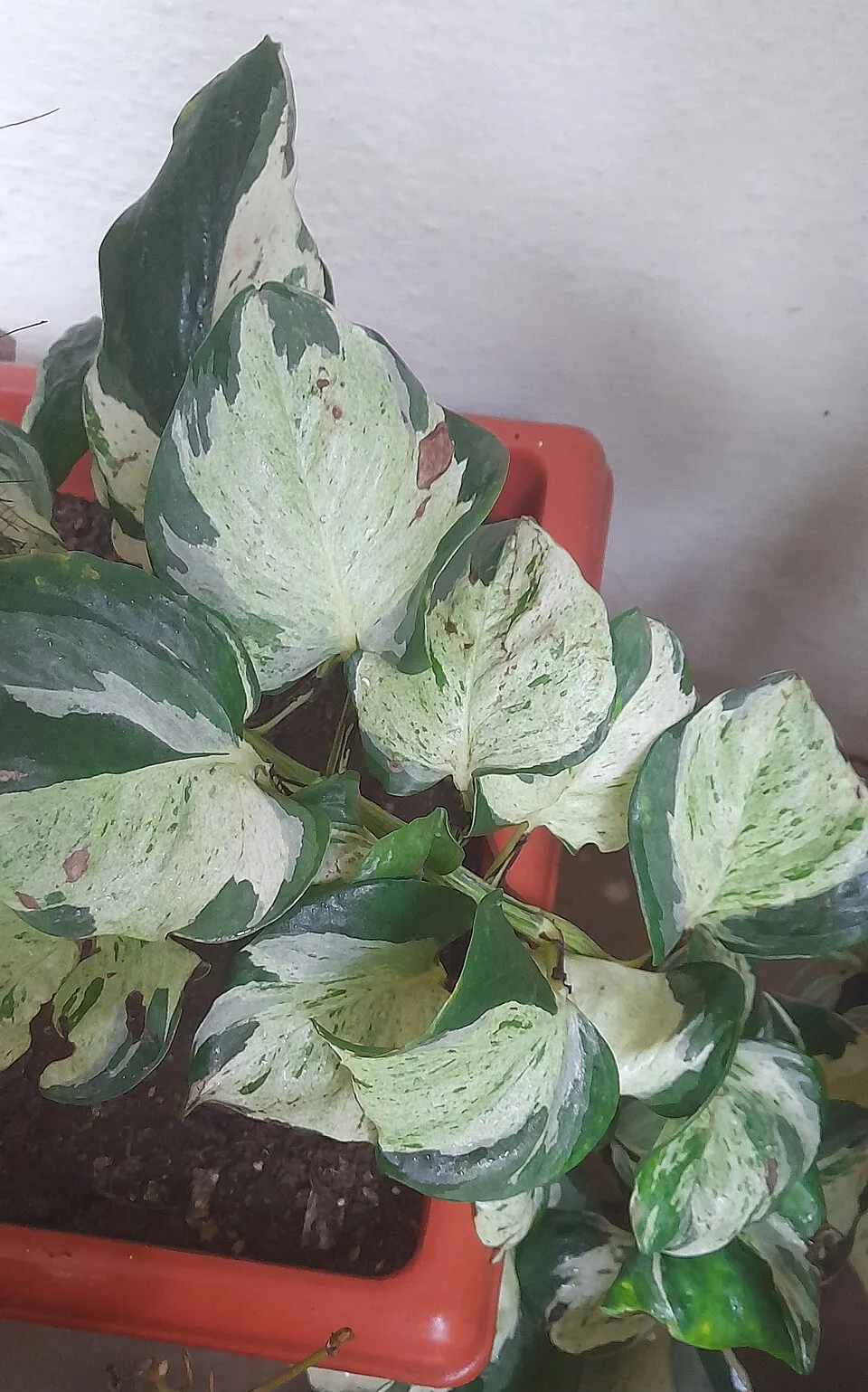
Epipremnum aureum 'Pearls and Jade' is a highly prized compact cultivar of the widely popular Pothos, a member of the Araceae family. This distinctive variety typically reaches an indoor height of 3 to 4 feet (0.91 to 1.22 meters), presenting a graceful trailing or climbing habit. Its most striking feature is its small, heart-shaped leaves, usually measuring 2 to 4 inches (5 to 10 cm) in length, which display an intricate and captivating variegation.
The foliage exhibits a unique marbling pattern of white, light green, and darker green shades, often concentrated around the leaf margins, giving it a lavish and eye-catching appearance that distinguishes it from other Pothos varieties like 'Marble Queen' or 'Golden Pothos' by having smaller, thinner leaves. The stems are characteristically sturdy, smooth, and greenish, adaptable for training on poles or allowing to cascade from hanging baskets.
Native to the tropical Solomon Islands, 'Pearls and Jade' Pothos thrives remarkably well in indoor environments globally, adapting to a range of lighting conditions but preferring bright, indirect sunlight to maintain its vibrant variegation. While it rarely flowers when cultivated indoors, its ornamental value lies entirely in its stunning foliage. Taxonomically, this cultivar was developed by the University of Florida in 2009.
Beyond its aesthetic appeal, a significant attribute of Epipremnum aureum, including the 'Pearls and Jade' cultivar, is its proven ability to filter common indoor air pollutants, as notably identified by NASA research. This ease of care, combined with its decorative charm and air-purifying properties, makes it an ideal houseplant for both novice and experienced plant enthusiasts.
Trusted Scientific References
Authoritative external sources for Epipremnum aureum Pearls and Jade:
Wikipedia — Epipremnum aureum Pearls and Jade
Kew POWO (Plants of the World Online)
PubMed — peer-reviewed research
NCBI Taxonomy Browser
GBIF — Global Biodiversity
Pearls and Jade Pothos should be interpreted through verified botanical identity, practical care, and responsible safety language. This recovery note adds the missing context needed for a complete profile: match light to the plant's habit, use well-drained soil, water according to season, and avoid unsupported medicinal or edible claims.
For publishing, the plant can be presented as a source-backed indoor plant with clear care guidance, common problem diagnosis, and conservative safety wording.
1.1.Pearls and Jade Pothos — Key Features
- ✓Botanical Name — Epipremnum aureum 'Pearls and Jade'
- ✓Family — Araceae
- ✓Striking Variegation — Distinctive white, light green, and dark green marbling on heart-shaped leaves.
- ✓Air Purification Power — NASA-rated for effectively removing indoor air pollutants like formaldehyde and benzene.
- ✓Low Maintenance — Considered an easy-care houseplant, suitable for beginners.
- ✓Versatile Growth Habit — Can be grown as a trailing plant in hanging baskets or trained to climb.
- ✓Compact Size — Generally smaller leaves and overall growth compared to other Pothos varieties.
- ✓Non — Flowering Indoors — Primarily cultivated and valued for its decorative foliage.
- ✓Toxic Nature — Contains calcium oxalate, making it harmful if ingested by humans or pets.
- ✓Mood Enhancer — Contributes to a calming and positive indoor environment, reducing stress.
1.2.Pearls and Jade Pothos — Snapshot Summary
- ✓Epipremnum aureum 'Pearls and Jade' is a compact, variegated Pothos cultivar.
- ✓Features stunning white, light green, and dark green marbled foliage.
- ✓Renowned for its significant indoor air purification capabilities, removing common toxins.
- ✓Contributes positively to psychological well-being, reducing stress and enhancing mood.
- ✓Contains calcium oxalate crystals, making all parts toxic if ingested by humans or pets.
- ✓An exceptionally easy-to-care-for houseplant, ideal for all levels of plant enthusiasts.
2.Pearls and Jade Pothos — Taxonomic Classification
3.Pearls and Jade Pothos — Reference Facts
4.Pearls and Jade Pothos — Structural Profile
5.Pearls and Jade Pothos — Geographic Distribution
6.Pearls and Jade Pothos — Historical Applications
7.Pearls and Jade Pothos — Secondary Metabolites
- ✓Calcium Oxalates — All parts of Epipremnum aureum 'Pearls and Jade' contain insoluble calcium oxalate crystals, specifically raphides, which cause irritation upon contact or ingestion.
- ✓Volatile Organic Compounds (VOCs) — The plant actively absorbs various airborne VOCs such as formaldehyde, benzene, and xylene from its environment, metabolizing them internally.
- ✓Enzymes — A diverse array of plant enzymes are present, crucial for metabolic processes, including the detoxification and breakdown of absorbed environmental pollutants.
- ✓Photosynthetic Pigments — Chlorophyll a, chlorophyll b, and various carotenoids are abundant in the leaves, essential for capturing light energy and contributing to the plant's distinctive green and variegated coloration.
- ✓Plant Hormones — Auxins, cytokinins, and gibberellins regulate the plant's growth, development, and response to environmental stimuli.
- ✓Cell Wall Polysaccharides — Cellulose, hemicellulose, and pectin form the structural framework of plant cell walls, providing rigidity and support to the leaves and stems.
- ✓Water — As the primary constituent, water facilitates nutrient transport, maintains turgor pressure, and is essential for all biochemical reactions within the plant.
- ✓Minerals — Essential macro- and micronutrients absorbed from the soil, such as nitrogen, phosphorus, potassium, magnesium, and iron, play vital roles as enzyme cofactors and structural components.
8.Pearls and Jade Pothos — What Research Suggests
- ✓Improved Indoor Air Quality — This plant is highly effective at absorbing and metabolizing common airborne toxins such as formaldehyde, benzene, and xylene, contributing to a healthier breathing environment through phytoremediation.
- ✓Stress Reduction — The presence of indoor plants like the Pearls and Jade Pothos has been shown to reduce psychological and physiological stress, fostering a calmer and more serene atmosphere.
- ✓Enhanced Mood and Well-being — Interacting with or simply being in the vicinity of green plants can elevate mood, alleviate symptoms of anxiety, and provide a sense of connection to nature.
- ✓Increased Productivity and Concentration — Studies suggest that incorporating houseplants into workspaces can improve focus, enhance cognitive performance, and reduce mental fatigue.
- ✓Passive Humidity Regulation — Through the natural process of transpiration, the plant releases water vapor into the air, which can modestly contribute to increasing indoor humidity levels, beneficial in dry environments.
- ✓Aesthetic and Visual Comfort — Its beautiful variegated foliage serves as a natural decorative element, enhancing the visual appeal of living and working spaces and promoting a sense of peace.
- ✓Biophilic Connection — Cultivating and caring for plants satisfies an innate human desire for connection with nature, promoting a sense of purpose and overall contentment.
- ✓Natural Sound Dampening (Minor) — While minimal for a single plant, a collection of plants can collectively help absorb sound waves, contributing to a slightly quieter indoor environment.
8.1.Pearls and Jade Pothos — Health Applications
9.Pearls and Jade Pothos — Precautions & Warnings
9.1.Pearls and Jade Pothos — Reported Side Effects
- ✓Oral Irritation — Ingestion of any part of the plant causes immediate, intense burning and swelling of the mouth, tongue, and throat due to calcium oxalate crystals.
- ✓Digestive Upset — Consumption can lead to nausea, vomiting, abdominal pain, and diarrhea, particularly with larger quantities.
- ✓Skin Irritation — Direct contact with the plant's sap may cause localized skin redness, itching, or dermatitis in sensitive individuals.
- ✓Pet Toxicity — Highly toxic to cats, dogs, and other household pets, resulting in excessive drooling, pawing at the mouth, vomiting, and difficulty swallowing.
- ✓Eye Irritation — Accidental contact of sap with the eyes can cause pain, redness, irritation, and temporary blurred vision.
- ✓Allergic Reactions — Although rare, some individuals may experience allergic reactions to plant components, manifesting as respiratory issues or exacerbated skin irritation.
9.2.Pearls and Jade Pothos — Clinical Safety Notes
- ✓Keep Out of Reach of Children — Ensure the plant is placed in an elevated or otherwise inaccessible location to prevent accidental ingestion by young children.
- ✓Pet-Proofing — Position plants in areas completely inaccessible to pets, or consider using physical barriers to prevent curious animals from chewing on leaves.
- ✓Handle with Gloves — Wear protective gloves when pruning, repotting, or handling the plant to avoid potential skin irritation from its sap.
- ✓Avoid Ingestion — Emphasize clearly that no part of the Pearls and Jade Pothos is safe for human or animal consumption.
- ✓Wash Hands Thoroughly — Always wash hands with soap and water immediately after handling the plant, especially before touching your face or food.
- ✓Seek Immediate Medical Attention — In case of accidental ingestion by humans or pets, contact poison control or a veterinarian promptly.
- ✓Educate Household Members — Inform everyone in the household about the plant's toxicity and necessary safety precautions to ensure a safe environment.
10.Pearls and Jade Pothos — Application Forms
- ✓Indoor Air Purification — Strategically place Pearls and Jade Pothos in living rooms, bedrooms, or offices to actively filter out common indoor air pollutants like formaldehyde and benzene.
- ✓Decorative Home Accent — Utilize its striking variegated foliage as a beautiful trailing plant in hanging baskets, on high shelves, or trained to climb a moss pole for vertical interest.
- ✓Stress-Reducing Ambiance — Incorporate into personal spaces or work environments to leverage its psychological benefits, contributing to a calming and visually appealing atmosphere.
- ✓Biophilic Design Element — Integrate into interior design schemes to foster a stronger connection to nature, enhancing overall well-being and aesthetic harmony in urban settings.
- ✓Educational Plant Specimen — Cultivate as an easy-to-care-for houseplant for beginners, providing a practical opportunity to learn about plant care, propagation, and environmental benefits.
- ✓Gifting Option — Offer as a thoughtful and attractive gift for housewarming, birthdays, or as a gesture of care, suitable for those new to plant keeping.
- ✓Office and Workspace Enhancement — Position near desks or common areas in offices to improve air quality and provide a natural, mood-lifting element for employees.
- ✓Bathroom and Kitchen Decor — Its tolerance for moderate humidity makes it suitable for brightening up bathrooms and kitchens, where it can also help with minor air purification.
11.Pearls and Jade Pothos — Growing Guide
- ✓Light — Provide bright, indirect light; direct sunlight can scorch its delicate variegated leaves, while too little light can diminish variegation.
- ✓Soil — Use a rich, airy, and well-draining potting mix, ideally a blend of equal parts potting soil, perlite, and orchid bark, to prevent root rot.
- ✓Water — Water thoroughly when the top 1 to 2 inches of soil feels dry to the touch; reduce watering frequency in fall and winter months.
- ✓Temperature & Humidity — Maintain standard household temperatures between 65-80°F (18-27°C) and moderate to slightly high humidity; avoid temperatures below 50°F (10°C).
- ✓Fertilizer — Fertilize monthly during the active growing seasons of spring and summer with a balanced liquid houseplant fertilizer, following product instructions, and cease feeding in fall/winter.
- ✓Pruning — Trim back leggy stems in spring or summer to encourage a bushier growth habit and maintain desired shape, never removing more than one-third of the plant at once.
- ✓Propagation — Easily propagate via stem cuttings with 3-5 nodes, rooted in water until roots are 2-3 inches long, then transfer to well-draining soil.
- ✓Potting — Repot into a slightly larger container with good drainage when the plant becomes root-bound, typically every 1-2 years.
Reviewed by the Flora Medical Global Botanical Review Panel
Multi-disciplinary editorial group · Botany · Ethnobotany · Herbal-medicine literature
Who reviewed this: This page was checked by the Flora Medical Global Botanical Review Panel — an in-house editorial group of botany graduates, ethnobotany researchers, and horticulture practitioners who collectively maintain our 7,000+ plant encyclopedia. Meet the team.
Our 4-step verification process
1. Taxonomic verification
Scientific names and synonyms cross-checked against Kew POWO, World Flora Online, and The Plant List.
2. Phytochemical & medicinal cross-reference
Active compounds, traditional uses, and reported activities are cross-referenced with PubMed, USDA Dr. Duke's database, and peer-reviewed ethnobotanical literature.
3. Conservation & distribution check
Distribution, ecology, and conservation status confirmed against GBIF occurrence records and the IUCN Red List.
4. Editorial & safety review
Every entry passes an editorial pass for clarity, originality, and safety notices (toxicity, contraindications, dosage caveats) before publication.
Last reviewed:
Important medical disclaimer: This content is for educational and research purposes only. It is not medical advice and is not a substitute for consultation with a licensed healthcare provider. Do not use any herb to self-treat a medical condition without professional guidance.
Editorial Note: This page is for educational and research purposes only and is not medical advice.
Written by: Flora Medical Global Editorial Team
Reviewed by: Flora Medical Global Botanical Review Panel
Last Updated: June 15, 2026





Pearls and Jade Pothos — Comments & Community Reviews
Rate this plant