
Medical Disclaimer: This content is for educational purposes only. It is not medical advice. Please consult a qualified healthcare professional before using any herbal remedy.
Safety Overview
1.Peperomia Pellucida Med — Overview
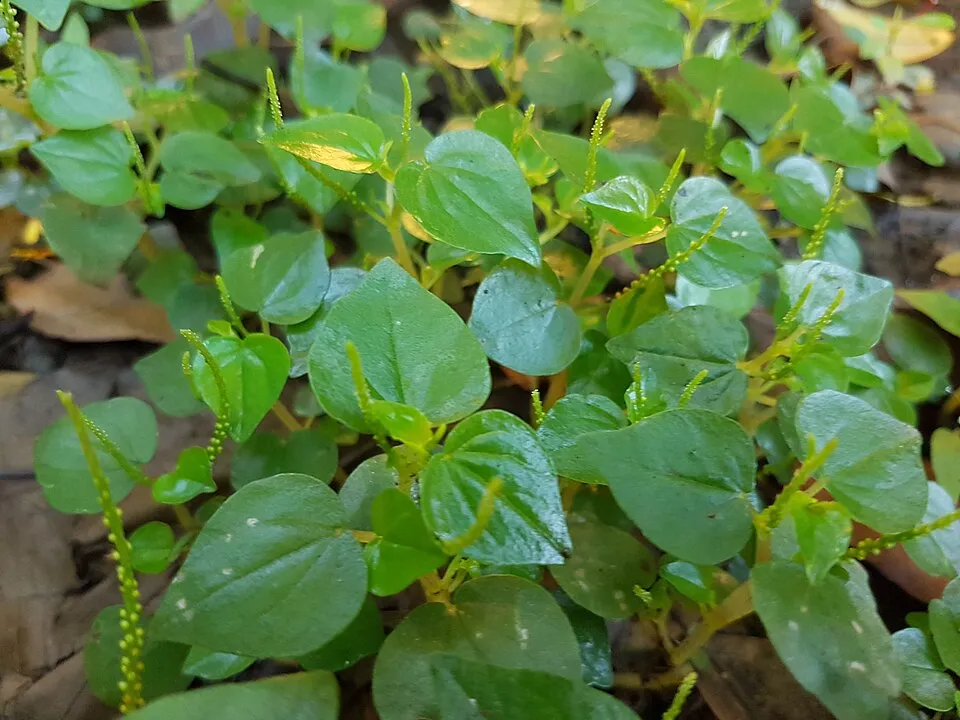
Peperomia pellucida, widely recognized as shiny bush or emerald ripple, is a delicate yet resilient succulent herbaceous plant within the distinguished Piperaceae family. This species typically attains a modest height ranging from 15 to 45 cm, characterized by its distinctive morphology.
Its leaves are a prominent feature, being fleshy, heart-shaped, and possessing a glossy, light-green surface that reflects ambient light, which contributes to its common moniker 'shiny bush.' These leaves can measure up to 8 cm in length and 5 cm in width, arranged in a well-spaced manner along the stems. The stems themselves are thick, succulent, and generally green, sometimes exhibiting a subtly hairy texture.
Reproductively, Peperomia pellucida develops small, slender, cylindrical inflorescences that emerge from the leaf axils. These inflorescences bear numerous minute, petal-less flowers, typically greenish-brown in coloration. This plant thrives predominantly in tropical and subtropical regions, preferring moist, shaded forest understories, along riverbanks, and in other humid environments.
It flourishes in loose, well-drained, and humus-rich soils. Its natural distribution is extensive, encompassing various countries across Southeast Asia, tropical Africa, and South America, making it a ubiquitous presence in these regions, often found in urban gardens and as a popular houseplant. Taxonomically, it is a member of the diverse genus Peperomia, which comprises over 1,500 species, many of which are noted for their unique foliage and documented medicinal properties in traditional herbal practices.
Trusted Scientific References
1. Authoritative external sources for Peperomia pellucida
1.1 Wikipedia — Peperomia pellucida
1.2 Kew POWO (Plants of the World Online)
1.3 PubMed — peer-reviewed research
1.4 NCBI Taxonomy Browser
1.5 GBIF — Global Biodiversity
1.6Peperomia Pellucida Med should be interpreted through verified botanical identity, practical care, and responsible safety language. This recovery note adds the missing context needed for a complete profile: match light to the plant's habit, use well-drained soil, water according to season, and avoid unsupported medicinal or edible claims. For publishing, the plant can be presented as a source-backed medicinal plant with clear care guidance, common problem diagnosis, and conservative safety wording.
1.1.Peperomia Pellucida Med — Key Features
- ✓Succulent, heart — shaped, glossy green leaves are a key identifying characteristic.
- ✓Belongs to the — Belongs to the large and diverse Piperaceae family, known for many medicinal species.
- ✓Widespread distribution across — Widespread distribution across tropical regions of Asia, Africa, and South America.
- ✓Holds significant value — Holds significant value in traditional medicine systems like Ayurveda, TCM, and indigenous South American practices.
- ✓Contains a rich — Contains a rich array of phytoconstituents, including unique arylpropanoids like apiol and cytotoxic peperomins.
- ✓Exhibits scientifically documented anti — inflammatory and analgesic effects, often linked to prostaglandin modulation.
- ✓Possesses promising broad — spectrum antimicrobial, antioxidant, and potential anticancer activities in research.
- ✓Relatively easy to — Relatively easy to cultivate in shaded, humid environments, making it accessible for home gardens.
- ✓Characterized by a distinct, pungent mustard — like odor, particularly when crushed.
- ✓Known for its — Known for its potential to support bone health and gastrointestinal well-being based on preclinical studies.
1.2.Peperomia Pellucida Med — At-a-Glance Summary
- ✓Peperomia pellucida, or shiny bush, is a tropical herbaceous plant from the Piperaceae family.
- ✓Traditionally used for inflammation, pain, digestive issues, and infections across various cultures.
- ✓Rich in bioactive compounds including sesquiterpenes, flavonoids, arylpropanoids, and peperomins.
- ✓Scientific studies support its anti-inflammatory, analgesic, antimicrobial, and antioxidant properties.
- ✓Caution advised for pregnant/lactating individuals and those with known hypersensitivity reactions.
- ✓No clinically validated human dosing; use under professional guidance is recommended.
2.Peperomia Pellucida Med — Taxonomic Classification
3.Peperomia Pellucida Med — Quick Facts
4.Peperomia Pellucida Med — Plant Morphology
5.Peperomia Pellucida Med — Where It Grows
6.Peperomia Pellucida Med — Historical Applications
7.Peperomia Pellucida Med — Bioactive Constituents
- ✓Sesquiterpenes — Primarily composed of compounds like Carotol (13.41% in essential oil), which is a major hydroxylated sesquiterpene contributing to anti-inflammatory effects.
- ✓Flavonoids — Includes Apigenin, Acacetin, Isovitexin, and Pellucidatin, known for their antioxidant, anti-inflammatory, and potential anticancer properties.
- ✓Phytosterols — Contains Campesterol and Stigmasterol, which are plant sterols recognized for their potential to lower cholesterol levels.
- ✓Arylpropanoids — Compounds such as Apiol and Pachypophyllin are present, with Apiol specifically documented for its antifungal activity against pathogens like Trichophyton mentagrophytes.
- ✓Substituted Styrenes — Features compounds like Pellucidin A, a dimeric ArC2 compound, whose specific bioactivity requires further investigation.
- ✓Peperomins — A class of compounds exhibiting cytotoxic and anticancer activities in vitro against various human cancer cell lines.
- ✓Essential Oils — A complex mixture of volatile compounds, predominantly sesquiterpenes, which contribute to the plant's characteristic aroma, antimicrobial, and antioxidant properties.
- ✓Phenylpropanoids — These compounds, along with lignans, have been isolated and shown to possess estrogenic and anti-estrogenic activities, indicating hormonal modulation potential.
- ✓Lignans — Present in the ethyl acetate extract, these compounds contribute to the plant's observed estrogenic and anti-estrogenic effects, acting as partial or full agonists depending on concentration.
8.Peperomia Pellucida Med — What Research Suggests
- ✓Anti-inflammatory — Research indicates Peperomia pellucida extracts can reduce inflammation, potentially by interfering with prostaglandin synthesis, as demonstrated in rat paw edema models.
- ✓Analgesic — The plant exhibits pain-relieving effects, active against both inflammatory and non-inflammatory pain, with studies showing inhibition of acetic acid-induced writhing and activity in hot-plate tests.
- ✓Antimicrobial — Crude methanolic extracts demonstrate broad-spectrum activity against various bacteria and fungi, including Staphylococcus aureus and Trichophyton mentagrophytes.
- ✓Antimalarial — In vitro and in vivo studies suggest P. pellucida extracts can inhibit the growth of Plasmodium falciparum and Plasmodium vinckei petteri, supporting traditional uses against fevers.
- ✓Anti-leishmanial — Monoterpenoid derivatives from related Peperomia species show toxic activity against Leishmania promastigotes, indicating potential antiparasitic action.
- ✓Antioxidant — Essential oils from the stem and leaves exhibit significant antioxidant effects, comparable to standard antioxidants like vitamin C, protecting against oxidative stress.
- ✓Gastroprotective — Studies in rodents have reported gastroprotective activity, suggesting the plant may help protect the stomach lining from damage.
- ✓Bone Healing — Research in rodents indicates stimulatory effects on osteoblast differentiation and mineralization, suggesting potential for bone repair and health.
- ✓Anticancer/Cytotoxic — Crude extracts have demonstrated cytotoxicity against various cancer cell lines, including HL-60, MCF-7, and HeLa, highlighting its chemotherapeutic potential in vitro.
- ✓Diuretic — Traditionally used in regions like Guyana and the Amazon to promote urination, aiding in the treatment of conditions like proteinuria.
- ✓Cholesterol-lowering — Ethnomedicinal data from northeastern Brazil suggests its use in lowering cholesterol levels.
- ✓Hemorrhage Control — In Bolivian traditional medicine, the whole plant is crushed and administered orally to stop hemorrhage.
8.1.Peperomia Pellucida Med — Health Applications
9.Peperomia Pellucida Med — Precautions & Warnings
9.1.Peperomia Pellucida Med — Possible Adverse Reactions
- ✓Allergic Reactions — Individuals with hypersensitivity to Peperomia pellucida or its constituents may experience asthma-like symptoms due to its strong mustard-like odor.
- ✓Gastrointestinal Upset — High doses or prolonged use may potentially cause mild digestive discomfort in sensitive individuals.
- ✓Prostaglandin Synthesis Interference — As it interferes with prostaglandin synthesis, it may affect physiological processes regulated by these compounds.
- ✓Drug Interactions (Theoretical) — Caution is advised when co-administering with NSAIDs or other anti-inflammatory drugs due to potential additive effects and increased risk of GI bleeding or bruising.
- ✓Pregnancy/Lactation — Avoid use during these periods due to insufficient clinical data and its documented interference with prostaglandin synthesis.
- ✓Hypotension — Due to its traditional use as a diuretic, it may theoretically lower blood pressure, especially if combined with antihypertensive medications.
9.2.Peperomia Pellucida Med — Safety Overview
- ✓Hypersensitivity — Contraindicated for individuals with known allergies or hypersensitivity reactions to Peperomia pellucida or other members of the Piperaceae family.
- ✓Pregnancy and Lactation — Avoid use in pregnant or lactating women due to a lack of clinical safety data and its reported interference with prostaglandin synthesis.
- ✓Pediatric Use — Safety and efficacy in children have not been established; therefore, its use in pediatric populations is not recommended.
- ✓Drug Interactions — Exercise caution when combining with conventional medications, particularly NSAIDs, anticoagulants, or other anti-inflammatory agents, due to theoretical interaction risks.
- ✓Dosage — No clinically validated human dosing guidelines exist; traditional doses vary, and professional guidance is recommended.
- ✓Long-term Use — Insufficient research exists on the safety profile of Peperomia pellucida for prolonged internal consumption.
- ✓Professional Consultation — Always consult a qualified healthcare professional or medical herbalist before using Peperomia pellucida, especially for chronic conditions or if on medication.
10.Peperomia Pellucida Med — Preparation & Dosage
- ✓Fresh Consumption — Leaves can be eaten raw in salads or cooked as a vegetable, a traditional method for relieving rheumatic joint pain.
- ✓Decoction — Roots or whole plant material can be boiled in water to create a decoction, traditionally used for fevers or to stop hemorrhage.
- ✓Infusion/Tea — Dried or fresh leaves are steeped in hot water to prepare teas, commonly consumed for gastrointestinal discomforts and respiratory ailments.
- ✓Topical Poultice — Mashed aerial parts are applied directly to the skin as a dressing for wounds, abscesses, acne, and to alleviate localized pain.
- ✓Aqueous Extracts — Prepared by steeping plant material in water, these extracts are used in research for anti-inflammatory and analgesic studies.
- ✓Methanolic Extracts — Created using methanol as a solvent, these extracts are often employed in laboratory settings to isolate compounds with antimicrobial or cytotoxic activities.
- ✓Juices — Freshly pressed juice from the leaves and stems can be consumed for various internal therapeutic purposes.
- ✓Tinctures — Alcohol-based preparations that concentrate the plant's compounds, offering a longer shelf life and convenient dosing.
11.Peperomia Pellucida Med — Growing Guide
- ✓Climate — Thrives in tropical to subtropical climates, preferring warm temperatures and high humidity.
- ✓Light — Best grown in partial to full shade, protected from direct, intense sunlight which can scorch its delicate leaves.
- ✓Soil — Requires well-drained, loose, and humus-rich soil, mimicking its natural forest understory habitat.
- ✓Watering — Needs consistent moisture; keep the soil evenly damp but avoid waterlogging, which can lead to root rot.
- ✓Propagation — Easily propagated from seeds or stem cuttings, which root readily in moist conditions.
- ✓Temperature — Optimal growth occurs between 20-30°C (68-86°F); sensitive to cold temperatures and frost.
- ✓Fertilization — Benefits from light, balanced liquid fertilizer application during its active growing season (spring and summer).
- ✓Pest/Disease — Generally robust, but can be susceptible to common houseplant pests like spider mites or mealybugs in dry conditions.
Reviewed by the Flora Medical Global Botanical Review Panel
Multi-disciplinary editorial group · Botany · Ethnobotany · Herbal-medicine literature
Who reviewed this: This page was checked by the Flora Medical Global Botanical Review Panel — an in-house editorial group of botany graduates, ethnobotany researchers, and horticulture practitioners who collectively maintain our 7,000+ plant encyclopedia. Meet the team.
Our 4-step verification process
1. Taxonomic verification
Scientific names and synonyms cross-checked against Kew POWO, World Flora Online, and The Plant List.
2. Phytochemical & medicinal cross-reference
Active compounds, traditional uses, and reported activities are cross-referenced with PubMed, USDA Dr. Duke's database, and peer-reviewed ethnobotanical literature.
3. Conservation & distribution check
Distribution, ecology, and conservation status confirmed against GBIF occurrence records and the IUCN Red List.
4. Editorial & safety review
Every entry passes an editorial pass for clarity, originality, and safety notices (toxicity, contraindications, dosage caveats) before publication.
Last reviewed:
Important medical disclaimer: This content is for educational and research purposes only. It is not medical advice and is not a substitute for consultation with a licensed healthcare provider. Do not use any herb to self-treat a medical condition without professional guidance.
Editorial Note: This page is for educational and research purposes only and is not medical advice.
Written by: Flora Medical Global Editorial Team
Reviewed by: Flora Medical Global Botanical Review Panel
Last Updated: June 15, 2026





Peperomia Pellucida Med — Comments & Community Reviews
Rate this plant