

Medical Disclaimer: This content is for educational purposes only. It is not medical advice. Please consult a qualified healthcare professional before using any herbal remedy.
Safety Overview
1.Pericallis Hybrida — At a Glance
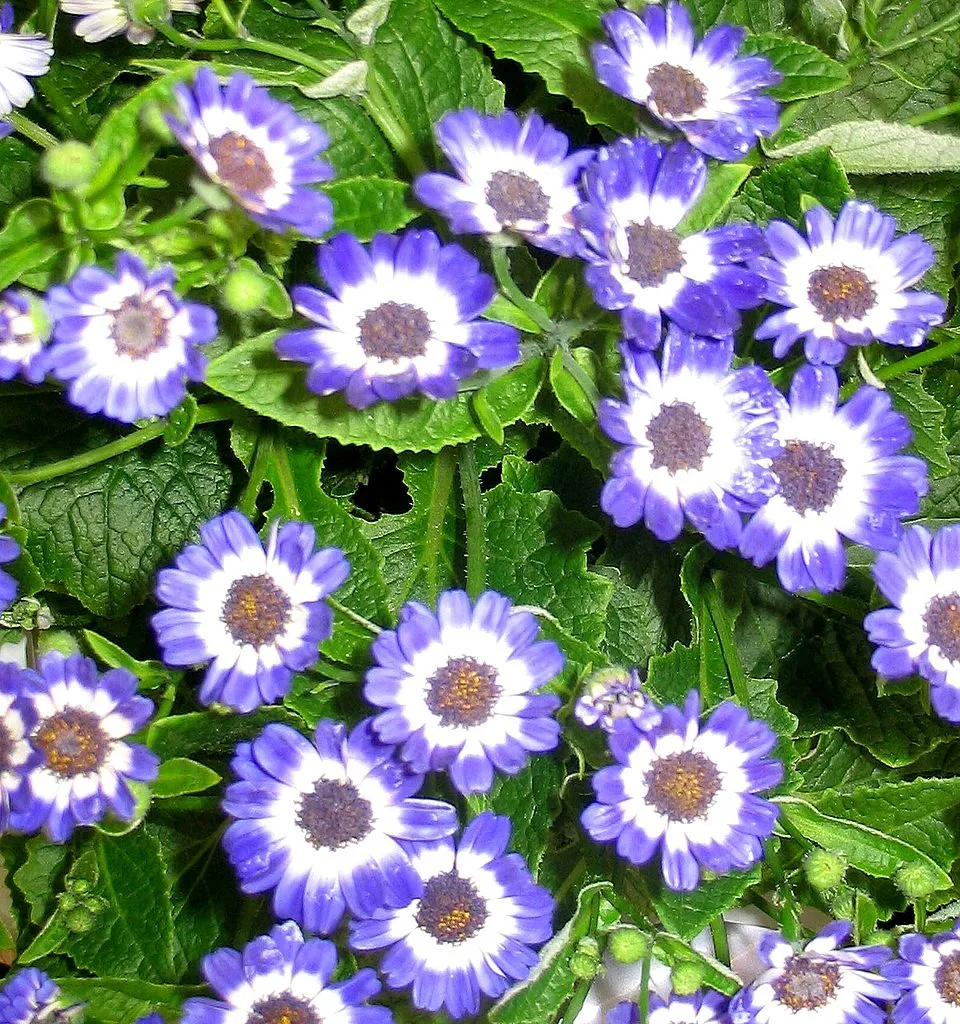
Pericallis Hybrida, commonly known as the florist's cineraria or simply cineraria, is a captivating herbaceous flowering plant renowned for its spectacular, daisy-like blooms. This species is a complex hybrid, primarily derived from parental species like Pericallis cruenta and Pericallis lanata, both native to the Canary Islands. Its morphology is characterized by large, showy capitula, often featuring contrasting centers, which emerge in a dazzling spectrum of colors including vivid blues, purples, reds, pinks, and whites.
The plant typically forms a compact, bushy mound, reaching a moderate height of 30-60 cm (12-24 inches) and a similar spread, making it an ideal choice for container gardening, bedding plants, and as a cheerful indoor ornamental. Its broad, often slightly hairy leaves are ovate to cordate in shape, forming an attractive basal rosette. While its wild ancestors thrive in cool, moist, and shaded forest understories of their native islands, Pericallis Hybrida cultivars are widely cultivated globally, adapted to a range of temperate conditions as annuals or tender perennials.
Taxonomically, it belongs to the vast Asteraceae family, also known as the daisy or sunflower family, which is one of the largest families of flowering plants. Its hybrid nature contributes to the extensive genetic diversity and horticultural variations seen in commercial varieties.
Trusted Scientific References
1. Authoritative external sources for Pericallis Hybrida
1.1 Wikipedia — Pericallis Hybrida
1.2 Kew POWO (Plants of the World Online)
1.3 PubMed — peer-reviewed research
1.4 NCBI Taxonomy Browser
1.5 GBIF — Global Biodiversity
1.6Pericallis Hybrida should be interpreted through verified botanical identity, practical care, and responsible safety language. This recovery note adds the missing context needed for a complete profile: match light to the plant's habit, use well-drained soil, water according to season, and avoid unsupported medicinal or edible claims. For publishing, the plant can be presented as a source-backed garden plant with clear care guidance, common problem diagnosis, and conservative safety wording.
1.1.Pericallis Hybrida — Distinguishing Points
- ✓Botanical Name — Pericallis Hybrida.
- ✓Common Name — Florist's Cineraria, Cineraria.
- ✓Family — Asteraceae (Daisy Family).
- ✓Flower Appearance — Large, showy, daisy-like capitula with diverse, vibrant colors, often with contrasting centers.
- ✓Growth Habit — Bushy, herbaceous perennial typically cultivated as an annual or tender perennial.
- ✓Ornamental Value — Highly prized for its striking floral displays in gardens, containers, and as houseplants.
- ✓Preferred Climate — Thrives in cool, moist conditions with bright, indirect light.
- ✓Key Phytochemicals — Rich in flavonoids, sesquiterpene lactones, and phenolic acids.
- ✓Medicinal Status — Primarily ornamental; potential medicinal properties are inferred from constituents and related species, not established for direct use.
- ✓Hybrid Origin — A complex horticultural hybrid, enhancing its genetic diversity and range of cultivars.
1.2.Pericallis Hybrida — In Brief
- ✓Pericallis Hybrida is a popular ornamental flowering plant in the Asteraceae family.
- ✓Renowned for its vibrant, large, daisy-like blooms in a wide array of colors.
- ✓Contains notable phytochemicals including flavonoids, sesquiterpene lactones, and phenolic acids.
- ✓Primarily cultivated for its aesthetic appeal; traditional medicinal use is extremely limited and unproven.
- ✓Research suggests potential antioxidant and anti-inflammatory properties, based on its chemical constituents.
- ✓Not recommended for internal consumption due to insufficient safety data and potential toxicity.
2.Pericallis Hybrida — Nomenclature & Classification
3.Pericallis Hybrida — Vital Statistics
4.Pericallis Hybrida — Physical Description
5.Pericallis Hybrida — Native Range & Habitat
6.Pericallis Hybrida — Folk Medicine Applications
Mostly appreciated for its ornamental beauty and ability to provide color during cooler months. It doesn't hold significant historical or traditional cultural uses beyond its decorative appeal in temperate regions.
7.Pericallis Hybrida — Key Phytochemicals
- ✓Flavonoids — Key compounds include quercetin, kaempferol, luteolin, and their glycosides; these are potent antioxidants, anti-inflammatory agents, and contribute to the plant's vibrant pigmentation.
- ✓Sesquiterpene Lactones — Such as germacranolides and guaianolides; these often impart a bitter taste and are known for diverse biological activities including anti-inflammatory, cytotoxic, and antimicrobial properties.
- ✓Phenolic Acids — Prominent examples are caffeic acid, chlorogenic acid, and ferulic acid; these act as strong antioxidants, contributing to the plant's defense mechanisms and potential health benefits.
- ✓Alkaloids — Various nitrogen-containing compounds may be present in trace amounts; their specific types and pharmacological actions in Pericallis Hybrida require detailed investigation, but in general, alkaloids exhibit diverse biological effects.
- ✓Triterpenes — Pentacyclic triterpenes can be found; these compounds are often associated with anti-inflammatory, hepatoprotective, and adaptogenic properties in medicinal plants.
- ✓Saponins — Glycosides with surfactant properties; they may contribute to immunomodulatory effects and have been investigated for cholesterol-lowering potential.
- ✓Coumarins — Benzopyrone derivatives; some coumarins possess anticoagulant, antimicrobial, and anti-inflammatory activities, though their presence and significance in Pericallis Hybrida are not extensively documented.
- ✓Polysaccharides — Complex carbohydrates that can contribute to the plant's structural integrity and may also exhibit immunomodulatory and prebiotic effects in biological systems.
- ✓Volatile Compounds — Small amounts of terpenoids and other volatile organic compounds may contribute to the plant's subtle fragrance, though it is not a primary source of essential oils.
8.Pericallis Hybrida — Evidence-Based Benefits
- ✓Anti-inflammatory Support — Phytochemicals such as sesquiterpene lactones and flavonoids found in Pericallis Hybrida are recognized for their potential to modulate inflammatory pathways, offering a basis for investigating anti-inflammatory effects.
- ✓Antioxidant Activity — The presence of phenolic acids and various flavonoids suggests that extracts from Pericallis Hybrida could possess significant antioxidant capabilities, helping to neutralize free radicals and protect cellular structures.
- ✓Immunomodulatory Potential — Certain sesquiterpene lactones and polysaccharides within the Asteraceae family, and potentially in this hybrid, may influence immune system responses, warranting further research into immune support.
- ✓Antimicrobial Properties — Some constituents, including specific sesquiterpene lactones and phenolic compounds, have demonstrated in vitro antimicrobial activity against bacteria and fungi in related plant species, suggesting a similar defensive role in Pericallis Hybrida.
- ✓Pain Relief (Analgesic) — The inferred anti-inflammatory actions could indirectly contribute to the alleviation of pain associated with inflammatory conditions, though direct analgesic studies are lacking for Pericallis Hybrida.
- ✓Cardioprotective Effects — Antioxidant and anti-inflammatory compounds can contribute to overall cardiovascular health by reducing oxidative stress and inflammation within the vascular system.
- ✓Cellular Health Maintenance — Through its antioxidant capacity, Pericallis Hybrida may support cellular integrity and protect against oxidative damage that contributes to cellular aging and dysfunction.
- ✓Neuroprotective Interest — Flavonoids and phenolic acids are often studied for their ability to protect neuronal cells from oxidative stress and inflammation, suggesting a theoretical neuroprotective potential for its compounds.
- ✓Anti-allergic Potential — Certain flavonoids are known to stabilize mast cells and inhibit histamine release, which could theoretically contribute to anti-allergic effects, though this remains to be explored for Pericallis Hybrida.
8.1.Pericallis Hybrida — Health Applications
9.Pericallis Hybrida — Cautions & Contraindications
9.1.Pericallis Hybrida — Caution Notes
- ✓Allergic Reactions — Contact dermatitis or respiratory irritation may occur in sensitive individuals due to pollen or direct contact with plant sap, typical for some Asteraceae members.
- ✓Gastrointestinal Upset — Accidental ingestion, though not recommended, could potentially lead to symptoms such as nausea, vomiting, or diarrhea due to unknown compounds or bitterness.
- ✓Skin Irritation — Direct handling of the plant, especially by individuals with sensitive skin, might cause localized redness, itching, or a mild rash.
- ✓Photosensitivity — Some plants in the Asteraceae family contain compounds that can induce photosensitivity upon skin contact or ingestion, increasing susceptibility to sunburn.
- ✓Toxicity (Potential) — As with many ornamental plants, specific toxicity data for Pericallis Hybrida is limited, and ingestion should be avoided as it may contain compounds harmful if consumed in quantity.
- ✓Cross-reactivity — Individuals with known allergies to other plants within the Asteraceae family, such as ragweed or chamomile, may experience cross-reactions.
9.2.Pericallis Hybrida — Risk Assessment
- ✓Not for Internal Consumption — Pericallis Hybrida is an ornamental plant and should not be ingested due to the lack of comprehensive safety data and potential presence of unknown toxic compounds.
- ✓Keep Out of Reach of Children and Pets — To prevent accidental ingestion, which could lead to adverse health effects, ensure the plant is inaccessible to curious children and animals.
- ✓Skin Contact Caution — Individuals with sensitive skin are advised to wear gloves when handling the plant to minimize the risk of contact dermatitis or irritation.
- ✓Pregnancy and Lactation — Avoid any form of internal or external use during pregnancy and lactation due to insufficient scientific safety data.
- ✓Allergic Individuals — Persons with known allergies to plants in the Asteraceae family should exercise caution when handling Pericallis Hybrida due to potential cross-reactivity.
- ✓Consult a Healthcare Professional — Before considering any experimental internal or external use, it is imperative to consult with a qualified medical herbalist or physician.
- ✓External Use Only (with caution) — Any topical application should first be tested on a small, inconspicuous area of skin to check for individual sensitivity or allergic reactions.
10.Pericallis Hybrida — Preparations & Uses
- ✓Ornamental Cultivation — Primarily cultivated and enjoyed for its exceptional aesthetic value in gardens, containers, and as a vibrant houseplant.
- ✓Decorative Displays — Utilized extensively in floral arrangements and as potted gifts due to its striking and diverse flower colors.
- ✓Research Extracts — Various solvent extracts (e.g., ethanolic, aqueous) are prepared in laboratory settings to isolate and analyze active phytochemicals for scientific investigation.
- ✓Topical Application (Experimental) — Hypothetically, extracts could be incorporated into topical formulations like creams or poultices for external use to investigate localized inflammatory responses, though this is not a traditional use.
- ✓Infusion (Theoretical) — Dried aerial parts could theoretically be steeped in hot water to create an herbal infusion for research purposes, but internal consumption is not recommended.
- ✓Tincture Preparation (Scientific Study) — Alcoholic tinctures can be prepared for phytochemical concentration and subsequent analysis of potential bioactivities in controlled research environments.
- ✓Botanical Specimen — Collected and preserved for botanical study, identification, and inclusion in herbarium collections to document plant diversity.
11.Pericallis Hybrida — Garden Cultivation
- ✓Climate Preference — Thrives in cool, temperate conditions, ideally between 10-18°C (50-65°F), and is highly sensitive to frost and excessive heat.
- ✓Light Requirements — Prefers bright, indirect light; direct afternoon sun can lead to leaf scorch and reduced flowering.
- ✓Soil Composition — Requires consistently moist, well-draining, humus-rich soil with a slightly acidic to neutral pH (6.0-7.0) for optimal growth.
- ✓Watering Schedule — Maintain consistent soil moisture, avoiding both waterlogging and allowing the soil to dry out completely between waterings.
- ✓Fertilization — Feed every 2-4 weeks during the active growing and flowering season with a balanced liquid fertilizer, reducing frequency as flowering wanes.
- ✓Propagation — Primarily propagated by seed, typically sown in late summer or early autumn for blooms in winter and spring.
- ✓Pruning and Deadheading — Regular deadheading of spent flowers encourages continuous blooming and helps maintain a tidy, vigorous plant habit.
- ✓Pest and Disease Management — Monitor for common pests like aphids, whiteflies, and spider mites, and ensure good air circulation to prevent fungal diseases like powdery mildew.
Reviewed by the Flora Medical Global Botanical Review Panel
Multi-disciplinary editorial group · Botany · Ethnobotany · Herbal-medicine literature
Who reviewed this: This page was checked by the Flora Medical Global Botanical Review Panel — an in-house editorial group of botany graduates, ethnobotany researchers, and horticulture practitioners who collectively maintain our 7,000+ plant encyclopedia. Meet the team.
Our 4-step verification process
1. Taxonomic verification
Scientific names and synonyms cross-checked against Kew POWO, World Flora Online, and The Plant List.
2. Phytochemical & medicinal cross-reference
Active compounds, traditional uses, and reported activities are cross-referenced with PubMed, USDA Dr. Duke's database, and peer-reviewed ethnobotanical literature.
3. Conservation & distribution check
Distribution, ecology, and conservation status confirmed against GBIF occurrence records and the IUCN Red List.
4. Editorial & safety review
Every entry passes an editorial pass for clarity, originality, and safety notices (toxicity, contraindications, dosage caveats) before publication.
Last reviewed:
Important medical disclaimer: This content is for educational and research purposes only. It is not medical advice and is not a substitute for consultation with a licensed healthcare provider. Do not use any herb to self-treat a medical condition without professional guidance.
Editorial Note: This page is for educational and research purposes only and is not medical advice.
Written by: Flora Medical Global Editorial Team
Reviewed by: Flora Medical Global Botanical Review Panel
Last Updated: June 15, 2026





Pericallis Hybrida — Comments & Community Reviews
Rate this plant