
Medical Disclaimer: This content is for educational purposes only. It is not medical advice. Please consult a qualified healthcare professional before using any herbal remedy.
Safety Overview
1.Periwinkle — Plant Snapshot
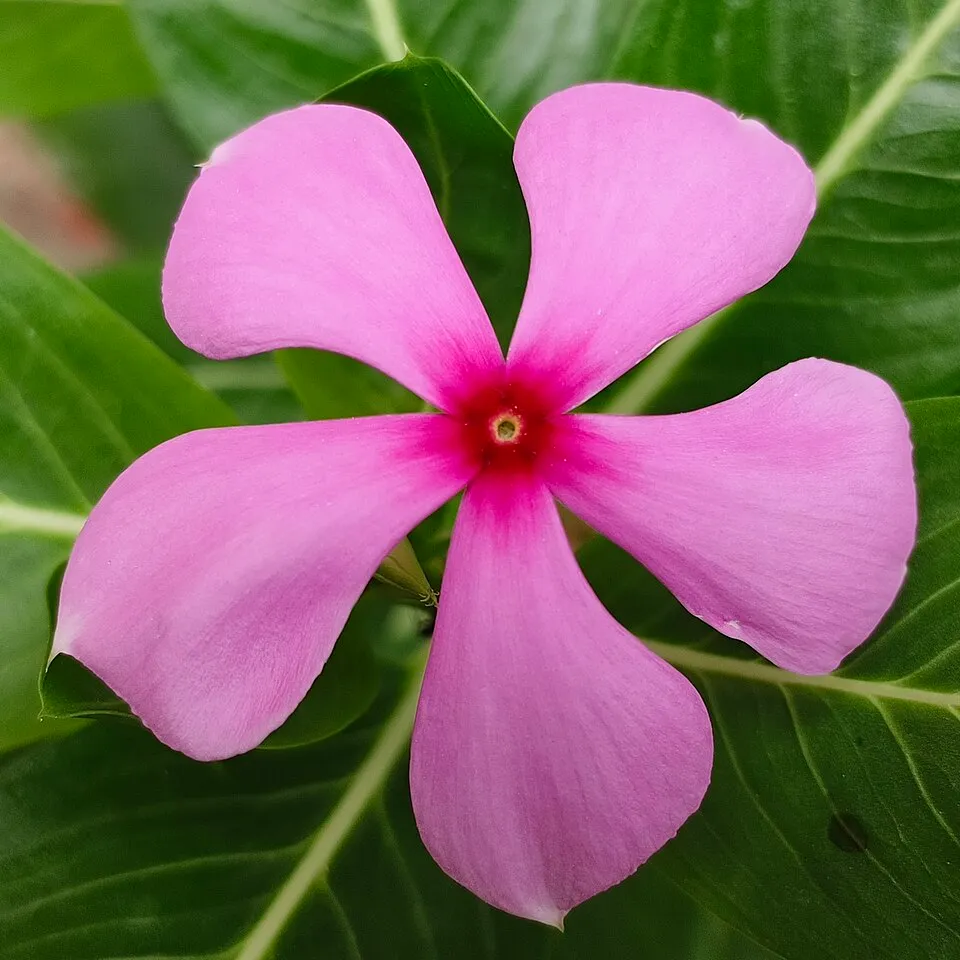
Catharanthus roseus, widely recognized as Madagascar Periwinkle or Cape Periwinkle, is an evergreen subshrub belonging to the Apocynaceae family. Native to the tropical and subtropical regions of Madagascar, it has successfully naturalized across warm climates globally, often cultivated as an ornamental due to its striking, continuously blooming flowers. This plant typically grows to a height of 30 to 90 centimeters (1 to 3 feet) and a similar spread, forming a bushy, upright habit.
Its leaves are oppositely arranged, simple, oblong to obovate, dark green, glossy, and possess a pale midrib. The flowers, which can be pink, white, or bicolored with a contrasting eye, are five-petaled and borne in cymose clusters in the leaf axils. The fruit consists of a pair of follicles, each containing numerous small, black seeds.
While visually similar to the European Periwinkles (Vinca minor and Vinca major), Catharanthus roseus is botanically distinct, a crucial differentiation given its unique and potent medicinal properties. Its robust growth and adaptability allow it to thrive in various soil types, though it prefers well-drained conditions and ample sunlight. This plant's journey from a decorative garden specimen to a cornerstone of modern pharmacology underscores its botanical significance and chemical complexity.
Trusted Scientific References
Authoritative external sources for Catharanthus roseus (L.) G. Don:
Wikipedia — Catharanthus roseus (L.) G. Don
Kew POWO (Plants of the World Online)
PubMed — peer-reviewed research
NCBI Taxonomy Browser
GBIF — Global Biodiversity
Periwinkle should be interpreted through verified botanical identity, practical care, and responsible safety language. This recovery note adds the missing context needed for a complete profile: match light to the plant's habit, use well-drained soil, water according to season, and avoid unsupported medicinal or edible claims.
For publishing, the plant can be presented as a source-backed medicinal plant with clear care guidance, common problem diagnosis, and conservative safety wording.
1.1.Periwinkle — Key Features
- ✓Source of Vinblastine & Vincristine — Critical chemotherapeutic agents.
- ✓Native to Madagascar — Originates from the island of Madagascar.
- ✓Apocynaceae Family Member — Part of the Dogbane family.
- ✓Evergreen Subshrub — Retains foliage year-round in suitable climates.
- ✓Distinct from European Periwinkle — Not to be confused with Vinca species.
- ✓Ornamental Value — Valued for its attractive, continuous flowering.
- ✓Antimitotic Activity — Alkaloids disrupt cell division.
- ✓Traditional Ethnomedicine — Used in various ancient healing systems.
- ✓Commercial Cultivation — Grown globally for pharmaceutical production.
- ✓Diverse Phytochemistry — Contains a wide array of bioactive compounds.
1.2.Periwinkle — Snapshot Summary
- ✓Potent Medicinal Plant — Source of life-saving anticancer drugs vinblastine and vincristine.
- ✓Rich Alkaloid Content — Contains over 150 alkaloids, with bisindoles being most active.
- ✓Traditional Uses — Historically used for diabetes, hypertension, and various disorders in Ayurveda and Unani.
- ✓Global Ornamental — Widely cultivated for its beautiful, continuous blooms in warm climates.
- ✓High Toxicity — Requires extreme caution and professional guidance due to its narrow therapeutic window.
- ✓Ongoing Research — Continues to be studied for its diverse pharmacological activities beyond cancer.
2.Periwinkle — Scientific Profile
3.Periwinkle — Reference Facts
4.Periwinkle — Structural Profile
5.Periwinkle — Habitat & Distribution
6.Periwinkle — Historical Applications
7.Periwinkle — Bioactive Constituents
- ✓Monoterpene Indole Alkaloids (MIAs) — Over 110 MIAs have been identified, serving as precursors to bisindole alkaloids and exhibiting various bioactivities, including neuroprotective and cytotoxic effects.
- ✓Bisindole Alkaloids — The most pharmacologically significant class, including vinblastine, vincristine, vindesine, and vinorelbine, which are potent antimitotic agents crucial in chemotherapy.
- ✓Flavonoids — A diverse group of polyphenolic compounds such as quercetin and kaempferol derivatives, contributing to the plant's antioxidant and anti-inflammatory properties.
- ✓Phenolic Acids — Compounds like caffeic acid and ferulic acid, known for their strong antioxidant activity and potential roles in protecting against oxidative damage.
- ✓Volatile Constituents — A complex mixture of over 150 compounds, including terpenoids and fatty acid derivatives, contributing to the plant's aroma and potentially some antimicrobial effects.
- ✓Triterpenoids — Compounds like ursolic acid and oleanolic acid, which may contribute to anti-inflammatory, hepatoprotective, and even some anticancer activities.
- ✓Sterols — Including β-sitosterol, known for its anti-inflammatory and cholesterol-lowering properties.
- ✓Tannins — Astringent compounds that can contribute to antimicrobial and antioxidant effects, also historically used for digestive issues.
8.Periwinkle — Research Insights
- ✓Anticancer Activity — The most renowned benefit, derived from bisindole alkaloids like vinblastine and vincristine, which interfere with microtubule formation, inhibiting cell division in rapidly proliferating cancer cells.
- ✓Antidiabetic Properties — Traditional medicine, particularly Ayurveda and Unani, utilized Catharanthus roseus for managing blood sugar, a use supported by contemporary research investigating its hypoglycemic effects.
- ✓Antimicrobial Action — Extracts have demonstrated efficacy against various bacteria and fungi, suggesting potential in treating infectious conditions, possibly due to diverse alkaloid and phenolic compounds.
- ✓Antioxidant Effects — Rich in phenolic acids and flavonoids, the plant exhibits significant antioxidant activity, helping to neutralize free radicals and reduce oxidative stress in the body.
- ✓Anti-inflammatory Support — Certain constituents may possess anti-inflammatory properties, potentially aiding in the management of inflammatory conditions, though this area requires more targeted research.
- ✓Hypotensive Action — Traditionally used to address high blood pressure in Unani medicine, some compounds within the plant may contribute to cardiovascular regulation.
- ✓Diuretic Properties — Historical uses include promoting urine production, which could help in conditions requiring fluid balance regulation, although specific mechanisms are still under investigation.
- ✓Wound Healing — Traditional applications in some cultures involved using poultices or extracts for minor cuts and wounds, potentially due to its antimicrobial and anti-inflammatory components.
- ✓Stomach Disorder Relief — In Ayurvedic medicine, various parts of C. roseus were traditionally used to alleviate certain stomach ailments and digestive discomforts.
- ✓Liver and Kidney Support — Folkloric medicine systems have also attributed properties to Periwinkle that support the health and function of the liver and kidneys, warranting further scientific exploration.
8.1.Periwinkle — Indications & Uses
9.Periwinkle — Risk Profile
9.1.Periwinkle — Possible Adverse Reactions
- ✓Bone Marrow Suppression — A severe and common side effect of vinca alkaloids, leading to reduced white blood cells, red blood cells, and platelets.
- ✓Neurotoxicity — Can cause peripheral neuropathy, manifested as numbness, tingling, muscle weakness, and loss of reflexes.
- ✓Gastrointestinal Issues — Nausea, vomiting, constipation, and abdominal pain are frequently reported, especially with oral consumption or high doses.
- ✓Hair Loss (Alopecia) — A common side effect of chemotherapy drugs derived from Catharanthus roseus, though usually reversible.
- ✓Jaw Pain — Specific to vinca alkaloids, patients may experience pain in the jaw or parotid glands.
- ✓Myalgia and Arthralgia — Muscle and joint pain can occur, contributing to overall discomfort during treatment.
- ✓Hypersensitivity Reactions — Rare but possible allergic reactions, including skin rashes or more severe anaphylaxis.
9.2.Periwinkle — Safety Profile
- ✓Professional Supervision — Due to its potent and toxic alkaloids, any use of Catharanthus roseus, especially in concentrated forms, must be under strict medical or expert supervision.
- ✓Pregnancy and Lactation — Absolutely contraindicated during pregnancy and breastfeeding due to potential teratogenic and toxic effects on the fetus or infant.
- ✓Liver and Kidney Impairment — Patients with pre-existing liver or kidney conditions should avoid use, as these organs are crucial for metabolizing and eliminating the plant's compounds.
- ✓Drug Interactions — Can interact significantly with other medications, particularly those affecting the liver's cytochrome P450 enzymes, or other cytotoxic drugs.
- ✓Children and Elderly — Use is generally not recommended for children or the elderly due to increased sensitivity and potential for adverse effects.
- ✓Oral Consumption Warning — Direct oral consumption of raw plant material is highly discouraged and potentially dangerous due to unpredictable alkaloid concentrations and toxicity.
- ✓Avoid Self-Medication — Never attempt self-medication with Catharanthus roseus or its extracts; its therapeutic window is narrow, and toxicity is high.
10.Periwinkle — Preparation & Dosage
- ✓Pharmaceutical Extraction — The primary modern method involves complex industrial processes to isolate and purify vinblastine and vincristine for chemotherapeutic drugs.
- ✓Herbal Infusions (Traditional) — Historically, dried leaves and flowers were steeped in hot water to make teas, primarily for diabetes and hypertension, though caution is paramount due to toxicity.
- ✓Decoctions (Traditional) — Roots or tougher plant parts might be boiled longer to extract compounds for traditional remedies, often for fever or dysentery.
- ✓Topical Applications (Traditional) — Crushed leaves or poultices were sometimes applied externally for skin conditions, wounds, or insect bites in folk medicine.
- ✓Tinctures — Alcoholic extracts can concentrate some constituents, but again, due to the plant's potency, this should only be done under expert guidance.
- ✓Powdered Formulations (Traditional) — Dried and powdered plant material was occasionally mixed with other herbs or consumed directly in traditional systems like Ayurveda for various ailments.
- ✓Research Extracts — Laboratories prepare various solvent extracts (e.g., methanolic, ethanolic) for in vitro and in vivo studies to investigate specific pharmacological activities.
11.Periwinkle — Growth Requirements
- ✓Climate Preference — Thrives in tropical and subtropical climates, requiring warm temperatures and high humidity.
- ✓Sunlight Requirements — Prefers full sun exposure for optimal growth and flowering, though it can tolerate partial shade.
- ✓Soil Conditions — Best grown in well-drained, slightly acidic to neutral soil (pH 6.0-7.0) enriched with organic matter.
- ✓Watering Regime — Requires regular watering, especially during dry periods, but avoid waterlogging to prevent root rot.
- ✓Propagation — Easily propagated from seeds, cuttings, or by division, with cuttings being a common method for commercial cultivation.
- ✓Fertilization — Benefits from balanced liquid fertilizer applications during its active growing season to support robust growth and bloom.
- ✓Pest and Disease Management — Generally hardy, but can be susceptible to spider mites, aphids, and fungal diseases like root rot in overly wet conditions.
- ✓Harvesting — Leaves are typically harvested when mature, often just before flowering, for maximum alkaloid content, depending on the desired chemical profile.
Reviewed by the Flora Medical Global Botanical Review Panel
Multi-disciplinary editorial group · Botany · Ethnobotany · Herbal-medicine literature
Who reviewed this: This page was checked by the Flora Medical Global Botanical Review Panel — an in-house editorial group of botany graduates, ethnobotany researchers, and horticulture practitioners who collectively maintain our 7,000+ plant encyclopedia. Meet the team.
Our 4-step verification process
1. Taxonomic verification
Scientific names and synonyms cross-checked against Kew POWO, World Flora Online, and The Plant List.
2. Phytochemical & medicinal cross-reference
Active compounds, traditional uses, and reported activities are cross-referenced with PubMed, USDA Dr. Duke's database, and peer-reviewed ethnobotanical literature.
3. Conservation & distribution check
Distribution, ecology, and conservation status confirmed against GBIF occurrence records and the IUCN Red List.
4. Editorial & safety review
Every entry passes an editorial pass for clarity, originality, and safety notices (toxicity, contraindications, dosage caveats) before publication.
Last reviewed:
Important medical disclaimer: This content is for educational and research purposes only. It is not medical advice and is not a substitute for consultation with a licensed healthcare provider. Do not use any herb to self-treat a medical condition without professional guidance.
Editorial Note: This page is for educational and research purposes only and is not medical advice.
Written by: Flora Medical Global Editorial Team
Reviewed by: Flora Medical Global Botanical Review Panel
Last Updated: June 15, 2026





Periwinkle — Comments & Community Reviews
Rate this plant