
Medical Disclaimer: This content is for educational purposes only. It is not medical advice. Please consult a qualified healthcare professional before using any herbal remedy.
Safety Overview
1.Phalaenopsis Amabilis — Botanical Snapshot
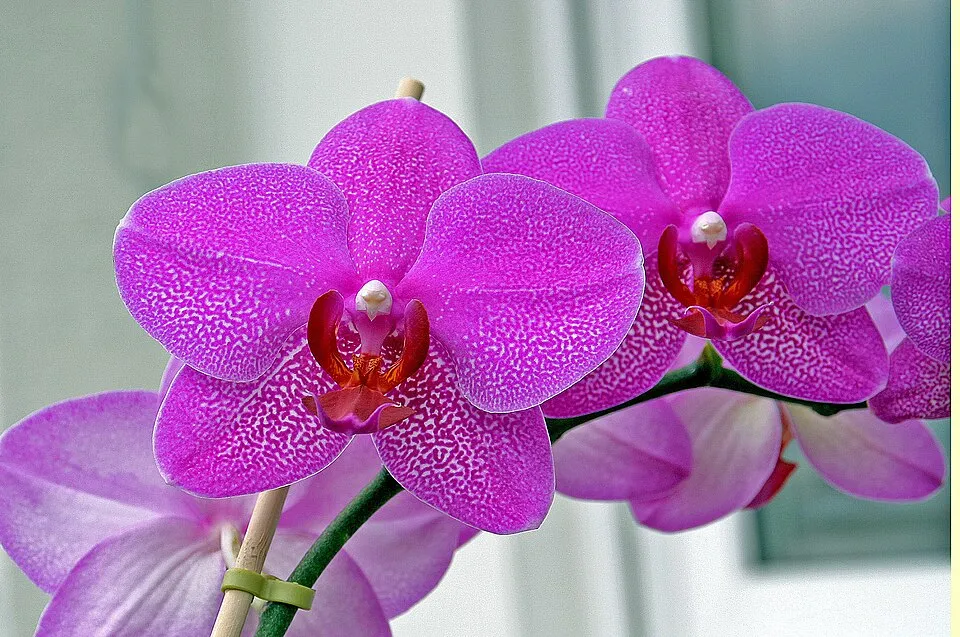
Phalaenopsis amabilis, commonly known as the Moon Orchid or Moth Orchid, is a stunning epiphytic orchid species celebrated for its elegant and long-lasting flowers. Native to the warm, humid tropical rainforests of northern Australia, Indonesia, and surrounding islands, it thrives by attaching itself to trees, absorbing moisture and nutrients from the air and rain rather than soil. Morphologically, the plant features broadly oval, fleshy, and glossy green leaves that can reach up to 20 inches (50 cm) in length, providing a lush, evergreen appeal.
From its compact base emerges a tall, arching flower stalk, often growing up to 40 inches (100 cm) high, which can bear 20-30 individual blooms. These exquisite flowers, typically up to 4 inches (10 cm) across, are pure white, resembling moths in flight, hence one of its common names. They are often adorned with a distinctive white and yellow lip, sometimes marked with a red throat, adding to their intricate beauty.
As a foundational species within the Orchidaceae family, Phalaenopsis amabilis holds significant horticultural importance, being a primary parent for countless modern Phalaenopsis hybrids. Its graceful appearance and adaptability have made it one of the most popular and widely cultivated ornamental orchids globally, and it proudly serves as the national flower of Indonesia.
Trusted Scientific References
1. Authoritative external sources for Phalaenopsis amabilis
1.1 Wikipedia — Phalaenopsis amabilis
1.2 Kew POWO (Plants of the World Online)
1.3 PubMed — peer-reviewed research
1.4 NCBI Taxonomy Browser
1.5 GBIF — Global Biodiversity
1.6Phalaenopsis Amabilis should be interpreted through verified botanical identity, practical care, and responsible safety language. This recovery note adds the missing context needed for a complete profile: match light to the plant's habit, use well-drained soil, water according to season, and avoid unsupported medicinal or edible claims. For publishing, the plant can be presented as a source-backed indoor plant with clear care guidance, common problem diagnosis, and conservative safety wording.
1.1.Phalaenopsis Amabilis — Highlights
- ✓Common Names — Moon Orchid, Moth Orchid.
- ✓Botanical Name — Phalaenopsis amabilis.
- ✓Family — Orchidaceae.
- ✓Growth Habit — Epiphytic, growing on other plants for physical support.
- ✓Flower Characteristics — Large, fragrant, pure white blooms resembling moths, often with distinctive yellow and red markings on the lip.
- ✓Foliage — Broad, fleshy, elliptical, and glossy green leaves, providing year-round appeal.
- ✓Native Range — Indigenous to northern Australia, Indonesia, and surrounding islands.
- ✓Cultural Significance — Holds the esteemed status as the national flower of Indonesia.
- ✓Indoor Air Quality — Known for its ability to help purify indoor air by removing certain volatile organic compounds.
- ✓Non — Toxic Status — Universally recognized as non-toxic to both humans and household pets.
1.2.Phalaenopsis Amabilis — At-a-Glance Summary
- ✓Elegant epiphytic orchid known for its stunning, long-lasting white 'moth-like' flowers.
- ✓Native to tropical regions of Southeast Asia and Australia, thriving in warm, humid conditions.
- ✓Primarily valued as an ornamental houseplant and for its air-purifying qualities.
- ✓Non-toxic to humans and pets, making it a safe choice for indoor environments.
- ✓Requires bright, indirect light, specialized orchid potting mix, and consistent moisture.
- ✓Lacks traditional or scientifically documented direct medicinal uses, unlike some other orchid species.
2.Phalaenopsis Amabilis — Scientific Identity
3.Phalaenopsis Amabilis — Key Data
4.Phalaenopsis Amabilis — Physical Description
5.Phalaenopsis Amabilis — Ecological Habitat
6.Phalaenopsis Amabilis — Folk Medicine Applications
7.Phalaenopsis Amabilis — Phytochemistry
- ✓Specific medicinal chemical constituents for Phalaenopsis amabilis are not widely documented or utilized in traditional medicine or industry. However, like all living plants, it contains a range of general biochemical compounds essential for its life processes and ornamental characteristics:
- ✓General Plant Metabolites — Contains fundamental biological compounds such as carbohydrates (sugars, starch), proteins, lipids, and nucleic acids, crucial for energy, growth, and cellular functions.
- ✓Photosynthetic Pigments — Chlorophylls (a and b) are present in its lush green leaves, facilitating photosynthesis. Carotenoids are also found, offering photoprotection and contributing to subtle colorations.
- ✓Anthocyanins — While the primary flowers are white, some Phalaenopsis species and hybrids contain anthocyanins, which are water-soluble pigments responsible for red, purple, and blue hues, and are known for their antioxidant properties.
- ✓Flavonoids — A class of polyphenolic compounds widely distributed in plants, potentially present in trace amounts, known for antioxidant and anti-inflammatory activities, though specific profiles for P. amabilis are not extensively studied.
- ✓Volatile Organic Compounds (VOCs) — The flowers release various volatile esters, aldehydes, and alcohols that contribute to their characteristic, often subtle, fragrance, which are key for pollinator attraction.
- ✓Polysaccharides — Complex carbohydrates found in cell walls and as energy reserves within the plant, contributing to its structural integrity and metabolic processes.
- ✓Phytosterols — Plant sterols are present in cell membranes, playing a role in structural stability and signaling pathways, similar to cholesterol in animals.
- ✓Alkaloids (Potential Trace) — While not a prominent feature, some orchid species are known to produce various alkaloids, which can have diverse biological activities, though their specific presence and medicinal relevance in P. amabilis are not established.
8.Phalaenopsis Amabilis — Evidence-Based Benefits
- ✓While Phalaenopsis amabilis is not traditionally documented for direct medicinal benefits in established systems like Ayurveda or TCM, its presence and properties offer several indirect advantages and areas of potential interest:
- ✓Air Purification — Helps improve indoor air quality by absorbing volatile organic compounds (VOCs) such as xylene and toluene, contributing to a healthier breathing environment.
- ✓Stress Reduction — The aesthetic appeal and natural presence of living plants, particularly beautiful orchids, are known to lower psychological and physiological stress levels.
- ✓Mood Enhancement — Cultivating or simply observing Phalaenopsis amabilis can foster positive emotional states, reduce feelings of anxiety, and contribute to overall mental well-being.
- ✓Aesthetic Therapy — Its elegant, long-lasting blooms provide visual pleasure and can create a calming, therapeutic ambiance in homes, offices, and healthcare settings.
- ✓Humidity Regulation — Through natural transpiration, the plant subtly releases moisture into the air, which can slightly increase ambient humidity, potentially benefiting respiratory comfort in dry indoor environments.
- ✓Non-toxic — Phalaenopsis amabilis is confirmed as non-toxic to humans and common household pets like cats and dogs, making it a safe ornamental choice without ingestion concerns.
- ✓Horticultural Therapy — Engaging in the care and cultivation of this orchid offers a rewarding activity that promotes mindfulness, patience, and a sense of accomplishment.
- ✓Focus Improvement — Studies suggest that the presence of plants in workspaces can enhance concentration, creativity, and overall productivity.
- ✓Bio-indicator Potential — Its sensitivity to environmental conditions like light, temperature, and humidity could indirectly serve as a natural indicator of indoor climate stability.
- ✓Cultural Significance — As the national flower of Indonesia, it holds cultural and symbolic value, fostering a connection to nature and heritage.
- ✓Potential Future Research — Like other members of the diverse Orchidaceae family, Phalaenopsis amabilis may harbor undiscovered phytochemicals with pharmacological potential, awaiting further scientific investigation.
- ✓Indirect Ecosystem Support — Its widespread cultivation supports horticultural industries and promotes an appreciation for plant biodiversity.
9.Phalaenopsis Amabilis — Safety & Side Effects
9.1.Phalaenopsis Amabilis — Reported Side Effects
- ✓Given that Phalaenopsis amabilis is not typically used for medicinal purposes, direct systemic side effects are not applicable. However, certain issues can arise from improper handling or environmental factors:
- ✓Allergic Reactions (Rare) — While uncommon, individuals highly sensitive to plant materials might experience mild skin irritation upon direct contact with sap or pollen, though orchid pollen is not airborne.
- ✓Root Rot — Overwatering or inadequate drainage in the potting medium can lead to root rot, a common issue that can severely damage or kill the plant.
- ✓Pest Infestations — Poor growing conditions can make the plant susceptible to common orchid pests such as mealybugs, spider mites, or scale insects, requiring intervention.
- ✓Fungal/Bacterial Diseases — Excessive humidity combined with poor air circulation can lead to fungal or bacterial leaf spots and crown rot, impacting plant health.
- ✓Environmental Stress Symptoms — Sudden changes in light, temperature, or humidity can cause bud blast (flower bud drop), leaf yellowing, or overall plant decline.
- ✓No Known Medicinal Adverse Effects — As it is not ingested or applied medicinally, it does not carry risks of drug interactions or systemic adverse reactions associated with herbal remedies.
9.2.Phalaenopsis Amabilis — Risk Assessment
- ✓Phalaenopsis amabilis is widely regarded as a very safe plant, particularly for indoor environments:
- ✓Non-toxic to Humans and Pets — It is confirmed by major botanical and veterinary sources to be non-toxic upon ingestion by humans, cats, and dogs, making it ideal for family homes.
- ✓Minimal Allergenic Risk — The plant produces heavy, sticky pollen that is not easily airborne, significantly reducing the risk of respiratory allergic reactions associated with pollen.
- ✓Topical Safety — Generally safe for skin contact; however, as a best practice, individuals with sensitive skin should wash hands after handling any plant material.
- ✓No Documented Drug Interactions — Due to its lack of medicinal use, there are no known or documented interactions with pharmaceutical medications or other herbal supplements.
- ✓Environmental Friendliness — Poses no known ecological risks when cultivated responsibly as an ornamental houseplant.
- ✓Safe for Indoor Air Quality — Contributes positively to indoor air quality by absorbing pollutants, without releasing any known harmful compounds itself.
- ✓Responsible Sourcing — Ensure purchasing plants from reputable nurseries to guarantee healthy, disease-free specimens that have not been treated with harmful chemicals.
10.Phalaenopsis Amabilis — Preparations & Uses
- ✓Phalaenopsis amabilis is primarily utilized for its ornamental value and general well-being contributions, rather than direct medicinal applications:
- ✓Ornamental Display — Primarily cultivated and displayed as an indoor ornamental plant to enhance aesthetic appeal in homes, offices, and public spaces.
- ✓Air Purification — Positioned in indoor environments to leverage its natural ability to help filter certain airborne toxins, thereby contributing to healthier indoor air quality.
- ✓Interior Design Element — Used in floral arrangements, terrariums, and interior landscaping to add a touch of tropical elegance and sophistication.
- ✓Gifting & Decoration — A popular choice for gifts, celebrations, and festive decorations due to its beautiful, long-lasting flowers and symbolic grace.
- ✓Horticultural Therapy — Engaging in the care of Phalaenopsis amabilis can serve as a calming and rewarding activity, promoting mental relaxation and a sense of accomplishment.
- ✓Educational Specimen — Utilized in botanical gardens and educational settings to showcase epiphytic growth, orchid morphology, and plant diversity.
- ✓Non-toxic Greenery — Provides a safe and beautiful plant option for households with children and pets, eliminating concerns about accidental ingestion.
- ✓Aesthetic Enhancement — Its presence contributes to a visually stimulating and pleasant environment, which can indirectly support a positive mood and reduce stress.
11.Phalaenopsis Amabilis — Cultivation & Care
- ✓Cultivating Phalaenopsis amabilis successfully requires attention to its specific epiphytic needs:
- ✓Light Requirements — Provide bright, indirect light; avoid direct sunlight which can scorch leaves. East or west-facing windows are often ideal.
- ✓Potting Medium — Use a specialized, well-draining orchid potting mix, typically composed of bark chips, sphagnum moss, perlite, and charcoal, to ensure adequate air circulation around the roots.
- ✓Watering Schedule — Water thoroughly when the top inch of the potting medium feels dry, usually once a week; ensure all excess water drains out and avoid letting the plant sit in standing water or water accumulating in the leaf crown.
- ✓Temperature & Humidity — Thrives in warm conditions, with ideal daytime temperatures between 75-85°F (24-29°C) and nighttime temperatures between 61-66°F (16-19°C); maintain high humidity levels (50-80%) using a humidity tray or humidifier.
- ✓Air Circulation — Essential for root health and preventing fungal diseases; ensure good air movement around the plant but protect it from strong drafts.
- ✓Fertilization — Apply a balanced, water-soluble orchid-specific fertilizer (e.g., 20-20-20) every other week during the growing season, reducing to monthly during dormancy or winter.
- ✓Pruning & Repotting — After flowers fade, you can cut the spike just above a node for potential reblooming or remove entirely if it browns; repot every 1-2 years or when the medium breaks down, ideally after blooming.
- ✓Propagation — Most commonly propagated from keikis (small plantlets) that develop on the flower spikes, which can be carefully removed and potted once they develop roots.
Reviewed by the Flora Medical Global Botanical Review Panel
Multi-disciplinary editorial group · Botany · Ethnobotany · Herbal-medicine literature
Who reviewed this: This page was checked by the Flora Medical Global Botanical Review Panel — an in-house editorial group of botany graduates, ethnobotany researchers, and horticulture practitioners who collectively maintain our 7,000+ plant encyclopedia. Meet the team.
Our 4-step verification process
1. Taxonomic verification
Scientific names and synonyms cross-checked against Kew POWO, World Flora Online, and The Plant List.
2. Phytochemical & medicinal cross-reference
Active compounds, traditional uses, and reported activities are cross-referenced with PubMed, USDA Dr. Duke's database, and peer-reviewed ethnobotanical literature.
3. Conservation & distribution check
Distribution, ecology, and conservation status confirmed against GBIF occurrence records and the IUCN Red List.
4. Editorial & safety review
Every entry passes an editorial pass for clarity, originality, and safety notices (toxicity, contraindications, dosage caveats) before publication.
Last reviewed:
Important medical disclaimer: This content is for educational and research purposes only. It is not medical advice and is not a substitute for consultation with a licensed healthcare provider. Do not use any herb to self-treat a medical condition without professional guidance.
Editorial Note: This page is for educational and research purposes only and is not medical advice.
Written by: Flora Medical Global Editorial Team
Reviewed by: Flora Medical Global Botanical Review Panel
Last Updated: June 15, 2026





Phalaenopsis Amabilis — Comments & Community Reviews
Rate this plant