
Medical Disclaimer: This content is for educational purposes only. It is not medical advice. Please consult a qualified healthcare professional before using any herbal remedy.
Safety Overview
1.Phedimus Spurius — Introduction & Highlights
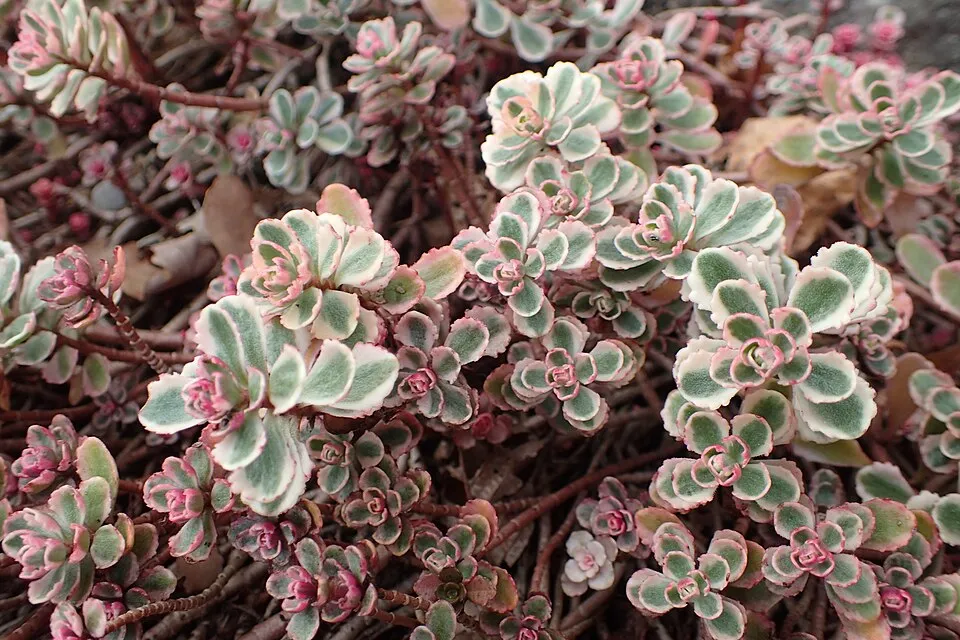
Phedimus spurius, commonly known as Caucasian stonecrop or false stonecrop, is a resilient succulent perennial belonging to the Crassulaceae family. Native to the rugged landscapes of the Caucasus region, encompassing southeastern Europe and western Asia, this plant has become a popular horticultural subject due to its aesthetic appeal, drought tolerance, and minimal maintenance requirements. Architecturally, Phedimus spurius forms dense, low-growing mats or cushions of foliage, typically reaching a modest height of 10-15 cm but spreading extensively. The leaves are fleshy, obovate to spatulate, and often arranged oppositely or in whorls along the stems.
A remarkable feature is their chromatic plasticity, shifting from a vibrant green in shaded conditions to a deep reddish-bronze or purplish hue when exposed to intense sunlight and cooler temperatures. This striking color change is attributed to the synthesis of anthocyanin pigments, serving as a photoprotective mechanism. The stems are succulent and somewhat rigid, contributing to the plant's ground-covering habit. During the summer, Phedimus spurius produces a profusion of small, star-shaped flowers, typically borne in terminal cymes.
These inflorescences are commonly vibrant pink or deep rose, creating a beautiful contrast with the foliage and attracting various pollinators. Each flower features five distinct petals and eventually develops into small seed capsules. In colder climates, the foliage often intensifies in color and may persist through winter, while in regions with severe frosts, the aerial parts might die back, with regeneration occurring from its robust root system in spring. Phedimus spurius is exceptionally well-adapted to arid and semi-arid conditions, thriving in well-drained soils and requiring minimal watering, a testament to its efficient water storage capabilities.
Trusted Scientific References
1. Authoritative external sources for Phedimus Spurius
1.1 Wikipedia — Phedimus Spurius
1.2 Kew POWO (Plants of the World Online)
1.3 PubMed — peer-reviewed research
1.4 NCBI Taxonomy Browser
1.5 GBIF — Global Biodiversity
1.1.Phedimus Spurius — Standout Qualities
- ✓Succulent foliage with vibrant green to reddish — bronze hues.
- ✓Drought — tolerant and low-maintenance groundcover.
- ✓Star — shaped pink or rose flowers bloom in summer.
- ✓Forms dense, spreading — Forms dense, spreading mats, ideal for rock gardens.
- ✓Native to the — Native to the Caucasus region, naturalized in parts of North America.
- ✓Exhibits Crassulacean Acid — Exhibits Crassulacean Acid Metabolism (CAM) for water efficiency.
- ✓Cold — hardy perennial (USDA Zones 3-9).
- ✓Contains beneficial phenolic — Contains beneficial phenolic compounds and anthocyanins.
- ✓Attracts pollinators like — Attracts pollinators like bees and butterflies.
- ✓Easy propagation via — Easy propagation via cuttings or division.
1.2.Phedimus Spurius — Quick Summary
- ✓Drought-tolerant succulent perennial from the Caucasus region.
- ✓Forms dense mats with colorful foliage and pink star-shaped flowers.
- ✓Contains flavonoids, anthocyanins, and organic acids with potential antioxidant benefits.
- ✓Primarily ornamental, with limited traditional medicinal use specifically for Phedimus spurius.
- ✓Easy to cultivate in well-drained soil and full sun.
- ✓Generally safe for topical use, but internal consumption is not recommended.
2.Phedimus Spurius — Scientific Profile
3.Phedimus Spurius — Botanical Stats
4.Phedimus Spurius — Plant Morphology
5.Phedimus Spurius — Habitat & Distribution
6.Phedimus Spurius — Cultural & Traditional Roles
7.Phedimus Spurius — Active Compounds
- ✓Flavonoids — Key compounds like quercetin and kaempferol derivatives are present, known for their antioxidant, anti-inflammatory, and protective cellular actions.
- ✓Anthocyanins — These water-soluble pigments, responsible for the plant's reddish-purple coloration, act as potent antioxidants and provide photoprotection.
- ✓Organic Acids — Due to its Crassulacean Acid Metabolism (CAM) photosynthesis, Phedimus spurius contains malic acid, citric acid, and isocitric acid, which contribute to its tart taste and metabolic functions.
- ✓Triterpenoids — Compounds such as ursolic acid and oleanolic acid derivatives may be present, offering potential anti-inflammatory and hepatoprotective activities.
- ✓Polysaccharides — Mucilaginous polysaccharides contribute to the succulent texture and may offer soothing and wound-healing properties.
- ✓Tannins — These polyphenolic compounds provide astringent effects and contribute to antioxidant and antimicrobial activities.
- ✓Alkaloids — While generally in low concentrations, some Sedum species may contain trace amounts of alkaloids, though their specific roles are not well-defined for Phedimus spurius.
- ✓Phenolic Acids — Gallic acid and caffeic acid are examples of phenolic acids that contribute to the plant's overall antioxidant capacity.
8.Phedimus Spurius — Research Insights
- ✓Anti-inflammatory Properties — Traditionally, related Sedum species have been used to alleviate inflammation due to the presence of flavonoids and other bioactive compounds that modulate inflammatory pathways.
- ✓Wound Healing Support — The mucilaginous content and potential antioxidant activity in Phedimus spurius may contribute to protecting skin cells and promoting the regeneration of tissues, assisting in minor wound care.
- ✓Antioxidant Activity — Rich in phenolic compounds and anthocyanins, Caucasian stonecrop exhibits antioxidant effects, helping to neutralize free radicals and reduce oxidative stress in the body.
- ✓Astringent Effects — Certain constituents in Phedimus spurius may possess astringent qualities, which can help to constrict tissues, potentially useful for minor cuts or skin irritations.
- ✓Diuretic Potential — Some Crassulaceae members are noted for mild diuretic properties, which could aid in fluid balance, although specific research on Phedimus spurius is limited.
- ✓Skin Soothing — The succulent sap, similar to Aloe vera, might offer a cooling and soothing effect on irritated or sun-exposed skin, providing relief from discomfort.
- ✓Digestive Aid (Traditional) — In some traditional systems, related succulents have been hypothetically used to soothe gastrointestinal discomfort, likely due to mucilage content.
- ✓Antimicrobial Action — Preliminary studies on certain Sedum species suggest mild antimicrobial properties, which could help protect against minor topical infections.
8.1.Phedimus Spurius — Therapeutic Indications
9.Phedimus Spurius — Precautions & Warnings
9.1.Phedimus Spurius — Reported Side Effects
- ✓Allergic Reactions — Rare skin irritation or contact dermatitis may occur in sensitive individuals upon direct contact with the sap of Phedimus spurius.
- ✓Gastrointestinal Upset — Ingesting large quantities of Caucasian stonecrop may lead to mild digestive discomfort, nausea, or diarrhea due to its organic acid content.
- ✓Photosensitivity — While unconfirmed for Phedimus spurius, some Crassulaceae members can cause photosensitivity in susceptible individuals.
- ✓Bitterness/Unpalatability — The plant's taste may be unpalatable, deterring ingestion but also indicating potential presence of compounds not suitable for large consumption.
- ✓Drug Interactions — No known specific drug interactions for Phedimus spurius; however, caution is advised with diuretic medications if consumed internally.
9.2.Phedimus Spurius — Risk Assessment
- ✓Pregnancy and Lactation — Insufficient data exists; pregnant and breastfeeding individuals should avoid internal use of Phedimus spurius.
- ✓Children — Keep out of reach of children; internal consumption is not recommended due to lack of safety data and potential gastrointestinal upset.
- ✓Allergies — Individuals with known plant allergies, especially to Crassulaceae family members, should exercise caution.
- ✓Internal Consumption — Phedimus spurius is primarily an ornamental plant; internal medicinal use is not well-documented or recommended without expert guidance.
- ✓Skin Sensitivity — Perform a patch test before extensive topical application to check for any allergic reactions or skin irritation.
- ✓Horticultural Use — Generally safe for handling in gardening, but wear gloves if you have sensitive skin.
10.Phedimus Spurius — How to Use
- ✓Ornamental Groundcover — Widely used as a low-maintenance, drought-tolerant groundcover in rock gardens, borders, and green roofs due to its spreading habit and attractive foliage.
- ✓Topical Poultice (Traditional) — Historically, related Sedum species leaves might be crushed and applied as a poultice for minor cuts, burns, or insect stings to soothe and aid healing.
- ✓Infusion (Hypothetical) — If medicinal properties are confirmed, dried leaves could potentially be steeped in hot water to create an infusion for internal use, though this is not a common practice for Phedimus spurius.
- ✓Tincture Preparation (Experimental) — An ethanolic extract of the aerial parts could be prepared for concentrated topical or internal application, subject to further research and safety verification.
- ✓Succulent Juice/Sap Application — The fresh sap from the fleshy leaves might be directly applied to skin irritations for a cooling and soothing effect, similar to aloe vera.
- ✓Culinary Use (Caution) — While some Sedum species have edible leaves, Phedimus spurius is not widely consumed, and caution is advised due to potential unknown compounds or mild bitterness.
11.Phedimus Spurius — Propagation & Care
- ✓Soil Requirements — Phedimus spurius thrives in well-drained, gritty soil; a mix of sand, perlite, and a small amount of compost is ideal to prevent root rot.
- ✓Light Exposure — Full sun to partial shade is preferred, with more sun enhancing the vibrant reddish foliage coloration of Caucasian stonecrop.
- ✓Watering — As a succulent, it requires minimal watering; allow the soil to dry out completely between waterings, especially during dormant periods.
- ✓Temperature and Hardiness — This plant is remarkably cold-hardy (USDA Zones 3-9), tolerating frost, but prefers temperate conditions.
- ✓Propagation — Easily propagated by stem cuttings, division, or seeds; stem cuttings root readily in well-drained soil.
- ✓Fertilization — Fertilize sparingly, if at all; a balanced, diluted liquid fertilizer once in spring is sufficient for Phedimus spurius.
- ✓Pests and Diseases — Generally pest-free, but watch for slugs and snails in moist conditions, and ensure good air circulation to prevent fungal issues.
Reviewed by the Flora Medical Global Botanical Review Panel
Multi-disciplinary editorial group · Botany · Ethnobotany · Herbal-medicine literature
Who reviewed this: This page was checked by the Flora Medical Global Botanical Review Panel — an in-house editorial group of botany graduates, ethnobotany researchers, and horticulture practitioners who collectively maintain our 7,000+ plant encyclopedia. Meet the team.
Our 4-step verification process
1. Taxonomic verification
Scientific names and synonyms cross-checked against Kew POWO, World Flora Online, and The Plant List.
2. Phytochemical & medicinal cross-reference
Active compounds, traditional uses, and reported activities are cross-referenced with PubMed, USDA Dr. Duke's database, and peer-reviewed ethnobotanical literature.
3. Conservation & distribution check
Distribution, ecology, and conservation status confirmed against GBIF occurrence records and the IUCN Red List.
4. Editorial & safety review
Every entry passes an editorial pass for clarity, originality, and safety notices (toxicity, contraindications, dosage caveats) before publication.
Last reviewed:
Important medical disclaimer: This content is for educational and research purposes only. It is not medical advice and is not a substitute for consultation with a licensed healthcare provider. Do not use any herb to self-treat a medical condition without professional guidance.
Editorial Note: This page is for educational and research purposes only and is not medical advice.
Written by: Flora Medical Global Editorial Team
Reviewed by: Flora Medical Global Botanical Review Panel
Last Updated: June 15, 2026





Phedimus Spurius — Comments & Community Reviews
Rate this plant