
Medical Disclaimer: This content is for educational purposes only. It is not medical advice. Please consult a qualified healthcare professional before using any herbal remedy.
Safety Overview
1.Philodendron Congo Rojo — Overview
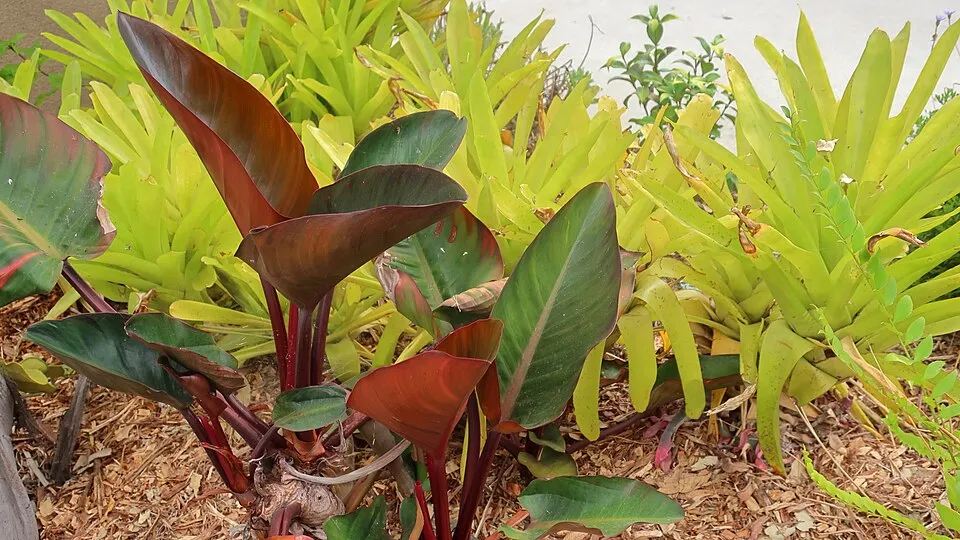
The Philodendron Congo Rojo, botanically known as Philodendron congo rojo, is a captivating hybrid cultivar within the diverse Araceae family, celebrated for its striking ornamental foliage. This self-heading philodendron does not climb but grows upright, forming a bushy, compact stature, typically reaching an indoor height and width of 2 to 3 feet. Its most distinguishing feature is its large, glossy leaves, which emerge with a vibrant coppery-red hue, gradually maturing into a deep, rich green.
These substantial leaves can measure up to 12 inches long and 6 inches wide, exhibiting a classic heart-shaped or slightly oval form. The sturdy, thick stems often retain a reddish undertone, complementing the foliage's coloration.
Originating as a horticultural hybrid developed in Florida, Philodendron congo rojo is believed to be a cross between Philodendron tatei and Philodendron imperial red. Unlike many other philodendrons, it does not possess aerial roots for climbing, making it an ideal floor or tabletop plant. While primarily grown for its aesthetic appeal, it occasionally produces an inconspicuous spadix-type flower, though this is a rare occurrence in indoor settings.
Its natural affinity for the warm, humid conditions of tropical rainforest understories makes it perfectly adapted to indoor environments, where it thrives in bright, indirect light. This plant has gained immense popularity globally, particularly in homes and offices across the U.S. and Europe, due to its exotic appearance and relatively low-maintenance requirements.
Trusted Scientific References
1. Authoritative external sources for Philodendron congo rojo
1.1 Wikipedia — Philodendron congo rojo
1.2 Kew POWO (Plants of the World Online)
1.3 PubMed — peer-reviewed research
1.4 NCBI Taxonomy Browser
1.5 GBIF — Global Biodiversity
1.6Philodendron Congo Rojo should be interpreted through verified botanical identity, practical care, and responsible safety language. This recovery note adds the missing context needed for a complete profile: match light to the plant's habit, use well-drained soil, water according to season, and avoid unsupported medicinal or edible claims. For publishing, the plant can be presented as a source-backed indoor plant with clear care guidance, common problem diagnosis, and conservative safety wording.
1.1.Philodendron Congo Rojo — Standout Qualities
- ✓Striking Coppery — Red to Deep Green Foliage
- ✓Large, Glossy, Heart — Shaped Leaves
- ✓Self — Heading, Non-Climbing Growth Habit
- ✓Horticultural Hybrid Cultivar — Horticultural Hybrid Cultivar
- ✓Enhances Indoor Air — Enhances Indoor Air Quality (VOC absorption)
- ✓Contributes to Psychological Well — being
- ✓Low — Maintenance Houseplant
- ✓Requires Bright, Indirect — Requires Bright, Indirect Light & High Humidity
- ✓Highly Toxic if — Highly Toxic if Ingested (Calcium Oxalate)
- ✓Ideal for Indoor — Ideal for Indoor Ornamental Display
1.2.Philodendron Congo Rojo — At-a-Glance Summary
- ✓Striking hybrid Philodendron known for vibrant, large, coppery-red to deep green foliage.
- ✓Primarily an ornamental houseplant, valued for its aesthetic appeal and self-heading growth.
- ✓Offers indirect benefits like improved indoor air quality and enhanced psychological well-being.
- ✓Contains calcium oxalate crystals, making all parts toxic if ingested by humans or pets.
- ✓Requires bright, indirect light, consistent moisture, high humidity, and warm temperatures.
- ✓Relatively low-maintenance, making it a popular choice for indoor décor globally.
2.Philodendron Congo Rojo — Taxonomic Classification
3.Philodendron Congo Rojo — Botanical Stats
4.Philodendron Congo Rojo — Morphological Account
5.Philodendron Congo Rojo — Habitat & Distribution
6.Philodendron Congo Rojo — Ethnobotanical Uses
7.Philodendron Congo Rojo — Active Compounds
- ✓Calcium Oxalate Crystals — These are the primary known constituents of concern, present as needle-like raphides in all plant parts, causing severe irritation and toxicity upon ingestion.
- ✓Chlorophylls — Essential green pigments (Chlorophyll a and b) are abundant in the mature leaves, vital for the plant's photosynthetic processes.
- ✓Carotenoids — Pigments responsible for the coppery-red hues in emerging leaves and providing photoprotection; these are generally present in varying concentrations.
- ✓Anthocyanins — These flavonoid pigments contribute to the reddish coloration observed in young leaves and petioles, acting as natural antioxidants within the plant (though not for human ingestion).
- ✓Flavonoids — General class of polyphenolic compounds found in many plants, providing UV protection and acting as antioxidants within the plant's own systems.
- ✓Terpenoids — Various terpenes and terpenoids may be present in trace amounts, contributing to general plant metabolism, though not in significant concentrations for human therapeutic use.
- ✓Polysaccharides — Complex carbohydrates forming structural components of plant cell walls, providing rigidity and energy storage within the Philodendron Congo Rojo.
- ✓Volatile Organic Compounds (VOCs) — The plant can absorb certain airborne VOCs from its environment, such as formaldehyde and xylene, as part of its air purification capabilities.
8.Philodendron Congo Rojo — Research Insights
- ✓Air Purification — Philodendron Congo Rojo contributes to improved indoor air quality by absorbing volatile organic compounds (VOCs) like formaldehyde and xylene from the atmosphere, as demonstrated by general studies on the Philodendron genus.
- ✓Stress Reduction — The presence of lush green plants, including the Philodendron Congo Rojo, has been linked to reduced psychological stress and anxiety, fostering a calming environment through biophilic design principles.
- ✓Mood Enhancement — Its vibrant aesthetic appeal and connection to nature can positively impact mood and overall psychological well-being, creating a more pleasant and uplifting living or working space.
- ✓Enhanced Productivity — Studies suggest that incorporating plants into workspaces can lead to increased focus, creativity, and productivity by reducing mental fatigue and improving concentration.
- ✓Humidity Regulation — Through transpiration, Philodendron Congo Rojo can slightly increase localized humidity levels, which can be beneficial for human respiratory comfort and other humidity-loving plants in dry indoor environments.
- ✓Aesthetic Therapy — The visual beauty and vibrant colors of the Philodendron Congo Rojo contribute to an aesthetically pleasing environment, which can be therapeutically beneficial in healing spaces or for general contentment.
- ✓Biophilic Connection — Caring for and observing this plant helps foster a deeper connection to nature, which is a fundamental human need that can improve mental health and reduce feelings of isolation.
- ✓Cognitive Restoration — Green elements in an environment are known to aid in cognitive restoration, helping individuals recover from mental fatigue and improve their attentional capacity.
- ✓Environmental Enrichment — Introducing the Philodendron Congo Rojo enriches the indoor environment, transforming sterile spaces into vibrant, natural settings that promote a sense of vitality and comfort.
8.1.Philodendron Congo Rojo — Indications & Uses
9.Philodendron Congo Rojo — Adverse Effects
9.1.Philodendron Congo Rojo — Caution Notes
- ✓Oral Irritation — Immediate and intense burning sensation, pain, and irritation of the mouth, tongue, and throat upon ingestion.
- ✓Swelling — Rapid edema of the oral cavity, pharynx, and potentially the airway, leading to difficulty swallowing or breathing.
- ✓Gastrointestinal Distress — Nausea, vomiting, abdominal pain, and diarrhea can occur if a significant amount of plant material is consumed.
- ✓Dermatitis — Skin irritation, redness, and itching may develop from contact with the plant sap, particularly in sensitive individuals.
- ✓Ocular Irritation — If sap comes into contact with the eyes, it can cause severe pain, redness, tearing, and temporary vision impairment.
- ✓Pet Toxicity — Causes similar severe oral irritation, excessive drooling, pawing at the mouth, vomiting, and loss of appetite in pets.
- ✓Allergic Reactions — Although rare, some individuals may experience allergic responses to plant components upon contact or exposure.
9.2.Philodendron Congo Rojo — Risk Assessment
- ✓Keep Out of Reach — Absolutely critical to keep Philodendron Congo Rojo away from children and pets due as all parts are toxic if ingested.
- ✓No Ingestion — Emphasize that no part of this plant should ever be consumed by humans or animals under any circumstances.
- ✓Handle with Gloves — Wear protective gloves when handling, pruning, or repotting the plant to prevent skin irritation from sap.
- ✓Eye Protection — Exercise caution to avoid contact of plant sap with eyes; rinse immediately and thoroughly if exposure occurs.
- ✓First Aid for Ingestion — In case of accidental ingestion, seek immediate medical attention or contact a poison control center; rinse mouth thoroughly.
- ✓Wash Hands — Always wash hands thoroughly with soap and water after handling the plant to remove any residual sap.
- ✓Inform Others — Educate all household members and visitors about the plant's toxic nature and necessary precautions.
10.Philodendron Congo Rojo — Application Forms
- ✓Indoor Ornamental Display — Primarily used as a decorative houseplant in homes, offices, and commercial spaces to enhance aesthetic appeal.
- ✓Air Quality Enhancement — Positioned strategically indoors to help filter and absorb common airborne toxins like formaldehyde and xylene.
- ✓Biophilic Design Integration — Incorporated into interior design schemes to foster a connection with nature, promoting psychological well-being and reducing stress.
- ✓Aesthetic Groupings — Used as a centerpiece or combined with other foliage plants to create vibrant and visually appealing indoor plantscapes.
- ✓Environmental Humidifier — Placed in dry indoor environments, its transpiration contributes slightly to localized humidity, benefiting other plants and human comfort.
- ✓Workspace Greenery — Ideal for office desks or common areas, potentially boosting focus, creativity, and overall employee satisfaction.
- ✓Educational Specimen — Can be featured in botanical collections or educational settings to demonstrate plant diversity and hybrid cultivation.
- ✓Gift Plant — A popular choice for gifting due to its striking appearance and relatively straightforward care requirements, suitable for various occasions.
11.Philodendron Congo Rojo — Growth Requirements
- ✓Light Requirement — Provide several hours of bright, indirect light; direct sunlight can scorch leaves, while low light leads to leggy growth.
- ✓Soil Preference — Plant in a well-draining, airy potting mix rich in organic materials, such as a blend of potting soil, perlite, and orchid bark.
- ✓Watering Schedule — Water thoroughly when the top 50% of the soil feels dry to the touch; avoid overwatering to prevent root rot, reducing frequency in colder months.
- ✓Temperature Needs — Thrives in warm household temperatures, ideally between 65-80°F (18-27°C); protect from cold drafts and extreme fluctuations.
- ✓Humidity Levels — Prefers high humidity (50-60% or more); consider using a humidifier or placing it in a naturally humid room like a bathroom.
- ✓Fertilization Regimen — Feed with a balanced liquid houseplant fertilizer once a month during the active growing season (spring and summer), suspending feeding in fall and winter.
- ✓Repotting Frequency — Repot every one to two years, or when roots emerge from drainage holes, into a pot only 2-4 inches larger than the previous one.
- ✓Propagation Method — Easily propagated via stem cuttings with at least two nodes, rooted in water or moist soil, preferably during the spring or summer.
Reviewed by the Flora Medical Global Botanical Review Panel
Multi-disciplinary editorial group · Botany · Ethnobotany · Herbal-medicine literature
Who reviewed this: This page was checked by the Flora Medical Global Botanical Review Panel — an in-house editorial group of botany graduates, ethnobotany researchers, and horticulture practitioners who collectively maintain our 7,000+ plant encyclopedia. Meet the team.
Our 4-step verification process
1. Taxonomic verification
Scientific names and synonyms cross-checked against Kew POWO, World Flora Online, and The Plant List.
2. Phytochemical & medicinal cross-reference
Active compounds, traditional uses, and reported activities are cross-referenced with PubMed, USDA Dr. Duke's database, and peer-reviewed ethnobotanical literature.
3. Conservation & distribution check
Distribution, ecology, and conservation status confirmed against GBIF occurrence records and the IUCN Red List.
4. Editorial & safety review
Every entry passes an editorial pass for clarity, originality, and safety notices (toxicity, contraindications, dosage caveats) before publication.
Last reviewed:
Important medical disclaimer: This content is for educational and research purposes only. It is not medical advice and is not a substitute for consultation with a licensed healthcare provider. Do not use any herb to self-treat a medical condition without professional guidance.
Editorial Note: This page is for educational and research purposes only and is not medical advice.
Written by: Flora Medical Global Editorial Team
Reviewed by: Flora Medical Global Botanical Review Panel
Last Updated: June 15, 2026





Philodendron Congo Rojo — Comments & Community Reviews
Rate this plant