
Medical Disclaimer: This content is for educational purposes only. It is not medical advice. Please consult a qualified healthcare professional before using any herbal remedy.
Safety Overview
1.Phlomis Russeliana — Plant Snapshot
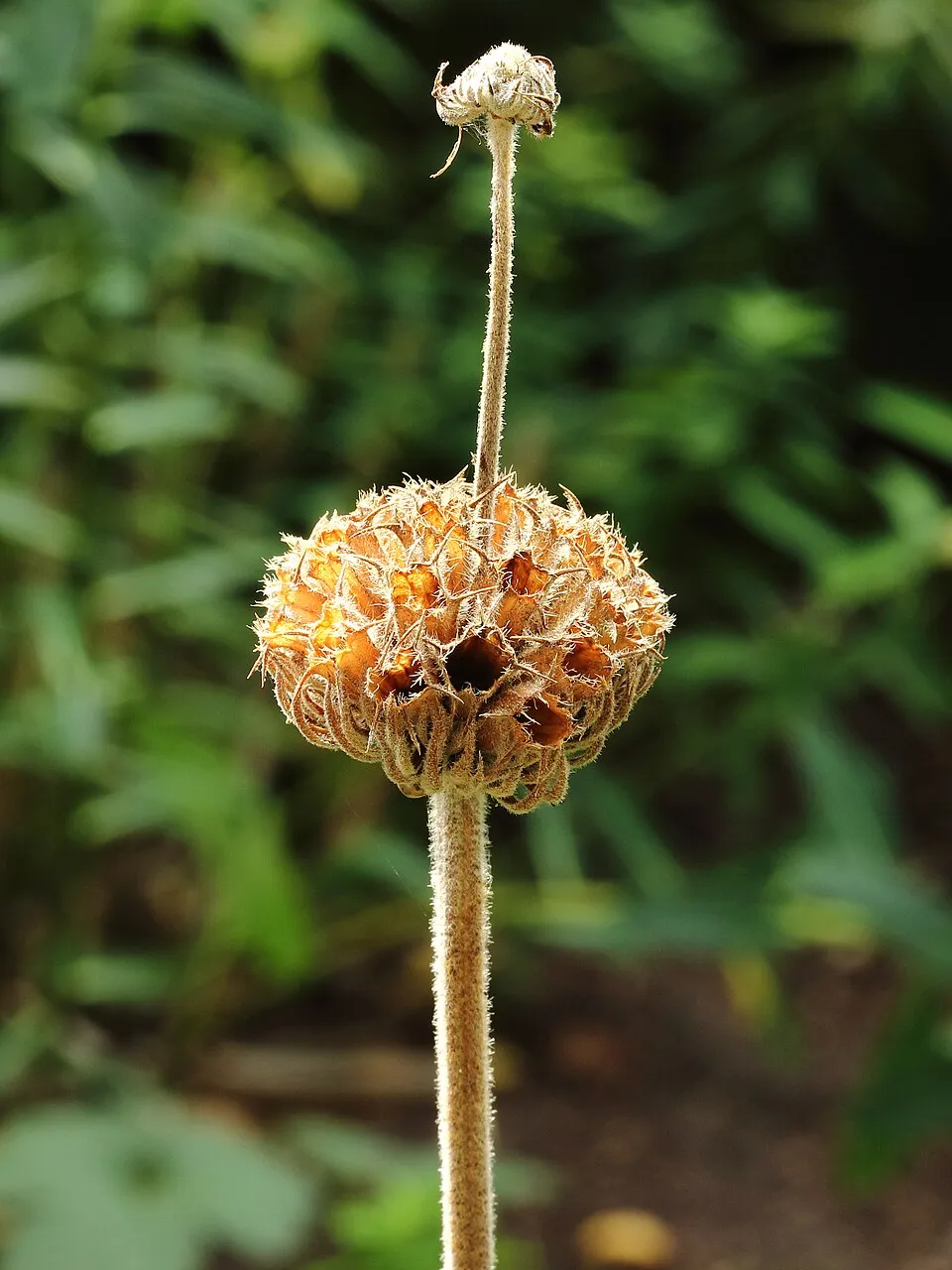
Phlomis russeliana, commonly known as Jerusalem Sage or Turkish Sage, is a captivating perennial subshrub native to the Eastern Mediterranean, specifically Turkey, where it thrives in hard and softwood forest environments at elevations ranging from 1,000 to 5,500 feet. This robust member of the Lamiaceae family is celebrated for its distinctive architectural form, typically reaching 1-2 feet in height with a spread of 4-5 feet due to its wide-ranging rhizomatous growth. The plant features large, heart-shaped to ovate leaves, measuring 4-8 inches long, which are softly woolly and olive-green, particularly on their undersides, contributing to its excellent drought tolerance and heat resistance. These striking leaves form a dense basal rosette from which sturdy, square stems emerge.
The true botanical spectacle unfolds from late spring through summer, as unbranched flowering stems ascend 2-3 feet above the foliage. These stems bear stunning whorls of hooded, pale yellow to creamy white flowers, typically arranged in 3-5 distinct tiers. The zygomorphic flowers, characteristic of the mint family, are perfectly adapted for insect pollination, attracting bees and butterflies. Even after flowering, the persistent, papery calyces add significant architectural interest, ensuring the plant remains an attractive feature in the garden year-round.
Phlomis russeliana flourishes in full sun to light shade and requires well-drained, poor to moderately fertile soils, making it an ideal candidate for xeriscaping, low-maintenance gardens, and as an effective weed-smothering groundcover. Its resilience and unique form make it a valuable asset for adding texture and structure to various landscape designs.
Trusted Scientific References
1. Authoritative external sources for Phlomis russeliana
1.1 Wikipedia — Phlomis russeliana
1.2 Kew POWO (Plants of the World Online)
1.3 PubMed — peer-reviewed research
1.4 NCBI Taxonomy Browser
1.5 GBIF — Global Biodiversity
1.6Phlomis Russeliana should be interpreted through verified botanical identity, practical care, and responsible safety language. This recovery note adds the missing context needed for a complete profile: match light to the plant's habit, use well-drained soil, water according to season, and avoid unsupported medicinal or edible claims. For publishing, the plant can be presented as a source-backed garden plant with clear care guidance, common problem diagnosis, and conservative safety wording.
1.1.Phlomis Russeliana — Key Features
- ✓Botanical Name — Phlomis russeliana, also known as Jerusalem Sage or Turkish Sage.
- ✓Family — Lamiaceae (Mint family), characterized by square stems and opposite leaves.
- ✓Native Range — Endemic to Turkey, found in forests at high elevations.
- ✓Growth Habit — Spreading evergreen perennial subshrub, 1-2 ft tall, 4-5 ft wide.
- ✓Foliage — Large, heart-shaped, woolly olive-green leaves forming a basal rosette.
- ✓Flowers — Hooded, pale yellow to creamy white flowers in distinct tiered whorls.
- ✓Bloom Time — Late spring through summer, offering extended seasonal interest.
- ✓Drought Tolerance — Highly resilient to dry conditions once established.
- ✓Landscape Use — Excellent for xeriscapes, borders, groundcover, and rock gardens.
- ✓Pollinator Attraction — Attracts bees and butterflies, contributing to garden biodiversity.
1.2.Phlomis Russeliana — Quick Summary
- ✓Architectural beauty with striking tiered yellow flowers.
- ✓Drought-tolerant, low-maintenance perennial for xeriscaping.
- ✓Attracts pollinators like bees and butterflies, deer resistant.
- ✓Contains potential anti-inflammatory and antioxidant compounds.
- ✓Native to Turkey, thriving in well-drained, sunny conditions.
- ✓Primarily ornamental, with limited traditional medicinal documentation for this specific species.
2.Phlomis Russeliana — Taxonomic Classification
3.Phlomis Russeliana — Quick Facts
4.Phlomis Russeliana — Morphological Account
5.Phlomis Russeliana — Habitat & Distribution
6.Phlomis Russeliana — Historical Applications
7.Phlomis Russeliana — Active Compounds
- ✓Flavonoids — Key compounds like apigenin and luteolin derivatives are often present, acting as potent antioxidants and contributing to anti-inflammatory effects.
- ✓Phenolic Acids — Caffeic acid, rosmarinic acid, and chlorogenic acid are commonly found, known for their significant antioxidant, antimicrobial, and anti-inflammatory properties.
- ✓Iridoids — Compounds such as harpagide and ajugol may be present, contributing to anti-inflammatory and analgesic activities.
- ✓Diterpenoids — Labdane-type diterpenoids are characteristic of the Lamiaceae family, exhibiting various biological activities including antimicrobial and cytotoxic effects.
- ✓Essential Oils — Volatile compounds, though less prominent than in some other Lamiaceae, contribute to the plant's subtle aroma and may possess mild antimicrobial and insect-repellent qualities.
- ✓Triterpenes — Ursolic acid and oleanolic acid derivatives are common in Phlomis, known for their anti-inflammatory, hepatoprotective, and anticancer properties.
- ✓Glycosides — Various glycosidic compounds, including phenylethanoid glycosides, can be found, often contributing to antioxidant and immune-modulating effects.
- ✓Saponins — These compounds can have expectorant properties and may contribute to immune stimulation and cholesterol-lowering effects.
- ✓Tannins — Present in varying amounts, tannins provide astringent properties, useful in traditional medicine for wound healing and digestive complaints.
8.Phlomis Russeliana — Research Insights
- ✓Anti-inflammatory Properties — Phlomis species, including Phlomis russeliana, are noted for potential anti-inflammatory effects, often attributed to the presence of flavonoids and phenolic compounds that can modulate inflammatory pathways.
- ✓Antioxidant Activity — Rich in phenolic acids and flavonoids, Phlomis russeliana may help neutralize free radicals, protecting cells from oxidative stress and supporting overall cellular health.
- ✓Antimicrobial Potential — Extracts from Phlomis species have shown activity against various bacteria and fungi, suggesting potential use in traditional remedies for minor infections.
- ✓Digestive Support — Historically, some Lamiaceae family members are used to soothe digestive discomfort, and Phlomis russeliana may offer mild carminative or antispasmodic effects due to its aromatic compounds.
- ✓Wound Healing — Traditional applications of related Phlomis species include poultices for minor cuts and abrasions, potentially due to antiseptic and anti-inflammatory actions that aid tissue repair.
- ✓Respiratory Aid — In some traditional systems, plants with similar aromatic profiles are used to relieve symptoms of coughs and colds, possibly through expectorant or bronchodilatory effects.
- ✓Diuretic Action — Certain compounds found in Lamiaceae plants can promote increased urine output, which may assist in flushing toxins from the body and supporting kidney function.
- ✓Mood Enhancement — The presence of essential oils in aromatic plants like Phlomis russeliana can have calming or uplifting effects, contributing to a sense of well-being through aromatherapy principles.
- ✓Immune System Modulation — Bioactive compounds may help support and balance the immune system, contributing to the body's natural defense mechanisms.
- ✓Skin Health — The plant’s antioxidant and anti-inflammatory properties could be beneficial in topical applications for soothing irritated skin and promoting a healthy complexion.
8.1.Phlomis Russeliana — Indications & Uses
9.Phlomis Russeliana — Risk Profile
9.1.Phlomis Russeliana — Caution Notes
- ✓Allergic Reactions — Sensitive individuals may experience skin irritation upon contact or allergic reactions if ingested, similar to other Lamiaceae family members.
- ✓Digestive Upset — Ingesting large quantities, if used internally, could potentially lead to mild gastrointestinal discomfort such as nausea or diarrhea.
- ✓Photosensitivity — While uncommon, some plant compounds can increase skin sensitivity to sunlight in certain individuals.
- ✓Pregnancy and Lactation — Lack of safety data necessitates avoidance during pregnancy and breastfeeding.
- ✓Drug Interactions — Potential for interaction with medications, especially those affecting blood clotting or blood sugar, due to its bioactive compounds.
- ✓Hypotension — Theoretically, compounds that relax blood vessels could lead to a drop in blood pressure, although this is not well-documented for this species.
- ✓Liver or Kidney Issues — Individuals with pre-existing liver or kidney conditions should exercise caution, as metabolic processing of plant compounds could pose a risk.
9.2.Phlomis Russeliana — Clinical Safety Notes
- ✓Pregnancy and Breastfeeding — Contraindicated due to insufficient research on its effects on fetal development or infant health.
- ✓Children — Not recommended for use in children due to lack of specific safety data.
- ✓Pre-existing Conditions — Individuals with chronic medical conditions, especially liver, kidney, or cardiovascular diseases, should consult a healthcare professional before use.
- ✓Allergic History — People with known allergies to plants in the Lamiaceae family should avoid contact or ingestion.
- ✓Medication Interactions — Exercise caution if taking prescription medications, particularly anticoagulants, anti-diabetics, or hypotensives, as interactions are possible.
- ✓Dosage — Adhere strictly to traditional or professional guidance for dosage; avoid self-medication.
- ✓External Use — Perform a patch test on a small area of skin before extensive topical application to check for sensitivity.
- ✓Oral Consumption — Primarily an ornamental plant; internal use for medicinal purposes is not widely supported by modern clinical research for this specific species.
10.Phlomis Russeliana — How to Use
- ✓Ornamental Landscaping — Primarily valued for its architectural form, long-lasting blooms, and drought tolerance in gardens, xeriscapes, and perennial borders.
- ✓Dried Flower Arrangements — The persistent, papery calyces and dried flower stalks are excellent for adding structural interest to dried floral displays.
- ✓Herbal Infusion (Limited) — While not a primary medicinal herb, some Lamiaceae species are prepared as mild herbal teas; however, specific medicinal use of Phlomis russeliana is not widely documented.
- ✓Topical Application (Traditional) — Related Phlomis species have been traditionally used in poultices for minor skin irritations or wounds, though specific efficacy for P. russeliana is anecdotal.
- ✓Companion Planting — Its deer-resistant nature and ability to attract pollinators make it a good companion plant in mixed borders.
- ✓Erosion Control — Its spreading rhizomatous root system makes it useful for stabilizing slopes and preventing soil erosion in dry, sunny areas.
- ✓Aromatic Use (Limited) — The subtle aromatic compounds may be used in potpourri, although its scent is not as strong as other Lamiaceae members.
11.Phlomis Russeliana — Propagation & Care
- ✓Soil Preference — Thrives in well-drained, poor to moderately fertile soils; sandy or rocky loam is ideal to prevent root rot.
- ✓Sun Exposure — Prefers full sun to light shade, with full sun promoting the best flowering and densest growth.
- ✓Water Needs — Drought-tolerant once established, requiring low to very low irrigation; overwatering should be avoided.
- ✓Hardiness — Root hardy to approximately 0-10° F (USDA Zones 6-9), remaining evergreen in milder climates.
- ✓Propagation — Easily propagated by division of its rhizomes in spring or autumn, or by softwood cuttings.
- ✓Maintenance — Low maintenance; prune spent flower stalks for tidiness and to encourage a second flush of blooms, though dried stalks offer winter interest.
- ✓Pest and Disease Resistance — Generally robust and resistant to most pests and diseases, and deer typically leave the foliage untouched.
- ✓Spreading Habit — Spreads by rhizomes and can form a dense groundcover, effectively suppressing weeds; spread is usually easy to control.
Reviewed by the Flora Medical Global Botanical Review Panel
Multi-disciplinary editorial group · Botany · Ethnobotany · Herbal-medicine literature
Who reviewed this: This page was checked by the Flora Medical Global Botanical Review Panel — an in-house editorial group of botany graduates, ethnobotany researchers, and horticulture practitioners who collectively maintain our 7,000+ plant encyclopedia. Meet the team.
Our 4-step verification process
1. Taxonomic verification
Scientific names and synonyms cross-checked against Kew POWO, World Flora Online, and The Plant List.
2. Phytochemical & medicinal cross-reference
Active compounds, traditional uses, and reported activities are cross-referenced with PubMed, USDA Dr. Duke's database, and peer-reviewed ethnobotanical literature.
3. Conservation & distribution check
Distribution, ecology, and conservation status confirmed against GBIF occurrence records and the IUCN Red List.
4. Editorial & safety review
Every entry passes an editorial pass for clarity, originality, and safety notices (toxicity, contraindications, dosage caveats) before publication.
Last reviewed:
Important medical disclaimer: This content is for educational and research purposes only. It is not medical advice and is not a substitute for consultation with a licensed healthcare provider. Do not use any herb to self-treat a medical condition without professional guidance.
Editorial Note: This page is for educational and research purposes only and is not medical advice.
Written by: Flora Medical Global Editorial Team
Reviewed by: Flora Medical Global Botanical Review Panel
Last Updated: June 15, 2026





Phlomis Russeliana — Comments & Community Reviews
Rate this plant