
Medical Disclaimer: This content is for educational purposes only. It is not medical advice. Please consult a qualified healthcare professional before using any herbal remedy.
Safety Overview
1.Photinia Red Robin — Introduction & Highlights
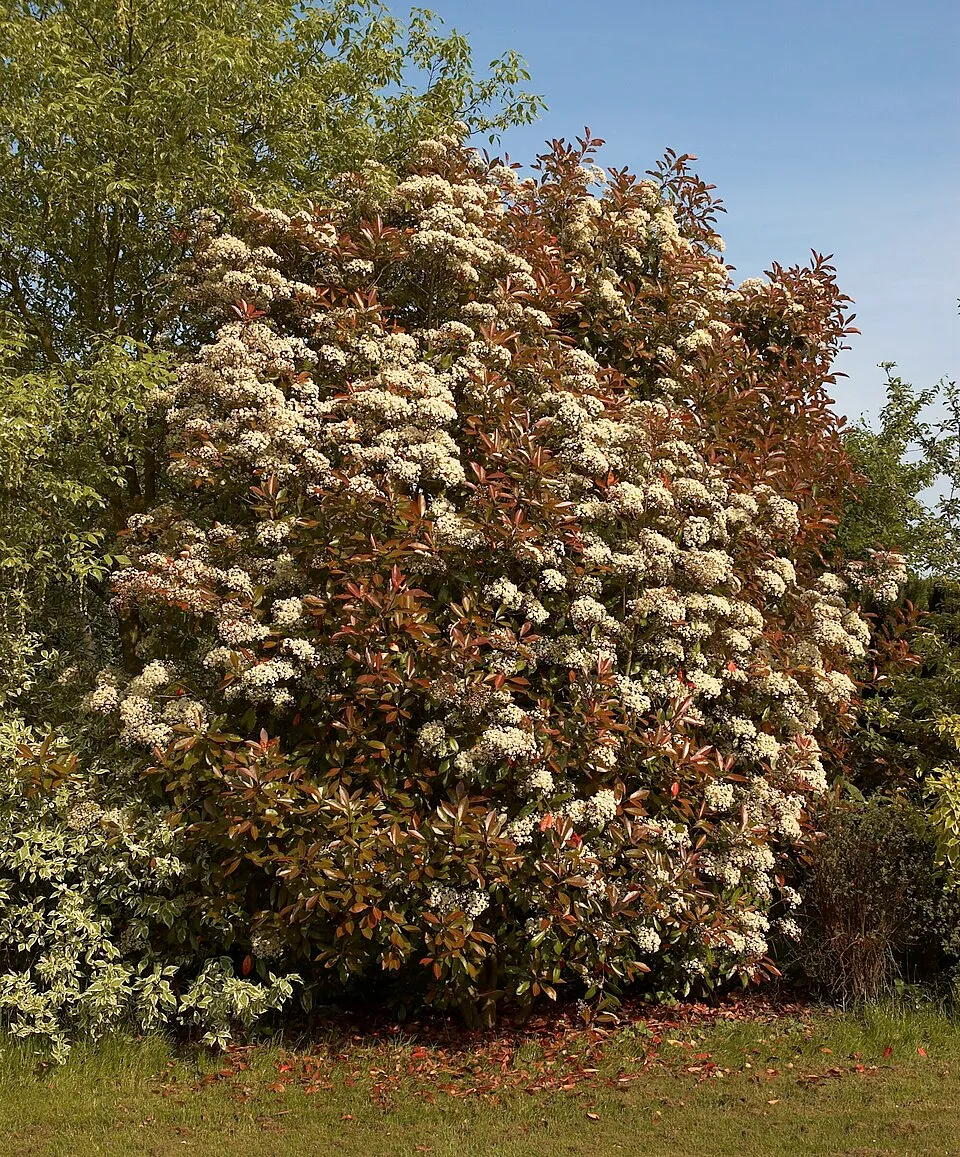
Photinia × fraseri, widely recognized by its cultivar name 'Red Robin', is a striking evergreen hybrid shrub belonging to the Rosaceae family. This vigorous, dense-growing plant is believed to be a cross between Photinia glabra and Photinia serrulata, exhibiting characteristics from both parent species. It typically grows as a large shrub or small tree, reaching heights of 3 to 5 meters (10 to 15 feet) and a similar spread, forming an excellent choice for hedges, screens, or as a standalone specimen in temperate landscapes. The most iconic feature of 'Red Robin' is its spectacular new foliage, which emerges in brilliant, glossy, fire-engine red during spring and often again in autumn. These young leaves provide a dramatic visual contrast against the mature, dark green, leathery, elliptical to ovate leaves, which can measure 8-10 cm (3-4 inches) in length.
The new shoots are often covered in fine reddish pubescence, contributing to their vibrant appearance. As the leaves age, they transition to a deep, lustrous green, maintaining their color throughout the winter months. In late spring, typically May to June, 'Red Robin' produces small, star-shaped white flowers arranged in flattened clusters (corymbs) at the branch tips. While not individually showy, the collective display can be quite attractive. These flowers are occasionally followed by small, red, crabapple-like pome fruits, though fruit production is often sparse and not a primary ornamental feature.
This hybrid is remarkably adaptable, thriving in a wide range of well-drained soil types, from sandy to clay, and tolerating full sun to partial shade. Optimal red foliage color is achieved in sunny locations. Its resilience to urban pollution, coastal conditions, and moderate drought once established further enhances its popularity in diverse horticultural settings.
Trusted Scientific References
1. Authoritative external sources for Photinia × fraseri
1.1 Wikipedia — Photinia × fraseri
1.2 Kew POWO (Plants of the World Online)
1.3 PubMed — peer-reviewed research
1.4 NCBI Taxonomy Browser
1.5 GBIF — Global Biodiversity
1.1.Photinia Red Robin — Key Features
- ✓Striking Red New Growth — Emerges in brilliant, glossy red, especially in spring and autumn.
- ✓Evergreen Foliage — Retains dark green, leathery leaves year-round, providing consistent garden structure.
- ✓Hybrid Vigor — A robust and fast-growing shrub, reaching significant size.
- ✓Dense Growth Habit — Forms a thick, bushy structure, excellent for privacy and screening.
- ✓White Spring Flowers — Clusters of small, star-shaped white flowers appear in late spring.
- ✓Adaptable to Conditions — Tolerates various soil types and urban pollution.
- ✓Responds Well to Pruning — Easily shaped and maintained, encouraging more red flushes.
- ✓Low Maintenance — Generally easy to care for once established.
- ✓Moderate Drought Tolerance — Can withstand periods of dryness after establishment.
- ✓Potential Toxicity — Contains cyanogenic glycosides, making it harmful if ingested.
1.2.Photinia Red Robin — Concise Overview
- ✓Photinia 'Red Robin' is a popular ornamental evergreen shrub.
- ✓Known for its vibrant red new foliage and dense growth.
- ✓Ideal for hedging, screening, and as a specimen plant.
- ✓Contains cyanogenic glycosides, making it toxic if ingested.
- ✓Requires full sun to partial shade and well-drained soil.
- ✓Not recommended for medicinal use; primarily for aesthetic landscaping.
2.Photinia Red Robin — Systematic Position
3.Photinia Red Robin — Quick Facts
4.Photinia Red Robin — Plant Morphology
5.Photinia Red Robin — Where It Grows
6.Photinia Red Robin — Ethnobotanical Uses
7.Photinia Red Robin — Active Compounds
- ✓While Photinia × fraseri 'Red Robin' is primarily ornamental, its phytochemical profile can be inferred from its parent species and the broader Rosaceae family. Specific quantitative analysis for this hybrid is limited, and these compounds are not meant for medicinal ingestion.
- ✓Flavonoids — Compounds like quercetin, kaempferol, and their glycosides may be present, contributing to the plant's vibrant red coloration in new growth and offering antioxidant properties.
- ✓Tannins — Hydrolyzable and condensed tannins are common in Rosaceae, providing astringent qualities to plant tissues, potentially contributing to defense against herbivores.
- ✓Phenolic Acids — Gallic acid, chlorogenic acid, and caffeic acid derivatives are likely present, acting as antioxidants and contributing to plant defense.
- ✓Cyanogenic Glycosides — Compounds such as prunasin are found in the leaves and seeds of many Rosaceae members, including some Photinia species, which can release hydrogen cyanide upon enzymatic hydrolysis, posing a toxicity risk upon ingestion.
- ✓Triterpenoids — Ursolic acid and oleanolic acid derivatives may be present, commonly found in plant cuticles and offering protective roles.
- ✓Anthocyanins — Responsible for the intense red pigmentation of new leaves, these are water-soluble pigments with known antioxidant capabilities in other plants.
- ✓Carotenoids — Present in leaves, contributing to green and yellow hues, often masked by chlorophyll but becoming visible in senescence.
- ✓Volatile Organic Compounds — Various terpenes and esters may be emitted, contributing to the plant's scent profile and potentially acting as signaling molecules.
- ✓Lignans — Woody plants often contain lignans, which are polyphenolic compounds involved in structural support and defense.
- ✓Saponins — Steroidal or triterpenoid saponins might be present, which can have various biological activities but are not well-documented for 'Red Robin'.
8.Photinia Red Robin — Modern Studies
- ✓Photinia × fraseri 'Red Robin' is primarily cultivated as an ornamental plant and is generally not recognized for its direct medicinal properties in traditional or modern pharmacopoeias. However, based on the broader Rosaceae family and related Photinia species, some potential phytochemical properties can be inferred, though these are not confirmed for this specific hybrid and it should not be used for medicinal purposes.
- ✓Ornamental Value — Enhances aesthetic appeal in gardens and landscapes, promoting psychological well-being through visual beauty.
- ✓Air Purification Potential — Like many plants, it contributes to local air quality by absorbing carbon dioxide and releasing oxygen, though specific studies on this hybrid are limited.
- ✓Habitat Provision — Offers shelter and nesting sites for birds and other wildlife, supporting local biodiversity.
- ✓Soil Stabilization — Its extensive root system helps prevent soil erosion, particularly on slopes.
- ✓Tannin Content (Hypothetical) — Some Photinia species and many Rosaceae plants contain tannins, which traditionally exhibit astringent properties, but this is not a confirmed medicinal use for 'Red Robin'.
- ✓Flavonoid Presence (Hypothetical) — Flavonoids, common antioxidants in many plants, may be present, contributing to general plant defense mechanisms, but their medicinal application from 'Red Robin' is unresearched.
- ✓Anti-inflammatory Potential (Extrapolated) — Certain compounds found in the Rosaceae family have shown anti-inflammatory activity, but this has not been studied or validated for Photinia × fraseri 'Red Robin'.
- ✓Antioxidant Activity (Extrapolated) — The presence of polyphenolic compounds, common in plants, suggests potential antioxidant properties, though specific research on 'Red Robin' for therapeutic use is absent.
- ✓Detoxification Support (Theoretical) — While plants generally contribute to ecosystem health, 'Red Robin' is not a detoxifying herb for human consumption and its internal use is contraindicated.
- ✓General Wellness Support (Indirect) — Maintaining a green environment with plants like 'Red Robin' can indirectly support human wellness by reducing stress and improving mood, a benefit of horticulture rather than direct medicinal action.
8.1.Photinia Red Robin — Health Applications
9.Photinia Red Robin — Precautions & Warnings
9.1.Photinia Red Robin — Side Effects & Warnings
- ✓Photinia × fraseri 'Red Robin' contains cyanogenic glycosides, particularly in its leaves and seeds, which can release hydrogen cyanide upon ingestion. This makes the plant potentially toxic to humans and animals.
- ✓Gastrointestinal Distress — Ingestion can cause nausea, vomiting, abdominal pain, and diarrhea.
- ✓Respiratory Issues — Higher doses may lead to difficulty breathing, rapid respiration, and oxygen deprivation due to cyanide poisoning.
- ✓Cardiac Symptoms — Can affect heart rate and rhythm in severe cases of poisoning.
- ✓Neurological Effects — Symptoms may include dizziness, weakness, confusion, and in extreme cases, seizures or coma.
- ✓Skin Irritation — Direct contact with sap is generally not a significant irritant, but sensitive individuals should exercise caution.
- ✓Livestock Poisoning — Highly toxic to grazing animals like horses, cattle, and sheep, potentially causing severe illness or death if consumed in sufficient quantities.
- ✓Pet Toxicity — Poses a significant risk to domestic pets (dogs, cats) if they chew on leaves or berries, leading to similar symptoms of cyanide poisoning.
9.2.Photinia Red Robin — Safety Overview
- ✓Photinia × fraseri 'Red Robin' is considered toxic if ingested and should be handled with care.
- ✓Ornamental Use Only — Strictly for external landscaping and decorative purposes; not for human or animal consumption.
- ✓Keep Away from Children — Ensure children are supervised around the plant and educated about not ingesting any parts.
- ✓Pet Safety — Prevent pets, especially herbivores and curious animals, from chewing on leaves or berries.
- ✓Livestock Warning — Highly toxic to grazing animals; do not plant in areas accessible to livestock.
- ✓Handling Precautions — Wear gloves when pruning or handling large quantities of plant material to avoid potential skin irritation, though this is rare.
- ✓Dispose of Cuttings Safely — Ensure pruned material is disposed of where it cannot be accessed or consumed by animals.
- ✓Seek Medical Attention — In case of accidental ingestion, contact a poison control center or medical professional immediately.
10.Photinia Red Robin — Application Forms
- ✓Photinia × fraseri 'Red Robin' is strictly an ornamental plant and should not be used for internal medicinal purposes due to its potential toxicity. Its uses are primarily horticultural.
- ✓Hedging — Planted in rows to create dense, evergreen hedges for privacy, boundary definition, or windbreaks, offering year-round interest with its red new growth.
- ✓Screening — Used as a tall screen to block unsightly views or provide a backdrop for other garden plants.
- ✓Specimen Plant — Can be grown as a standalone focal point in a garden, showcasing its vibrant foliage and architectural form.
- ✓Container Planting — Younger plants can be grown in large pots or containers on patios or balconies, especially where space is limited.
- ✓Topiary — Responds well to pruning, making it suitable for shaping into various topiary forms, such as standards or globes.
- ✓Architectural Planting — Utilized in structured garden designs to provide form, color, and texture, particularly effective in formal landscapes.
- ✓Wildlife Garden — While toxic if ingested, its dense habit provides shelter for birds, and its flowers can attract pollinators, indirectly supporting garden biodiversity.
11.Photinia Red Robin — Growth Requirements
- ✓Site Selection — Choose a location with full sun to partial shade; full sun promotes the best red foliage color.
- ✓Soil Requirements — Thrives in a wide range of well-drained soils, including sandy, loamy, or clay, with a preference for slightly acidic to neutral pH.
- ✓Watering — Requires regular watering during its establishment phase; once mature, it is moderately drought-tolerant but benefits from consistent moisture, especially during dry spells.
- ✓Fertilization — Apply a balanced slow-release fertilizer in early spring to encourage vigorous growth and vibrant foliage, avoiding over-fertilization.
- ✓Pruning — Prune in late winter or early spring before new growth begins to maintain shape, encourage bushier growth, and stimulate the production of more red new shoots. Light trimming can be done after the first flush of red leaves.
- ✓Propagation — Typically propagated by semi-hardwood cuttings taken in summer, rooted in a moist, well-draining medium with rooting hormone.
- ✓Pest and Disease Management — Generally robust, but can be susceptible to leaf spot (Entomosporium maculatum), especially in humid conditions, and occasionally aphids or vine weevils. Ensure good air circulation.
- ✓Climate — Hardy in USDA Zones 7-9, tolerating temperatures down to -15°C (5°F), though severe frosts can damage new growth.
Reviewed by the Flora Medical Global Botanical Review Panel
Multi-disciplinary editorial group · Botany · Ethnobotany · Herbal-medicine literature
Who reviewed this: This page was checked by the Flora Medical Global Botanical Review Panel — an in-house editorial group of botany graduates, ethnobotany researchers, and horticulture practitioners who collectively maintain our 7,000+ plant encyclopedia. Meet the team.
Our 4-step verification process
1. Taxonomic verification
Scientific names and synonyms cross-checked against Kew POWO, World Flora Online, and The Plant List.
2. Phytochemical & medicinal cross-reference
Active compounds, traditional uses, and reported activities are cross-referenced with PubMed, USDA Dr. Duke's database, and peer-reviewed ethnobotanical literature.
3. Conservation & distribution check
Distribution, ecology, and conservation status confirmed against GBIF occurrence records and the IUCN Red List.
4. Editorial & safety review
Every entry passes an editorial pass for clarity, originality, and safety notices (toxicity, contraindications, dosage caveats) before publication.
Last reviewed:
Important medical disclaimer: This content is for educational and research purposes only. It is not medical advice and is not a substitute for consultation with a licensed healthcare provider. Do not use any herb to self-treat a medical condition without professional guidance.
Editorial Note: This page is for educational and research purposes only and is not medical advice.
Written by: Flora Medical Global Editorial Team
Reviewed by: Flora Medical Global Botanical Review Panel
Last Updated: June 15, 2026





Photinia Red Robin — Comments & Community Reviews
Rate this plant