
Medical Disclaimer: This content is for educational purposes only. It is not medical advice. Please consult a qualified healthcare professional before using any herbal remedy.
Safety Overview
1.Physocarpus Opulifolius — Introduction & Highlights
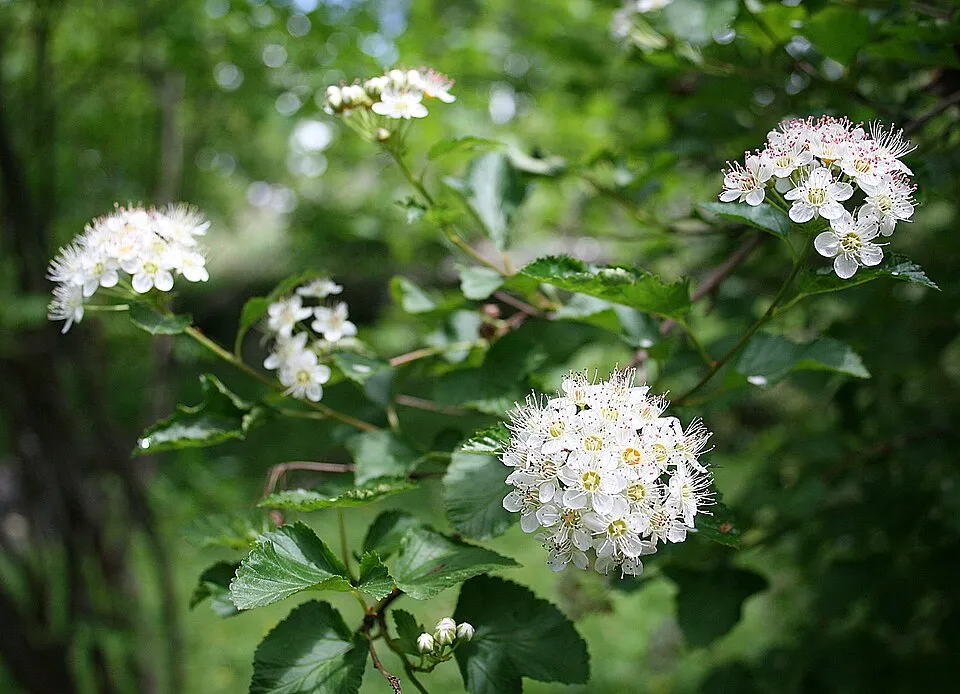
Physocarpus opulifolius, commonly known as common ninebark or eastern ninebark, is a robust deciduous shrub native to a wide range of North American ecosystems, from Canada south to Georgia and west to Minnesota. As a member of the Rosaceae family, it exhibits characteristic resilience and adaptability, thriving in diverse habitats from rocky slopes and riverbanks to open woodlands. This multi-stemmed shrub typically achieves a mature height and spread of 6-10 feet (1.8-3 meters), developing a dense, rounded to arching habit. Its most distinguishing feature, and the origin of its common name, is the exfoliating bark, which peels away in thin, papery strips to reveal multiple layers of inner bark in shades of tan, reddish-brown, and cinnamon, creating year-round visual interest.
The alternate, simple leaves are broadly ovate with 3-5 shallow lobes and serrated margins, typically measuring 2-5 inches (5-12.5 cm) long. While the species generally has medium green foliage, numerous cultivars boast striking colors ranging from deep purple and bronze to vibrant gold and variegated patterns. In late spring to early summer, Physocarpus opulifolius produces abundant, showy clusters of small, five-petaled, star-shaped flowers, usually white or pale pink, borne in corymb-like racemes at the tips of branches. These blossoms are a valuable nectar source for pollinators.
Following the floral display, ornamental fruit clusters emerge, consisting of inflated, bladder-like follicles that ripen to a reddish-brown hue and persist through fall and into winter, providing sustenance for various bird species. Its hardiness, tolerance to a wide range of soil types and moisture levels (including drought once established), and aesthetic appeal make it a popular landscape plant.
Trusted Scientific References
1. Authoritative external sources for Physocarpus opulifolius
1.1 Wikipedia — Physocarpus opulifolius
1.2 Kew POWO (Plants of the World Online)
1.3 PubMed — peer-reviewed research
1.4 NCBI Taxonomy Browser
1.5 GBIF — Global Biodiversity
1.1.Physocarpus Opulifolius — Standout Qualities
- ✓Distinctive Exfoliating Bark — Peeling bark in layers of brown, tan, and cinnamon.
- ✓Native to North America — Found across a broad range of the continent.
- ✓Hardy and Adaptable — Tolerates diverse soil types, moisture levels, and temperatures.
- ✓Ornamental Value — Attractive foliage (often colorful cultivars), white/pink flowers, and reddish fruit.
- ✓Traditional Medicinal Uses — Employed by First Nations for various ailments including inflammation and wounds.
- ✓Rich in Bioactive Compounds — Contains tannins, flavonoids, and phenolic acids.
- ✓Pollinator Friendly — Flowers provide nectar for bees and other beneficial insects.
- ✓Wildlife Food Source — Fruits persist into winter, offering food for birds.
- ✓Low Maintenance Shrub — Generally resistant to pests and diseases, requiring minimal care.
1.2.Physocarpus Opulifolius — In Brief
- ✓Physocarpus opulifolius is a North American native shrub known for its distinctive exfoliating bark.
- ✓Traditionally used by First Nations for anti-inflammatory, wound-healing, and fever-reducing properties.
- ✓Rich in tannins, flavonoids, and phenolic acids, contributing to its astringent and antioxidant activities.
- ✓Easy to cultivate, adapting to various soil and light conditions, making it popular in landscaping.
- ✓Preparations include decoctions, poultices, and tinctures from bark and roots.
- ✓Exercise caution with internal use, especially during pregnancy, lactation, or with pre-existing conditions.
2.Physocarpus Opulifolius — Taxonomic Classification
3.Physocarpus Opulifolius — Quick Facts
4.Physocarpus Opulifolius — Structural Profile
5.Physocarpus Opulifolius — Where It Grows
6.Physocarpus Opulifolius — Ethnobotanical Uses
7.Physocarpus Opulifolius — Bioactive Constituents
- ✓Tannins — Predominantly hydrolyzable and condensed tannins, such as proanthocyanidins, which are responsible for the plant's astringent properties and contribute to its traditional anti-inflammatory and wound-healing uses.
- ✓Flavonoids — Including quercetin, kaempferol, and their glycosides, known for their antioxidant, anti-inflammatory, and potentially anticarcinogenic activities.
- ✓Phenolic Acids — Such as gallic acid, caffeic acid, and chlorogenic acid, which contribute to the plant's antioxidant capacity and protective effects against oxidative stress.
- ✓Saponins — These triterpenoid glycosides are known for their detergent-like properties and can exhibit various biological activities, including anti-inflammatory and immune-modulating effects.
- ✓Lignans — A class of phytoestrogens that may possess antioxidant, anti-inflammatory, and anticancer properties, though their specific roles in common ninebark are less studied.
- ✓Terpenoids — A diverse group of compounds, some of which may contribute to the plant's aromatic profile and possess anti-inflammatory or antimicrobial actions.
- ✓Coumarins — Simple phenolic compounds that can have anticoagulant, anti-inflammatory, and antimicrobial properties, though their presence in significant amounts requires further investigation.
- ✓Anthocyanins — Especially in purple-leaved cultivars, these pigments are potent antioxidants responsible for the plant's vibrant foliage colors and may offer additional health benefits.
8.Physocarpus Opulifolius — What Research Suggests
- ✓Anti-inflammatory Support — Traditionally, preparations from the bark and roots of common ninebark were used to alleviate inflammation, potentially due to the presence of phenolic compounds and tannins.
- ✓Wound Healing Acceleration — Applied topically, the bark has been historically used as a poultice to dress wounds, promoting faster healing and protecting against infection through its astringent properties.
- ✓Antipyretic Action — First Nations peoples utilized Physocarpus opulifolius to help reduce fevers, suggesting a traditional role in managing febrile conditions.
- ✓Diuretic Properties — The berries were occasionally consumed or prepared as a decoction to encourage increased urination, aiding in the body's fluid balance and detoxification processes.
- ✓Analgesic Effects — Traditional applications hint at pain-relieving properties, particularly for discomfort associated with inflammation or minor injuries.
- ✓Astringent Qualities — High tannin content makes ninebark effective as an astringent, useful for tightening tissues and reducing secretions, both internally and externally.
- ✓Antimicrobial Potential — The presence of various phytochemicals, including tannins, may confer mild antimicrobial activity, supporting its use in wound care and against minor infections.
- ✓Digestive Aid (Traditional) — In some traditional practices, small amounts were used to address certain digestive discomforts, likely related to its astringent nature.
- ✓Skin Irritation Relief — Decoctions or poultices could be applied to soothe skin irritations, rashes, and minor burns, leveraging its anti-inflammatory and astringent actions.
8.1.Physocarpus Opulifolius — Indications & Uses
9.Physocarpus Opulifolius — Precautions & Warnings
9.1.Physocarpus Opulifolius — Caution Notes
- ✓Gastrointestinal Upset — High intake of tannins from Physocarpus opulifolius may cause stomach upset, nausea, or constipation in sensitive individuals.
- ✓Allergic Reactions — Skin irritation or allergic reactions are possible, especially with topical application for those sensitive to Rosaceae family plants.
- ✓Drug Interactions — The astringent properties might interfere with the absorption of certain medications if taken concurrently; consult a healthcare professional.
- ✓Liver/Kidney Strain — Excessive or prolonged internal use without professional guidance could potentially stress liver or kidney function.
- ✓Tannin Overload — Very high doses of tannins can inhibit nutrient absorption, particularly iron, leading to deficiencies over time.
- ✓Photosensitivity — While rare, some plant compounds can increase skin sensitivity to sunlight in susceptible individuals.
9.2.Physocarpus Opulifolius — Toxicity Assessment
- ✓Pregnancy and Lactation — Avoid use during pregnancy and breastfeeding due to insufficient safety data and potential effects of tannins.
- ✓Children — Not recommended for use in young children without explicit medical supervision due to lack of specific dosage and safety information.
- ✓Pre-existing Conditions — Individuals with chronic gastrointestinal issues, liver, or kidney disease should avoid internal use or consult a physician.
- ✓Dosage — Adhere strictly to traditional or expert-recommended dosages; do not self-prescribe large quantities of common ninebark preparations.
- ✓Professional Consultation — Always consult a qualified medical herbalist or healthcare provider before using Physocarpus opulifolius for medicinal purposes, especially if on other medications.
- ✓External Use Caution — Perform a patch test on a small skin area before widespread topical application to check for sensitivity or allergic reactions.
- ✓Plant Identification — Ensure accurate identification of Physocarpus opulifolius to avoid confusion with potentially toxic plants.
10.Physocarpus Opulifolius — Application Forms
- ✓Decoction of Bark/Roots — Prepare by simmering dried bark or roots of Physocarpus opulifolius in water for 15-20 minutes, traditionally used for internal inflammatory conditions or fevers.
- ✓Topical Poultice — Crush fresh or dried bark and mix with a small amount of water to form a paste, then apply directly to wounds, skin irritations, or inflamed areas.
- ✓Herbal Infusion (Leaves/Flowers) — Although less common for medicinal use, young leaves or flowers can be steeped in hot water for a mild tea, potentially for their flavonoid content.
- ✓Tincture Preparation — Macerate dried bark or roots in alcohol (e.g., vodka or grain alcohol) for several weeks to extract active compounds, then strain and bottle for concentrated use.
- ✓Berry Infusion — The dried berries of eastern ninebark can be infused in hot water to create a diuretic tea, as per traditional uses.
- ✓External Wash — A diluted decoction of the bark can be used as an external wash for skin conditions, minor cuts, or as a gargle for mouth and throat irritations.
- ✓Liniment — Infuse the bark in a carrier oil (like olive or almond oil) to create a topical liniment for muscle aches or localized pain.
11.Physocarpus Opulifolius — Growth Requirements
- ✓Site Selection — Choose a location with full sun to partial shade; full sun promotes the best flowering and foliage color for Physocarpus opulifolius.
- ✓Soil Requirements — Adaptable to a wide range of soil types, from sandy to clay, but prefers well-drained, slightly acidic to neutral soil (pH 6.0-7.0).
- ✓Watering — Water regularly during the first growing season to establish a strong root system; mature plants are drought-tolerant but benefit from occasional watering during prolonged dry spells.
- ✓Fertilization — Generally not required in fertile soils; if growth is poor, a balanced slow-release fertilizer can be applied in spring.
- ✓Pruning — Prune common ninebark after flowering to maintain shape, remove dead or crossing branches, and encourage new growth; renewal pruning by cutting back old stems to the ground can rejuvenate older plants.
- ✓Pest and Disease Management — Physocarpus opulifolius is relatively pest and disease resistant; occasional issues may include powdery mildew in humid conditions or aphids, which are typically managed with good air circulation and organic sprays.
- ✓Propagation — Easily propagated by softwood cuttings taken in early summer or by hardwood cuttings in late fall/winter; seeds require stratification.
Reviewed by the Flora Medical Global Botanical Review Panel
Multi-disciplinary editorial group · Botany · Ethnobotany · Herbal-medicine literature
Who reviewed this: This page was checked by the Flora Medical Global Botanical Review Panel — an in-house editorial group of botany graduates, ethnobotany researchers, and horticulture practitioners who collectively maintain our 7,000+ plant encyclopedia. Meet the team.
Our 4-step verification process
1. Taxonomic verification
Scientific names and synonyms cross-checked against Kew POWO, World Flora Online, and The Plant List.
2. Phytochemical & medicinal cross-reference
Active compounds, traditional uses, and reported activities are cross-referenced with PubMed, USDA Dr. Duke's database, and peer-reviewed ethnobotanical literature.
3. Conservation & distribution check
Distribution, ecology, and conservation status confirmed against GBIF occurrence records and the IUCN Red List.
4. Editorial & safety review
Every entry passes an editorial pass for clarity, originality, and safety notices (toxicity, contraindications, dosage caveats) before publication.
Last reviewed:
Important medical disclaimer: This content is for educational and research purposes only. It is not medical advice and is not a substitute for consultation with a licensed healthcare provider. Do not use any herb to self-treat a medical condition without professional guidance.
Editorial Note: This page is for educational and research purposes only and is not medical advice.
Written by: Flora Medical Global Editorial Team
Reviewed by: Flora Medical Global Botanical Review Panel
Last Updated: June 15, 2026





Physocarpus Opulifolius — Comments & Community Reviews
Rate this plant