
Medical Disclaimer: This content is for educational purposes only. It is not medical advice. Please consult a qualified healthcare professional before using any herbal remedy.
Safety Overview
1.Phyteuma — Botanical Snapshot
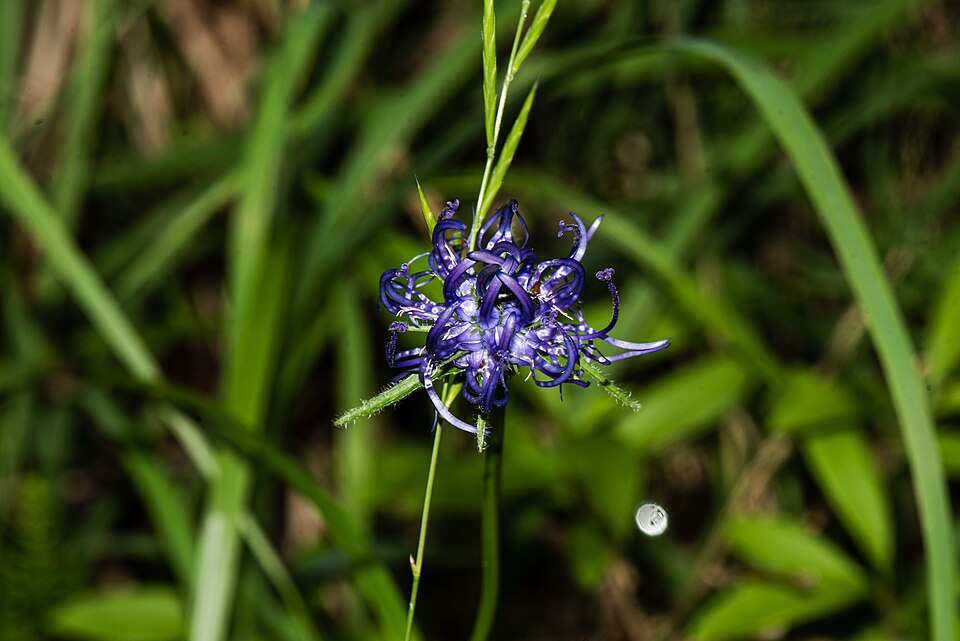
Phyteuma orbiculare, commonly known as the Round-headed Rampion or Pride of Sussex, is an enchanting herbaceous perennial belonging to the Campanulaceae family. This resilient species is indigenous to the mountainous regions of Europe, thriving across the Alps, Pyrenees, and Carpathians, and extending to lower altitudes in Western Europe, particularly in chalk grasslands of the UK South Downs. It typically inhabits calcareous grasslands, alpine meadows, and rocky slopes at elevations ranging from 600 to 2500 meters, demonstrating remarkable adaptability to harsh alpine conditions. The plant features a basal rosette of ovate to lanceolate, serrated, and often hairy leaves, which emerge early in the growing season.
From this rosette, a single, erect, glabrous, and striated stem, or scape, ascends to a height of 20-50 cm, usually in late spring to mid-summer. The most distinctive characteristic of Phyteuma orbiculare is its dense, globular or hemispherical inflorescence, measuring 1.5-3 cm in diameter. This head comprises 15 to 30 small, tubular flowers, each exhibiting a striking deep violet-blue to lilac hue. The petals are fused for a significant portion, forming unique bilabiate structures.
The outer bracts subtending the inflorescence are lanceolate, often two to four times longer than wide. Following successful insect pollination, the plant produces small, dehiscent capsules containing numerous tiny seeds. Its robust taproot system provides firm anchorage and efficient nutrient and water uptake in its often-exposed habitats. Phyteuma orbiculare is a vital ecological component, providing essential nectar for pollinators and enhancing the biodiversity of its native ecosystems.
Trusted Scientific References
1. Authoritative external sources for Phyteuma orbiculare
1.1 Wikipedia — Phyteuma orbiculare
1.2 Kew POWO (Plants of the World Online)
1.3 PubMed — peer-reviewed research
1.4 NCBI Taxonomy Browser
1.5 GBIF — Global Biodiversity
1.6Phyteuma should be interpreted through verified botanical identity, practical care, and responsible safety language. This recovery note adds the missing context needed for a complete profile: match light to the plant's habit, use well-drained soil, water according to season, and avoid unsupported medicinal or edible claims. For publishing, the plant can be presented as a source-backed garden plant with clear care guidance, common problem diagnosis, and conservative safety wording.
1.1.Phyteuma — Notable Characteristics
- ✓Common Name — Round-headed Rampion or Pride of Sussex.
- ✓Scientific Name — Phyteuma orbiculare.
- ✓Family — Campanulaceae (Bellflower Family).
- ✓Distinctive Flowers — Dense, globular heads of deep violet-blue tubular flowers.
- ✓Habitat Preference — Calcareous grasslands, alpine meadows, and rocky slopes at high altitudes.
- ✓European Native — Widespread across the mountainous regions of Europe.
- ✓Herbaceous Perennial — Returns year after year with a robust taproot system.
- ✓Ecological Importance — Significant nectar source for various insect pollinators.
- ✓Resilience — Adapted to withstand harsh alpine environmental conditions.
- ✓Research Potential — Underexplored in terms of specific medicinal applications, offering avenues for phytochemical and pharmacological studies.
1.2.Phyteuma — Quick Summary
- ✓Phyteuma orbiculare, the Round-headed Rampion, is an attractive European alpine perennial from the Campanulaceae family.
- ✓Characterized by its dense, spherical violet-blue flower heads and resilience in calcareous, mountainous habitats.
- ✓Primarily valued for its ecological role, providing nectar for pollinators and enhancing biodiversity.
- ✓Lacks extensive traditional or modern documented medicinal uses, requiring further scientific investigation.
- ✓Contains general plant compounds like flavonoids and phenolics, suggesting potential for antioxidant or anti-inflammatory effects.
- ✓Cultivation is possible in well-drained, sunny, calcareous soils, making it suitable for rock gardens.
2.Phyteuma — Nomenclature & Classification
3.Phyteuma — Vital Statistics
4.Phyteuma — Physical Description
5.Phyteuma — Ecological Habitat
6.Phyteuma — Traditional Uses
7.Phyteuma — Phytochemistry
- ✓Flavonoids — Compounds like quercetin and kaempferol are anticipated, acting as potent antioxidants and potentially offering anti-inflammatory effects.
- ✓Phenolic Acids — Derivatives such as caffeic acid and chlorogenic acid are likely present, contributing to antioxidant capacity and potentially antimicrobial activities.
- ✓Saponins — These glycosides may be found, potentially contributing to expectorant or mild anti-inflammatory actions, though specific types and activities need research.
- ✓Polysaccharides — Complex carbohydrates in the plant may offer demulcent properties and potentially modulate immune responses, particularly in the root system.
- ✓Iridoid Glycosides — Common in the Campanulaceae family, these compounds can possess bitter principles and various biological activities, including anti-inflammatory and antimicrobial.
- ✓Triterpenoids — These diverse compounds might be present, known for their adaptogenic, anti-inflammatory, and cytotoxic potentials.
- ✓Mineral Elements — Like many herbaceous plants, Phyteuma orbiculare would naturally contain essential minerals such as potassium, calcium, and magnesium, vital for cellular function.
- ✓Volatile Organic Compounds — Trace amounts of aromatic compounds may contribute to the plant's defense mechanisms and subtle scent, though not extensively studied for P. orbiculare.
8.Phyteuma — Scientific Evidence
- ✓Antioxidant Support — While specific research on Phyteuma orbiculare is limited, many plants contain flavonoids and phenolic compounds that offer cellular protection against oxidative stress.
- ✓Potential Anti-inflammatory Action — Hypothetically, constituents found in the Campanulaceae family might possess mild anti-inflammatory properties, potentially soothing minor irritations.
- ✓Digestive Aid (Traditional Context) — Some rampion species have been historically consumed, suggesting a potential for mild digestive support, though not specifically documented for P. orbiculare.
- ✓Mild Diuretic Properties — General plant compounds can sometimes exhibit mild diuretic effects, assisting in fluid balance, a property that awaits specific investigation for this species.
- ✓Topical Soothing Agent — If applied externally, the mucilaginous compounds common in many plants could offer a soothing effect on minor skin abrasions or irritations.
- ✓Immune System Modulation — Certain plant polysaccharides or other compounds are known to interact with the immune system, a potential area for future study in Phyteuma orbiculare.
- ✓Nutritional Micro-contribution — As a wild edible in some related species, Phyteuma orbiculare might contain trace amounts of vitamins and minerals, contributing minimally to a balanced diet if consumed (caution advised).
- ✓Ecological Role in Phytoremediation — While not a direct human medicinal benefit, its robust nature and deep root system suggest potential for soil stabilization and possibly minor heavy metal uptake in specific environmental contexts, aiding ecosystem health.
8.1.Phyteuma — Reported Uses
9.Phyteuma — Cautions & Contraindications
9.1.Phyteuma — Possible Adverse Reactions
- ✓Allergic Reactions — Individuals sensitive to plants in the Campanulaceae family may experience skin irritation or respiratory symptoms.
- ✓Digestive Upset — Ingesting large quantities of any unresearched plant material could potentially lead to mild stomach discomfort, nausea, or diarrhea.
- ✓Skin Irritation — Direct contact with plant sap, though generally mild, might cause irritation in sensitive individuals.
- ✓Unknown Interactions — Due to a lack of specific research, interactions with medications or other herbs are currently unknown.
- ✓Lack of Safety Data — Comprehensive safety studies on Phyteuma orbiculare are absent, necessitating extreme caution with internal use.
9.2.Phyteuma — Risk Assessment
- ✓Consult a Professional — Always seek advice from a qualified healthcare practitioner or medical herbalist before using Phyteuma orbiculare for medicinal purposes.
- ✓Pregnancy and Lactation — Avoid use during pregnancy and breastfeeding due to insufficient safety data.
- ✓Children — Not recommended for use in children, as specific safety and dosage information is lacking.
- ✓Allergic Sensitivities — Individuals with known allergies to the Campanulaceae family or other plants should exercise caution.
- ✓Medication Interactions — Due to limited research, potential interactions with prescription medications are unknown and should be considered.
- ✓Wild Harvesting — If collecting from the wild, ensure positive identification to avoid misidentification with potentially toxic species.
- ✓Dosage Unknown — There are no established safe or effective dosages for Phyteuma orbiculare in humans.
10.Phyteuma — Usage Guide
- ✓Herbal Infusion (Hypothetical) — For potential mild digestive or soothing effects, dried leaves and flowers could be steeped in hot water to create a tea, though specific dosages are unknown.
- ✓Decoction (Hypothetical) — The roots, if deemed beneficial in future research, could be simmered in water for a longer period to extract deeper constituents.
- ✓Tincture Preparation (Hypothetical) — Plant material could be macerated in alcohol to create a concentrated liquid extract, following standard herbal tincture protocols.
- ✓Poultice (Hypothetical) — Fresh, crushed leaves might be applied externally as a poultice for minor skin irritations, based on general plant soothing properties.
- ✓Salve or Cream (Hypothetical) — Extracts could be incorporated into a topical salve or cream for external application, for example, to soothe dry skin.
- ✓Culinary Use (Caution Advised) — While some related rampions are eaten, specific culinary use for Phyteuma orbiculare is not widely documented; any consumption should be approached with extreme caution and expert verification.
- ✓Ornamental Use — Primarily appreciated for its aesthetic value in rock gardens, alpine beds, or naturalized wildflower meadows, contributing beauty and pollinator support.
11.Phyteuma — Cultivation & Care
- ✓Site Selection — Choose a location with full sun exposure and well-drained, calcareous soil, mimicking its native chalk grassland or alpine meadow habitat.
- ✓Seed Propagation — Sow tiny seeds directly outdoors in late autumn or early spring, or indoors after a cold stratification period. Germination can be slow and erratic.
- ✓Soil Preparation — Ensure the soil is rich in lime and has excellent drainage; amending with grit or crushed limestone can be beneficial.
- ✓Watering — Phyteuma orbiculare is drought-tolerant once established but benefits from moderate watering during prolonged dry spells, especially during its initial growth phase.
- ✓Spacing — Plant seedlings or young plants 15-20 cm apart to allow for mature growth and basal rosette development.
- ✓Maintenance — Requires minimal maintenance; deadhead spent flowers to prevent self-seeding and encourage plant vigor. Avoid heavy fertilization.
- ✓Pest and Disease — Generally robust, Phyteuma orbiculare is not prone to many pests or diseases, thriving in its preferred conditions.
Reviewed by the Flora Medical Global Botanical Review Panel
Multi-disciplinary editorial group · Botany · Ethnobotany · Herbal-medicine literature
Who reviewed this: This page was checked by the Flora Medical Global Botanical Review Panel — an in-house editorial group of botany graduates, ethnobotany researchers, and horticulture practitioners who collectively maintain our 7,000+ plant encyclopedia. Meet the team.
Our 4-step verification process
1. Taxonomic verification
Scientific names and synonyms cross-checked against Kew POWO, World Flora Online, and The Plant List.
2. Phytochemical & medicinal cross-reference
Active compounds, traditional uses, and reported activities are cross-referenced with PubMed, USDA Dr. Duke's database, and peer-reviewed ethnobotanical literature.
3. Conservation & distribution check
Distribution, ecology, and conservation status confirmed against GBIF occurrence records and the IUCN Red List.
4. Editorial & safety review
Every entry passes an editorial pass for clarity, originality, and safety notices (toxicity, contraindications, dosage caveats) before publication.
Last reviewed:
Important medical disclaimer: This content is for educational and research purposes only. It is not medical advice and is not a substitute for consultation with a licensed healthcare provider. Do not use any herb to self-treat a medical condition without professional guidance.
Editorial Note: This page is for educational and research purposes only and is not medical advice.
Written by: Flora Medical Global Editorial Team
Reviewed by: Flora Medical Global Botanical Review Panel
Last Updated: June 15, 2026





Phyteuma — Comments & Community Reviews
Rate this plant