
Medical Disclaimer: This content is for educational purposes only. It is not medical advice. Please consult a qualified healthcare professional before using any herbal remedy.
Safety Overview
1.Pieris Japonica — At a Glance
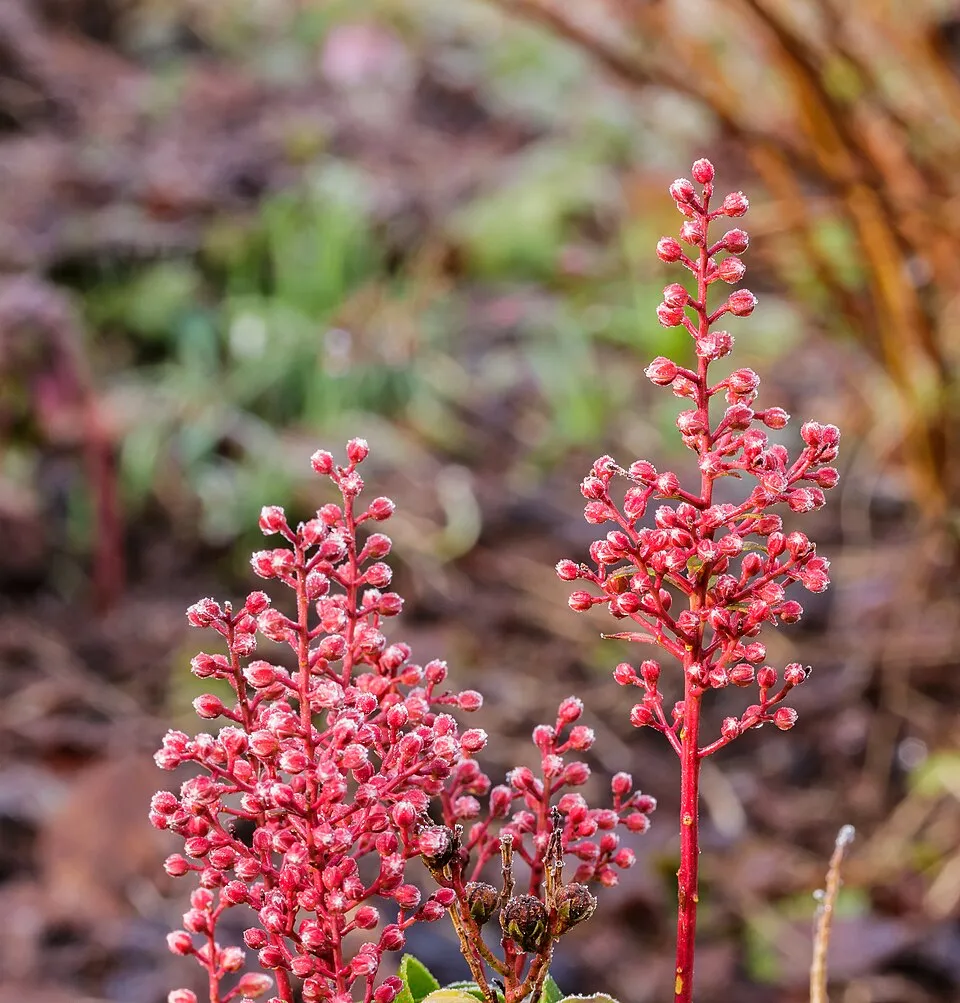
Pieris japonica, commonly known as Japanese Andromeda or Lily-of-the-Valley Shrub, is a distinguished evergreen shrub native to the temperate forests and mountainous regions of East Asia, specifically flourishing across Japan, Taiwan, and China. This captivating member of the Ericaceae family, which also encompasses rhododendrons and azaleas, thrives in acidic, well-drained soils and dappled to partial shade, mirroring its natural understory habitat. Morphologically, the shrub typically grows 2-4 meters tall and wide, forming a dense, rounded habit. Its leathery, dark green, lance-shaped leaves, ranging from 5-12 cm in length, provide year-round visual interest.
However, it's the spectacular new growth that truly defines its ornamental allure, emerging in striking hues of bronzy-red, vibrant pink, or deep burgundy. This coloration is attributed to a high concentration of anthocyanins, which not only protect the tender young foliage from intense UV radiation and herbivory but also offer a prolonged display of color before maturing to a deep green. In late winter to early spring, preceding the full unfurling of new leaves, Pieris japonica produces abundant, elegant, urn-shaped flowers. These blossoms, typically white or pale pink, are densely clustered in graceful, drooping panicles, strongly resembling the delicate flowers of the Lily-of-the-Valley, hence one of its common names.
These fragrant flowers serve as an important early nectar source for pollinators, contributing to the ecological balance of its native ecosystems. Various cultivars have been developed, offering a spectrum of flower colors, growth habits, and foliage variegations, enhancing its appeal as a prized specimen in ornamental horticulture.
Trusted Scientific References
1. Authoritative external sources for Pieris japonica
1.1 Wikipedia — Pieris japonica
1.2 Kew POWO (Plants of the World Online)
1.3 PubMed — peer-reviewed research
1.4 NCBI Taxonomy Browser
1.5 GBIF — Global Biodiversity
1.6Pieris Japonica should be interpreted through verified botanical identity, practical care, and responsible safety language. This recovery note adds the missing context needed for a complete profile: match light to the plant's habit, use well-drained soil, water according to season, and avoid unsupported medicinal or edible claims. For publishing, the plant can be presented as a source-backed garden plant with clear care guidance, common problem diagnosis, and conservative safety wording.
1.1.Pieris Japonica — Distinguishing Points
- ✓Botanical Name — Pieris japonica.
- ✓Common Names — Japanese Andromeda, Lily-of-the-Valley Shrub.
- ✓Plant Family — Ericaceae.
- ✓Native Range — Japan, Taiwan, China.
- ✓Foliage — Evergreen, lance-shaped, new growth vibrant bronzy-red to burgundy.
- ✓Flowers — Urn-shaped, white or pale pink, arranged in drooping panicles, early spring bloom.
- ✓Soil Requirements — Prefers acidic, well-drained, organic-rich soil.
- ✓Light Conditions — Thrives in dappled shade to partial shade.
- ✓Toxicity — Highly toxic due to the presence of grayanotoxins in all plant parts.
- ✓Primary Use — Exclusively ornamental landscaping and garden specimen.
1.2.Pieris Japonica — Snapshot Summary
- ✓Evergreen ornamental shrub native to East Asia.
- ✓Features vibrant new foliage and pendulous, urn-shaped flowers.
- ✓All parts are highly toxic due to the presence of grayanotoxins.
- ✓Not recognized or used in traditional or modern internal herbal medicine.
- ✓Requires acidic, well-drained soil and dappled to partial shade for optimal growth.
- ✓Primarily valued for its significant aesthetic appeal in ornamental landscaping.
2.Pieris Japonica — Nomenclature & Classification
3.Pieris Japonica — Key Data
4.Pieris Japonica — Botanical Features
5.Pieris Japonica — Origin & Spread
6.Pieris Japonica — Traditional Uses
7.Pieris Japonica — Phytochemistry
- ✓Grayanotoxins — The primary toxic compounds are diterpenoid grayanotoxins (e.g., grayanotoxin I, II, III), which are potent neurotoxins and cardiotoxins, disrupting sodium channel function and leading to severe physiological effects upon ingestion.
- ✓Flavonoids — A diverse group of polyphenolic compounds, including anthocyanins responsible for the vibrant red and pink hues in new foliage, known for their antioxidant properties and roles in UV protection within the plant.
- ✓Triterpenes — Compounds often found in plant waxes and resins, contributing to the plant's defense mechanisms, structural integrity, and potentially possessing various biological activities in isolated forms.
- ✓Phenolic Acids — Simple phenolic compounds such as gallic acid or caffeic acid derivatives, which contribute to the plant's overall antioxidant capacity and defense against pathogens and environmental stressors.
- ✓Tannins — Astringent polyphenols that act as natural deterrents against herbivores and pathogens, contributing to the plant's bitter taste and defense mechanisms, commonly found in Ericaceae species.
- ✓Steroids — Plant sterols, such as beta-sitosterol, are essential components of cell membranes and precursors for various plant hormones, present in various plant tissues.
- ✓Volatile Organic Compounds — Contribute to the delicate, sweet fragrance emitted by the flowers, playing a role in attracting pollinators and potentially in inter-plant communication or pest deterrence.
- ✓Saponins — Glycosidic compounds that can exhibit foaming properties and may contribute to the plant's defense mechanisms, though their presence and specific types in Pieris japonica are less studied than grayanotoxins.
8.Pieris Japonica — Scientific Evidence
- ✓Not for Internal Medicinal Use — Pieris japonica is widely recognized as a highly toxic plant, containing grayanotoxins, rendering it unsuitable and dangerous for internal medicinal applications in humans or animals.
- ✓Scientific Research Interest — The unique phytochemical profile of Pieris japonica, particularly its grayanotoxins, is a subject of scientific study for understanding plant defense mechanisms and potential bioactivity in highly controlled, laboratory-based research settings, not for direct human consumption.
- ✓Pest Deterrent Properties — The natural presence of toxic grayanotoxins within the plant effectively deters herbivores, a property that could be researched for developing natural, plant-derived pesticides, but not for direct medicinal use.
- ✓Antioxidant Capacity (in vitro) — While Pieris japonica itself is toxic, some Pieris species or isolated compounds have demonstrated in vitro antioxidant activity in laboratory tests, a finding that does not translate to safe internal use for this specific species due to its grayanotoxin content.
- ✓Anti-inflammatory Potential (experimental) — Exploratory research on isolated, non-toxic compounds from related Ericaceae species or in vitro models might investigate anti-inflammatory effects, strictly within a controlled scientific context and not for therapeutic application of the whole plant.
- ✓Botanical Study of Toxicity — The plant serves as a valuable model for toxicological studies, helping researchers understand the mechanisms of grayanotoxin poisoning and develop countermeasures.
- ✓Ecological Role in Defense — Its chemical defenses highlight the plant's evolutionary strategies against predation, offering insights into plant-herbivore interactions.
- ✓Potential for Bioactive Compound Isolation — While the whole plant is toxic, the isolation and modification of specific compounds under strict laboratory conditions could theoretically yield new structures for pharmacological investigation, always with extreme caution.
8.1.Pieris Japonica — Conditions Traditionally Used For
9.Pieris Japonica — Cautions & Contraindications
9.1.Pieris Japonica — Reported Side Effects
- ✓Severe Nausea and Vomiting — Ingestion of any part of Pieris japonica can rapidly induce profound nausea, persistent vomiting, and intense abdominal pain due to grayanotoxin poisoning.
- ✓Bradycardia and Hypotension — Grayanotoxins can critically interfere with cardiac function, leading to a dangerously slow heart rate (bradycardia) and a significant drop in blood pressure (hypotension).
- ✓Dizziness and Weakness — Systemic effects of grayanotoxin poisoning frequently include severe dizziness, profound generalized weakness, and a noticeable loss of coordination.
- ✓Excessive Salivation and Sweating — Increased salivation (sialorrhea) and diaphoresis (excessive sweating) are common symptoms observed after ingestion, indicative of autonomic nervous system disruption.
- ✓Convulsions and Coma — In severe cases of poisoning, particularly following the ingestion of larger quantities, grayanotoxins can precipitate seizures, convulsions, and potentially lead to coma or death.
- ✓Skin Irritation — Direct contact with the sap or foliage of Pieris japonica may cause mild skin irritation or contact dermatitis in sensitive individuals.
- ✓Visual Disturbances — Blurred vision or other visual abnormalities have been reported in cases of severe grayanotoxin intoxication.
9.2.Pieris Japonica — Safety Overview
- ✓Highly Toxic — All parts of Pieris japonica, including its leaves, stems, flowers, and even the nectar, contain potent grayanotoxins and are highly poisonous if ingested by humans or animals.
- ✓Keep Out of Reach — It is imperative to ensure that children, pets, and livestock cannot access or ingest any part of this plant; plant it in areas inaccessible to curious individuals.
- ✓Avoid Ingestion at All Costs — Never consume any part of Pieris japonica; even small amounts can cause severe, life-threatening symptoms and require immediate medical intervention.
- ✓Wear Protective Gloves — When handling the plant, especially during pruning, planting, or any direct contact, it is strongly advisable to wear gloves to prevent potential skin irritation from the sap.
- ✓Honey Contamination Warning — Honey produced from the nectar of Pieris japonica (and other related Ericaceae species like rhododendrons) can be toxic, known as 'mad honey,' and should never be consumed.
- ✓Immediate Emergency Action — If ingestion by humans or animals is suspected, seek immediate emergency medical attention or contact a poison control center (for humans) or a veterinarian (for animals) without delay.
- ✓Educate Others — Inform family members, gardeners, and anyone interacting with the plant about its toxic nature to prevent accidental poisoning.
10.Pieris Japonica — Preparation Methods
- ✓Ornamental Landscaping — Primarily cultivated for its significant aesthetic value in gardens, providing year-round interest with its evergreen foliage, vibrant new growth, and elegant early spring flowers.
- ✓Specimen Planting — Ideal as a focal point in shade gardens, woodland settings, or as an accent plant in mixed borders due to its graceful architectural form and seasonal color transitions.
- ✓Container Cultivation — Well-suited for growing in large containers on patios, decks, or balconies, allowing for precise control over soil acidity and moisture levels.
- ✓Hedging or Border Plant — Can be effectively used to create low, evergreen hedges or defined borders, adding structure and visual appeal to garden designs.
- ✓Cut Flower Displays — The attractive pendulous flower panicles can be cut and utilized in fresh floral arrangements, though care should be taken during handling due to potential irritants.
- ✓Botanical Research Material — Plant parts are exclusively used in controlled botanical and phytochemical research for the analysis of grayanotoxins and their biological effects, not for direct application.
- ✓Erosion Control (Limited) — In appropriate, acidic, shaded environments, its dense root system can offer minor benefits in stabilizing slopes or preventing soil erosion.
- ✓Habitat for Pollinators — Its early spring flowers provide a crucial nectar source for early-emerging bees and other pollinators, contributing to local biodiversity.
11.Pieris Japonica — Garden Cultivation
- ✓Soil Preference — Thrives in well-drained, consistently moist, and highly acidic soils (pH 4.5-6.0), rich in organic matter, mimicking its native forest understory conditions.
- ✓Light Requirements — Prefers dappled shade to partial shade; direct, intense afternoon sun, especially in warmer climates, can scorch its delicate foliage, though some morning sun encourages robust flowering.
- ✓Watering — Requires regular and consistent watering to maintain even soil moisture, particularly during prolonged dry periods, but absolutely avoid waterlogging to prevent root rot.
- ✓Pruning — Generally requires minimal pruning; prune lightly after flowering to maintain a desirable shape, remove spent flower clusters, or eliminate any dead, damaged, or crossing branches.
- ✓Propagation — Can be propagated effectively by semi-hardwood cuttings taken in mid-to-late summer, or less commonly by seed, though seed propagation can be slow and may not yield true-to-type cultivars.
- ✓Fertilization — Benefits from an annual application of an acid-forming fertilizer in early spring, specifically formulated for acid-loving plants such as rhododendrons, camellias, and azaleas.
- ✓Pest and Disease Management — Generally resistant to most severe pests; however, watch for lace bugs, spider mites, and Phytophthora root rot in poorly drained conditions; ensure good air circulation to deter fungal issues.
- ✓Winter Protection — In colder zones (USDA Zone 4-5), provide winter protection with mulching around the base to insulate roots and shield from harsh winds and extreme temperatures.
Reviewed by the Flora Medical Global Botanical Review Panel
Multi-disciplinary editorial group · Botany · Ethnobotany · Herbal-medicine literature
Who reviewed this: This page was checked by the Flora Medical Global Botanical Review Panel — an in-house editorial group of botany graduates, ethnobotany researchers, and horticulture practitioners who collectively maintain our 7,000+ plant encyclopedia. Meet the team.
Our 4-step verification process
1. Taxonomic verification
Scientific names and synonyms cross-checked against Kew POWO, World Flora Online, and The Plant List.
2. Phytochemical & medicinal cross-reference
Active compounds, traditional uses, and reported activities are cross-referenced with PubMed, USDA Dr. Duke's database, and peer-reviewed ethnobotanical literature.
3. Conservation & distribution check
Distribution, ecology, and conservation status confirmed against GBIF occurrence records and the IUCN Red List.
4. Editorial & safety review
Every entry passes an editorial pass for clarity, originality, and safety notices (toxicity, contraindications, dosage caveats) before publication.
Last reviewed:
Important medical disclaimer: This content is for educational and research purposes only. It is not medical advice and is not a substitute for consultation with a licensed healthcare provider. Do not use any herb to self-treat a medical condition without professional guidance.
Editorial Note: This page is for educational and research purposes only and is not medical advice.
Written by: Flora Medical Global Editorial Team
Reviewed by: Flora Medical Global Botanical Review Panel
Last Updated: June 15, 2026





Pieris Japonica — Comments & Community Reviews
Rate this plant