

Medical Disclaimer: This content is for educational purposes only. It is not medical advice. Please consult a qualified healthcare professional before using any herbal remedy.
Safety Overview
1.Pineapple Plant — At a Glance
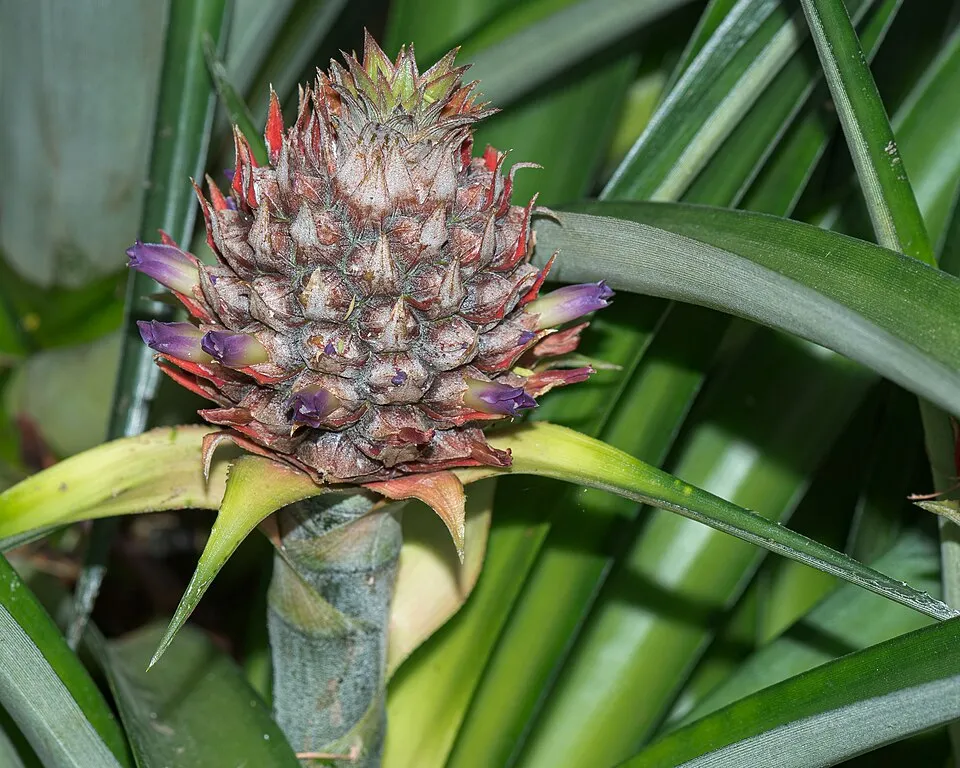
The Pineapple Plant, Ananas comosus, is a globally recognized perennial herbaceous plant belonging to the Bromeliaceae family, native to the tropical and subtropical regions of South America, specifically between southern Brazil and Paraguay. This iconic plant typically grows to a height of 0.9 to 1.5 meters (3 to 5 feet) with a similar spread, forming a robust rosette of long, rigid, sword-shaped leaves.
These leaves, which can reach 40 to 100 cm (16 to 40 inches) in length, are characteristically vibrant green, often featuring a waxy cuticle that minimizes water loss and spiny, serrated margins, though some cultivated varieties are smoother. The leaves are spirally arranged around a short, stout central stem that becomes woody over time, largely obscured by the dense foliage.
Unlike many plants, Ananas comosus possesses a shallow, fibrous root system primarily for anchorage and nutrient absorption from the topsoil. However, its unique adaptation allows for significant moisture and nutrient uptake through specialized peltate trichomes on its leaves, enabling it to thrive in less fertile environments. The plant's distinctive inflorescence emerges from the center of the leaf rosette, a stout stalk bearing numerous small, individual florets arranged in a dense spiral.
These florets, typically purple or red, are subtended by bracts and, upon pollination, fuse to form the compound fruit known as a syncarp. The development of this beloved golden-yellow, sweet, and juicy pineapple fruit can take up to two years, transitioning from a green, spiky cluster to its familiar mature form. Its domestication by indigenous South American peoples predates European contact, highlighting its long-standing cultural and economic significance.
Trusted Scientific References
1. Authoritative external sources for Ananas comosus
1.1 Wikipedia — Ananas comosus
1.2 Kew POWO (Plants of the World Online)
1.3 PubMed — peer-reviewed research
1.4 NCBI Taxonomy Browser
1.5 GBIF — Global Biodiversity
1.6Pineapple Plant should be interpreted through verified botanical identity, practical care, and responsible safety language. This recovery note adds the missing context needed for a complete profile: match light to the plant's habit, use well-drained soil, water according to season, and avoid unsupported medicinal or edible claims. For publishing, the plant can be presented as a source-backed indoor plant with clear care guidance, common problem diagnosis, and conservative safety wording.
1.1.Pineapple Plant — Notable Characteristics
- ✓Bromelain — rich — Contains a unique proteolytic enzyme complex with numerous health benefits.
- ✓Anti — inflammatory — Known for its ability to reduce swelling and pain.
- ✓Immune Booster — High in Vitamin C, supporting robust immune function.
- ✓Digestive Aid — Facilitates protein digestion and alleviates indigestion.
- ✓Antioxidant Powerhouse — Protects cells from free radical damage.
- ✓Excellent Source of Vitamin C — Essential for overall health and vitality.
- ✓Rich in Manganese — Crucial for bone health and metabolic processes.
- ✓Perennial Herbaceous Plant — A long-lived plant with a distinctive growth habit.
- ✓Syncarp Fruit — A unique compound fruit formed from fused individual florets.
- ✓CAM Photosynthesis — An adaptation allowing efficient water use in arid conditions.
1.2.Pineapple Plant — At-a-Glance Summary
- ✓Ananas comosus is a tropical fruit known for its unique sweet and tangy flavor.
- ✓Rich in bromelain, a powerful enzyme with anti-inflammatory and digestive properties.
- ✓Excellent source of Vitamin C and manganese, supporting immunity and bone health.
- ✓Widely used fresh, juiced, cooked, and as a supplement for various health benefits.
- ✓Potential side effects include digestive upset, allergies, and interactions with blood-thinning medications.
- ✓Consult healthcare providers for therapeutic doses, especially if pregnant or on medication.
2.Pineapple Plant — Nomenclature & Classification
3.Pineapple Plant — Fact Sheet
4.Pineapple Plant — Botanical Description
5.Pineapple Plant — Ecological Habitat
6.Pineapple Plant — Traditional Uses
7.Pineapple Plant — Key Phytochemicals
- ✓Proteolytic Enzymes — Primarily bromelain, a complex mixture of sulfhydryl-containing proteases found in the fruit, stem, and leaves, known for its anti-inflammatory, digestive, and fibrinolytic actions.
- ✓Ascorbic Acid (Vitamin C) — A potent water-soluble antioxidant crucial for immune function, collagen synthesis, and protection against oxidative stress.
- ✓Manganese — An essential trace mineral vital for bone development, metabolism, and as a cofactor for numerous enzymes, including superoxide dismutase.
- ✓Dietary Fiber — Both soluble and insoluble fibers contribute to digestive health, promoting regular bowel movements and supporting a healthy gut microbiome.
- ✓Phenolic Compounds — Includes various flavonoids (e.g., quercetin) and phenolic acids (e.g., caffeic acid), which provide antioxidant and anti-inflammatory benefits.
- ✓Carotenoids — Such as beta-carotene, a precursor to Vitamin A, contributing to the fruit's yellow color and offering antioxidant protection.
- ✓Organic Acids — Malic acid and citric acid contribute to the fruit's characteristic tart flavor and play roles in cellular energy metabolism.
- ✓Sugars — Predominantly fructose, glucose, and sucrose, providing natural sweetness and energy.
- ✓B Vitamins — Contains small amounts of B vitamins like thiamine (B1), pyridoxine (B6), and folate, essential for energy metabolism and nervous system function.
- ✓Trace Minerals — Including copper, potassium, and magnesium, which are important electrolytes and cofactors for various physiological processes.
8.Pineapple Plant — Pharmacological Findings
- ✓Digestive Aid — Pineapple contains bromelain, a complex mixture of proteolytic enzymes that effectively break down proteins, assisting digestion and reducing symptoms of indigestion and bloating.
- ✓Anti-inflammatory Properties — Bromelain exhibits potent anti-inflammatory effects by modulating immune cells and reducing pro-inflammatory mediators, which can help alleviate pain and swelling from conditions like arthritis or injury.
- ✓Immune System Support — Rich in Vitamin C, Ananas comosus acts as a powerful antioxidant, bolstering the immune system by protecting cells from oxidative stress and supporting the production of white blood cells.
- ✓Wound Healing — The proteolytic activity of bromelain can aid in debridement (removal of dead tissue) and reduce swelling, promoting faster healing of wounds, burns, and surgical incisions.
- ✓Respiratory Health — Bromelain's mucolytic properties help thin mucus, making it beneficial for conditions like sinusitis, bronchitis, and asthma by facilitating easier breathing and reducing congestion.
- ✓Cardiovascular Health — Components in pineapple, including bromelain, may help reduce platelet aggregation and fibrin formation, potentially lowering the risk of blood clots and supporting overall heart health.
- ✓Antioxidant Protection — Beyond Vitamin C, pineapple contains various phenolic compounds and flavonoids that combat free radicals, contributing to cellular health and potentially reducing the risk of chronic diseases.
- ✓Bone Health — Pineapple is a good source of manganese, a vital trace mineral essential for bone formation, connective tissue development, and overall bone density maintenance.
- ✓Muscle Recovery — Due to its anti-inflammatory and pain-reducing effects, pineapple, particularly bromelain, can help alleviate muscle soreness and accelerate recovery after strenuous exercise.
- ✓Anti-cancer Potential — Preliminary research suggests that bromelain may possess anti-proliferative and apoptotic effects on certain cancer cells, warranting further investigation into its chemopreventive properties.
8.1.Pineapple Plant — Reported Uses
9.Pineapple Plant — Cautions & Contraindications
9.1.Pineapple Plant — Warnings
- ✓Oral Allergy Syndrome — Can cause itching or tingling in the mouth and throat for individuals sensitive to certain pollens.
- ✓Digestive Upset — Excessive consumption, especially of unripe fruit or high doses of bromelain, may lead to diarrhea, nausea, or stomach cramps.
- ✓Increased Bleeding Risk — Bromelain can thin the blood, potentially increasing the risk of bleeding or bruising, particularly in susceptible individuals.
- ✓Allergic Reactions — Beyond oral allergy, some individuals may experience skin rashes, hives, or difficulty breathing in severe cases.
- ✓Drug Interactions — Bromelain can interact with anticoagulants (blood thinners), antiplatelet drugs, and certain antibiotics, increasing their effects or side effects.
- ✓Tooth Enamel Erosion — The high acidity of pineapple can potentially erode tooth enamel if consumed in large quantities or frequently.
- ✓Uterine Contractions — While often anecdotal, some pregnant individuals are advised caution with large amounts of pineapple, particularly unripe fruit, due to theoretical concerns of inducing contractions.
9.2.Pineapple Plant — Risk Assessment
- ✓Pregnancy and Lactation — Generally considered safe in food amounts. High doses of bromelain supplements should be avoided due to insufficient safety data.
- ✓Children — Safe for consumption in moderation. Introduce small amounts to avoid potential allergic reactions or digestive upset.
- ✓Bleeding Disorders — Individuals with bleeding disorders or those taking anticoagulant medications should avoid high doses of bromelain due to increased bleeding risk.
- ✓Prior to Surgery — Discontinue bromelain supplements at least two weeks before any scheduled surgery to minimize the risk of excessive bleeding.
- ✓Allergies — Individuals with allergies to pollen, celery, carrots, or latex may experience cross-reactivity to pineapple.
- ✓Gastrointestinal Sensitivity — People with acid reflux, GERD, or stomach ulcers may find the acidity of pineapple irritating.
- ✓Medication Interactions — Consult a healthcare professional if taking antibiotics (e.g., amoxicillin), sedatives, or blood thinners, as bromelain can alter their absorption or effects.
- ✓Unripe Fruit — Unripe pineapple contains higher levels of bromelain and can be harsh on the digestive system, potentially causing irritation.
10.Pineapple Plant — Preparation Methods
- ✓Fresh Consumption — The most common method, consumed raw as a fruit, in salads, or as a dessert.
- ✓Juicing — Freshly squeezed pineapple juice is popular for its refreshing taste and nutritional benefits.
- ✓Culinary Ingredient — Used extensively in cooking, baking, and grilling, adding a sweet and tangy flavor to dishes, marinades, and sauces.
- ✓Bromelain Supplements — Extracts of bromelain are available in capsule or tablet form for targeted therapeutic use, such as for inflammation or digestion.
- ✓Traditional Poultices — In some traditional medicine systems, mashed pineapple fruit or leaves were applied topically to aid in wound healing or reduce swelling.
- ✓Dried or Canned — Processed pineapple is available as dried rings, chunks, or canned in syrup or juice, offering extended shelf life.
- ✓Fermented Beverages — Used to make traditional fermented drinks like 'Tepache' in Mexico, utilizing the fruit's natural sugars and yeasts.
- ✓Smoothies and Desserts — Blended into smoothies, yogurts, or incorporated into various sweet treats.
11.Pineapple Plant — Garden Cultivation
- ✓Climate — Thrives in tropical and subtropical climates with temperatures between 20-30°C (68-86°F).
- ✓Soil Requirements — Prefers well-drained, slightly acidic soil (pH 4.5-6.5) rich in organic matter.
- ✓Propagation — Commonly propagated from crowns (the leafy top of the fruit), slips (small plantlets at the base of the fruit), or suckers (shoots from the main stem).
- ✓Sunlight — Requires full sun exposure for optimal growth and fruit development, typically 6-8 hours daily.
- ✓Watering — Needs consistent moisture but is sensitive to waterlogging; regular watering during dry periods is crucial.
- ✓Fertilization — Benefits from balanced fertilizer applications, especially during growth phases, with emphasis on nitrogen, phosphorus, and potassium.
- ✓Pest and Disease Management — Susceptible to mealybugs, scale insects, and root rot; requires vigilant monitoring and appropriate organic or chemical controls.
- ✓Harvesting — Fruit is typically harvested when it changes color from green to yellow-orange and emits a sweet aroma, indicating ripeness.
Reviewed by the Flora Medical Global Botanical Review Panel
Multi-disciplinary editorial group · Botany · Ethnobotany · Herbal-medicine literature
Who reviewed this: This page was checked by the Flora Medical Global Botanical Review Panel — an in-house editorial group of botany graduates, ethnobotany researchers, and horticulture practitioners who collectively maintain our 7,000+ plant encyclopedia. Meet the team.
Our 4-step verification process
1. Taxonomic verification
Scientific names and synonyms cross-checked against Kew POWO, World Flora Online, and The Plant List.
2. Phytochemical & medicinal cross-reference
Active compounds, traditional uses, and reported activities are cross-referenced with PubMed, USDA Dr. Duke's database, and peer-reviewed ethnobotanical literature.
3. Conservation & distribution check
Distribution, ecology, and conservation status confirmed against GBIF occurrence records and the IUCN Red List.
4. Editorial & safety review
Every entry passes an editorial pass for clarity, originality, and safety notices (toxicity, contraindications, dosage caveats) before publication.
Last reviewed:
Important medical disclaimer: This content is for educational and research purposes only. It is not medical advice and is not a substitute for consultation with a licensed healthcare provider. Do not use any herb to self-treat a medical condition without professional guidance.
Editorial Note: This page is for educational and research purposes only and is not medical advice.
Written by: Flora Medical Global Editorial Team
Reviewed by: Flora Medical Global Botanical Review Panel
Last Updated: June 15, 2026





Pineapple Plant — Comments & Community Reviews
Rate this plant