
Medical Disclaimer: This content is for educational purposes only. It is not medical advice. Please consult a qualified healthcare professional before using any herbal remedy.
Safety Overview
1.Piper Cubeba — Plant Snapshot
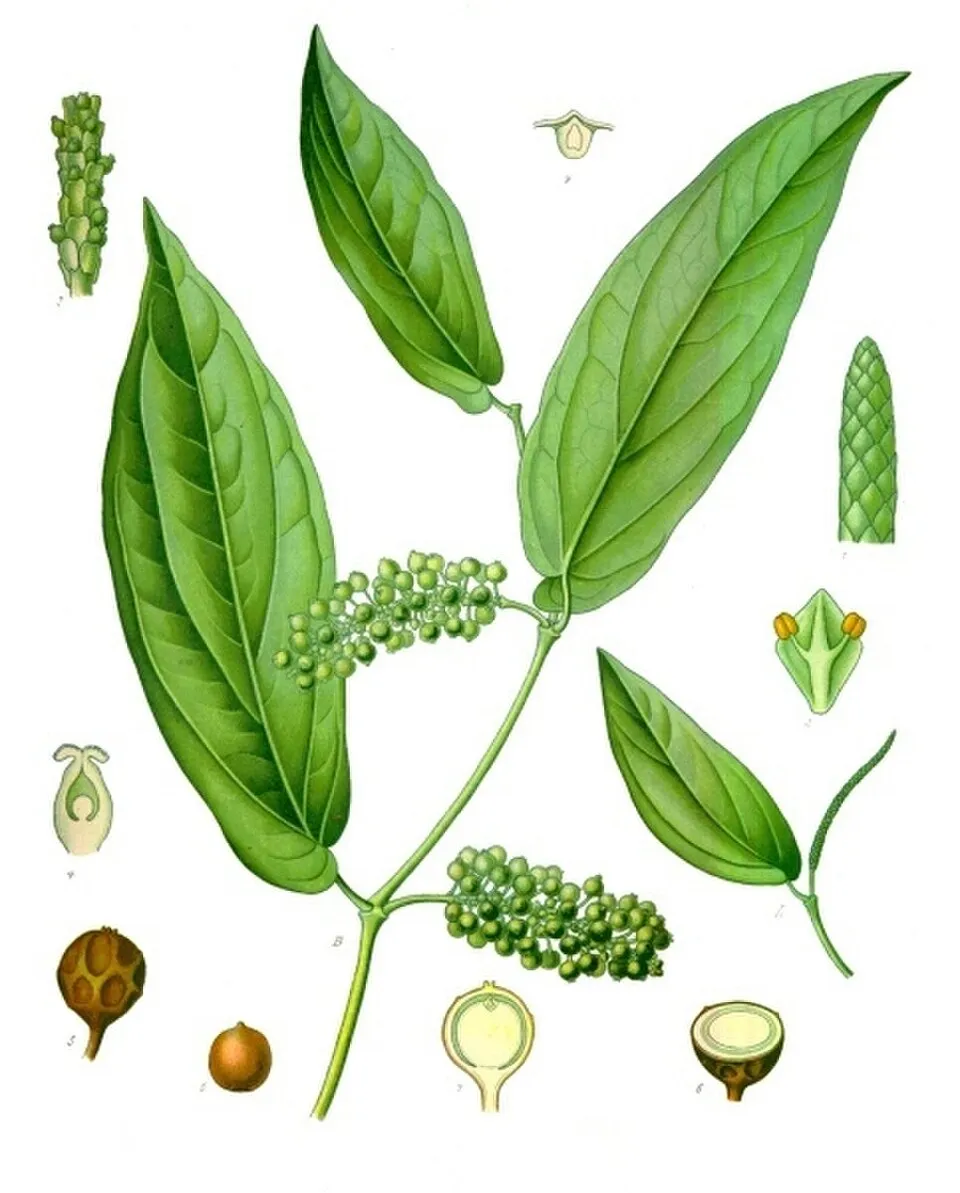
Piper cubeba, commonly known as cubeb pepper or tailed pepper, is a fascinating perennial flowering vine belonging to the botanical family Piperaceae. This robust climber typically ascends to heights of 3 to 6 meters, utilizing its sturdy stems to twine around supporting structures like trees or trellises in its native habitat.
The foliage of Piper cubeba is characterized by its deep, vibrant green hue, with leaves that are glossy, ovate to elliptical, and substantial, generally measuring between 8 to 15 cm in length. These leaves contribute significantly to the plant's lush and verdant appearance.
Its reproductive structures are equally distinctive, featuring small, densely arranged spike-like inflorescences that extend from 5 to 12 cm. These racemes bear tiny, inconspicuous greenish-white flowers that, despite their size, emit a notably spicy and aromatic fragrance, a hallmark of the species. Following successful pollination, the plant produces its prized fruit: small, spherical, berry-like drupes, typically 5 to 7 mm in diameter.
These fruits mature from green to a dark brown or black color, each possessing a unique, pungent, and slightly bitter flavor profile, often described as a cross between black pepper and allspice, with hints of eucalyptus. A defining characteristic is the persistent stalk or 'tail' at the base of each dried fruit, hence the common name 'tailed pepper.'
The stem of Piper cubeba exhibits a smooth, grayish-brown bark texture, providing a strong structural foundation in its natural environment. This species thrives in the warm, humid, and tropical climates of Southeast Asia, primarily indigenous to regions such as Indonesia (especially Java and Sumatra), Malaysia, and parts of Africa where it has been naturalized.
Its taxonomic classification within the Piperaceae family places it among a diverse group of plants renowned for their significant culinary and medicinal properties.
Trusted Scientific References
1. Authoritative external sources for Piper cubeba med
1.1 Wikipedia — Piper cubeba med
1.2 Kew POWO (Plants of the World Online)
1.3 PubMed — peer-reviewed research
1.4 NCBI Taxonomy Browser
1.5 GBIF — Global Biodiversity
1.1.Piper Cubeba — Standout Qualities
- ✓Distinctive Tailed Berries — Each fruit retains a small stalk, giving it the 'tailed pepper' name.
- ✓Unique Flavor Profile — A complex blend of peppery, spicy, slightly bitter, and eucalyptus notes.
- ✓Rich Essential Oil Content — High concentration of volatile compounds, particularly sabinene and cubebol.
- ✓Potent Lignans — Contains cubebin, a well-researched compound with diverse biological activities.
- ✓Traditional Medicinal Staple — Widely used in Ayurvedic, Unani, and TCM systems for centuries.
- ✓Versatile Culinary Ingredient — Found in spice blends and flavoring agents globally.
- ✓Anti — inflammatory Powerhouse — Significant anti-inflammatory properties attributed to its phytochemistry.
- ✓Broad — Spectrum Antimicrobial — Effective against various pathogens, supporting its traditional use in infections.
- ✓Climbing Perennial Vine — A robust, woody vine indigenous to tropical Southeast Asia.
- ✓Digestive and Respiratory Support — Primary traditional applications focus on these two body systems.
1.2.Piper Cubeba — At-a-Glance Summary
- ✓Piper cubeba, or cubeb pepper, is a tropical climbing vine from the Piperaceae family.
- ✓Valued for its unique, tailed, pungent berries used in traditional medicine and cuisine.
- ✓Rich in essential oils, lignans (like cubebin), and phenolic compounds.
- ✓Offers significant digestive, respiratory, anti-inflammatory, and antimicrobial benefits.
- ✓Used in Ayurveda, TCM, and Unani for a wide range of ailments.
- ✓Requires careful dosing and is contraindicated in pregnancy and certain health conditions.
2.Piper Cubeba — Taxonomic Classification
3.Piper Cubeba — Quick Facts
4.Piper Cubeba — Structural Profile
5.Piper Cubeba — Where It Grows
6.Piper Cubeba — Ethnobotanical Uses
7.Piper Cubeba — Secondary Metabolites
- ✓Essential Oil — The fruit yields a rich essential oil (typically 5-15%) composed primarily of monoterpenes (e.g., sabinene, α-thujene, δ-3-carene) and sesquiterpenes (e.g., cubebol, caryophyllene, germacrene D), which are responsible for its distinctive aroma and many pharmacological actions.
- ✓Lignans — Key bioactive compounds include cubebin, hinokinin, and dihydrocubebin. Cubebin, in particular, is well-studied for its anti-inflammatory, antimicrobial, anticancer, and neuroprotective properties.
- ✓Alkaloids — Contains minor amounts of piperine-like alkaloids, which contribute to its pungency and may enhance the bioavailability of other compounds.
- ✓Phenolic Acids — Includes compounds like gallic acid, caffeic acid, and ferulic acid, which are potent antioxidants and contribute to the plant's anti-inflammatory profile.
- ✓Flavonoids — Presence of various flavonoids such as quercetin, kaempferol, and rutin, known for their antioxidant, anti-inflammatory, and cardioprotective effects.
- ✓Fatty Acids — The fruit contains fixed oils with various fatty acids, though less studied for specific medicinal actions compared to the essential oil.
- ✓Steroids — Minor quantities of phytosteroids have been identified, contributing to the overall biochemical complexity.
- ✓Resins — The fruit also contains resinous compounds that may contribute to its traditional medicinal uses and pungent taste.
8.Piper Cubeba — Modern Studies
- ✓Digestive Aid — Cubeb pepper is traditionally used to stimulate digestive enzymes, alleviate symptoms of indigestion, bloating, and flatulence, acting as a carminative to soothe the gastrointestinal tract.
- ✓Respiratory Support — Its essential oil constituents, particularly monoterpenes, are believed to exert expectorant properties, helping to clear mucus and relieve congestion associated with conditions like asthma, bronchitis, and coughs.
- ✓Anti-inflammatory Action — Research suggests that lignans like cubebin and various terpenes contribute to significant anti-inflammatory effects, potentially benefiting inflammatory conditions throughout the body.
- ✓Antioxidant Properties — Rich in phenolic compounds and flavonoids, Piper cubeba exhibits strong antioxidant activity, protecting cells from oxidative stress and free radical damage.
- ✓Antimicrobial Effects — The essential oil and extracts demonstrate broad-spectrum antimicrobial activity against bacteria, fungi, and parasites, making it useful in traditional treatments for infections.
- ✓Diuretic and Renal Support — Historically, it has been employed to promote urination and support kidney health, with some studies suggesting renoprotective qualities.
- ✓Hepatoprotective Potential — Certain compounds in cubeb may help protect liver cells from damage and support overall liver function, as indicated by preclinical studies.
- ✓Wound Healing — Traditional applications include topical use for minor wounds and skin irritations, benefiting from its antiseptic and anti-inflammatory compounds.
- ✓Pain Relief — Due to its anti-inflammatory and potential analgesic properties, cubeb may offer relief from pain, particularly those related to inflammation.
- ✓Aphrodisiac Properties — In some traditional systems, cubeb is considered to possess aphrodisiac qualities, enhancing vitality and sexual health.
8.1.Piper Cubeba — Health Applications
9.Piper Cubeba — Adverse Effects
9.1.Piper Cubeba — Possible Adverse Reactions
- ✓Gastrointestinal Upset — High doses may cause stomach irritation, nausea, or diarrhea due to its pungent and stimulating properties.
- ✓Allergic Reactions — Individuals sensitive to members of the Piperaceae family or other spices may experience skin rashes, itching, or respiratory distress.
- ✓Kidney Irritation — Excessive long-term use, particularly of the essential oil, could potentially irritate the kidneys.
- ✓Liver Discomfort — While traditionally used for liver support, very high doses might theoretically strain the liver in susceptible individuals.
- ✓Skin Sensitivity — Undiluted essential oil can cause skin irritation or sensitization when applied topically.
- ✓Drug Interactions — May interact with medications, especially blood thinners, antidiabetics, or drugs metabolized by the liver, due to its active compounds.
9.2.Piper Cubeba — Safety Profile
- ✓Pregnancy & Lactation — Avoid use during pregnancy and breastfeeding due to insufficient safety data and potential uterine stimulant effects.
- ✓Children — Not recommended for infants and young children; consult a pediatrician or qualified herbalist for older children.
- ✓Pre-existing Conditions — Individuals with severe kidney disease, liver disorders, or gastrointestinal ulcers should exercise caution or avoid use.
- ✓Drug Interactions — Consult a healthcare professional if taking prescription medications, especially anticoagulants, diabetes medications, or liver-metabolized drugs.
- ✓Dosage — Adhere strictly to recommended dosages; excessive intake can lead to adverse effects.
- ✓Essential Oil Use — The essential oil should always be diluted before topical application and used internally only under the strict guidance of a qualified practitioner.
- ✓Allergic History — Individuals with known allergies to spices or Piperaceae plants should avoid cubeb.
10.Piper Cubeba — Application Forms
- ✓Powdered Fruit — Dried cubeb berries are ground into a fine powder, often mixed with honey or warm water for digestive and respiratory ailments.
- ✓Decoction/Infusion — Crushed cubeb berries can be boiled in water to create a decoction, or steeped as an infusion for a medicinal tea.
- ✓Essential Oil — The distilled essential oil is used in aromatherapy, diluted for topical application, or in very small, controlled doses internally under expert guidance for specific conditions.
- ✓Tincture — Cubeb berries can be macerated in alcohol to produce a tincture, offering a concentrated form for internal use.
- ✓Culinary Spice — Used as a spice in various cuisines, particularly in North African and Middle Eastern blends like Ras el hanout, adding a pungent, peppery flavor.
- ✓Herbal Smoking Blend — Historically used in some cultures in herbal smoking blends for respiratory issues, though this method is not widely recommended due to health risks.
- ✓Topical Application — Infused oils or poultices made from cubeb powder can be applied externally for skin conditions or muscle pain.
11.Piper Cubeba — Growing Guide
- ✓Climate — Thrives in warm, humid tropical and subtropical climates with consistent rainfall.
- ✓Soil — Prefers well-drained, fertile, organic-rich loamy soils with a slightly acidic to neutral pH (6.0-7.0).
- ✓Light — Requires partial shade, especially during the hottest parts of the day, mimicking its understory growth in native forests.
- ✓Support — As a climbing vine, it needs robust trellises, stakes, or living trees for support to grow vertically.
- ✓Watering — Needs regular and abundant watering, ensuring the soil remains consistently moist but not waterlogged.
- ✓Propagation — Primarily propagated from seeds or stem cuttings, with cuttings being faster for establishing new plants.
- ✓Fertilization — Benefits from regular applications of balanced organic fertilizer during its growing season.
- ✓Pests/Diseases — Generally robust, but watch for common tropical pests like aphids or fungal issues in overly damp conditions.
Reviewed by the Flora Medical Global Botanical Review Panel
Multi-disciplinary editorial group · Botany · Ethnobotany · Herbal-medicine literature
Who reviewed this: This page was checked by the Flora Medical Global Botanical Review Panel — an in-house editorial group of botany graduates, ethnobotany researchers, and horticulture practitioners who collectively maintain our 7,000+ plant encyclopedia. Meet the team.
Our 4-step verification process
1. Taxonomic verification
Scientific names and synonyms cross-checked against Kew POWO, World Flora Online, and The Plant List.
2. Phytochemical & medicinal cross-reference
Active compounds, traditional uses, and reported activities are cross-referenced with PubMed, USDA Dr. Duke's database, and peer-reviewed ethnobotanical literature.
3. Conservation & distribution check
Distribution, ecology, and conservation status confirmed against GBIF occurrence records and the IUCN Red List.
4. Editorial & safety review
Every entry passes an editorial pass for clarity, originality, and safety notices (toxicity, contraindications, dosage caveats) before publication.
Last reviewed:
Important medical disclaimer: This content is for educational and research purposes only. It is not medical advice and is not a substitute for consultation with a licensed healthcare provider. Do not use any herb to self-treat a medical condition without professional guidance.
Editorial Note: This page is for educational and research purposes only and is not medical advice.
Written by: Flora Medical Global Editorial Team
Reviewed by: Flora Medical Global Botanical Review Panel
Last Updated: June 15, 2026





Piper Cubeba — Comments & Community Reviews
Rate this plant