
Medical Disclaimer: This content is for educational purposes only. It is not medical advice. Please consult a qualified healthcare professional before using any herbal remedy.
Safety Overview
1.Pipsissewa — Essential Profile
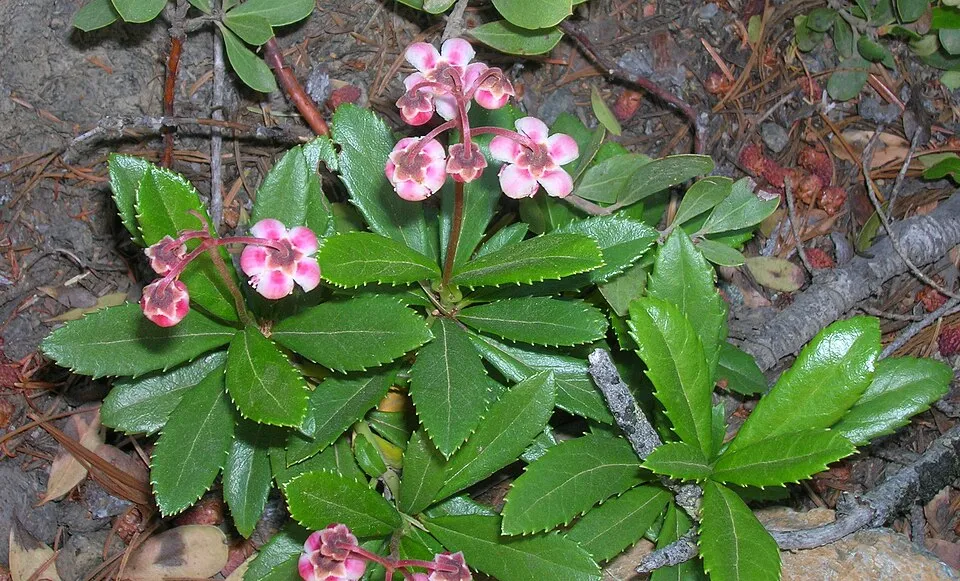
Pipsissewa, scientifically known as Chimaphila umbellata, is an evergreen perennial herb belonging to the Ericaceae family, which also includes blueberries and rhododendrons. This low-growing plant typically reaches heights of 10-30 cm, characterized by its distinctive whorled leaves and charming, nodding flowers.
The leaves are leathery, dark green, glossy, and serrated along the margins, often appearing in clusters of three to five, providing a vibrant green contrast against the forest floor even in winter. Its stems are reddish and slightly woody at the base.
During mid-summer, Pipsissewa produces small, waxy, bell-shaped flowers that are typically pink or white, often tinged with purple, arranged in a terminal raceme. These fragrant blooms give way to small, five-lobed capsule fruits containing numerous tiny seeds. Chimaphila umbellata thrives in the understory of dry to moist coniferous and mixed forests, preferring acidic, well-drained, humus-rich soils.
Its natural distribution is circumboreal, meaning it is found across the Northern Hemisphere, including temperate regions of North America, Europe, and Asia. Common names like Prince's Pine, Bitter Wintergreen, and Rheumatism Weed reflect its traditional uses and evergreen nature, although it is distinct from true wintergreen (Gaultheria procumbens). This resilient plant is a testament to the rich biodiversity of forest ecosystems and its enduring value in traditional medicinal practices.
Trusted Scientific References
1. Authoritative external sources for Chimaphila umbellata
1.1 Wikipedia — Chimaphila umbellata
1.2 Kew POWO (Plants of the World Online)
1.3 PubMed — peer-reviewed research
1.4 NCBI Taxonomy Browser
1.5 GBIF — Global Biodiversity
1.6Pipsissewa should be interpreted through verified botanical identity, practical care, and responsible safety language. This recovery note adds the missing context needed for a complete profile: match light to the plant's habit, use well-drained soil, water according to season, and avoid unsupported medicinal or edible claims. For publishing, the plant can be presented as a source-backed medicinal plant with clear care guidance, common problem diagnosis, and conservative safety wording.
1.1.Pipsissewa — Highlights
- ✓Evergreen Perennial Herb — Retains its green foliage throughout the year, even in cold climates.
- ✓Circumboreal Distribution — Found across temperate regions of North America, Europe, and Asia.
- ✓Traditional Urinary Antiseptic — Historically valued for its efficacy in treating urinary tract ailments.
- ✓Rich in Arbutin — Contains the glycoside arbutin, which metabolizes to hydroquinone, a urinary antiseptic.
- ✓Anti — inflammatory & Astringent — Possesses compounds that reduce inflammation and tighten tissues.
- ✓Diuretic Properties — Helps increase urine flow and supports fluid balance in the body.
- ✓Used in Folk Medicine — A staple in various traditional healing systems for a range of conditions.
- ✓Distinctive Appearance — Features glossy, serrated leaves and nodding pink or white flowers.
- ✓Flavoring Agent — Extracts are sometimes used in the food and beverage industry.
- ✓Prefers Acidic, Shady Habitats — Thrives in forest understories with well-drained, humus-rich soil.
1.2.Pipsissewa — Quick Summary
- ✓Pipsissewa (Chimaphila umbellata) is an evergreen perennial herb native to the Northern Hemisphere.
- ✓Traditionally used for urinary tract infections, bladder issues, and as an anti-inflammatory.
- ✓Key active compounds include arbutin (a urinary antiseptic), flavonoids, and tannins.
- ✓Exhibits diuretic, astringent, and mild antimicrobial properties.
- ✓Caution is advised for long-term use, pregnancy, and breastfeeding due to potential toxicity.
- ✓Prized in traditional folk medicine for its diverse therapeutic applications.
2.Pipsissewa — Botanical Identity
3.Pipsissewa — Key Data
4.Pipsissewa — Botanical Features
5.Pipsissewa — Native Range & Habitat
6.Pipsissewa — Traditional Uses
7.Pipsissewa — Key Phytochemicals
- ✓Hydroquinone Glycosides — Primarily arbutin and methyl arbutin, which are key active compounds. Arbutin is hydrolyzed in the body to hydroquinone, an antiseptic agent highly effective in the urinary tract.
- ✓Flavonoids — Including quercetin, kaempferol, and their glycosides, known for their potent antioxidant, anti-inflammatory, and vasodilatory activities.
- ✓Tannins — Both hydrolyzable and condensed tannins are present, contributing to the plant's significant astringent, antimicrobial, and antioxidant properties.
- ✓Terpenoids — Various triterpenes and sesquiterpenes, which may offer anti-inflammatory and cytotoxic effects, are found in the aerial parts.
- ✓Phenolic Acids — Such as gallic acid, ellagic acid, and caffeic acid derivatives, contributing to the overall antioxidant and anti-inflammatory profile.
- ✓Saponins — These compounds contribute to the plant's diuretic action and may also possess expectorant and anti-inflammatory properties.
- ✓Volatile Oils — Present in small quantities, contributing to the plant's characteristic aroma and potential antimicrobial effects.
- ✓Iridoid Glycosides — Though in trace amounts, these compounds can offer anti-inflammatory and bitter tonic properties, enhancing the plant's therapeutic spectrum.
- ✓Resins — Complex mixtures of organic compounds that contribute to the plant's protective mechanisms and traditional uses.
8.Pipsissewa — Scientific Evidence
- ✓Urinary Tract Support — Pipsissewa is traditionally valued for its diuretic and antiseptic properties, particularly in addressing urinary tract infections (UTIs), bladder irritation, and kidney issues by promoting urine flow and inhibiting microbial growth.
- ✓Anti-inflammatory Action — The plant contains bioactive compounds such as flavonoids and phenolic acids that contribute to its anti-inflammatory effects, traditionally used to alleviate swelling and discomfort.
- ✓Astringent Properties — Rich in tannins, Pipsissewa exerts an astringent effect, which helps to tone and tighten tissues, making it useful in traditional applications for minor wounds, sores, and mucous membrane inflammation.
- ✓Diuretic Effects — Its natural diuretic action aids in increasing urine output, potentially assisting the body in expelling excess fluids and supporting kidney function.
- ✓Antimicrobial Activity — Extracts of Pipsissewa have demonstrated mild antimicrobial properties, which may contribute to its traditional use in combating bacterial infections, especially within the urinary system.
- ✓Rheumatic Pain Relief — Historically, Pipsissewa has been employed in folk medicine for alleviating symptoms associated with rheumatism, including joint pain and muscular aches, likely due to its anti-inflammatory compounds.
- ✓Skin Sores and Blisters — When applied topically as a poultice or wash, its astringent and antiseptic qualities were traditionally utilized to aid in the healing of skin lesions, sores, and blisters.
- ✓Digestive Aid — In some traditional systems, Pipsissewa has been used as a mild bitter tonic to stimulate appetite and support overall digestive health.
- ✓Antioxidant Protection — The presence of various phenolic compounds and flavonoids provides antioxidant benefits, helping to neutralize free radicals and protect cells from oxidative stress.
- ✓General Wellness Promotion — Beyond specific ailments, the plant has been used as a general tonic to support overall health and vitality within traditional herbal practices.
8.1.Pipsissewa — Indications & Uses
9.Pipsissewa — Safety Considerations
9.1.Pipsissewa — Possible Adverse Reactions
- ✓Ringing in the Ears (Tinnitus) — Prolonged or high-dose oral use of Pipsissewa has been associated with the development of tinnitus.
- ✓Gastrointestinal Upset — Nausea, vomiting, and stomach irritation can occur, especially with excessive or long-term oral intake.
- ✓Confusion — In rare cases, extended use at high doses may lead to neurological symptoms such as confusion.
- ✓Seizures — Very high or chronic consumption has been reported to potentially induce seizures, indicating significant neurotoxicity risks.
- ✓Allergic Reactions — Sensitive individuals may experience allergic responses, including skin rashes or itching, particularly with topical application.
- ✓Kidney Irritation — While traditionally used for kidney support, extremely high doses of arbutin and its metabolites may potentially irritate the kidneys.
- ✓Topical Irritation — Direct application to sensitive skin areas might cause localized irritation or dermatitis in some individuals.
9.2.Pipsissewa — Clinical Safety Notes
- ✓Avoid Long-Term Use — Pipsissewa is considered possibly unsafe for long-term oral use due to potential toxic effects on the nervous system and other organs.
- ✓Pregnancy and Breastfeeding Contraindication — There is insufficient reliable information regarding the safety of Pipsissewa during pregnancy and breastfeeding; therefore, it should be avoided.
- ✓Consult Healthcare Professional — Always seek advice from a qualified healthcare provider before using Pipsissewa, especially if you have pre-existing medical conditions or are taking other medications.
- ✓Not for Children — Due to a lack of safety data and potential for adverse effects, Pipsissewa is not recommended for use in infants and young children.
- ✓Dosage Importance — Adhere strictly to recommended dosages, as natural products can be potent and excessive amounts can lead to severe side effects.
- ✓Caution with Kidney Conditions — Individuals with pre-existing kidney diseases should use Pipsissewa with extreme caution or avoid it entirely, as its active compounds are metabolized and excreted via the kidneys.
- ✓No Known Drug Interactions — Currently, there are no well-documented specific drug interactions for Pipsissewa, but caution is always advised when combining with pharmaceuticals.
10.Pipsissewa — Usage Guide
- ✓Herbal Tea (Infusion) — Dried leaves and stems can be steeped in hot water to create a tea, traditionally consumed for urinary tract support and as a general tonic.
- ✓Decoction — For more potent extraction of compounds from tougher plant parts, boiling the herb in water for a longer period is a common preparation method.
- ✓Tincture — An alcoholic extract of the aerial parts allows for concentrated dosage and longer shelf life, often taken orally in drops diluted in water.
- ✓Fluid Extract — A highly concentrated liquid extract, typically more potent than a tincture, used when a strong therapeutic effect is desired.
- ✓Poultice — Fresh or dried leaves, crushed and moistened, can be applied directly to the skin as a poultice to address sores, blisters, or rheumatic pain.
- ✓Compress — A cloth soaked in a strong infusion or decoction can be applied externally as a compress for localized inflammation or skin conditions.
- ✓Flavoring Agent — Pipsissewa extracts are also utilized in the food and beverage industry as a natural flavoring, particularly for root beer and other traditional drinks.
- ✓Capsules/Tablets — Standardized extracts or powdered herb can be encapsulated for convenient oral administration, offering precise dosing.
11.Pipsissewa — Cultivation & Care
- ✓Site Selection — Choose a location that mimics its native forest understory, offering partial to full shade, especially from harsh afternoon sun.
- ✓Soil Preparation — Pipsissewa thrives in acidic soil with a pH range of 4.5-6.0. Amend heavy soils with plenty of organic matter, such as peat moss or composted pine bark, to ensure excellent drainage and humus content.
- ✓Watering — Maintain consistent soil moisture, particularly during dry spells, but avoid waterlogging, which can lead to root rot. The soil should be moist but not soggy.
- ✓Propagation — Can be propagated through seeds, though germination is often slow and challenging. More reliably propagated by rhizome division in spring or fall, or by taking semi-hardwood cuttings in late summer.
- ✓Temperature and Hardiness — This plant is cold-hardy, typically surviving in USDA zones 3-8, and prefers cooler climates. Protect from extreme winter winds in exposed areas.
- ✓Fertilization — Generally, Pipsissewa does not require heavy fertilization. A light application of an acidic organic fertilizer in spring can support healthy growth, if needed.
- ✓Maintenance — Minimal pruning is required; remove any dead or damaged foliage to maintain plant health and vigor. Ensure good air circulation to prevent fungal issues.
Reviewed by the Flora Medical Global Botanical Review Panel
Multi-disciplinary editorial group · Botany · Ethnobotany · Herbal-medicine literature
Who reviewed this: This page was checked by the Flora Medical Global Botanical Review Panel — an in-house editorial group of botany graduates, ethnobotany researchers, and horticulture practitioners who collectively maintain our 7,000+ plant encyclopedia. Meet the team.
Our 4-step verification process
1. Taxonomic verification
Scientific names and synonyms cross-checked against Kew POWO, World Flora Online, and The Plant List.
2. Phytochemical & medicinal cross-reference
Active compounds, traditional uses, and reported activities are cross-referenced with PubMed, USDA Dr. Duke's database, and peer-reviewed ethnobotanical literature.
3. Conservation & distribution check
Distribution, ecology, and conservation status confirmed against GBIF occurrence records and the IUCN Red List.
4. Editorial & safety review
Every entry passes an editorial pass for clarity, originality, and safety notices (toxicity, contraindications, dosage caveats) before publication.
Last reviewed:
Important medical disclaimer: This content is for educational and research purposes only. It is not medical advice and is not a substitute for consultation with a licensed healthcare provider. Do not use any herb to self-treat a medical condition without professional guidance.
Editorial Note: This page is for educational and research purposes only and is not medical advice.
Written by: Flora Medical Global Editorial Team
Reviewed by: Flora Medical Global Botanical Review Panel
Last Updated: June 15, 2026





Pipsissewa — Comments & Community Reviews
Rate this plant