
Medical Disclaimer: This content is for educational purposes only. It is not medical advice. Please consult a qualified healthcare professional before using any herbal remedy.
Safety Overview
1.Pittosporum — Overview
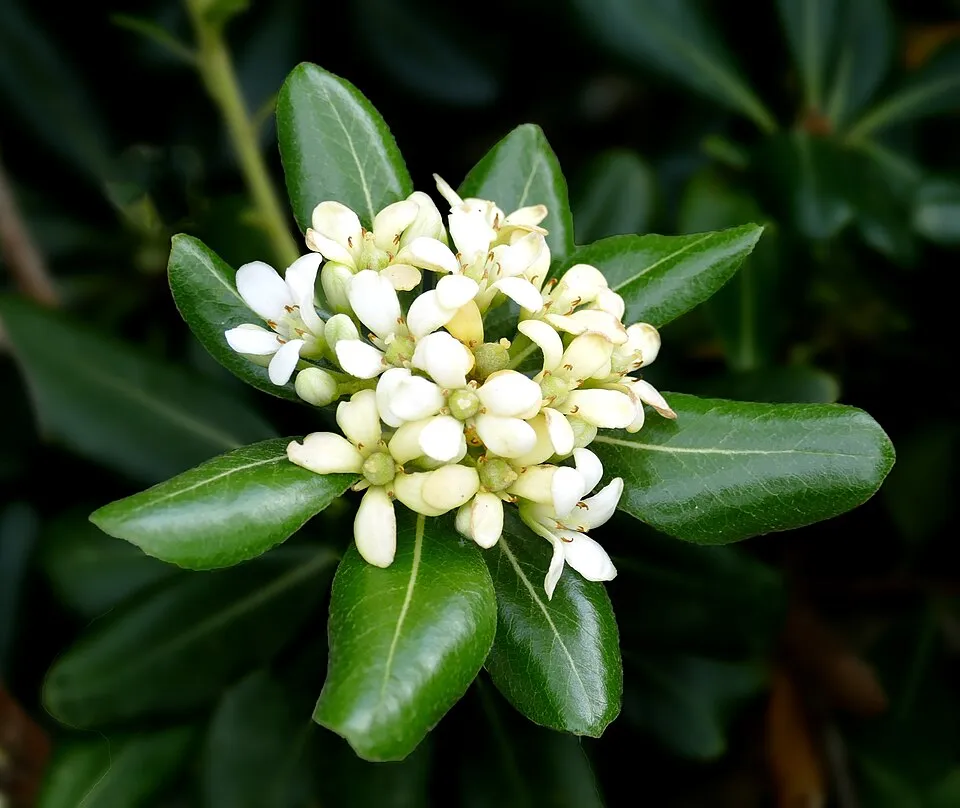
Pittosporum tobira, commonly known as Japanese Pittosporum or Japanese Mock Orange, is a robust and highly ornamental evergreen shrub belonging to the Pittosporaceae family. Native to the coastal regions of East Asia, specifically Japan, China, and Korea, it thrives in a variety of challenging environments. This species typically forms a dense, rounded mound, reaching mature dimensions of 5 to 10 feet in both height and spread, though it is readily adaptable to pruning for smaller forms or even as a compact tree.
Its most striking feature is its foliage: thick, leathery, obovate leaves with a glossy dark green upper surface and a paler underside, often displaying subtly undulated margins. From late spring into early summer, Pittosporum tobira produces terminal clusters of small, star-shaped flowers. These creamy-white blooms are renowned for their intensely sweet, orange-blossom-like fragrance, making the plant a cherished addition to sensory gardens and landscape designs where its aroma can be appreciated.
Following the floral display, small, woody capsules develop, which eventually split open to reveal sticky, orange-red seeds. The plant's exceptional adaptability extends to its tolerance of salt spray, significant drought once established, a wide range of soil types, and both full sun and partial shade, cementing its role as a versatile and resilient choice for coastal landscapes, hedges, foundation plantings, and container cultivation in temperate to subtropical zones.
Trusted Scientific References
1. Authoritative external sources for Pittosporum tobira
1.1 Wikipedia — Pittosporum tobira
1.2 Kew POWO (Plants of the World Online)
1.3 PubMed — peer-reviewed research
1.4 NCBI Taxonomy Browser
1.5 GBIF — Global Biodiversity
1.6Pittosporum should be interpreted through verified botanical identity, practical care, and responsible safety language. This recovery note adds the missing context needed for a complete profile: match light to the plant's habit, use well-drained soil, water according to season, and avoid unsupported medicinal or edible claims. For publishing, the plant can be presented as a source-backed garden plant with clear care guidance, common problem diagnosis, and conservative safety wording.
1.1.Pittosporum — Key Features
- ✓Evergreen foliage with — Evergreen foliage with glossy, dark green leaves.
- ✓Produces intensely fragrant, creamy — white, star-shaped flowers.
- ✓Native to Japan, — Native to Japan, China, and Korea (East Asia).
- ✓Highly adaptable to — Highly adaptable to various growing conditions, including salt and drought.
- ✓Primarily cultivated as — Primarily cultivated as an ornamental shrub or small tree.
- ✓Exhibits in vitro anti — inflammatory properties in research.
- ✓Demonstrated antioxidant activity — Demonstrated antioxidant activity in laboratory studies.
- ✓Possesses in vitro — Possesses in vitro antimicrobial potential against certain pathogens.
- ✓Tolerates both full — Tolerates both full sun and partial shade environments.
- ✓Low maintenance and — Low maintenance and generally resistant to pests and diseases.
1.2.Pittosporum — In Brief
- ✓Pittosporum tobira is a fragrant evergreen shrub known for its ornamental value.
- ✓Native to East Asia, it boasts glossy leaves and sweet-scented white flowers.
- ✓Research indicates in vitro anti-inflammatory, antioxidant, and antimicrobial properties.
- ✓It is highly adaptable, tolerating drought, salt, and various soil conditions.
- ✓Not recommended for internal medicinal consumption due to limited safety data.
- ✓Primarily valued for its landscape aesthetics and delightful fragrance.
2.Pittosporum — Scientific Profile
3.Pittosporum — Botanical Stats
4.Pittosporum — Morphological Account
5.Pittosporum — Habitat & Distribution
6.Pittosporum — Historical Applications
7.Pittosporum — Active Compounds
- ✓Terpenoids — This class includes monoterpenes and triterpenes, contributing to the plant's characteristic fragrance and exhibiting potential anti-inflammatory and antimicrobial activities.
- ✓Flavonoids — Compounds like quercetin and kaempferol derivatives are present, known for their potent antioxidant, anti-inflammatory, and potentially anticarcinogenic effects.
- ✓Phenolic Acids — Such as caffeic acid and chlorogenic acid, which are significant antioxidants and contribute to the plant's defense mechanisms against pathogens.
- ✓Saponins — These naturally occurring glycosides may possess immunomodulatory, anti-inflammatory, and hypocholesterolemic properties, though their specific role in P. tobira is less explored.
- ✓Coumarins — A group of lactones that can have anticoagulant, anti-inflammatory, and antimicrobial effects, found in various plant species.
- ✓Steroids — Including phytosterols like beta-sitosterol, which are recognized for their anti-inflammatory and cholesterol-lowering potential.
- ✓Essential Oils — Responsible for the distinctive sweet, orange-blossom-like aroma of the flowers, these volatile compounds often contain monoterpenes and sesquiterpenes with antimicrobial and relaxing properties.
- ✓Tannins — Astringent compounds that can provide antioxidant and antimicrobial benefits, often used in traditional medicine for their healing properties.
- ✓Fatty Acids — The seeds contain various fatty acids, which are essential for plant growth and can have nutritional value.
- ✓Alkaloids — While not extensively studied in Pittosporum tobira, some plant species in the family may contain minor alkaloid compounds with diverse pharmacological activities.
8.Pittosporum — Modern Studies
- ✓Anti-inflammatory Potential — Research indicates that extracts from Pittosporum tobira leaves and bark possess compounds that may help reduce inflammation.
- ✓Antioxidant Activity — Phytochemical analyses reveal the presence of compounds like flavonoids and phenolic acids, which exhibit significant antioxidant properties, potentially protecting cells from oxidative stress.
- ✓Antimicrobial Properties — In vitro studies have demonstrated that extracts of Japanese Pittosporum can inhibit the growth of various microorganisms, suggesting potential antibacterial and antifungal applications.
- ✓Wound Healing Support — Given its anti-inflammatory and antimicrobial actions, Pittosporum tobira extracts might theoretically aid in the healing of minor wounds or skin abrasions by reducing infection risk and inflammation.
- ✓Skin Health Promotion — The antioxidant and anti-inflammatory compounds could contribute to healthier skin by combating free radical damage and soothing irritated skin, though this requires further investigation.
- ✓Potential Pain Relief — Through its observed anti-inflammatory mechanisms, extracts may offer a natural avenue for alleviating discomfort associated with inflammatory conditions.
- ✓Immune System Modulation — While not directly proven, the presence of various bioactive compounds suggests a potential role in supporting or modulating immune responses.
- ✓Respiratory Comfort (Traditional) — Although not widely documented, some localized traditional uses in its native regions might have explored its aromatic properties for respiratory comfort, similar to other fragrant plants.
- ✓Cardiovascular Health Support — The antioxidant properties could indirectly contribute to cardiovascular well-being by mitigating oxidative damage to blood vessels.
- ✓Neuroprotective Interest — Certain flavonoids and phenolic compounds found in plants are known for neuroprotective effects, warranting further study in Pittosporum tobira extracts.
8.1.Pittosporum — Reported Uses
9.Pittosporum — Adverse Effects
9.1.Pittosporum — Side Effects & Warnings
- ✓Skin Irritation — Direct contact with the sap or foliage may cause mild skin irritation or allergic reactions in sensitive individuals.
- ✓Gastrointestinal Upset — Accidental ingestion of plant parts, especially seeds, may lead to mild gastrointestinal discomfort, nausea, or vomiting.
- ✓Allergic Reactions — Individuals sensitive to strong floral fragrances may experience respiratory irritation or allergic responses to the plant's blooms.
- ✓Potential Toxicity — While not considered highly toxic, some Pittosporum species contain compounds that can be mildly toxic if ingested in large quantities by humans or pets.
- ✓Photosensitivity (Hypothetical) — Certain plant compounds can induce photosensitivity; however, this is not widely reported for Pittosporum tobira.
- ✓Interaction with Medications (Hypothetical) — Due to limited research on internal use, potential interactions with pharmaceutical medications are unknown and should be considered.
9.2.Pittosporum — Safety Overview
- ✓Not for Internal Consumption — Pittosporum tobira is primarily an ornamental plant and is not recommended for internal medicinal use due to insufficient safety data.
- ✓Keep Out of Reach — Keep plant parts, especially seeds, away from children and pets to prevent accidental ingestion.
- ✓Consult a Professional — Always consult a healthcare professional or medical herbalist before considering any internal or extensive topical use of plant extracts.
- ✓Patch Test for Topical Use — If exploring topical applications (for research or highly localized folk use), perform a small patch test to check for skin sensitivity or allergic reactions.
- ✓Pregnancy and Lactation — Pregnant and nursing individuals should avoid any internal use and exercise caution with extensive topical exposure due to lack of safety data.
- ✓Allergic Individuals — People with known plant allergies or sensitivities to strong fragrances should approach this plant with caution.
- ✓Ornamental Use is Safe — When used purely for ornamental purposes in gardens, Pittosporum tobira is generally considered safe for landscape applications.
10.Pittosporum — Application Forms
- ✓Ornamental Landscaping — Primarily cultivated for its aesthetic appeal, dense foliage, and fragrant flowers in gardens, hedges, and foundation plantings.
- ✓Aromatic Applications — The intensely fragrant flowers can be used in fresh floral arrangements or potpourri to infuse spaces with a sweet, uplifting aroma.
- ✓Research Extracts — For scientific investigation, extracts are typically prepared using solvents like ethanol or water from leaves, bark, or flowers to isolate and study active compounds.
- ✓Topical Preparations (Potential) — If future research validates safety and efficacy, extracts could potentially be incorporated into topical creams, salves, or poultices for skin inflammation or minor infections.
- ✓External Washes (Speculative Traditional) — In some localized folk practices, decoctions of leaves or bark might have been used as external washes for skin conditions or as a mild astringent, though not widely documented.
- ✓Aromatherapy (Indirect) — While not an essential oil extracted for direct aromatherapy, the plant's natural fragrance can contribute to a pleasant and calming garden environment.
- ✓Educational and Botanical Study — Used in botanical gardens and educational institutions for study of its unique morphology and ecological adaptations.
11.Pittosporum — Propagation & Care
- ✓Site Selection — Choose a location with full sun to partial shade for optimal growth and flowering.
- ✓Soil Requirements — Adaptable to a wide range of well-draining soils, including sandy, loamy, or clay, with a pH from acidic to slightly alkaline.
- ✓Watering — Water regularly until established; once mature, Japanese Pittosporum is remarkably drought-tolerant, requiring minimal supplemental irrigation.
- ✓Fertilization — Apply a balanced, slow-release granular fertilizer in early spring to promote vigorous growth, especially for container-grown plants.
- ✓Pruning — Prune after flowering to maintain desired shape, size, and density; it tolerates heavy pruning well for hedging or shaping.
- ✓Propagation — Can be propagated from seeds, which require stratification, or more commonly from semi-hardwood cuttings taken in summer.
- ✓Pest and Disease Management — Generally pest and disease resistant, though watch for aphids, scale insects, or root rot in poorly drained soils.
- ✓Climate Zones — Best suited for USDA hardiness zones 8-10, tolerating temperatures down to about 10-15°F (-12 to -9°C).
Reviewed by the Flora Medical Global Botanical Review Panel
Multi-disciplinary editorial group · Botany · Ethnobotany · Herbal-medicine literature
Who reviewed this: This page was checked by the Flora Medical Global Botanical Review Panel — an in-house editorial group of botany graduates, ethnobotany researchers, and horticulture practitioners who collectively maintain our 7,000+ plant encyclopedia. Meet the team.
Our 4-step verification process
1. Taxonomic verification
Scientific names and synonyms cross-checked against Kew POWO, World Flora Online, and The Plant List.
2. Phytochemical & medicinal cross-reference
Active compounds, traditional uses, and reported activities are cross-referenced with PubMed, USDA Dr. Duke's database, and peer-reviewed ethnobotanical literature.
3. Conservation & distribution check
Distribution, ecology, and conservation status confirmed against GBIF occurrence records and the IUCN Red List.
4. Editorial & safety review
Every entry passes an editorial pass for clarity, originality, and safety notices (toxicity, contraindications, dosage caveats) before publication.
Last reviewed:
Important medical disclaimer: This content is for educational and research purposes only. It is not medical advice and is not a substitute for consultation with a licensed healthcare provider. Do not use any herb to self-treat a medical condition without professional guidance.
Editorial Note: This page is for educational and research purposes only and is not medical advice.
Written by: Flora Medical Global Editorial Team
Reviewed by: Flora Medical Global Botanical Review Panel
Last Updated: June 15, 2026





Pittosporum — Comments & Community Reviews
Rate this plant