

Medical Disclaimer: This content is for educational purposes only. It is not medical advice. Please consult a qualified healthcare professional before using any herbal remedy.
Safety Overview
1.Plai — Botanical Snapshot
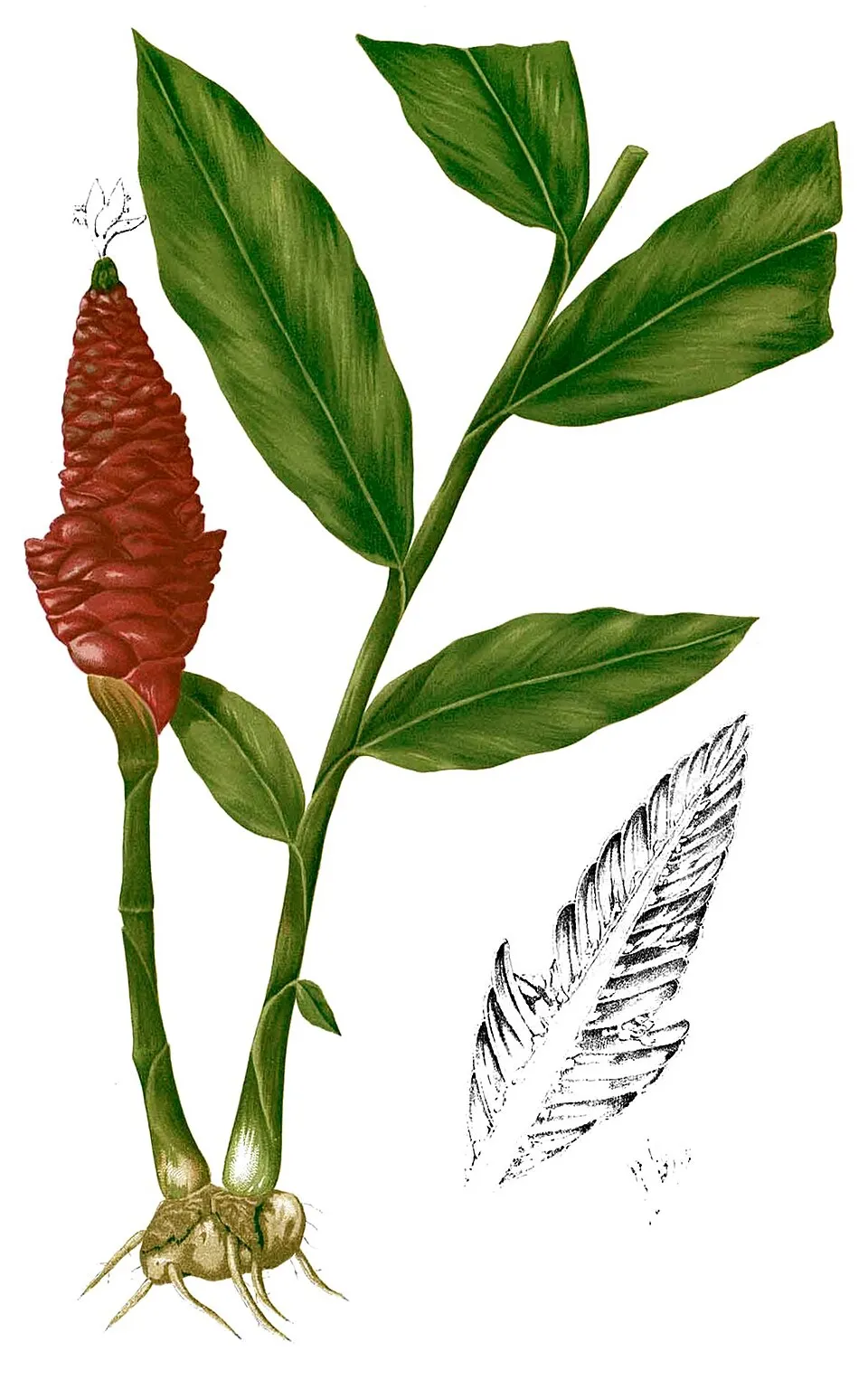
Plai, scientifically known as Zingiber montanum (J.Koenig) Link ex A. Dietr., is a robust perennial herbaceous plant belonging to the Zingiberaceae family, closely related to common ginger. It typically reaches heights of up to 1.5 meters, presenting an upright growth habit with a thick, often smooth stem.
Its prominent foliage consists of elongated, lanceolate leaves, measuring approximately 15 to 30 cm in length, characterized by a glossy green surface. The plant’s vibrant inflorescence emerges in distinct clusters, showcasing yellowish flowers often tinged with purple, shaped like lanterns, and blooming primarily from July to September.
The most medicinally significant part of Plai is its subterranean rhizome, which possesses a rough, fleshy texture and emits a characteristic, pungent ginger-like aroma. Zingiber montanum is indigenous to the tropical regions of Southeast Asia, with a particularly strong cultural and medicinal presence in Thailand, where it is locally known as 'Plai.' Its natural habitat encompasses moist and shaded forest areas, thriving in the warm, humid conditions typical of tropical to subtropical climates.
Beyond Thailand, Plai can also be found growing in other Asian countries such as India, Malaysia, and Indonesia, contributing significantly to local biodiversity and traditional herbal pharmacopeias.
Trusted Scientific References
1. Authoritative external sources for Zingiber montanum
1.1 Wikipedia — Zingiber montanum
1.2 Kew POWO (Plants of the World Online)
1.3 PubMed — peer-reviewed research
1.4 NCBI Taxonomy Browser
1.5 GBIF — Global Biodiversity
1.6Plai should be interpreted through verified botanical identity, practical care, and responsible safety language. This recovery note adds the missing context needed for a complete profile: match light to the plant's habit, use well-drained soil, water according to season, and avoid unsupported medicinal or edible claims. For publishing, the plant can be presented as a source-backed medicinal plant with clear care guidance, common problem diagnosis, and conservative safety wording.
1.1.Plai — Notable Characteristics
- ✓Tropical Perennial Herb — Native to Southeast Asia, thriving in warm, humid climates.
- ✓Aromatic Rhizome — The primary medicinal part, possessing a distinct pungent, ginger-like aroma.
- ✓Traditional Thai Medicine Staple — Deeply integrated into Thai traditional healing practices for centuries.
- ✓Potent Anti — inflammatory Action — Highly valued for reducing inflammation due to unique phenylbutenoids.
- ✓Analgesic Properties — Effective in alleviating various types of pain, especially musculoskeletal discomfort.
- ✓Rich in Phenylbutenoids — Contains unique bioactive compounds such as (E)-1-(3,4-dimethoxyphenyl)but-1-ene.
- ✓Versatile Topical Application — Widely used in creams, gels, and herbal compresses for external relief.
- ✓Digestive and Respiratory Support — Traditional uses include aiding digestion and addressing respiratory ailments.
- ✓Antimicrobial Potential — Essential oils exhibit properties against bacteria, fungi, and yeasts.
- ✓Ongoing Scientific Validation — Modern research continues to explore and confirm its traditional therapeutic benefits.
1.2.Plai — In Brief
- ✓Native to Southeast Asia, Plai (Zingiber montanum) is a renowned member of the ginger family.
- ✓Its rhizome is a cornerstone of traditional Thai medicine, prized for its therapeutic properties.
- ✓Scientific research supports its significant anti-inflammatory and analgesic effects, particularly for musculoskeletal pain.
- ✓Key bioactive compounds include phenylbutenoids like (E)-1-(3,4-dimethoxyphenyl)but-1-ene.
- ✓Commonly used in topical creams, essential oils, and herbal compresses for localized relief.
- ✓While generally well-tolerated, caution is advised, especially regarding potential skin sensitivity and interactions.
2.Plai — Botanical Identity
3.Plai — Key Data
4.Plai — Botanical Features
5.Plai — Native Range & Habitat
6.Plai — Folk Medicine Applications
7.Plai — Phytochemistry
- ✓Phenylbutenoids — Key compounds include (E)-1-(3,4-dimethoxyphenyl)but-1-ene (DMPBD), plaiwanone, and cassumunarin, which are primarily responsible for Plai's potent anti-inflammatory and analgesic effects.
- ✓Essential Oils (Volatile Compounds) — The rhizome yields a rich essential oil containing monoterpenes like sabinene, alpha-pinene, gamma-terpinene, and terpinene-4-ol, contributing to its distinctive aroma and antimicrobial properties.
- ✓Diarylheptanoids — These compounds, including some structurally similar to curcuminoids, are present and contribute to the plant's anti-inflammatory and antioxidant activities.
- ✓Flavonoids — Various flavonoids are found in Plai, acting as natural antioxidants that protect cells from oxidative damage and support immune function.
- ✓Phenolic Acids — These phytochemicals contribute to the plant's overall antioxidant capacity and may play a role in its anti-inflammatory actions.
- ✓Sesquiterpenes — Different sesquiterpenes are part of the essential oil composition, offering additional anti-inflammatory and antimicrobial benefits.
- ✓Steroids — Plant steroids may be present, influencing various physiological processes and potentially contributing to hormonal balance or anti-inflammatory effects.
- ✓Terpenoids — A broad category encompassing both monoterpenes and sesquiterpenes, crucial for the plant's aromatic and therapeutic profile.
- ✓Alkaloids — Though generally in lower concentrations compared to other categories, alkaloids may contribute to Plai's diverse pharmacological activities.
8.Plai — Evidence-Based Benefits
- ✓Anti-inflammatory Action — Plai is highly regarded for its potent anti-inflammatory properties, primarily attributed to compounds like (E)-1-(3,4-dimethoxyphenyl)but-1-ene, which modulates inflammatory pathways.
- ✓Analgesic Effects — It demonstrates significant pain-relieving capabilities, particularly useful for musculoskeletal discomfort, by interfering with pain signaling mechanisms.
- ✓Musculoskeletal Pain Relief — Topical application of Plai cream has shown benefits in reducing pain associated with muscle soreness, sprains, and mild to moderate osteoarthritis.
- ✓Digestive Health Support — Traditionally used as a carminative, Plai helps alleviate symptoms of indigestion, flatulence, and stomach discomfort, promoting overall digestive wellness.
- ✓Antimicrobial Properties — The essential oil extracted from Plai rhizomes exhibits activity against various bacteria, dermatophytes, and yeasts, offering potential as a natural antiseptic.
- ✓Antioxidant Protection — Plai contains phenolic compounds and flavonoids that scavenge free radicals, helping to protect cells from oxidative stress and damage.
- ✓Respiratory System Support — In traditional practices, Plai has been utilized to address respiratory issues such as asthma and cough, suggesting a bronchodilatory or antitussive effect.
- ✓Anti-obesity Potential — Pre-clinical studies indicate Plai extracts may inhibit pancreatic lipase activity, suggesting a potential role in managing fat absorption and weight.
- ✓Traditional Wellness Promotion — Beyond specific ailments, Plai is valued in traditional Thai medicine for general well-being, enhancing vitality and supporting systemic balance.
8.1.Plai — Conditions Traditionally Used For
9.Plai — Safety Considerations
9.1.Plai — Reported Side Effects
- ✓Skin Irritation — Topical application of Plai essential oil or extracts may cause mild skin irritation, redness, or allergic reactions in sensitive individuals.
- ✓Digestive Upset — Oral consumption, especially in large doses, could potentially lead to mild gastrointestinal discomfort such as nausea or stomach upset.
- ✓Allergic Reactions — Individuals with known allergies to other Zingiberaceae family members (e.g., ginger, turmeric) may experience allergic reactions to Plai.
- ✓Drug Interactions — Plai may theoretically interact with anticoagulant medications due to its potential anti-inflammatory effects, though specific data is limited.
- ✓Pregnancy and Lactation — Due to insufficient safety data, Plai is generally not recommended for use during pregnancy or breastfeeding without medical supervision.
- ✓Hypotension — Very high doses might hypothetically impact blood pressure, though this is not well-documented in human studies.
- ✓Photosensitivity — While rare, some individuals might experience increased skin sensitivity to sunlight when using certain topical herbal preparations.
9.2.Plai — Toxicity Assessment
- ✓Professional Consultation — Always consult a healthcare professional before using Plai, especially if pregnant, breastfeeding, or on medication.
- ✓Patch Testing — Perform a patch test on a small skin area before widespread topical use to check for allergic reactions or irritation.
- ✓Avoid Open Wounds — Do not apply Plai preparations to broken skin, open wounds, or mucous membranes.
- ✓Children's Use — Use in children should be under strict medical guidance due to limited safety data.
- ✓Moderate Dosing — Adhere to recommended dosages; excessive internal use may increase the risk of side effects.
- ✓Discontinue if Adverse Reactions Occur — Cease use immediately if any adverse reactions, such as severe skin irritation or systemic symptoms, develop.
- ✓Not a Substitute for Medical Treatment — Plai should not replace prescribed medical treatments for serious conditions; use as a complementary therapy.
10.Plai — Preparation Methods
- ✓Topical Creams and Gels — Formulated into 14% Plai creams or gels for direct application to the skin to alleviate muscle pain, sprains, and inflammation.
- ✓Herbal Compresses — Fresh or dried Plai rhizomes are incorporated into traditional Thai herbal compresses, often with other herbs, and heated for topical application to sore muscles and joints.
- ✓Essential Oil — The extracted essential oil is used in aromatherapy or diluted in carrier oils for massage to target localized pain and promote relaxation.
- ✓Decoctions and Infusions — Sliced or crushed rhizomes can be boiled to create a decoction for internal consumption, traditionally for digestive issues or as a general tonic.
- ✓Tinctures — Alcohol-based extracts of Plai rhizome are prepared for concentrated internal use, often taken in drops, for systemic anti-inflammatory or digestive support.
- ✓Poultices — Crushed fresh rhizome can be applied directly to bruises or inflamed areas as a poultice, held in place with a bandage for localized relief.
- ✓Capsules and Tablets — Standardized extracts of Plai are available in supplement form for convenient internal administration, ensuring consistent dosing of active compounds.
- ✓Culinary Use — Though less common than common ginger, Plai rhizome can be used sparingly as a spice in certain traditional Asian dishes for its unique flavor and health benefits.
11.Plai — Cultivation & Care
- ✓Climate Preference — Plai thrives in tropical to subtropical climates with high humidity and consistent warmth, ideally above 20°C.
- ✓Soil Requirements — It prefers well-drained, fertile soil rich in organic matter, with a slightly acidic to neutral pH (6.0-7.0).
- ✓Light Exposure — Optimal growth occurs in partial shade, mimicking its natural forest understory habitat, though it can tolerate some direct sunlight if kept well-watered.
- ✓Propagation Method — Primarily propagated through rhizome division; sections of healthy rhizome with at least one 'eye' or bud are planted.
- ✓Watering Regimen — Requires regular and ample watering, especially during dry periods, to maintain consistently moist but not waterlogged soil.
- ✓Fertilization — Benefits from periodic feeding with organic fertilizers or compost to support vigorous rhizome and foliage development.
- ✓Pest and Disease Management — Generally robust, but watchful for common ginger pests like rhizome rot in overly wet conditions; good drainage is key.
- ✓Harvesting — Rhizomes are typically harvested 8-10 months after planting, once the leaves begin to yellow and wither, indicating maturity.
Reviewed by the Flora Medical Global Botanical Review Panel
Multi-disciplinary editorial group · Botany · Ethnobotany · Herbal-medicine literature
Who reviewed this: This page was checked by the Flora Medical Global Botanical Review Panel — an in-house editorial group of botany graduates, ethnobotany researchers, and horticulture practitioners who collectively maintain our 7,000+ plant encyclopedia. Meet the team.
Our 4-step verification process
1. Taxonomic verification
Scientific names and synonyms cross-checked against Kew POWO, World Flora Online, and The Plant List.
2. Phytochemical & medicinal cross-reference
Active compounds, traditional uses, and reported activities are cross-referenced with PubMed, USDA Dr. Duke's database, and peer-reviewed ethnobotanical literature.
3. Conservation & distribution check
Distribution, ecology, and conservation status confirmed against GBIF occurrence records and the IUCN Red List.
4. Editorial & safety review
Every entry passes an editorial pass for clarity, originality, and safety notices (toxicity, contraindications, dosage caveats) before publication.
Last reviewed:
Important medical disclaimer: This content is for educational and research purposes only. It is not medical advice and is not a substitute for consultation with a licensed healthcare provider. Do not use any herb to self-treat a medical condition without professional guidance.
Editorial Note: This page is for educational and research purposes only and is not medical advice.
Written by: Flora Medical Global Editorial Team
Reviewed by: Flora Medical Global Botanical Review Panel
Last Updated: June 15, 2026




Plai — Comments & Community Reviews
Rate this plant