


Medical Disclaimer: This content is for educational purposes only. It is not medical advice. Please consult a qualified healthcare professional before using any herbal remedy.
Safety Overview
1.Plumeria Obtusa — Essential Profile
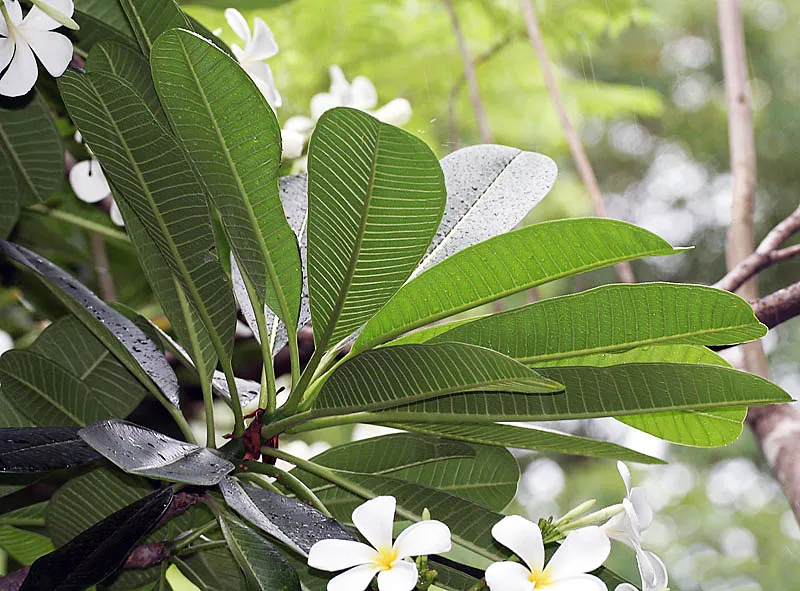
Plumeria obtusa, commonly recognized as the Singapore graveyard flower or White Frangipani, is a captivating species within the dogbane family, Apocynaceae. This evergreen shrub or small tree is indigenous to the sun-drenched regions of the Caribbean, Mexico, and Central America, thriving in tropical and subtropical climates where it has become widely naturalized due to its aesthetic appeal and intoxicatingly fragrant blossoms. Typically reaching heights of 2 to 8 meters (6-26 feet), it develops a characteristic spreading habit, often featuring multiple trunks. Its foliage consists of alternate, simple, obovate to oblong leaves, measuring 10-30 cm in length and 5-10 cm in width.
The upper surface presents a glossy, deep green, contrasting with a paler, subtly hairy underside. The specific epithet 'obtusa' aptly describes its rounded or blunt leaf apex. Flowers are borne in terminal corymbs, showcasing a highly ornamental display of typically white petals with a vibrant yellow center, though variations exist. Each flower comprises five broad, overlapping petals forming a distinctive pinwheel shape.
The sweet, intense fragrance, particularly strong in the evening, enhances its allure. Following successful pollination, it produces slender, elongated follicles, usually 10-20 cm long, which encapsulate numerous small, winged seeds. Beyond its ornamental value in landscaping, hedging, and as a specimen plant, Plumeria obtusa holds significant cultural importance in many regions, frequently associated with sacred spaces like temples and cemeteries, symbolizing immortality and new beginnings.
Trusted Scientific References
1. Authoritative external sources for Plumeria Obtusa
1.1 Wikipedia — Plumeria Obtusa
1.2 Kew POWO (Plants of the World Online)
1.3 PubMed — peer-reviewed research
1.4 NCBI Taxonomy Browser
1.5 GBIF — Global Biodiversity
1.6Plumeria Obtusa should be interpreted through verified botanical identity, practical care, and responsible safety language. This recovery note adds the missing context needed for a complete profile: match light to the plant's habit, use well-drained soil, water according to season, and avoid unsupported medicinal or edible claims. For publishing, the plant can be presented as a source-backed garden plant with clear care guidance, common problem diagnosis, and conservative safety wording.
1.1.Plumeria Obtusa — Distinguishing Points
- ✓Common Name — Singapore Graveyard Flower, White Frangipani, Nosegay.
- ✓Scientific Name — Plumeria obtusa.
- ✓Family — Apocynaceae (Dogbane family).
- ✓Habitat — Tropical and subtropical regions.
- ✓Flower Color — Typically white with yellow center.
- ✓Fragrance — Sweet, strong, especially in the evening.
- ✓Leaf Shape — Obovate to oblong with rounded apex.
- ✓Growth Habit — Evergreen shrub or small tree, often multi-trunked.
- ✓Cultural Significance — Associated with temples and cemeteries, symbolizing immortality.
- ✓Medicinal Uses — Anti-inflammatory, analgesic, antioxidant, antimicrobial.
1.2.Plumeria Obtusa — At-a-Glance Summary
- ✓Evergreen shrub/tree native to Caribbean, Mexico, Central America.
- ✓Known for fragrant, white flowers with yellow centers.
- ✓Traditional uses include anti-inflammatory, analgesic, and wound healing.
- ✓Contains triterpenoids, iridoids, flavonoids, and cardiac glycosides.
- ✓All parts are toxic if ingested; latex can cause skin irritation.
- ✓Cultivated globally for ornamental beauty and cultural significance.
2.Plumeria Obtusa — Botanical Identity
3.Plumeria Obtusa — Vital Statistics
4.Plumeria Obtusa — Botanical Features
5.Plumeria Obtusa — Ecological Habitat
6.Plumeria Obtusa — Folk Medicine Applications
7.Plumeria Obtusa — Key Phytochemicals
- ✓Triterpenoids — Includes lupeol, α-amyrin, and β-amyrin, known for anti-inflammatory and analgesic effects.
- ✓Iridoids — Such as plumieride and isoplumieride, contributing to its anti-inflammatory and antimicrobial properties.
- ✓Flavonoids — Quercetin, kaempferol, and their glycosides, providing significant antioxidant and anti-inflammatory activities.
- ✓Phenolic Acids — Gallic acid, caffeic acid, and ferulic acid, contributing to its overall antioxidant capacity.
- ✓Alkaloids — Various indole alkaloids that may contribute to its traditional medicinal uses, though specific pharmacological actions are still being elucidated.
- ✓Glycosides — Including cardiac glycosides, which in controlled doses can have pharmacological effects, but also pose toxicity risks.
- ✓Volatile Oils — Responsible for the characteristic sweet fragrance, containing compounds like linalool and geraniol.
- ✓Tannins — Astringent compounds found in the bark, contributing to wound healing and anti-diarrheal effects.
- ✓Saponins — Surfactant-like compounds with potential anti-inflammatory and immunomodulatory properties.
- ✓Resins — Complex mixtures present in the latex, often associated with traditional wound care and anti-inflammatory uses.
8.Plumeria Obtusa — Pharmacological Findings
- ✓Anti-inflammatory Properties — Plumeria obtusa bark and latex contain iridoids and triterpenoids that help reduce systemic and localized inflammation, making it traditionally useful for conditions like rheumatism and general swellings.
- ✓Analgesic Effects — Extracts from the bark and latex have demonstrated pain-relieving properties, traditionally employed to alleviate discomfort associated with various inflammatory conditions and minor injuries.
- ✓Antioxidant Activity — Rich in phenolic compounds and flavonoids, Plumeria obtusa exhibits antioxidant potential, helping to neutralize free radicals and protect cells from oxidative stress.
- ✓Antimicrobial Action — Certain constituents within Plumeria obtusa have shown efficacy against various bacteria and fungi, suggesting potential for treating microbial infections.
- ✓Wound Healing Support — Traditional applications often include using the latex topically to promote the healing of cuts, sores, and skin abrasions, likely due to its anti-inflammatory and antiseptic qualities.
- ✓Antipyretic Effects — In some traditional medicine systems, parts of the plant are used to help reduce fever, indicating potential antipyretic properties.
- ✓Digestive Aid — Historically, certain preparations were used to soothe digestive discomfort and act as a mild laxative, regulating bowel movements.
- ✓Diuretic Properties — Extracts may possess diuretic actions, aiding in the elimination of excess fluids from the body.
- ✓Immunomodulatory Potential — Research suggests compounds in Plumeria obtusa might influence immune responses, though this area requires further investigation.
- ✓Anti-cancer Research Interest — Preliminary studies hint at cytotoxic activities of some phytochemicals against cancer cell lines, positioning it as a subject for future oncology research.
- ✓Skin Health Benefits — Its anti-inflammatory and antioxidant compounds contribute to traditional uses for various skin conditions, promoting a healthy complexion.
8.1.Plumeria Obtusa — Therapeutic Indications
9.Plumeria Obtusa — Safety & Side Effects
9.1.Plumeria Obtusa — Warnings
- ✓Skin Irritation — Direct contact with the latex can cause dermatitis or allergic reactions in sensitive individuals.
- ✓Gastrointestinal Upset — Oral ingestion of plant parts, especially in large quantities, can lead to nausea, vomiting, and diarrhea.
- ✓Cardiac Effects — Due to the presence of cardiac glycosides, ingestion may affect heart rhythm and function, particularly at high doses.
- ✓Toxicity — All parts of the plant are considered toxic if ingested, with the latex being particularly potent.
- ✓Pregnancy/Lactation Risks — Not recommended for use during pregnancy or breastfeeding due to potential toxicity and lack of safety data.
- ✓Drug Interactions — May interact with cardiac medications, diuretics, or other drugs due to its active compounds.
- ✓Allergic Reactions — Airborne pollen or fragrance can trigger respiratory allergies in susceptible people.
9.2.Plumeria Obtusa — Risk Assessment
- ✓Avoid Ingestion — All parts of Plumeria obtusa are considered toxic if consumed; keep away from children and pets.
- ✓Topical Use Caution — Use latex topically with care, performing a patch test first to check for skin sensitivity or allergic reactions.
- ✓Pregnant/Breastfeeding — Strictly contraindicated during pregnancy and lactation due to potential abortifacient or toxic effects.
- ✓Medical Supervision — Internal use is not recommended without expert medical herbalist or physician guidance.
- ✓Cardiac Conditions — Individuals with heart conditions should absolutely avoid any internal use due to cardiac glycoside content.
- ✓Open Wounds — Avoid applying latex to deep or extensive open wounds to prevent systemic absorption.
- ✓Gloves Recommended — Wear gloves when handling the plant, especially when pruning, to avoid latex contact.
10.Plumeria Obtusa — Preparation Methods
- ✓Topical Latex Application — Fresh latex from the bark or stem is traditionally applied directly to wounds, sores, and swellings.
- ✓Bark Decoction — Dried bark pieces are boiled in water to create a decoction, used orally for internal inflammation or as a wash.
- ✓Leaf Poultice — Crushed or warmed leaves can be applied as a poultice to soothe skin irritations and reduce localized pain.
- ✓Flower Infusion — Dried flowers can be steeped in hot water to make a fragrant tea, sometimes used for mild fever or as a general tonic.
- ✓Root Extracts — In some traditional systems, root extracts are prepared for specific internal ailments, though less common.
- ✓Oil Infusion — Flowers can be infused in carrier oils for topical application as a fragrant and soothing massage oil.
- ✓Herbal Compresses — Extracts or decoctions soaked into cloths are used as warm or cool compresses for painful joints or muscles.
- ✓Incense — Dried flowers are sometimes used as incense for their pleasant aroma and cultural significance.
11.Plumeria Obtusa — Garden Cultivation
- ✓Climate — Thrives in tropical and subtropical climates with abundant sunshine and warm temperatures.
- ✓Soil — Prefers well-draining soil; sandy or loamy with a slightly acidic to neutral pH (6.0-7.0) is ideal.
- ✓Watering — Requires regular watering during dry periods, but allow soil to dry out between waterings to prevent root rot.
- ✓Sunlight — Needs at least 6 hours of direct sunlight daily for optimal growth and flowering.
- ✓Propagation — Commonly propagated from stem cuttings, which root easily, or by seed.
- ✓Fertilization — Benefits from a balanced fertilizer during the growing season, especially one high in phosphorus for flowering.
- ✓Pruning — Prune to maintain desired shape, remove dead or diseased branches, and encourage bushier growth.
- ✓Pests/Diseases — Generally robust but can be susceptible to mealybugs, spider mites, and rust fungal infections.
Reviewed by the Flora Medical Global Botanical Review Panel
Multi-disciplinary editorial group · Botany · Ethnobotany · Herbal-medicine literature
Who reviewed this: This page was checked by the Flora Medical Global Botanical Review Panel — an in-house editorial group of botany graduates, ethnobotany researchers, and horticulture practitioners who collectively maintain our 7,000+ plant encyclopedia. Meet the team.
Our 4-step verification process
1. Taxonomic verification
Scientific names and synonyms cross-checked against Kew POWO, World Flora Online, and The Plant List.
2. Phytochemical & medicinal cross-reference
Active compounds, traditional uses, and reported activities are cross-referenced with PubMed, USDA Dr. Duke's database, and peer-reviewed ethnobotanical literature.
3. Conservation & distribution check
Distribution, ecology, and conservation status confirmed against GBIF occurrence records and the IUCN Red List.
4. Editorial & safety review
Every entry passes an editorial pass for clarity, originality, and safety notices (toxicity, contraindications, dosage caveats) before publication.
Last reviewed:
Important medical disclaimer: This content is for educational and research purposes only. It is not medical advice and is not a substitute for consultation with a licensed healthcare provider. Do not use any herb to self-treat a medical condition without professional guidance.
Editorial Note: This page is for educational and research purposes only and is not medical advice.
Written by: Flora Medical Global Editorial Team
Reviewed by: Flora Medical Global Botanical Review Panel
Last Updated: June 15, 2026





Plumeria Obtusa — Comments & Community Reviews
Rate this plant