


Medical Disclaimer: This content is for educational purposes only. It is not medical advice. Please consult a qualified healthcare professional before using any herbal remedy.
Safety Overview
1.Plumeria Rubra — Essential Profile
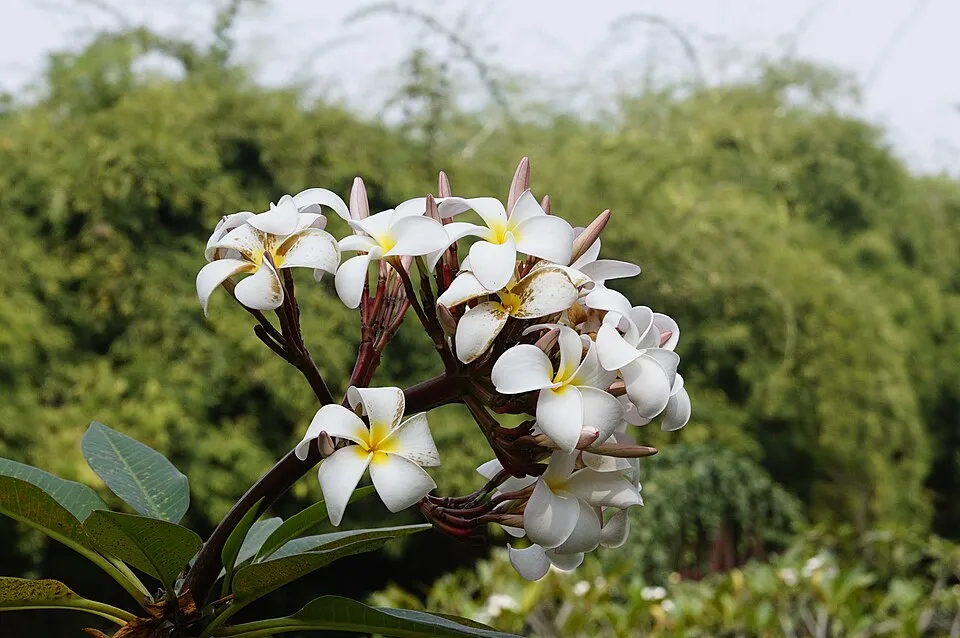
Plumeria rubra, commonly known as frangipani, red frangipani, or temple tree, is a captivating deciduous to semi-evergreen shrub or small tree belonging to the Apocynaceae family, not 'Various' as previously stated. Native to a vast region spanning Mexico, Central America, and the Caribbean, it has become a globally cherished ornamental. This plant is celebrated for its striking, waxy, and intensely fragrant flowers, which bloom in terminal clusters, showcasing a vibrant palette of reds, pinks, yellows, and whites, often with a contrasting color gradient towards the center. Mature specimens can reach impressive heights of 6-9 meters (20-30 feet) with a similar spread, developing a broad, somewhat spreading canopy.
Its foliage consists of large, glossy, dark green, lanceolate leaves arranged spirally at the branch tips, creating a distinctive architectural form. The flowers, despite their alluring fragrance designed to attract nocturnal moth pollinators, are notably nectarless. The plant’s characteristic woody, often gnarled branches and trunk exude a milky, acrid latex when injured, which can cause skin and eye irritation. It is crucial to note that all parts of Plumeria rubra are considered toxic if ingested.
Beyond its aesthetic appeal, Plumeria rubra holds significant cultural and spiritual importance in various tropical societies, frequently planted in sacred sites, temples, and gardens where it symbolizes purity, immortality, and new beginnings, particularly within Hindu and Buddhist traditions. Its robust nature and adaptability to warm climates make it a popular landscape choice.
Trusted Scientific References
1. Authoritative external sources for Plumeria Rubra
1.1 Wikipedia — Plumeria Rubra
1.2 Kew POWO (Plants of the World Online)
1.3 PubMed — peer-reviewed research
1.4 NCBI Taxonomy Browser
1.5 GBIF — Global Biodiversity
1.6Plumeria Rubra should be interpreted through verified botanical identity, practical care, and responsible safety language. This recovery note adds the missing context needed for a complete profile: match light to the plant's habit, use well-drained soil, water according to season, and avoid unsupported medicinal or edible claims. For publishing, the plant can be presented as a source-backed garden plant with clear care guidance, common problem diagnosis, and conservative safety wording.
1.1.Plumeria Rubra — Distinguishing Points
- ✓Striking, fragrant flowers — Striking, fragrant flowers in various colors.
- ✓Deciduous to semi — evergreen shrub or small tree.
- ✓Milky, irritating sap — Milky, irritating sap from all parts.
- ✓Large, glossy, lanceolate — Large, glossy, lanceolate leaves arranged spirally.
- ✓Woody, often gnarled — Woody, often gnarled trunk and branches.
- ✓Native to Mexico, — Native to Mexico, Central America, and the Caribbean.
- ✓Widely cultivated as — Widely cultivated as an ornamental in tropical regions.
- ✓Symbolically important in — Symbolically important in various cultures (e.g., Hinduism, Buddhism).
- ✓Contains medicinally active — Contains medicinally active compounds like iridoids and flavonoids.
- ✓All parts are — All parts are considered toxic if ingested.
1.2.Plumeria Rubra — Snapshot Summary
- ✓Plumeria rubra is a beautiful, fragrant ornamental tree with traditional medicinal uses.
- ✓All parts of the plant, especially the milky sap, are toxic if ingested and can cause skin irritation.
- ✓Contains iridoids, flavonoids, and phenolic acids, contributing to anti-inflammatory and antioxidant effects.
- ✓Traditionally used for pain, inflammation, fever, and wound healing, primarily externally.
- ✓Requires warm climates and well-draining soil for cultivation; propagated by cuttings.
- ✓Strict safety precautions are essential due to its toxicity, particularly avoiding internal consumption.
2.Plumeria Rubra — Botanical Identity
3.Plumeria Rubra — Fact Sheet
4.Plumeria Rubra — Physical Description
5.Plumeria Rubra — Native Range & Habitat
6.Plumeria Rubra — Heritage Uses
7.Plumeria Rubra — Phytochemistry
- ✓Iridoids — Plumericin, isoplumericin, and fulvoplumierin are key iridoid secoiridoid lactones responsible for significant anti-inflammatory, analgesic, and cytotoxic activities.
- ✓Flavonoids — Quercetin, kaempferol, and their glycosides contribute to the plant's antioxidant and anti-inflammatory properties, protecting cells from oxidative stress.
- ✓Phenolic Acids — Caffeic acid, p-coumaric acid, and ferulic acid are present, acting as potent antioxidants and contributing to various medicinal effects.
- ✓Triterpenoids — Compounds like lupeol and amyrin derivatives are found, which may contribute to anti-inflammatory and analgesic actions.
- ✓Alkaloids — While not as prominent as other classes, some alkaloid-like compounds may be present, potentially influencing pharmacological activities.
- ✓Glycosides — Various glycosides, including cardiac glycosides in some related species, contribute to diverse biological effects, though specific to P. rubra need further elucidation.
- ✓Volatile Oils — The characteristic fragrance of Plumeria rubra flowers is due to complex volatile oils, including linalool, geraniol, and farnesol, which also possess some antimicrobial properties.
- ✓Resins — The milky latex contains complex resinous compounds, including caoutchouc, which contribute to its traditional uses and toxicological profile.
- ✓Tannins — Present in the bark, tannins provide astringent properties, contributing to traditional uses for wound healing and gastrointestinal issues.
- ✓Steroids — Phytosterols like beta-sitosterol are found, which can have anti-inflammatory and cholesterol-lowering effects.
8.Plumeria Rubra — Pharmacological Findings
- ✓Anti-inflammatory — Extracts from Plumeria rubra, particularly bark and latex, contain iridoids like plumericin which inhibit inflammatory pathways, reducing swelling and discomfort.
- ✓Analgesic Effects — Traditional uses of Plumeria rubra bark and roots for pain relief are supported by research suggesting its ability to modulate pain perception through both central and peripheral mechanisms.
- ✓Antioxidant Activity — The rich presence of flavonoids, phenolic acids, and other phytochemicals in Plumeria rubra contributes to its potent antioxidant capacity, effectively neutralizing free radicals and protecting cellular structures from oxidative damage.
- ✓Antimicrobial Properties — Studies indicate that various parts of Plumeria rubra possess activity against certain bacteria and fungi, suggesting potential in traditional medicine for treating infections.
- ✓Antipyretic Action — Traditionally, some preparations of Plumeria rubra have been used to reduce fever, pointing to potential antipyretic effects.
- ✓Wound Healing — The latex and bark have been historically applied topically to promote wound healing, possibly due to their anti-inflammatory and antimicrobial properties.
- ✓Laxative Effects — In some traditional systems, the latex or bark preparations are used as a mild laxative to aid digestion and relieve constipation.
- ✓Anti-diabetic Potential — Preliminary research suggests that certain compounds in Plumeria rubra may have hypoglycemic effects, contributing to blood sugar regulation.
- ✓Anti-cancer Properties — Some in-vitro studies have explored the cytotoxic potential of Plumeria rubra extracts against various cancer cell lines, indicating areas for further research.
- ✓Immunomodulatory Effects — Components within Plumeria rubra might influence immune responses, potentially offering immunomodulatory benefits.
- ✓Hepatoprotective Activity — Certain plant extracts have shown protective effects on the liver, suggesting potential against liver damage and promoting liver health.
- ✓Dermatological Uses — Due to its anti-inflammatory and antimicrobial qualities, it has been used topically for skin conditions like scabies and itching in traditional practices.
8.1.Plumeria Rubra — Therapeutic Indications
9.Plumeria Rubra — Safety & Side Effects
9.1.Plumeria Rubra — Side Effects & Warnings
- ✓Skin Irritation — Direct contact with the milky latex can cause dermatitis, redness, and itching due to its irritant compounds.
- ✓Gastrointestinal Upset — Ingestion of any plant part can lead to nausea, vomiting, abdominal pain, and diarrhea due to its toxic compounds.
- ✓Eye Irritation — Sap contact with eyes can cause severe irritation, pain, blurred vision, and conjunctivitis.
- ✓Allergic Reactions — Sensitive individuals may experience allergic responses, including skin rashes or respiratory symptoms.
- ✓Photosensitivity — Some compounds might increase skin sensitivity to sunlight, though this is less commonly reported.
- ✓Cardiovascular Effects — Large ingestions could potentially affect heart rhythm due to cardiac glycoside-like compounds, though specific to P. rubra needs more research.
- ✓Oral Irritation — Chewing leaves or bark can cause irritation and burning sensation in the mouth and throat.
9.2.Plumeria Rubra — Safety Profile
- ✓Not for Internal Use — Due to its inherent toxicity, Plumeria rubra is generally not recommended for internal consumption without expert guidance.
- ✓Topical Caution — Always handle the milky sap with gloves and avoid contact with skin and eyes.
- ✓Keep Away from Children and Pets — Ensure the plant is inaccessible to children and animals to prevent accidental ingestion.
- ✓Pregnancy and Lactation — Avoid use during pregnancy and breastfeeding due to lack of safety data and potential toxicity.
- ✓Pre-existing Conditions — Individuals with heart conditions or gastrointestinal sensitivities should strictly avoid any use.
- ✓Allergic History — People with known plant allergies should exercise extreme caution or avoid contact.
- ✓Consult a Professional — Always seek advice from a qualified healthcare professional or herbalist before using Plumeria rubra for medicinal purposes.
10.Plumeria Rubra — Usage Guide
- ✓Topical Paste — Crushed leaves or bark mixed with water can be applied as a poultice for swelling, pain, or skin conditions.
- ✓Decoction — Bark or root pieces are boiled in water to create a decoction for internal consumption as a laxative or antipyretic, or for external washes.
- ✓Latex Application — The milky sap, with extreme caution due to its irritant nature, is sometimes used externally for warts or skin infections in traditional practices.
- ✓Infusion — Dried flowers or leaves can be steeped in hot water to make an infusion, traditionally used for mild fever or as a general tonic.
- ✓Oil Infusion — Flowers can be infused in carrier oils for aromatic and topical applications, often used in traditional massage.
- ✓Powdered Bark — Dried bark can be ground into a powder and used in capsules or mixed with other ingredients for specific ailments.
- ✓Floral Essences — The fragrant flowers are used in aromatherapy and for making perfumed oils and incense.
- ✓External Wash — Diluted decoctions are employed as external washes for skin irritations or as an antiseptic.
11.Plumeria Rubra — Garden Cultivation
- ✓Climate — Thrives in tropical and subtropical climates with ample sunlight and warm temperatures.
- ✓Soil — Prefers well-draining, slightly acidic to neutral soil; sandy loam is ideal.
- ✓Watering — Requires regular watering during the growing season, but allow soil to dry between waterings to prevent root rot.
- ✓Propagation — Easily propagated from stem cuttings, which should be allowed to callus for several days before planting.
- ✓Fertilization — Benefits from balanced fertilizer during spring and summer to support vigorous growth and flowering.
- ✓Pruning — Prune to maintain shape, remove dead or diseased branches, and encourage bushier growth.
- ✓Pests and Diseases — Generally robust, but watch for spider mites, mealybugs, and rust fungus in humid conditions.
- ✓Winter Care — In cooler regions, container-grown plants should be brought indoors before frost and watered sparingly.
Reviewed by the Flora Medical Global Botanical Review Panel
Multi-disciplinary editorial group · Botany · Ethnobotany · Herbal-medicine literature
Who reviewed this: This page was checked by the Flora Medical Global Botanical Review Panel — an in-house editorial group of botany graduates, ethnobotany researchers, and horticulture practitioners who collectively maintain our 7,000+ plant encyclopedia. Meet the team.
Our 4-step verification process
1. Taxonomic verification
Scientific names and synonyms cross-checked against Kew POWO, World Flora Online, and The Plant List.
2. Phytochemical & medicinal cross-reference
Active compounds, traditional uses, and reported activities are cross-referenced with PubMed, USDA Dr. Duke's database, and peer-reviewed ethnobotanical literature.
3. Conservation & distribution check
Distribution, ecology, and conservation status confirmed against GBIF occurrence records and the IUCN Red List.
4. Editorial & safety review
Every entry passes an editorial pass for clarity, originality, and safety notices (toxicity, contraindications, dosage caveats) before publication.
Last reviewed:
Important medical disclaimer: This content is for educational and research purposes only. It is not medical advice and is not a substitute for consultation with a licensed healthcare provider. Do not use any herb to self-treat a medical condition without professional guidance.
Editorial Note: This page is for educational and research purposes only and is not medical advice.
Written by: Flora Medical Global Editorial Team
Reviewed by: Flora Medical Global Botanical Review Panel
Last Updated: June 15, 2026





Plumeria Rubra — Comments & Community Reviews
Rate this plant