


Medical Disclaimer: This content is for educational purposes only. It is not medical advice. Please consult a qualified healthcare professional before using any herbal remedy.
Safety Overview
1.Podophyllum Hexandrum — Plant Snapshot
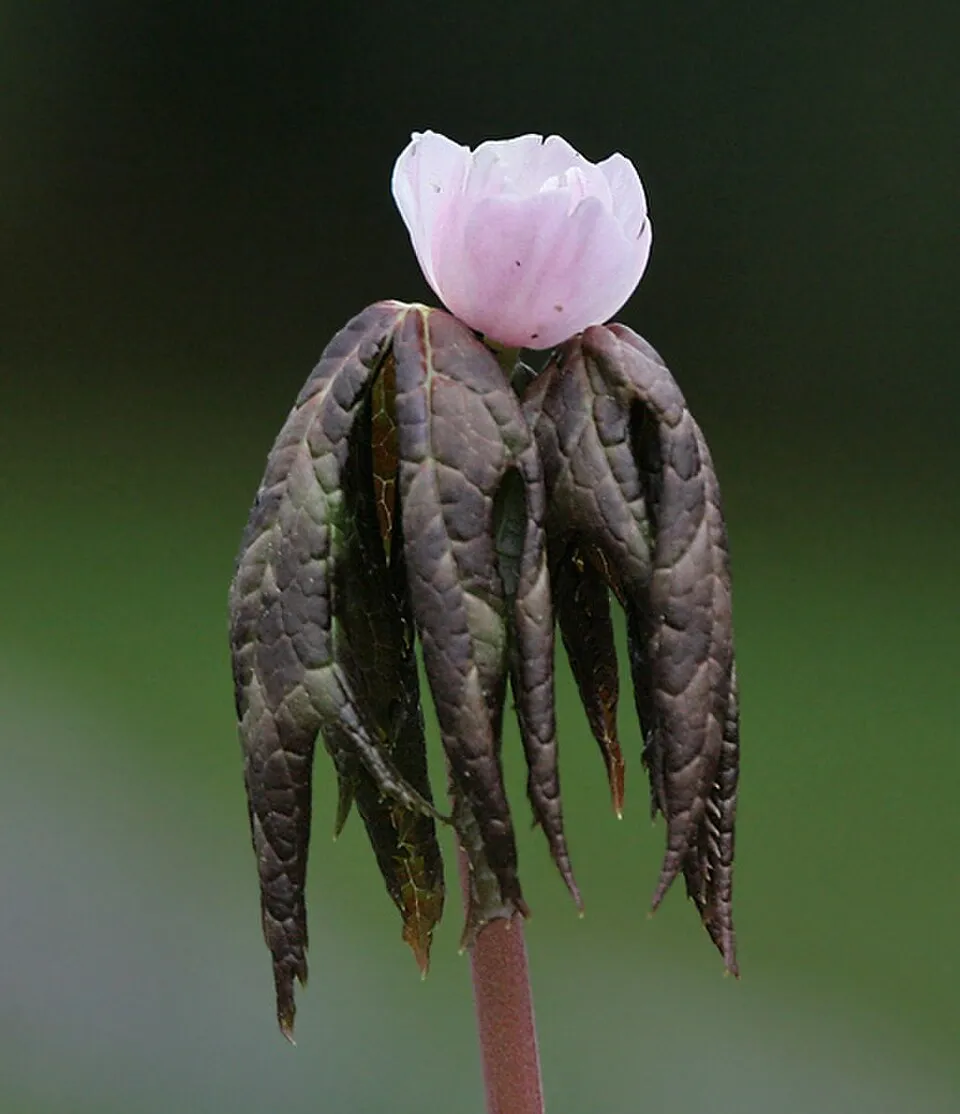
Podophyllum hexandrum, commonly known as Indian Podophyllum or Himalayan Mayapple, is a distinctive perennial herb belonging to the Berberidaceae family. This robust plant typically grows to a height of up to one meter, showcasing a stout, often slightly hairy stem. Its most striking features are its large, palmate leaves, which are deeply lobed and can span 15 to 30 centimeters in diameter, characterized by a glossy surface and prominent vein patterns.
During the spring season, Podophyllum hexandrum produces inconspicuous, bell-shaped flowers, usually white or light green, that emerge from the axils of its leaves. These flowers subsequently develop into fleshy, berry-like fruits, which mature to an appealing orange or red hue and contain numerous seeds. The plant's root system is notably thick and rhizomatous, contributing to its resilience and perennial nature.
Native to the cold, temperate zones of the Himalayas, Podophyllum hexandrum thrives in moist, shaded forest environments. Its natural distribution spans across countries like India, Nepal, and Tibet, typically found at high elevations ranging from 2,500 to 3,500 meters.
This species exhibits remarkable adaptability to its high-altitude habitat, making it a significant component of the unique Himalayan flora. It shares its family lineage with other Podophyllum species, all recognized for their distinct botanical characteristics and medicinal properties.
Trusted Scientific References
1. Authoritative external sources for Podophyllum hexandrum
1.1 Wikipedia — Podophyllum hexandrum
1.2 Kew POWO (Plants of the World Online)
1.3 PubMed — peer-reviewed research
1.4 NCBI Taxonomy Browser
1.5 GBIF — Global Biodiversity
1.6Podophyllum Hexandrum should be interpreted through verified botanical identity, practical care, and responsible safety language. This recovery note adds the missing context needed for a complete profile: match light to the plant's habit, use well-drained soil, water according to season, and avoid unsupported medicinal or edible claims. For publishing, the plant can be presented as a source-backed medicinal plant with clear care guidance, common problem diagnosis, and conservative safety wording.
1.1.Podophyllum Hexandrum — Defining Traits
- ✓Native to the high — altitude Himalayan regions.
- ✓Characterized by large, — Characterized by large, distinctly lobed leaves.
- ✓Produces fleshy, orange — red berry-like fruits.
- ✓Contains the potent — Contains the potent cytotoxic compound podophyllotoxin.
- ✓Utilized in traditional — Utilized in traditional Ayurvedic and Unani medicine.
- ✓Precursor for modern — Precursor for modern anticancer and antiviral pharmaceuticals.
- ✓Demands careful and — Demands careful and precise medical application.
- ✓Classified as a — Classified as a critically endangered species in some areas.
- ✓Resilient rhizomatous root — Resilient rhizomatous root system for perennial growth.
- ✓Adapted to cold, — Adapted to cold, shaded forest understory environments.
1.2.Podophyllum Hexandrum — Concise Overview
- ✓Potent Himalayan herb from the Berberidaceae family.
- ✓Primary source of the highly cytotoxic lignan, podophyllotoxin.
- ✓Exhibits strong anticancer, antiviral, and antimicrobial activities.
- ✓Traditionally used in Ayurveda for warts and as a purgative.
- ✓Extremely toxic; requires stringent professional medical supervision.
- ✓Precursor for modern antineoplastic drugs like etoposide.
2.Podophyllum Hexandrum — Systematic Position
3.Podophyllum Hexandrum — Botanical Stats
4.Podophyllum Hexandrum — Structural Profile
5.Podophyllum Hexandrum — Habitat & Distribution
6.Podophyllum Hexandrum — Cultural & Traditional Roles
7.Podophyllum Hexandrum — Secondary Metabolites
- ✓Lignans — The most significant class of compounds, including podophyllotoxin, 4'-demethylpodophyllotoxin, podophyllone, and picropodophyllin, responsible for potent cytotoxic and antiviral activities.
- ✓Flavonoids — Compounds like quercetin and kaempferol are present, contributing to the plant's antioxidant and potential anti-inflammatory properties.
- ✓Phenolic Acids — Various phenolic acids act as strong antioxidants, scavenging free radicals and protecting against oxidative damage.
- ✓Glycosides — These compounds, often formed by the attachment of sugar molecules to lignans, can influence solubility and bioavailability of active constituents.
- ✓Fatty Acids — GC-MS analysis reveals the presence of various fatty acids, which can play roles in membrane structure and signaling pathways.
- ✓Terpenoids — A diverse group of organic compounds that can exhibit a range of biological activities, including antimicrobial and anti-inflammatory effects.
- ✓Alkaloids — While less prominent than lignans, some alkaloidal compounds may be present, contributing to the plant's overall pharmacological profile.
- ✓Steroids — Plant sterols and related compounds can be found, often associated with anti-inflammatory and hormone-modulating activities.
8.Podophyllum Hexandrum — Modern Studies
- ✓Antitumor Activity — The rhizome of Podophyllum hexandrum is a primary source of podophyllotoxin, a potent lignan known to inhibit cell division by interfering with microtubule formation, leading to apoptosis in cancer cells.
- ✓Antiviral Properties — Podophyllotoxin and its derivatives are highly effective in treating certain viral infections, notably condylomata acuminata (genital warts) caused by the human papillomavirus (HPV).
- ✓Antimicrobial Efficacy — Extracts from P. hexandrum roots have demonstrated broad-spectrum inhibitory effects against various microbes, including pathogenic bacteria like Staphylococcus and Streptococcus, and fungi such as Candida albicans.
- ✓Antioxidant Activity — The plant contains phenolic compounds and flavonoids, which contribute to its significant free radical scavenging capacity, helping to mitigate oxidative stress and protect cellular integrity.
- ✓Laxative Effects — Traditionally, Podophyllum hexandrum has been utilized as a powerful purgative, aiding in the relief of constipation through its stimulating effect on bowel movements.
- ✓Dermatological Applications — In traditional medicine, the leaves and rhizome were topically applied to treat skin infections, wounds, and various skin ailments due to their antiseptic and healing properties.
- ✓Detoxifying Qualities — Ayurvedic practices attribute a 'bitter' taste to P. hexandrum, which is indicative of its traditional use in detoxification and cleansing regimens.
- ✓Anti-inflammatory Potential — While not its primary action, some phytochemicals present in the plant may contribute to reducing inflammation, supporting its use in various traditional remedies.
8.1.Podophyllum Hexandrum — Therapeutic Indications
9.Podophyllum Hexandrum — Precautions & Warnings
9.1.Podophyllum Hexandrum — Possible Adverse Reactions
- ✓Severe Systemic Toxicity — Even small internal doses can cause severe poisoning, affecting multiple organ systems.
- ✓Gastrointestinal Distress — Nausea, vomiting, severe diarrhea, and abdominal pain are common adverse reactions.
- ✓Neurotoxicity — Symptoms can include peripheral neuropathy, confusion, hallucinations, and even coma in severe cases.
- ✓Bone Marrow Suppression — Systemic exposure can lead to a decrease in blood cell production, causing anemia, leukopenia, and thrombocytopenia.
- ✓Hepatotoxicity and Nephrotoxicity — The plant can cause significant damage to the liver and kidneys.
- ✓Dermatological Reactions — Topical application may lead to severe skin irritation, blistering, necrosis, and ulceration if not carefully controlled.
- ✓Teratogenicity — Highly toxic to developing fetuses, causing severe birth defects or fetal death.
9.2.Podophyllum Hexandrum — Risk Assessment
- ✓Professional Guidance Essential — Due to its extreme toxicity, Podophyllum hexandrum must only be used under strict medical or expert supervision.
- ✓Absolute Contraindication in Pregnancy and Lactation — The plant is highly teratogenic and embryotoxic; absolutely avoid use during pregnancy and breastfeeding.
- ✓Avoid Internal Consumption — Internal use is generally contraindicated due to the high risk of severe systemic poisoning and organ damage.
- ✓Caution with Topical Use — Topical applications must be precisely controlled and limited to affected areas, avoiding healthy skin and mucous membranes.
- ✓Not for Children or the Elderly — Highly vulnerable populations should avoid any exposure to this plant due to increased risk of severe adverse effects.
- ✓Potential Drug Interactions — May interact dangerously with other cytotoxic, immunosuppressive, or liver-metabolized medications.
- ✓Dosage Critical — Even for external use, precise dosage and application time are paramount to minimize absorption and local side effects.
10.Podophyllum Hexandrum — Preparation & Dosage
- ✓Topical Application of Extracts — Standardized podophyllotoxin solutions or creams are applied externally for treating warts, strictly under medical supervision to avoid systemic absorption.
- ✓Traditional Decoctions — Historically, rhizome decoctions were used internally in highly diluted forms for their laxative effects, though this practice is now largely discouraged due to toxicity.
- ✓Tincture Preparations — Concentrated alcoholic tinctures of the rhizome were used externally or in minute, professionally guided internal doses for specific conditions.
- ✓Powdered Rhizome — In traditional systems like Ayurveda, the dried and powdered rhizome was used, but its internal application is considered extremely hazardous.
- ✓Standardized Pharmaceutical Formulations — Modern medicine utilizes purified podophyllotoxin derivatives (e.g., etoposide) in controlled dosages for chemotherapy.
- ✓External Poultices — Crushed leaves or rhizome paste were traditionally applied to skin infections and wounds, but this method carries significant risk of skin irritation and systemic toxicity.
- ✓Controlled Scientific Research — Extracts are used in laboratory settings to study their anticancer, antiviral, and antimicrobial properties.
11.Podophyllum Hexandrum — Propagation & Care
- ✓Climate Preference — Thrives in cold, temperate climates, mimicking its native Himalayan habitat at high altitudes.
- ✓Soil Requirements — Prefers moist, well-drained, humus-rich soil with a slightly acidic to neutral pH.
- ✓Light Conditions — Best grown in partial to full shade, as direct sunlight can scorch its delicate leaves.
- ✓Propagation Techniques — Can be propagated by seeds, which require stratification, or more commonly by rhizome division in early spring or autumn.
- ✓Watering Regime — Requires consistent moisture throughout its growing season but is susceptible to root rot in waterlogged conditions.
- ✓Nutrient Supply — Benefits from the addition of organic compost or a balanced slow-release fertilizer to support vigorous growth.
- ✓Pest and Disease Management — Generally robust, but watch for slugs and snails on young shoots, and fungal issues in overly damp conditions.
- ✓Harvesting — Rhizomes are typically harvested after several years of growth, usually in late autumn once the aerial parts have died back.
Reviewed by the Flora Medical Global Botanical Review Panel
Multi-disciplinary editorial group · Botany · Ethnobotany · Herbal-medicine literature
Who reviewed this: This page was checked by the Flora Medical Global Botanical Review Panel — an in-house editorial group of botany graduates, ethnobotany researchers, and horticulture practitioners who collectively maintain our 7,000+ plant encyclopedia. Meet the team.
Our 4-step verification process
1. Taxonomic verification
Scientific names and synonyms cross-checked against Kew POWO, World Flora Online, and The Plant List.
2. Phytochemical & medicinal cross-reference
Active compounds, traditional uses, and reported activities are cross-referenced with PubMed, USDA Dr. Duke's database, and peer-reviewed ethnobotanical literature.
3. Conservation & distribution check
Distribution, ecology, and conservation status confirmed against GBIF occurrence records and the IUCN Red List.
4. Editorial & safety review
Every entry passes an editorial pass for clarity, originality, and safety notices (toxicity, contraindications, dosage caveats) before publication.
Last reviewed:
Important medical disclaimer: This content is for educational and research purposes only. It is not medical advice and is not a substitute for consultation with a licensed healthcare provider. Do not use any herb to self-treat a medical condition without professional guidance.
Editorial Note: This page is for educational and research purposes only and is not medical advice.
Written by: Flora Medical Global Editorial Team
Reviewed by: Flora Medical Global Botanical Review Panel
Last Updated: June 15, 2026





Podophyllum Hexandrum — Comments & Community Reviews
Rate this plant