


Medical Disclaimer: This content is for educational purposes only. It is not medical advice. Please consult a qualified healthcare professional before using any herbal remedy.
Safety Overview
1.Podranea Ricasoliana — Overview
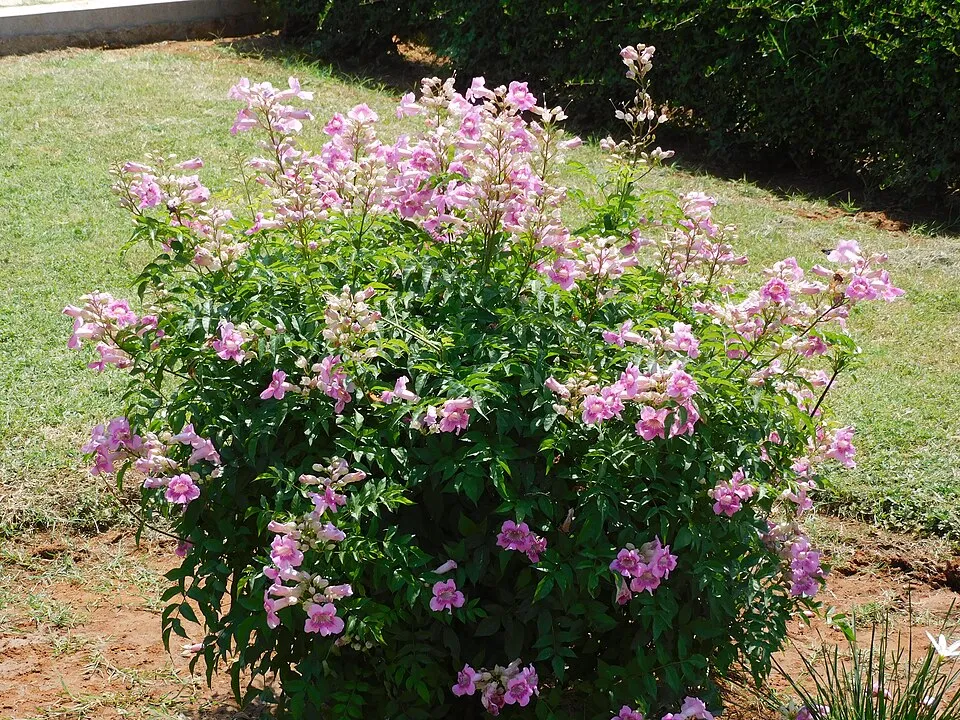
Podranea ricasoliana, commonly known as the Pink Trumpet Vine or Port St. Johns Creeper, is a robust, evergreen climbing shrub belonging to the Bignoniaceae family. Native to southern Africa, its exact indigenous range is debated, with some botanists suggesting it might have been introduced from elsewhere due to early trade.
This vigorous plant is characterized by its lush, pinnately compound leaves, typically bearing 7 to 9 glossy green leaflets with pointed tips, which provide a dense, attractive foliage cover. The most striking feature is its profusion of showy, trumpet-shaped flowers, ranging in color from pale pink to rose-purple, often adorned with darker maroon stripes leading into a cream-colored throat. These fragrant blooms typically appear in clusters at the branch tips from mid-summer until the first frost in temperate climates, attracting pollinators like bees.
The plant develops long, narrow, bean-like fruit pods following successful pollination. As a woody vine, it can sprawl extensively, clambering over fences and trees without tendrils, and can also be cultivated as a large-scale groundcover, rooting wherever its stems touch the soil. Its adaptability and ornamental appeal have made it a popular choice in warm-temperate and subtropical gardens worldwide.
Trusted Scientific References
1. Authoritative external sources for Podranea Ricasoliana
1.1 Wikipedia — Podranea Ricasoliana
1.2 Kew POWO (Plants of the World Online)
1.3 PubMed — peer-reviewed research
1.4 NCBI Taxonomy Browser
1.5 GBIF — Global Biodiversity
1.6Podranea Ricasoliana should be interpreted through verified botanical identity, practical care, and responsible safety language. This recovery note adds the missing context needed for a complete profile: match light to the plant's habit, use well-drained soil, water according to season, and avoid unsupported medicinal or edible claims. For publishing, the plant can be presented as a source-backed garden plant with clear care guidance, common problem diagnosis, and conservative safety wording.
1.1.Podranea Ricasoliana — Key Features
- ✓Vigorous evergreen climbing — Vigorous evergreen climbing vine.
- ✓Showy, fragrant pink to rose — purple trumpet-shaped flowers.
- ✓Pinnately compound, glossy — Pinnately compound, glossy green leaves.
- ✓Native to Southern — Native to Southern Africa, widely cultivated ornamentally.
- ✓Traditional uses for — Traditional uses for inflammation and wound healing.
- ✓Contains diverse phytochemicals — Contains diverse phytochemicals including flavonoids and tannins.
- ✓Drought — tolerant once established.
- ✓Attracts pollinators like — Attracts pollinators like bees.
- ✓Can be grown — Can be grown as a large groundcover.
- ✓Requires structural support — Requires structural support for climbing.
1.2.Podranea Ricasoliana — Concise Overview
- ✓Pink Trumpet Vine is an ornamental climber native to Southern Africa.
- ✓Traditionally used for anti-inflammatory and wound-healing properties.
- ✓Contains flavonoids, alkaloids, saponins, tannins, and phenolic compounds.
- ✓Requires full sun, well-drained soil, and structural support for growth.
- ✓Primarily used topically in traditional medicine, limited internal use.
- ✓Potential side effects include skin irritation and gastrointestinal upset.
2.Podranea Ricasoliana — Scientific Profile
3.Podranea Ricasoliana — Botanical Stats
4.Podranea Ricasoliana — Structural Profile
5.Podranea Ricasoliana — Habitat & Distribution
6.Podranea Ricasoliana — Historical Applications
7.Podranea Ricasoliana — Bioactive Constituents
- ✓Flavonoids — Include compounds like quercetin and kaempferol, known for antioxidant and anti-inflammatory activities.
- ✓Alkaloids — Nitrogen-containing compounds that can exhibit diverse pharmacological effects, although specific types in Podranea ricasoliana require further identification.
- ✓Saponins — Glycosides that can have detergent-like properties, contributing to expectorant or anti-inflammatory actions.
- ✓Tannins — Polyphenolic compounds responsible for astringent properties, beneficial for wound healing and antimicrobial effects.
- ✓Phenolic Compounds — A broad group of secondary metabolites with significant antioxidant and free radical scavenging capabilities.
- ✓Glycosides — Organic compounds containing a sugar molecule bound to a non-sugar component, often contributing to various biological activities.
- ✓Triterpenoids — A class of natural products with potential anti-inflammatory and cytotoxic effects, commonly found in plants.
- ✓Steroids — Plant sterols with structural resemblance to cholesterol, some possessing anti-inflammatory or hormonal modulating properties.
- ✓Volatile Oils — Aromatic compounds that contribute to the plant's fragrance and may possess antimicrobial or insect-repellent qualities.
- ✓Anthraquinones — Compounds that can have laxative or antimicrobial properties, though their presence and role here need validation.
8.Podranea Ricasoliana — Research Insights
- ✓Anti-inflammatory — Traditional uses suggest analgesic properties, potentially reducing swelling and pain in topical applications.
- ✓Wound Healing — Indigenous communities have historically applied plant parts to promote the healing of cuts and minor abrasions.
- ✓Antimicrobial Activity — Preliminary phytochemical analysis indicates the presence of compounds that may exhibit inhibitory effects against certain bacteria and fungi.
- ✓Antioxidant Properties — Flavonoids and phenolic compounds contribute to scavenging free radicals, potentially protecting cells from oxidative damage.
- ✓Astringent Effects — Tannins present in the plant may provide astringent actions, useful for tightening tissues and reducing minor bleeding.
- ✓Diuretic Potential — Some traditional applications hint at a mild diuretic effect, aiding in fluid balance.
- ✓Antipyretic Action — Anecdotal evidence suggests traditional use for reducing fever.
- ✓Dermatological Support — Extracts might be explored for skin conditions due to anti-inflammatory and antiseptic properties.
- ✓Immune Modulation — Certain compounds could potentially influence immune responses, though this requires extensive research.
- ✓Digestive Aid — Limited traditional accounts suggest use for minor gastrointestinal discomfort, likely due to bitter principles.
8.1.Podranea Ricasoliana — Conditions Traditionally Used For
9.Podranea Ricasoliana — Adverse Effects
9.1.Podranea Ricasoliana — Caution Notes
- ✓Skin Irritation — Direct contact with sap or leaves may cause dermatitis or allergic reactions in sensitive individuals.
- ✓Gastrointestinal Upset — Internal consumption of large quantities may lead to nausea, vomiting, or diarrhea.
- ✓Allergic Reactions — Individuals with sensitivities to Bignoniaceae family plants may experience allergic responses.
- ✓Photosensitivity — Some plant compounds can increase skin sensitivity to sunlight, leading to rashes or sunburn.
- ✓Drug Interactions — Potential for interaction with pharmaceutical medications, particularly those affecting blood clotting or liver enzymes.
- ✓Toxicity — High doses or improper preparation may result in toxic effects due to the presence of certain alkaloids or saponins.
- ✓Pregnancy/Lactation Risks — Lack of safety data advises against use during pregnancy and breastfeeding.
9.2.Podranea Ricasoliana — Safety Overview
- ✓Consult Healthcare Professional — Always seek medical advice before using Podranea ricasoliana, especially if pregnant, breastfeeding, or on medication.
- ✓Patch Test — Perform a skin patch test before topical application to check for allergic reactions.
- ✓Avoid Ingestion — Due to insufficient toxicity data, internal consumption should be approached with extreme caution or avoided.
- ✓Keep Out of Reach of Children — Store away from children and pets to prevent accidental ingestion.
- ✓Proper Identification — Ensure correct plant identification to avoid confusion with potentially toxic species.
- ✓Dosage — Adhere strictly to traditionally recommended dosages; avoid excessive or prolonged use.
- ✓Monitor for Reactions — Discontinue use immediately if adverse reactions such as skin irritation, digestive upset, or allergic symptoms occur.
10.Podranea Ricasoliana — Preparation & Dosage
- ✓Topical Poultices — Crushed leaves or bark traditionally applied as a poultice for minor wounds, skin irritations, and localized inflammation.
- ✓Herbal Infusions — Dried leaves or flowers steeped in hot water to create an infusion for internal consumption, historically for fever or mild digestive issues.
- ✓Decoctions — Boiling tougher plant parts like bark or roots in water to extract compounds, used for more potent traditional remedies.
- ✓Liniments — Extracts macerated in oil or alcohol for topical application to sore muscles or joints.
- ✓Ointments/Creams — Infused oils or extracts incorporated into balms for dermatological applications.
- ✓Washes/Compresses — Diluted infusions or decoctions used externally as washes for skin ailments or as compresses for swelling.
- ✓Tinctures — Alcohol-based extractions of plant material for concentrated internal or external use, though not widely documented for this plant.
- ✓Steam Inhalation — Infusions potentially used for respiratory benefits, based on general traditional herbal practices.
11.Podranea Ricasoliana — Growth Requirements
- ✓Soil Preference — Thrives in well-drained soil, tolerating a range from sandy to loamy types.
- ✓Light Requirements — Prefers full sun for optimal flowering, but can tolerate partial shade, though flowering may be reduced.
- ✓Water Needs — Medium water needs; drought-tolerant once established but benefits from regular irrigation during dry spells.
- ✓Support Structures — Requires strong support like trellises, pergolas, or fences for its climbing habit.
- ✓Pruning — Best pruned in late winter or early spring before new growth begins to maintain shape and encourage flowering.
- ✓Temperature Tolerance — Hardy to approximately 25-30°F (-4 to -1°C), with established plants rebounding from lower temperatures.
- ✓Propagation — Can be propagated from cuttings or by layering, as stems root easily where they touch the ground.
- ✓Fertilization — Benefits from a balanced fertilizer application during the growing season to promote vigorous growth and blooming.
Reviewed by the Flora Medical Global Botanical Review Panel
Multi-disciplinary editorial group · Botany · Ethnobotany · Herbal-medicine literature
Who reviewed this: This page was checked by the Flora Medical Global Botanical Review Panel — an in-house editorial group of botany graduates, ethnobotany researchers, and horticulture practitioners who collectively maintain our 7,000+ plant encyclopedia. Meet the team.
Our 4-step verification process
1. Taxonomic verification
Scientific names and synonyms cross-checked against Kew POWO, World Flora Online, and The Plant List.
2. Phytochemical & medicinal cross-reference
Active compounds, traditional uses, and reported activities are cross-referenced with PubMed, USDA Dr. Duke's database, and peer-reviewed ethnobotanical literature.
3. Conservation & distribution check
Distribution, ecology, and conservation status confirmed against GBIF occurrence records and the IUCN Red List.
4. Editorial & safety review
Every entry passes an editorial pass for clarity, originality, and safety notices (toxicity, contraindications, dosage caveats) before publication.
Last reviewed:
Important medical disclaimer: This content is for educational and research purposes only. It is not medical advice and is not a substitute for consultation with a licensed healthcare provider. Do not use any herb to self-treat a medical condition without professional guidance.
Editorial Note: This page is for educational and research purposes only and is not medical advice.
Written by: Flora Medical Global Editorial Team
Reviewed by: Flora Medical Global Botanical Review Panel
Last Updated: June 15, 2026





Podranea Ricasoliana — Comments & Community Reviews
Rate this plant