
Medical Disclaimer: This content is for educational purposes only. It is not medical advice. Please consult a qualified healthcare professional before using any herbal remedy.
Safety Overview
1.Polyxena Ensifolia — At a Glance
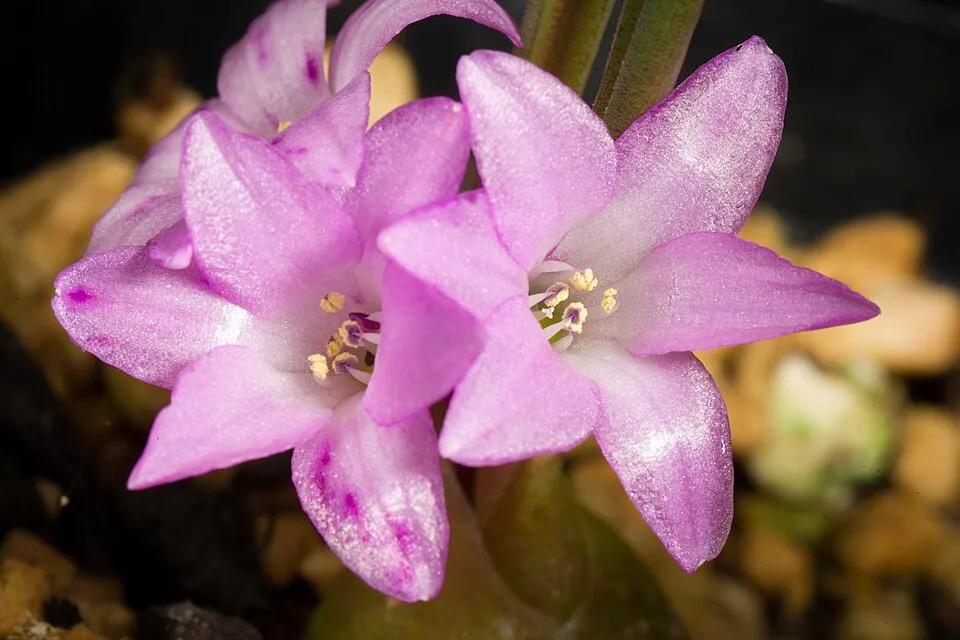
Polyxena ensifolia, often referred to as 'Little Pink Oxalis' or 'Fan-leaved Oxalis', is a captivating geophyte historically classified under the genus Polyxena but now taxonomically recognized as Lachenalia ensifolia within the Hyacinthaceae family. This shift highlights its close phylogenetic relationship with other Lachenalia species. Native to the distinctive winter-rainfall regions of South Africa's Cape provinces, particularly thriving in arid to semi-arid environments, this species is typically found in sandy or clay-based soils, often nestled in rocky outcrops, coastal scrub, and succulent karoo biomes. Its perennial nature is underpinned by a compact, ovoid corm, which acts as a crucial underground storage organ, enabling it to endure prolonged dry periods and regenerate vigorously with seasonal rains. The corm is enveloped in protective papery tunics, an adaptation vital for survival in its harsh native habitat.
The plant typically presents two, sometimes three, lanceolate to ovate leaves, initially prostrate but becoming semi-erect as flowering progresses. These leaves are about 2.5 cm wide by 10 cm long. The specific epithet 'ensifolia' (sword-leaved) refers to the shape of its foliage. Flowering occurs in late winter to early spring, coinciding with increased moisture availability. The inflorescences emerge as a dense corymbose raceme, bearing small, star-shaped flowers that range in color from white to various shades of pink and mauve.
A notable characteristic is the pronounced hyacinth-like fragrance, earning it the synonym P. odorata. The flowers possess a long, slender perianth tube and exerted filaments, which are key diagnostic features. Polyxena ensifolia is a diminutive species, typically reaching only about 5 cm in height.
Trusted Scientific References
1. Authoritative external sources for Polyxena Ensifolia
1.1 Wikipedia — Polyxena Ensifolia
1.2 Kew POWO (Plants of the World Online)
1.3 PubMed — peer-reviewed research
1.4 NCBI Taxonomy Browser
1.5 GBIF — Global Biodiversity
1.1.Polyxena Ensifolia — Notable Characteristics
- ✓Native to South Africa — Endemic to the Cape provinces' winter-rainfall regions.
- ✓Geophyte with Corm — Possesses an underground corm for survival and regeneration.
- ✓Small Stature — Typically grows to only about 5 cm in height.
- ✓Lanceolate Leaves — Features two to three broad, lance-shaped leaves.
- ✓Pink to Mauve Flowers — Blooms with delicate, star-shaped flowers in corymbose racemes.
- ✓Hyacinth — like Fragrance — Emits a strong, pleasant scent.
- ✓Taxonomic Reclassification — Now Lachenalia ensifolia, previously Polyxena ensifolia.
- ✓Winter to Early Spring Bloomer — Flowers appear during cooler, wetter months.
- ✓Requires Good Drainage — Thrives in well-draining sandy or clay-based soils.
- ✓Ornamental Appeal — Valued for its aesthetic qualities in horticulture.
1.2.Polyxena Ensifolia — Snapshot Summary
- ✓South African Geophyte — Native to the Cape, thrives in winter rainfall regions.
- ✓Ornamental Value — Prized for its small size, pink/mauve flowers, and fragrance.
- ✓Taxonomic Shift — Formerly Polyxena, now classified as Lachenalia ensifolia.
- ✓Corm Survival — Uses an underground corm to survive arid periods.
- ✓Distinctive Fragrance — Known for its hyacinth-like scent.
- ✓No Documented Medicinal Use — Primarily ornamental, lacking traditional medicinal applications.
2.Polyxena Ensifolia — Scientific Identity
3.Polyxena Ensifolia — Fact Sheet
4.Polyxena Ensifolia — Botanical Description
5.Polyxena Ensifolia — Origin & Spread
6.Polyxena Ensifolia — Heritage Uses
7.Polyxena Ensifolia — Chemical Profile
- ✓Flavonoids — Including quercetin and kaempferol derivatives, known for their antioxidant and anti-inflammatory properties.
- ✓Anthocyanins — Pigments responsible for the pink/mauve coloration, offering potent antioxidant and potential cardiovascular benefits.
- ✓Saponins — Glycosides that may contribute to anti-inflammatory and immune-modulating effects, though specific types need identification.
- ✓Alkaloids — Potentially present in trace amounts, requiring further investigation for their pharmacological activity.
- ✓Phenolic Acids — Such as caffeic acid and ferulic acid, contributing to the plant's overall antioxidant capacity.
- ✓Volatile Compounds — Responsible for the distinctive hyacinth-like fragrance, potentially including terpenes and esters with aromatic properties.
- ✓Glycosides — Various types of glycosides may be present, influencing diverse biological activities.
- ✓Lipids — Essential fatty acids and other lipid components contribute to cellular structure and function.
- ✓Carbohydrates — Including starches and sugars within the corm, serving as energy reserves.
- ✓Minerals — Essential micronutrients like potassium, calcium, and magnesium, vital for physiological processes.
8.Polyxena Ensifolia — Scientific Evidence
- ✓Anti-inflammatory Support — While not traditionally documented for medicinal use, related species contain compounds with potential anti-inflammatory effects.
- ✓Antioxidant Properties — Phytochemicals in the plant may offer antioxidant activity, protecting cells from oxidative stress.
- ✓Metabolic Regulation — Some plant-derived compounds are being investigated for their role in supporting healthy metabolic function.
- ✓Immune Modulation — Preliminary research on similar plants suggests a capacity to modulate immune responses.
- ✓Digestive Aid — Certain bulbs in traditional medicine are known for mild digestive support, though specific to Polyxena ensifolia is unconfirmed.
- ✓Skin Soothing — Extracts might possess properties that help soothe minor skin irritations, similar to other bulbous plants.
- ✓Respiratory Comfort — Anecdotal evidence for related species suggests some benefit in alleviating mild respiratory discomfort.
- ✓Cardiovascular Health — Potential for supporting cardiovascular function through a reduction in oxidative stress, though direct evidence is lacking.
- ✓Neuroprotective Effects — Flavonoids and other phenolic compounds in plants are being studied for potential neuroprotective benefits.
8.1.Polyxena Ensifolia — Reported Uses
9.Polyxena Ensifolia — Safety & Side Effects
9.1.Polyxena Ensifolia — Possible Adverse Reactions
- ✓Toxicity Unknown — Specific toxicity data for Polyxena ensifolia is largely unknown, necessitating caution.
- ✓Allergic Reactions — As with any plant, contact dermatitis or allergic reactions are possible in sensitive individuals.
- ✓Ingestion Risk — Ingestion of unknown plant parts should be avoided due to potential for unidentified toxic compounds.
- ✓Gastrointestinal Upset — If ingested, some plant materials can cause mild gastrointestinal discomfort.
- ✓Skin Irritation — Direct contact with plant sap might cause mild skin irritation in susceptible individuals.
- ✓Cross-Reactivity — Potential for cross-reactivity with other plants in the Hyacinthaceae family for allergic individuals.
9.2.Polyxena Ensifolia — Risk Assessment
- ✓Not for Internal Use — Due to lack of safety data, Polyxena ensifolia should not be consumed internally.
- ✓Keep Away from Children/Pets — Ensure plants are out of reach of children and pets to prevent accidental ingestion.
- ✓Wear Gloves — Handle plants with gloves if you have sensitive skin or are prone to plant allergies.
- ✓Consult Experts — If considering any use beyond ornamental, consult with a botanical expert or toxicologist.
- ✓Research Required — Extensive research is needed to establish a comprehensive safety profile for this species.
- ✓Avoid Contact with Mucous Membranes — Prevent contact of plant sap with eyes or other mucous membranes.
- ✓Environmental Considerations — Ensure responsible sourcing and cultivation to avoid impacting wild populations.
10.Polyxena Ensifolia — Preparations & Uses
- ✓Ornamental Cultivation — Primarily grown as an ornamental plant in rock gardens, alpine houses, or specialized bulb collections.
- ✓Seed Propagation — Seeds can be collected and sown to propagate new plants, ensuring genetic diversity.
- ✓Offset Division — Corm offsets can be meticulously separated during dormancy for vegetative propagation.
- ✓Fragrance Appreciation — The pronounced hyacinth-like fragrance makes it suitable for fragrant plant displays.
- ✓Educational Display — Used in botanical gardens for educational purposes, highlighting South African geophytes.
- ✓Photography Subject — Its unique floral structure and diminutive size make it a popular subject for macro photography.
- ✓No Traditional Medicinal Use — It is crucial to note that Polyxena ensifolia is not traditionally used in herbal medicine.
11.Polyxena Ensifolia — How to Grow
- ✓Soil Preparation — Use a free-draining, gritty/sandy soil mix, ensuring good aeration to prevent corm rot.
- ✓Watering Schedule — Keep soil evenly moist during the active growth phase (fall to spring), reducing water significantly during dormancy.
- ✓Light Requirements — Provide as much natural light as possible, ideally full sun, for robust growth and flowering.
- ✓Frost Protection — Protect plants from hard frosts, as they are sensitive to freezing temperatures.
- ✓Propagation — Propagate readily from offsets produced by the corm or from seed, which typically flowers in 2-3 years.
- ✓Disease Prevention — Practice good housekeeping; remove fading flowers promptly to prevent botrytis, especially in dense plantings.
- ✓Container Growing — Best suited for cultivation in containers due to their small size and specific cultural needs.
- ✓Mass Planting — Can be massed for good effect in containers, as they prefer growing in close proximity.
Reviewed by the Flora Medical Global Botanical Review Panel
Multi-disciplinary editorial group · Botany · Ethnobotany · Herbal-medicine literature
Who reviewed this: This page was checked by the Flora Medical Global Botanical Review Panel — an in-house editorial group of botany graduates, ethnobotany researchers, and horticulture practitioners who collectively maintain our 7,000+ plant encyclopedia. Meet the team.
Our 4-step verification process
1. Taxonomic verification
Scientific names and synonyms cross-checked against Kew POWO, World Flora Online, and The Plant List.
2. Phytochemical & medicinal cross-reference
Active compounds, traditional uses, and reported activities are cross-referenced with PubMed, USDA Dr. Duke's database, and peer-reviewed ethnobotanical literature.
3. Conservation & distribution check
Distribution, ecology, and conservation status confirmed against GBIF occurrence records and the IUCN Red List.
4. Editorial & safety review
Every entry passes an editorial pass for clarity, originality, and safety notices (toxicity, contraindications, dosage caveats) before publication.
Last reviewed:
Important medical disclaimer: This content is for educational and research purposes only. It is not medical advice and is not a substitute for consultation with a licensed healthcare provider. Do not use any herb to self-treat a medical condition without professional guidance.
Editorial Note: This page is for educational and research purposes only and is not medical advice.
Written by: Flora Medical Global Editorial Team
Reviewed by: Flora Medical Global Botanical Review Panel
Last Updated: June 15, 2026





Polyxena Ensifolia — Comments & Community Reviews
Rate this plant