
Medical Disclaimer: This content is for educational purposes only. It is not medical advice. Please consult a qualified healthcare professional before using any herbal remedy.
Safety Overview
1.Karanja — Introduction & Highlights
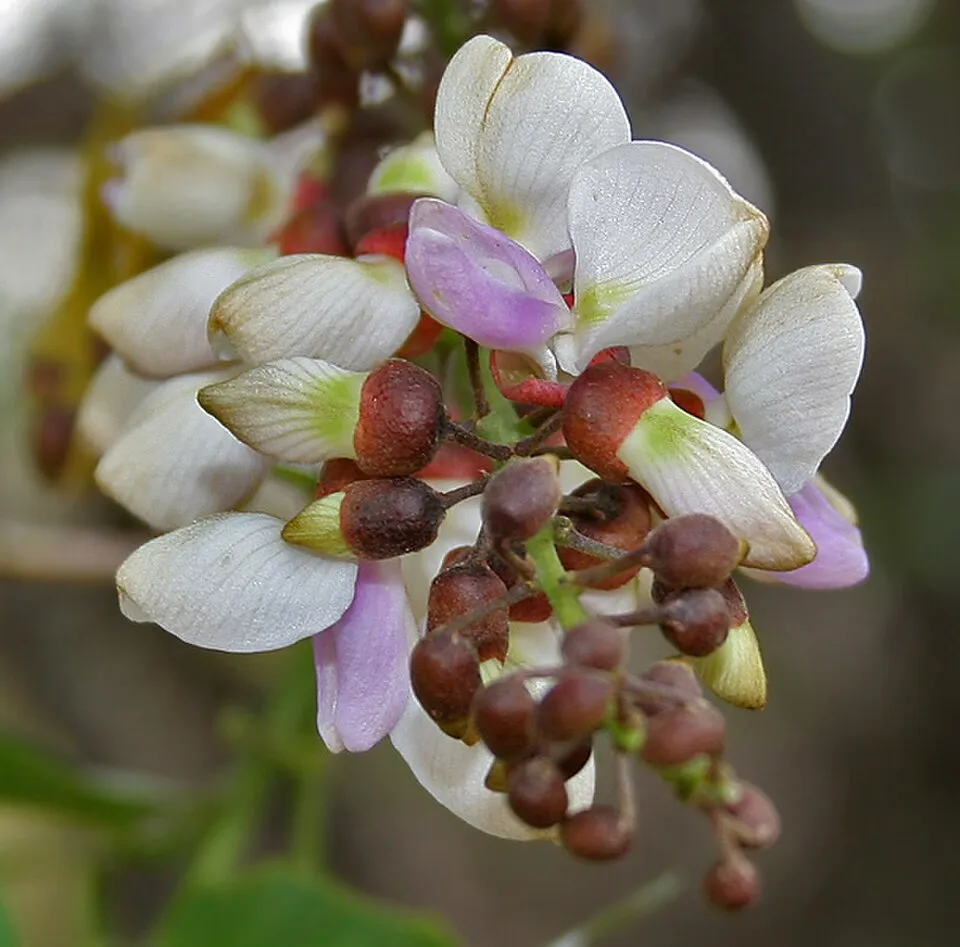
Karanja, scientifically known as Pongamia pinnata, is a resilient deciduous tree belonging to the Fabaceae family, renowned for its ecological and medicinal virtues. This robust species typically attains a height of 15-25 meters, forming a wide, spreading canopy that provides ample shade. Its distinctive foliage consists of alternately arranged compound leaves, each measuring 15 to 30 cm in length, featuring pinnate leaflets that are oval-shaped and possess a glossy, dark green hue. The tree's aesthetic appeal is further enhanced by its fragrant flowers, which emerge in striking clusters.
These blossoms showcase a unique blend of brownish-purple to white petals, with individual flowers spanning approximately 1.5 to 2.5 cm across. The bark of Pongamia pinnata is characterized by its rough, grayish-brown texture and deep fissures. Karanja thrives across tropical and subtropical environments, commonly found flourishing along coastal regions and riverbanks, with a prominent distribution throughout India, Southeast Asia, and Northern Australia. As a member of the Fabaceae family, it inherently possesses nitrogen-fixing capabilities, significantly enriching soil fertility.
The tree produces flat, leathery pods, each containing 1-3 seeds, which typically mature over a period of about six months. Beyond its medicinal applications, Karanja plays a pivotal role in environmental conservation by aiding in the reclamation of degraded lands, preventing soil erosion, and fostering biodiversity within local ecosystems.
Trusted Scientific References
1. Authoritative external sources for Pongamia pinnata
1.1 Wikipedia — Pongamia pinnata
1.2 Kew POWO (Plants of the World Online)
1.3 PubMed — peer-reviewed research
1.4 NCBI Taxonomy Browser
1.5 GBIF — Global Biodiversity
1.6Karanja should be interpreted through verified botanical identity, practical care, and responsible safety language. This recovery note adds the missing context needed for a complete profile: match light to the plant's habit, use well-drained soil, water according to season, and avoid unsupported medicinal or edible claims. For publishing, the plant can be presented as a source-backed medicinal plant with clear care guidance, common problem diagnosis, and conservative safety wording.
1.1.Karanja — Standout Qualities
- ✓Deciduous tree with — Deciduous tree with a broad, spreading canopy, reaching 15-25 meters in height.
- ✓Features fragrant brownish — purple to white flowers appearing in clusters.
- ✓Produces flat, leathery pods containing 1 — 3 seeds, maturing in approximately six months.
- ✓Rich in bioactive — Rich in bioactive compounds including flavonoids (Karanjin, Pongamol), tannins, and diverse fatty acids.
- ✓Exhibits significant anti — inflammatory, antimicrobial, hypoglycemic, and insecticidal properties.
- ✓Extensively utilized in — Extensively utilized in traditional Ayurvedic and Unani medicine for skin disorders, wounds, and digestive issues.
- ✓The seed oil, — The seed oil, known as Karanja oil, is a valuable source for topical medicinal applications and biofuel production.
- ✓Plays a crucial — Plays a crucial ecological role in nitrogen fixation, soil erosion prevention, and land reclamation.
- ✓Native to tropical — Native to tropical and subtropical regions of India, Southeast Asia, and Northern Australia.
- ✓Twigs historically served — Twigs historically served as traditional toothbrushes, highlighting its ancient uses in hygiene.
1.2.Karanja — Concise Overview
- ✓Karanja (Pongamia pinnata) is a versatile medicinal tree from the Fabaceae family.
- ✓Renowned in Ayurveda for treating various skin diseases, promoting wound healing, and managing inflammation.
- ✓The seed oil is particularly valued for its antimicrobial and anti-inflammatory properties for topical use.
- ✓Exhibits potential in blood sugar regulation and offers ecological benefits like nitrogen fixation.
- ✓Internal use requires significant caution and expert guidance due to potential toxicity.
- ✓Also serves as a source for biofuel and natural pesticide.
2.Karanja — Scientific Profile
3.Karanja — Reference Facts
4.Karanja — Structural Profile
5.Karanja — Where It Grows
6.Karanja — Cultural & Traditional Roles
7.Karanja — Active Compounds
- ✓Flavonoids — Key compounds like Karanjin, Pongamol, Quercetin, and Kaempferol are abundant, exhibiting significant anti-inflammatory, antioxidant, and insecticidal activities, contributing to the plant's therapeutic profile.
- ✓Fatty Acids — The seed oil is rich in Oleic acid (44.5-71.3%), Linoleic acid (10.8-18.3%), Palmitic acid (3.7-7.9%), Stearic acid (2.4-8.9%), Arachidic acid, Eicosenoic acid, Behenic acid, and Lignoceric acid, providing emollient, antimicrobial, and anti-inflammatory benefits.
- ✓Tannins — Present in the bark and leaves, tannins offer astringent and antimicrobial properties, aiding in wound healing and skin conditions.
- ✓Alkaloids — Various alkaloids contribute to the plant's diverse pharmacological activities, although specific types and their exact mechanisms are still under investigation.
- ✓Terpenoids — These compounds contribute to the plant's aromatic profile and possess various biological activities, including anti-inflammatory and antimicrobial effects.
- ✓Saponins — Found in different parts of the plant, saponins have demonstrated detergent-like properties and potential for immunomodulatory and antimicrobial actions.
- ✓Glycosides — These compounds, often linked to sugar molecules, contribute to the plant's therapeutic effects, including potential cardiovascular and anti-diabetic actions.
- ✓Resins — Present in the bark, resins contribute to the plant's traditional use in wound healing and as protective agents.
8.Karanja — What Research Suggests
- ✓Skin Disease Management — Karanja is highly valued in traditional medicine for its efficacy in treating various skin ailments like eczema, psoriasis, and scabies, attributed to its potent anti-inflammatory, antibacterial, and antifungal properties.
- ✓Accelerated Wound Healing — The oil extracted from Karanja seeds, and decoctions from its bark, are topically applied to promote rapid healing of wounds, ulcers, and abscesses by combating microbial infections and reducing inflammation.
- ✓Anti-inflammatory Action — Rich in flavonoids and other active compounds, Karanja exhibits significant anti-inflammatory effects, making it useful in alleviating pain and swelling associated with various conditions.
- ✓Antimicrobial Properties — Extracts from Karanja demonstrate broad-spectrum antimicrobial activity against bacteria, fungi, and parasites, contributing to its use in treating infections and worm infestations.
- ✓Blood Sugar Regulation — Traditional systems and preliminary research suggest Karanja's potential in regulating blood sugar levels, offering benefits for individuals managing Type II Diabetes Mellitus through its bitter principles.
- ✓Digestive Health Support — The plant is traditionally utilized to address digestive complaints such as bloating, abdominal tumors (as per traditional texts), and to provide relief from hemorrhoids and fistula conditions due to its purgative and healing actions.
- ✓Liver Detoxification — In traditional Chinese medicine, Karanja leaves are employed for their detoxifying properties, believed to support liver health and function.
- ✓Pain Relief from Bites — Fresh leaf juice of Pongamia pinnata is traditionally applied to insect and wasp bites to quickly reduce swelling and alleviate pain.
- ✓Ocular Health — Young leaf shoots are prepared as a cold infusion or decoction for external application in conjunctivitis, helping to relieve pain, discoloration, and gritty sensations in the eyes.
- ✓Antiviral Potential — Various parts of the plant, including seed extract, leaves, and bark, have shown promising antiviral properties in research, suggesting a broader therapeutic application.
- ✓Febrifuge Activity — Karanja possesses antipyretic qualities, traditionally used to help reduce fever and associated discomfort.
8.1.Karanja — Health Applications
9.Karanja — Adverse Effects
9.1.Karanja — Reported Side Effects
- ✓Skin Irritation — Topical application of Karanja oil or extracts may cause allergic reactions, redness, itching, or contact dermatitis in sensitive individuals.
- ✓Oral Toxicity — The seed oil, if ingested internally in large quantities, is known to be toxic, potentially causing severe gastrointestinal upset, nausea, vomiting, and purgative effects.
- ✓Gastrointestinal Distress — Internal use of Karanja extracts can lead to digestive discomforts such as abdominal pain, diarrhea, or indigestion.
- ✓Hypoglycemic Risk — Due to its potential to lower blood sugar, internal use of Karanja may interact with anti-diabetic medications, leading to hypoglycemia.
- ✓Pregnancy and Lactation — Internal use is generally contraindicated during pregnancy and breastfeeding due to insufficient safety data and potential adverse effects.
- ✓Children — Internal administration of Karanja products is not recommended for children due to the risk of toxicity and lack of established safety guidelines.
- ✓Drug Interactions — May interact with blood-thinning medications, immunosuppressants, or other drugs due to its active compounds, requiring medical consultation.
9.2.Karanja — Safety Profile
- ✓External Use Caution — While generally safe for external use, a patch test is recommended to check for skin sensitivity or allergic reactions before widespread application.
- ✓Internal Use Under Supervision — Internal administration of Karanja should only be undertaken under the strict guidance of a qualified medical herbalist or Ayurvedic practitioner due to potential toxicity.
- ✓Pregnancy and Breastfeeding Contraindication — Karanja is contraindicated for internal use during pregnancy and lactation due to the absence of conclusive safety studies.
- ✓Diabetes Management — Individuals with diabetes should exercise extreme caution and monitor blood sugar levels closely if using Karanja internally, as it may potentiate hypoglycemic effects of medications.
- ✓Avoid in Children — Internal use of Karanja is not advised for infants and young children due to the risk of adverse effects and toxicity.
- ✓Discontinue if Irritation Occurs — Any signs of skin irritation, allergic reaction, or systemic discomfort should prompt immediate cessation of use.
- ✓Quality and Purity — Always source Karanja products from reputable suppliers to ensure quality, purity, and freedom from contaminants.
10.Karanja — Application Forms
- ✓Topical Oil Application — Karanja seed oil is extensively used externally for skin conditions like eczema, psoriasis, scabies, and to treat wounds, abscesses, and hemorrhoids.
- ✓Bark Decoction for Wounds — A decoction prepared from the stem bark is used as an external wash for chronic ulcers and wounds, and for sitz baths in anorectal conditions.
- ✓Fresh Leaf Juice for Bites — The fresh juice extracted from Karanja leaves is applied topically to insect and wasp bites to reduce swelling and pain.
- ✓Leaf and Turmeric Paste for Eczema — A paste made from equal parts of fresh turmeric rhizomes and Pongamia seeds is applied to skin lesions for conditions like eczema and scabies.
- ✓Eye Wash for Conjunctivitis — A cold infusion or decoction made from young leaf shoots is used to instill or wash eyes, alleviating pain and irritation from conjunctivitis.
- ✓Internal Decoctions — Decoctions of bark, leaves, or fruits are traditionally used internally for conditions like diabetes, digestive issues, and worm infestations, always under expert guidance.
- ✓Traditional Toothbrush — Karanja twigs were historically used as natural toothbrushes to maintain oral hygiene and prevent gum diseases.
- ✓Powdered Forms — Dried and powdered parts of the plant (leaves, bark, seeds) are incorporated into Ayurvedic formulations for various internal and external applications.
11.Karanja — Growing Guide
- ✓Climate — Thrives in tropical and subtropical regions, tolerant to high temperatures and drought conditions once established.
- ✓Soil Requirements — Adaptable to a wide range of soil types, from sandy to clayey, but prefers well-drained loamy soils; exhibits tolerance to salinity and alkalinity.
- ✓Propagation — Primarily propagated through seeds, which benefit from pre-treatment (e.g., soaking) to enhance germination, or through stem cuttings.
- ✓Planting — Can be directly sown or transplanted as nursery-raised seedlings; spacing should allow for broad canopy development.
- ✓Watering — Young plants require regular watering; mature trees are highly drought-tolerant and require minimal irrigation.
- ✓Sunlight — Requires full sunlight exposure for optimal growth and flowering.
- ✓Pest and Disease Management — Generally robust and resistant to most pests and diseases, minimizing the need for extensive chemical interventions.
- ✓Ecological Benefits — As a leguminous plant, it fixes atmospheric nitrogen, enriching soil fertility and making it suitable for agroforestry and degraded land reclamation.
Reviewed by the Flora Medical Global Botanical Review Panel
Multi-disciplinary editorial group · Botany · Ethnobotany · Herbal-medicine literature
Who reviewed this: This page was checked by the Flora Medical Global Botanical Review Panel — an in-house editorial group of botany graduates, ethnobotany researchers, and horticulture practitioners who collectively maintain our 7,000+ plant encyclopedia. Meet the team.
Our 4-step verification process
1. Taxonomic verification
Scientific names and synonyms cross-checked against Kew POWO, World Flora Online, and The Plant List.
2. Phytochemical & medicinal cross-reference
Active compounds, traditional uses, and reported activities are cross-referenced with PubMed, USDA Dr. Duke's database, and peer-reviewed ethnobotanical literature.
3. Conservation & distribution check
Distribution, ecology, and conservation status confirmed against GBIF occurrence records and the IUCN Red List.
4. Editorial & safety review
Every entry passes an editorial pass for clarity, originality, and safety notices (toxicity, contraindications, dosage caveats) before publication.
Last reviewed:
Important medical disclaimer: This content is for educational and research purposes only. It is not medical advice and is not a substitute for consultation with a licensed healthcare provider. Do not use any herb to self-treat a medical condition without professional guidance.
Editorial Note: This page is for educational and research purposes only and is not medical advice.
Written by: Flora Medical Global Editorial Team
Reviewed by: Flora Medical Global Botanical Review Panel
Last Updated: June 15, 2026





Karanja — Comments & Community Reviews
Rate this plant