

Medical Disclaimer: This content is for educational purposes only. It is not medical advice. Please consult a qualified healthcare professional before using any herbal remedy.
Safety Overview
1.Potentilla — Botanical Snapshot
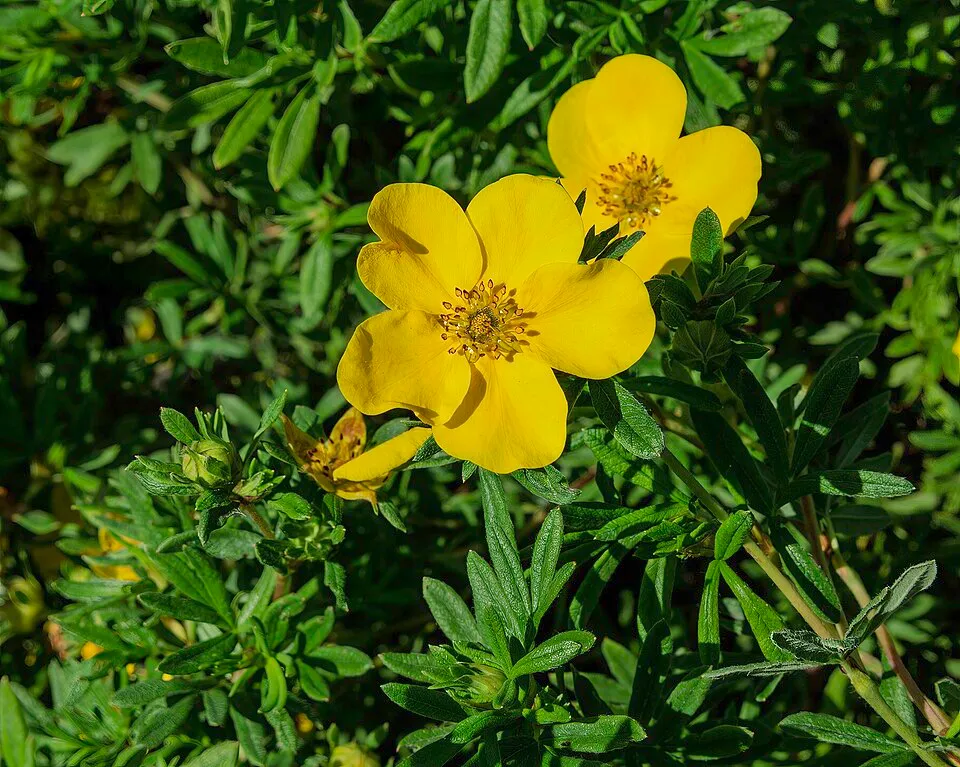
Potentilla fruticosa, commonly known as Shrubby Cinquefoil or Bush Cinquefoil, is a highly versatile and popular deciduous shrub belonging to the Rosaceae family. This resilient plant is native to the cool temperate regions across the Northern Hemisphere, spanning North America, Europe, and Asia. It typically forms a dense, rounded mound, reaching heights and widths of 2-4 feet, making it an excellent choice for various landscape applications.
Its finely textured foliage consists of small, pinnately compound leaves, often exhibiting a silvery-green hue, which adds to its ornamental appeal. From late spring until the first hard frost, it produces an abundance of small, five-petaled, saucer-shaped flowers. While bright yellow is the most common color, cultivators have developed varieties with white, cream, pink, and even orange blossoms.
The plant's extended blooming period, exceptional hardiness, and adaptability to a wide range of growing conditions—including poor soils, drought, and varying pH levels—make it a favored species for borders, hedges, foundation plantings, and mass plantings in diverse garden styles. Its shredding bark on older stems provides additional textural interest. Ecologically, Potentilla fruticosa provides valuable ecosystem services by attracting bees, butterflies, and other insect pollinators, contributing to biodiversity.
Trusted Scientific References
1. Authoritative external sources for Potentilla fruticosa
1.1 Wikipedia — Potentilla fruticosa
1.2 Kew POWO (Plants of the World Online)
1.3 PubMed — peer-reviewed research
1.4 NCBI Taxonomy Browser
1.5 GBIF — Global Biodiversity
1.6Potentilla should be interpreted through verified botanical identity, practical care, and responsible safety language. This recovery note adds the missing context needed for a complete profile: match light to the plant's habit, use well-drained soil, water according to season, and avoid unsupported medicinal or edible claims. For publishing, the plant can be presented as a source-backed garden plant with clear care guidance, common problem diagnosis, and conservative safety wording.
1.1.Potentilla — Highlights
- ✓Common Name — Shrubby Cinquefoil, Bush Cinquefoil
- ✓Scientific Name — Potentilla fruticosa
- ✓Family — Rosaceae
- ✓Native Range — Northern Hemisphere (North America, Europe, Asia)
- ✓Growth Habit — Dense, rounded deciduous shrub (2-4 feet tall/wide)
- ✓Foliage — Pinnately compound, often silvery-green
- ✓Flowers — Small, five-petaled, saucer-shaped; yellow, white, pink, orange cultivars
- ✓Bloom Period — Late spring to first frost (extended blooming)
- ✓Medicinal Uses — Astringent, anti-inflammatory, antioxidant, antimicrobial
- ✓Key Constituents — Tannins, Flavonoids, Triterpenes
1.2.Potentilla — At-a-Glance Summary
- ✓Potentilla fruticosa is a hardy, flowering shrub from the Rosaceae family.
- ✓Valued for its astringent, anti-inflammatory, and antioxidant properties.
- ✓Rich in tannins, flavonoids, and triterpenes, supporting digestive and skin health.
- ✓Traditionally used for diarrhea, wounds, and oral inflammations.
- ✓Easy to grow, adaptable to various climates and soil conditions.
- ✓Generally safe when used appropriately, but caution advised for certain populations.
2.Potentilla — Nomenclature & Classification
3.Potentilla — Fact Sheet
4.Potentilla — Physical Description
5.Potentilla — Origin & Spread
6.Potentilla — Folk Medicine Applications
7.Potentilla — Phytochemistry
- ✓Tannins (Ellagitannins, Proanthocyanidins) — Responsible for potent astringent properties, contributing to anti-diarrheal and wound-healing effects.
- ✓Flavonoids (Quercetin, Kaempferol, Rutin derivatives) — Provide significant antioxidant, anti-inflammatory, and antiallergic activities.
- ✓Triterpenes (Ursolic acid, Oleanolic acid) — Exhibit anti-inflammatory, hepatoprotective, and potential anticancer properties.
- ✓Phenolic Acids (Gallic acid, Caffeic acid) — Contribute to antioxidant and antimicrobial activities, protecting against oxidative damage.
- ✓Saponins — Possess emulsifying properties and may have immunomodulatory and cholesterol-lowering effects.
- ✓Volatile Oils — Present in small quantities, contributing to the plant's aroma and potentially having mild antiseptic actions.
- ✓Polysaccharides — May contribute to immunomodulatory effects and overall plant defense mechanisms.
- ✓Organic Acids (Citric acid, Malic acid) — Support metabolic processes and contribute to the plant's overall chemical profile.
- ✓Minerals (Potassium, Calcium, Magnesium) — Essential micronutrients contributing to the plant's nutritional value and physiological functions.
- ✓Carotenoids — Pigments found in the flowers, acting as antioxidants and precursors to Vitamin A.
- ✓Alkaloids — Generally present in very low concentrations, their specific medicinal roles in Potentilla fruticosa are less studied.
- ✓Glycosides — Various glycosides may be present, contributing to diverse pharmacological actions.
8.Potentilla — Pharmacological Findings
- ✓Astringent Properties — High tannin content helps constrict tissues, reducing fluid loss and inflammation in mucous membranes.
- ✓Anti-diarrheal Action — Reduces the frequency and severity of diarrhea by tightening the intestinal lining and inhibiting excessive fluid secretion.
- ✓Anti-inflammatory Effects — Flavonoids and triterpenes modulate inflammatory pathways, alleviating swelling and pain.
- ✓Wound Healing — Applied topically, its astringent and antiseptic qualities promote faster closure and healing of minor cuts and abrasions.
- ✓Oral Health Support — Used as a gargle, it can soothe mouth sores, gingivitis, and pharyngitis due to its anti-inflammatory and antiseptic effects.
- ✓Digestive Aid — Helps in managing symptoms of irritable bowel syndrome (IBS) and indigestion by reducing gut inflammation and spasms.
- ✓Antioxidant Activity — Flavonoids like quercetin and kaempferol protect cells from oxidative stress caused by free radicals.
- ✓Antimicrobial Potential — Exhibits mild antiseptic properties against certain bacteria and fungi, contributing to its use in traditional medicine for infections.
- ✓Immune Modulation — Supports overall immune function through its antioxidant and anti-inflammatory compounds, enhancing the body's defense mechanisms.
- ✓Skin Conditions Management — Beneficial for topical application in conditions like eczema and minor rashes due to its soothing and astringent actions.
- ✓Hemostatic Effect — Traditionally used to help stop minor bleeding due to its ability to constrict blood vessels and promote clotting.
- ✓Cardiovascular Support — Preliminary research suggests potential benefits in cardiovascular health through antioxidant and anti-inflammatory mechanisms.
8.1.Potentilla — Indications & Uses
9.Potentilla — Safety Considerations
9.1.Potentilla — Warnings
- ✓Constipation — Excessive intake due to high tannin content may lead to constipation.
- ✓Stomach Upset — Some individuals may experience mild gastrointestinal discomfort like nausea if taken in large doses.
- ✓Allergic Reactions — Rare but possible, including skin rashes or itching in sensitive individuals.
- ✓Tannin Sensitivity — Individuals sensitive to tannins might experience irritation of mucous membranes.
- ✓Iron Absorption Inhibition — High tannin intake can interfere with iron absorption over prolonged periods.
- ✓Drug Interactions — Potential to interact with medications due to its tannin content, affecting absorption of other drugs.
- ✓Liver Concerns — Very high, long-term doses could theoretically stress the liver, though not well-documented for this plant.
9.2.Potentilla — Clinical Safety Notes
- ✓Pregnancy and Lactation — Avoid use due to insufficient safety data; consult a healthcare professional.
- ✓Children — Use with caution and under professional guidance due to lack of specific pediatric studies.
- ✓Pre-existing Conditions — Individuals with chronic gastrointestinal conditions should consult a doctor before use.
- ✓Iron Deficiency Anemia — Individuals prone to or suffering from iron deficiency should be cautious due to potential iron absorption interference.
- ✓Dosage — Adhere strictly to recommended dosages to minimize risk of side effects like constipation or stomach upset.
- ✓Duration of Use — Not recommended for continuous long-term use without professional medical supervision.
- ✓Allergic History — Individuals with known allergies to plants in the Rosaceae family should exercise caution.
10.Potentilla — Usage Guide
- ✓Herbal Tea/Infusion — Dried leaves and flowers steeped in hot water are used for digestive issues like diarrhea and as a general tonic.
- ✓Decoction — Roots and tougher stems are simmered in water to extract compounds for more potent internal use, particularly for chronic inflammation.
- ✓Tincture — Alcohol-based extracts of aerial parts or roots for concentrated internal use, allowing for precise dosing.
- ✓Poultice — Fresh crushed leaves or a paste from dried powder applied directly to the skin for wounds, inflammations, and minor burns.
- ✓Topical Wash/Compress — Strong infusions or decoctions used as a wash or soaked into a cloth for compresses on skin irritations, eczema, and rashes.
- ✓Mouthwash/Gargle — Diluted infusion used to alleviate mouth sores, gum inflammation, and sore throats due to its astringent properties.
- ✓Capsules/Tablets — Standardized extracts or dried powdered plant material encapsulated for convenient and consistent internal dosing.
- ✓Ointments/Creams — Extracts incorporated into topical formulations for localized relief of skin conditions and minor injuries.
11.Potentilla — Garden Cultivation
- ✓Site Selection — Prefers full sun to partial shade (at least 6 hours of direct sunlight daily for optimal flowering).
- ✓Soil Requirements — Thrives in well-drained soil but is highly adaptable to a wide range of soil types, including poor soils and those with high pH.
- ✓Watering — Drought-tolerant once established; requires moderate watering, avoiding permanently wet sites.
- ✓Hardiness Zone — Hardy in USDA Zones 2-7, tolerating cold climates well but may struggle in very hot, humid conditions.
- ✓Fertilization — Benefits from a slow-release tree and shrub fertilizer in early spring for best performance, though not strictly necessary.
- ✓Pruning — Prune back about one-third of the plant in late winter or early spring to maintain shape, promote new growth, and encourage abundant flowering.
- ✓Pest and Disease Management — Generally resistant to most pests; spider mites and mildew can be issues in hot, humid weather.
- ✓Propagation — Easily propagated by softwood cuttings in early summer or by division.
Reviewed by the Flora Medical Global Botanical Review Panel
Multi-disciplinary editorial group · Botany · Ethnobotany · Herbal-medicine literature
Who reviewed this: This page was checked by the Flora Medical Global Botanical Review Panel — an in-house editorial group of botany graduates, ethnobotany researchers, and horticulture practitioners who collectively maintain our 7,000+ plant encyclopedia. Meet the team.
Our 4-step verification process
1. Taxonomic verification
Scientific names and synonyms cross-checked against Kew POWO, World Flora Online, and The Plant List.
2. Phytochemical & medicinal cross-reference
Active compounds, traditional uses, and reported activities are cross-referenced with PubMed, USDA Dr. Duke's database, and peer-reviewed ethnobotanical literature.
3. Conservation & distribution check
Distribution, ecology, and conservation status confirmed against GBIF occurrence records and the IUCN Red List.
4. Editorial & safety review
Every entry passes an editorial pass for clarity, originality, and safety notices (toxicity, contraindications, dosage caveats) before publication.
Last reviewed:
Important medical disclaimer: This content is for educational and research purposes only. It is not medical advice and is not a substitute for consultation with a licensed healthcare provider. Do not use any herb to self-treat a medical condition without professional guidance.
Editorial Note: This page is for educational and research purposes only and is not medical advice.
Written by: Flora Medical Global Editorial Team
Reviewed by: Flora Medical Global Botanical Review Panel
Last Updated: June 15, 2026





Potentilla — Comments & Community Reviews
Rate this plant