
Medical Disclaimer: This content is for educational purposes only. It is not medical advice. Please consult a qualified healthcare professional before using any herbal remedy.
Safety Overview
1.Pothos Jade — Plant Snapshot
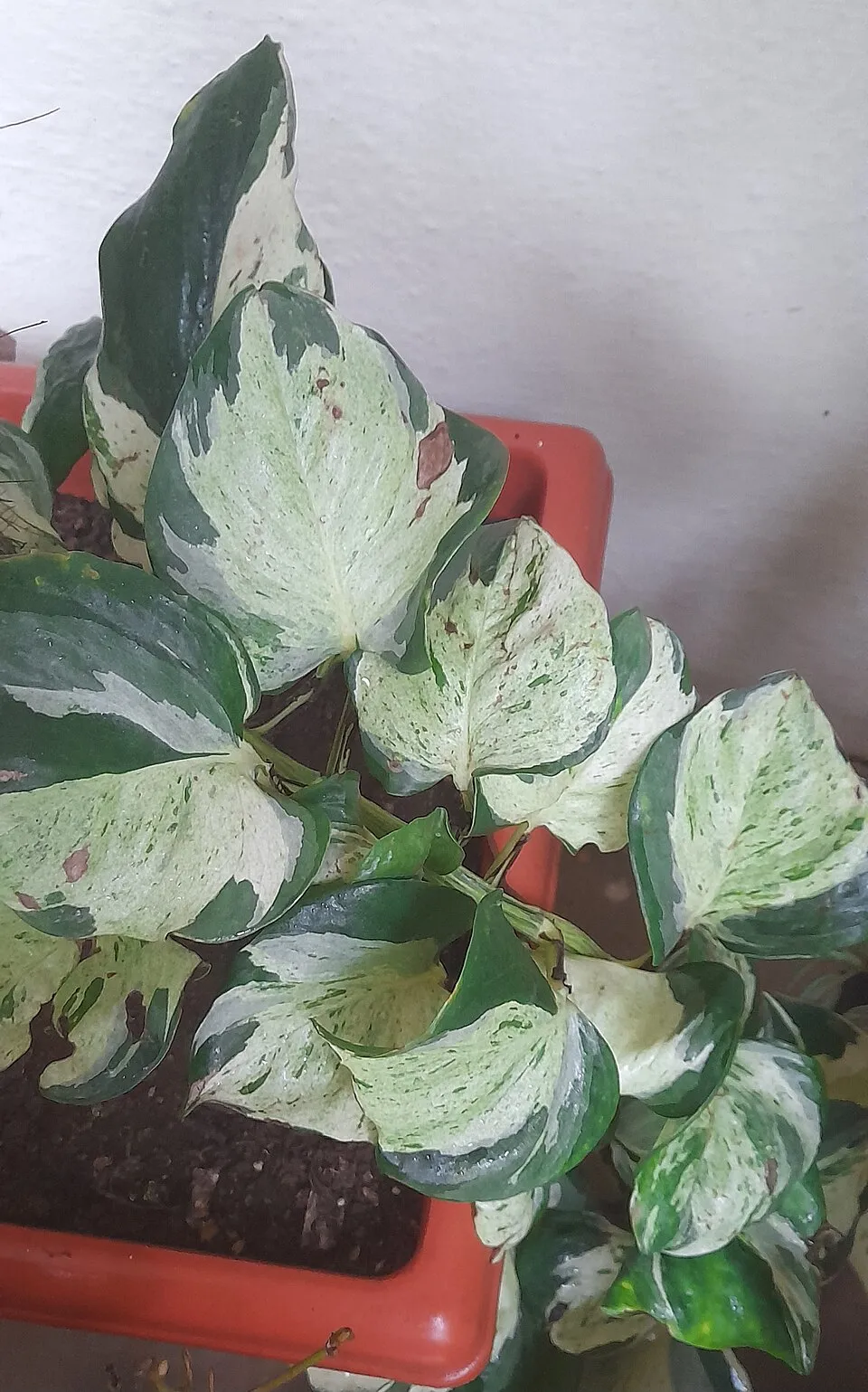
Pothos Jade, a specific cultivar of Epipremnum aureum, is a highly acclaimed ornamental plant belonging to the Araceae family. This cultivar is particularly distinguished by its uniformly deep green, glossy, heart-shaped leaves, which typically measure between 10 to 20 cm (4-8 inches) in length and notably lack the variegation seen in other varieties of Epipremnum aureum. This absence of lighter patterns lends the 'Jade' Pothos its characteristic rich and consistent emerald hue, making it a favored choice for indoor cultivation. In its native tropical rainforest habitats, primarily the Solomon Islands and other parts of Southeast Asia and the Pacific, it thrives as a vining epiphyte.
Its long, flexible stems can gracefully trail from elevated positions or ascend support structures, often reaching lengths of 3 meters (10 feet) or more under optimal conditions. Mature stems can become quite robust, sometimes exceeding 6 mm (0.25 inches) in diameter, anchoring numerous aerial roots that facilitate climbing and absorption of moisture and nutrients. While primarily cultivated for its striking foliage, like its parent species, Pothos Jade can rarely produce the characteristic Araceae inflorescence—a small, white spathe enclosing a spadix—though this phenomenon is exceptionally uncommon in indoor settings. Taxonomically, Epipremnum aureum has undergone several reclassifications, originally described as Pothos aureus and later Rhaphidophora aurea, before its current designation.
It is distinct from Epipremnum pinnatum, despite past confusion, based on specific leaf morphology and growth patterns. The genus name 'Epipremnum' signifies 'on trees,' referencing its epiphytic nature, while 'aureum' refers to the golden-yellow variegation typical of the species, though absent in the 'Jade' cultivar. Its ease of care, resilience, and adaptability to various indoor conditions, coupled with significant air-purifying capabilities, contribute to its global appeal.
Trusted Scientific References
1. Authoritative external sources for Epipremnum aureum Jade
1.1 Wikipedia — Epipremnum aureum Jade
1.2 Kew POWO (Plants of the World Online)
1.3 PubMed — peer-reviewed research
1.4 NCBI Taxonomy Browser
1.5 GBIF — Global Biodiversity
1.1.Pothos Jade — Defining Traits
- ✓Unblemished, deep green, heart — shaped leaves without variegation.
- ✓Robust vining and — Robust vining and trailing growth habit, ideal for hanging baskets or climbing.
- ✓Exceptional capabilities in — Exceptional capabilities in purifying indoor air from harmful volatile organic compounds.
- ✓High tolerance to — High tolerance to a wide range of light conditions, from low to bright indirect.
- ✓Contains insoluble calcium — Contains insoluble calcium oxalate raphides, rendering all parts of the plant toxic.
- ✓Simple and efficient — Simple and efficient propagation method through stem cuttings in water or soil.
- ✓Highly adaptable and — Highly adaptable and resilient, thriving in typical indoor environments with minimal care.
- ✓Capable of rapid — Capable of rapid growth, with stems potentially reaching several meters in length.
- ✓Low maintenance requirements, — Low maintenance requirements, making it suitable for beginner plant enthusiasts.
- ✓A tropical epiphyte — A tropical epiphyte originating from the rainforests of Southeast Asia and the Pacific.
1.2.Pothos Jade — Snapshot Summary
- ✓Popular ornamental houseplant known for its deep green foliage.
- ✓Highly effective natural air purifier, removing common indoor pollutants.
- ✓Contains toxic calcium oxalate crystals, making it unsafe for ingestion by humans and pets.
- ✓Exhibits antioxidant, antimicrobial, and potential anticancer properties in research settings.
- ✓Extremely easy to cultivate and propagate, adapting well to various indoor conditions.
- ✓Native to tropical regions of Southeast Asia and the Pacific.
2.Pothos Jade — Taxonomic Classification
3.Pothos Jade — Botanical Stats
4.Pothos Jade — Plant Morphology
5.Pothos Jade — Habitat & Distribution
6.Pothos Jade — Historical Applications
7.Pothos Jade — Secondary Metabolites
- ✓Alkaloids — These nitrogen-containing compounds are present in Epipremnum aureum and are known for their diverse pharmacological activities, including potential anticancer and CNS depressant effects.
- ✓Flavonoids — Abundant in the leaves, flavonoids such as rutin contribute significantly to the plant's antioxidant, anti-inflammatory, and antimicrobial properties by scavenging free radicals.
- ✓Glycosides — Various glycosides are found, which are compounds where a sugar is bound to a non-sugar moiety, contributing to diverse biological activities, including some with potential cardiac effects.
- ✓Terpenoids — These organic compounds, including steroidal terpenoids, are recognized for their anti-inflammatory, antimicrobial, and sometimes insecticidal properties.
- ✓Tannins — Present in the plant, tannins are phenolic compounds known for their astringent, antioxidant, and antimicrobial actions, often contributing to plant defense mechanisms.
- ✓Saponins — These detergent-like glycosides are found in the plant and can exhibit various biological effects, including anti-inflammatory and cholesterol-lowering properties in some species.
- ✓Carbohydrates and Reducing Sugars — Fundamental for plant metabolism and energy storage, these compounds are present in various parts of Epipremnum aureum.
- ✓Fatty Acids — Specific fatty acids like myristic acid and palmitic acid have been identified, playing roles in plant structure, energy storage, and signaling pathways.
- ✓Phenols — A broad group of compounds including phenolic acids, which are potent antioxidants and contribute to the plant's defense against pathogens and environmental stress.
- ✓Alcohols — Patchoulol, a sesquiterpene alcohol, is a notable compound detected in root extracts, known for its distinctive aroma and potential insecticidal properties.
- ✓Calcium Oxalates (Raphides) — These insoluble needle-like crystals are a key constituent in all parts of the plant, responsible for its significant irritant and toxic effects upon ingestion or contact.
8.Pothos Jade — Modern Studies
- ✓Air Purification — Pothos Jade is highly effective at removing common indoor air pollutants such as formaldehyde, benzene, xylene, and toluene, contributing to healthier indoor environments through phytoremediation.
- ✓Antioxidant Activity — Studies indicate that leaf extracts possess significant antioxidant potential, effectively scavenging free radicals and supporting the body's natural defense mechanisms against oxidative stress.
- ✓Antimicrobial Properties — Research has shown that various extracts from Epipremnum aureum exhibit antibacterial activity against pathogens like Escherichia coli and Staphylococcus aureus, and antifungal effects against Candida albicans.
- ✓Anticancer Potential — Chloroform extracts have demonstrated growth inhibition against T-47D breast cancer cells and acetone extracts against human liver cancer cell lines (HEPG-2) in in vitro studies, inducing both apoptotic and non-apoptotic cell death pathways.
- ✓CNS Depressant Effects — Aqueous and alcoholic extracts of the leaves have shown significant central nervous system depressant activity in animal models, leading to reduced locomotor activity and potentially offering calming effects.
- ✓Diuretic Action — Animal studies have indicated that leaf extracts can significantly increase urine volume, suggesting potential diuretic properties that could aid in fluid balance.
- ✓Wound Healing Support — While direct mechanisms are still under investigation, some traditional uses and preliminary research suggest a role in supporting the healing process of skin lesions.
- ✓Gastroprotective Effects — Preliminary studies hint at potential gastroprotective and anti-ulcer properties, although further research is needed to elucidate specific mechanisms.
- ✓Antidiabetic Potential — Some research suggests Epipremnum aureum may have antidiabetic properties, possibly by influencing glucose metabolism, warranting more in-depth investigation.
- ✓Traditional Skin Disease Treatment — In Malaysian traditional medicine, Epipremnum aureum has been historically applied for the treatment of various skin conditions, although modern scientific validation is limited and caution is advised due to skin irritants.
- ✓Ascites Management (Traditional) — Historically, some cultures in Malaysia have used this plant in traditional remedies aimed at managing ascites, a condition characterized by fluid accumulation in the abdomen.
8.1.Pothos Jade — Health Applications
9.Pothos Jade — Risk Profile
9.1.Pothos Jade — Warnings
- ✓Oral Irritation — Ingestion causes immediate burning, swelling, and pain in the mouth, throat, and lips due to calcium oxalate crystals.
- ✓Gastrointestinal Distress — Can lead to severe vomiting, excessive drooling, difficulty swallowing, and abdominal pain in humans and pets.
- ✓Skin Irritation — Direct contact with the sap can cause contact dermatitis, characterized by redness, itching, and a burning sensation on the skin.
- ✓Ocular Injury — Exposure of plant sap to the eyes can result in severe pain, irritation, conjunctivitis, corneal abrasions, and even toxic keratitis.
- ✓Respiratory Distress — Swelling of the throat and airways can, in rare severe cases, impede breathing, requiring immediate medical attention.
- ✓Systemic Toxicity — While primarily a local irritant, large ingestions could potentially lead to more widespread systemic effects, though rare.
9.2.Pothos Jade — Clinical Safety Notes
- ✓High Toxicity — Pothos Jade is considered toxic to humans and pets (cats, dogs, livestock) due to the presence of insoluble calcium oxalate crystals.
- ✓Avoid Ingestion — Absolutely refrain from consuming any part of the plant; it is not safe for internal medicinal use.
- ✓Keep Away from Children and Pets — Ensure plants are placed out of reach of curious children and animals to prevent accidental ingestion.
- ✓Use Gloves When Handling — Wear protective gloves when pruning or repotting to prevent skin contact with the irritating sap.
- ✓First Aid for Contact — In case of skin contact, wash the affected area thoroughly with soap and water; for eye contact, flush with copious amounts of water and seek immediate medical attention.
- ✓Seek Medical Attention — If ingestion occurs or severe symptoms develop, contact poison control or a medical professional immediately.
- ✓Not for Pregnant/Nursing — Pregnant or nursing individuals should avoid any direct contact or potential exposure to the plant.
10.Pothos Jade — Application Forms
- ✓Ornamental Display — Primarily used as an indoor ornamental plant, enhancing aesthetics in homes and offices with its lush foliage.
- ✓Air Purification — Strategically placed in living and working spaces to leverage its proven ability to filter common indoor air pollutants.
- ✓Topical Application (Traditional) — In some traditional practices, leaves were prepared as poultices for skin ailments, though modern use is cautioned due to skin irritant properties.
- ✓Decoctions/Infusions (Traditional) — Historically, certain cultures utilized plant parts in decoctions for internal medicinal purposes, but this practice is strongly discouraged due to the plant's significant toxicity.
- ✓Experimental Extracts — Plant extracts are prepared using various solvents (e.g., methanol, acetone) for in vitro and animal studies to investigate specific phytochemicals and their activities.
- ✓Phytoremediation Systems — Integrated into biofilter systems or green walls for large-scale indoor air quality improvement in public or commercial buildings.
- ✓Handling Precaution — Always handle the plant with gloves, especially when pruning, to prevent direct contact with the sap, which can cause skin irritation.
11.Pothos Jade — Growth Requirements
- ✓Light — Thrives in bright, indirect light but is highly tolerant of low-light conditions, though growth may be slower.
- ✓Watering — Water moderately, allowing the top inch or two of soil to dry out between waterings to prevent root rot.
- ✓Soil — Prefers well-draining, nutrient-rich potting mix, ideally with good aeration.
- ✓Humidity — Benefits from higher humidity levels, typical of its native tropical environment, but adapts to average household humidity.
- ✓Temperature — Best grown in warm indoor temperatures, ideally between 18-30°C (65-85°F), avoiding cold drafts.
- ✓Propagation — Easily propagated from stem cuttings placed in water or moist soil, rooting readily within a few weeks.
- ✓Support — As a vining plant, it can be grown in hanging baskets to trail or provided with a moss pole or trellis to climb.
Reviewed by the Flora Medical Global Botanical Review Panel
Multi-disciplinary editorial group · Botany · Ethnobotany · Herbal-medicine literature
Who reviewed this: This page was checked by the Flora Medical Global Botanical Review Panel — an in-house editorial group of botany graduates, ethnobotany researchers, and horticulture practitioners who collectively maintain our 7,000+ plant encyclopedia. Meet the team.
Our 4-step verification process
1. Taxonomic verification
Scientific names and synonyms cross-checked against Kew POWO, World Flora Online, and The Plant List.
2. Phytochemical & medicinal cross-reference
Active compounds, traditional uses, and reported activities are cross-referenced with PubMed, USDA Dr. Duke's database, and peer-reviewed ethnobotanical literature.
3. Conservation & distribution check
Distribution, ecology, and conservation status confirmed against GBIF occurrence records and the IUCN Red List.
4. Editorial & safety review
Every entry passes an editorial pass for clarity, originality, and safety notices (toxicity, contraindications, dosage caveats) before publication.
Last reviewed:
Important medical disclaimer: This content is for educational and research purposes only. It is not medical advice and is not a substitute for consultation with a licensed healthcare provider. Do not use any herb to self-treat a medical condition without professional guidance.
Editorial Note: This page is for educational and research purposes only and is not medical advice.
Written by: Flora Medical Global Editorial Team
Reviewed by: Flora Medical Global Botanical Review Panel
Last Updated: June 15, 2026





Pothos Jade — Comments & Community Reviews
Rate this plant