
Medical Disclaimer: This content is for educational purposes only. It is not medical advice. Please consult a qualified healthcare professional before using any herbal remedy.
Safety Overview
1.Pothos Pearls and Jade — Plant Snapshot
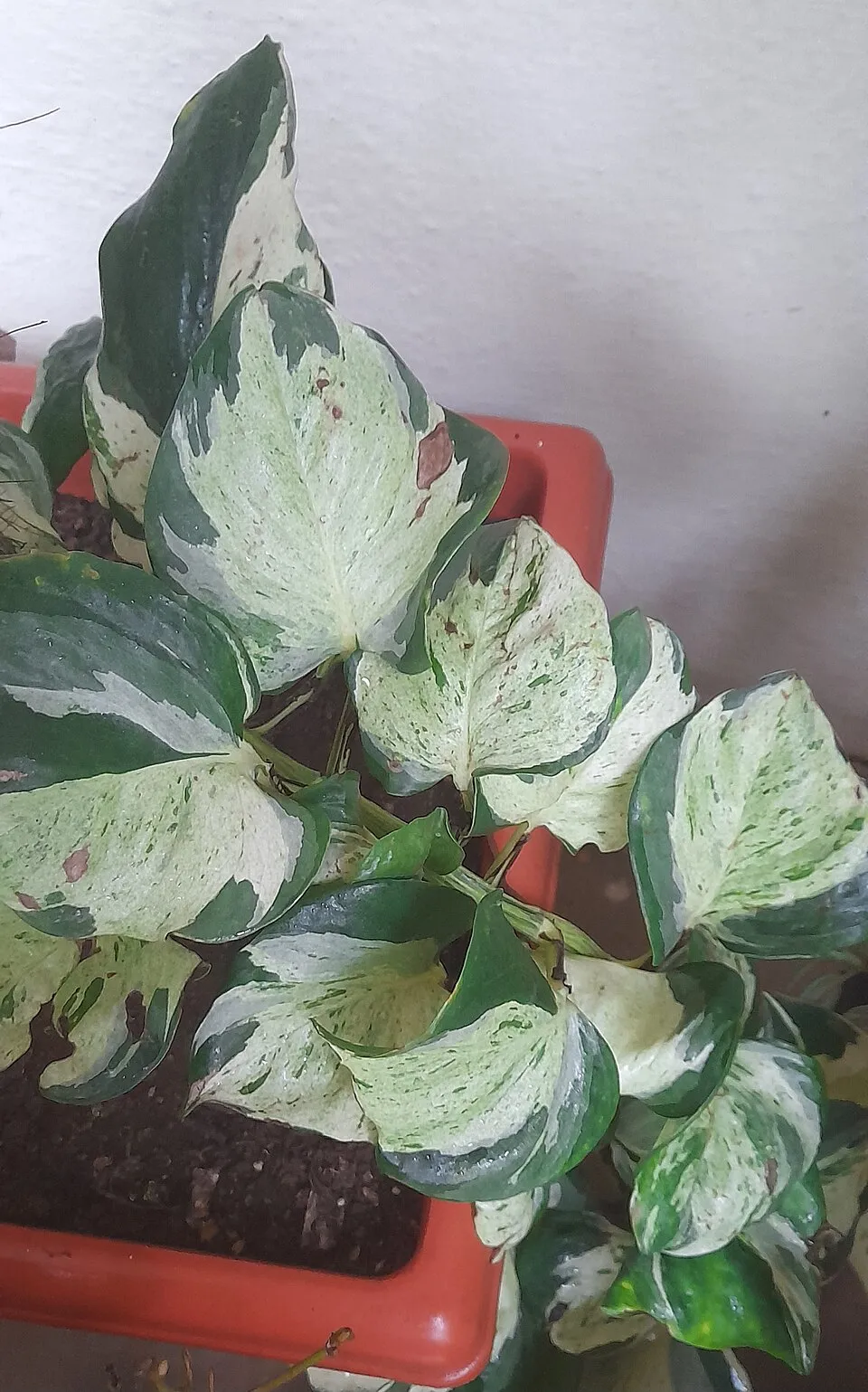
Pothos Pearls and Jade, scientifically known as Epipremnum aureum 'Pearls', is a captivating cultivar of the widely recognized Golden Pothos, belonging to the Araceae family. This perennial vine is celebrated for its distinctive heart-shaped leaves, which present a unique mosaic of deep green, creamy white, and silvery-grey variegation.
Each leaf, typically growing 7-12 inches long, possesses a glossy, waxy texture that enhances its visual appeal. The plant produces long, flexible stems that can either trail gracefully from hanging planters or climb upwards with the aid of aerial roots, making it highly versatile for various indoor arrangements.
Native to tropical regions of French Polynesia and Southeast Asia, the wild Epipremnum aureum thrives in the shaded understories of forests. The 'Pearls and Jade' cultivar adapts remarkably well to indoor environments, preferring warm temperatures between 18°C and 29°C (65°F to 85°F). While it flourishes in bright, indirect light, which accentuates its striking variegation, it also tolerates lower light conditions, though this may cause its distinctive patterns to become less pronounced.
This robust plant is known for its easy-care regimen and its ability to contribute to indoor air humidity and purification. Although it rarely flowers indoors, its lush foliage and adaptive nature make Pothos Pearls and Jade a popular and functional addition to any living space, improving both aesthetics and air quality.
Trusted Scientific References
1. Authoritative external sources for Epipremnum aureum Pearls
1.1 Wikipedia — Epipremnum aureum Pearls
1.2 Kew POWO (Plants of the World Online)
1.3 PubMed — peer-reviewed research
1.4 NCBI Taxonomy Browser
1.5 GBIF — Global Biodiversity
1.6Pothos Pearls and Jade should be interpreted through verified botanical identity, practical care, and responsible safety language. This recovery note adds the missing context needed for a complete profile: match light to the plant's habit, use well-drained soil, water according to season, and avoid unsupported medicinal or edible claims. For publishing, the plant can be presented as a source-backed indoor plant with clear care guidance, common problem diagnosis, and conservative safety wording.
1.1.Pothos Pearls and Jade — Standout Qualities
- ✓Distinctive variegated heart — shaped leaves with green, white, and grey.
- ✓Trailing or climbing — Trailing or climbing growth habit, versatile for various displays.
- ✓Exceptional indoor air — Exceptional indoor air purification capabilities, removing VOCs.
- ✓Low maintenance and — Low maintenance and highly tolerant of varied environmental conditions.
- ✓Enhances indoor humidity — Enhances indoor humidity through natural evapotranspiration.
- ✓Symbolizes prosperity, resilience, — Symbolizes prosperity, resilience, and positive energy in Feng Shui.
- ✓Easy to propagate — Easy to propagate from stem cuttings, making it simple to multiply.
- ✓Toxic to humans — Toxic to humans and pets due to calcium oxalate content.
- ✓Fast — growing and provides lush, vibrant greenery.
- ✓Adaptable to both — Adaptable to both bright, indirect light and lower light environments.
1.2.Pothos Pearls and Jade — At-a-Glance Summary
- ✓Ornamental and Air-Purifying Houseplant with striking variegated foliage.
- ✓Contains toxic calcium oxalate crystals, dangerous if ingested by humans or pets.
- ✓Known for its easy care, adaptability to various light conditions, and resilience.
- ✓Contributes to improved indoor air quality by absorbing common VOCs.
- ✓Associated with mental well-being, stress reduction, and positive Feng Shui.
- ✓Primarily grown for aesthetic appeal and environmental benefits, not for medicinal consumption.
2.Pothos Pearls and Jade — Scientific Profile
3.Pothos Pearls and Jade — Quick Facts
4.Pothos Pearls and Jade — Morphological Account
5.Pothos Pearls and Jade — Geographic Distribution
6.Pothos Pearls and Jade — Historical Applications
7.Pothos Pearls and Jade — Secondary Metabolites
- ✓Calcium Oxalate Crystals (Raphides) — These are the primary irritants in Pothos, causing mechanical irritation and burning sensations upon contact or ingestion, acting as a natural defense mechanism for the plant.
- ✓Flavonoids — Present in trace amounts, these are broad-spectrum plant pigments and antioxidants that may contribute to plant health and defense against environmental stressors.
- ✓Terpenoids — A diverse group of organic compounds providing characteristic scents and involved in plant defense, present in small quantities within the plant tissues.
- ✓Phenolic Acids — These compounds are secondary metabolites known for their antioxidant properties, contributing to the plant's overall biochemical profile.
- ✓Alkaloids — While not extensively studied in Epipremnum aureum, various alkaloid classes are found across the Araceae family, which can have diverse biological activities.
- ✓Saponins — These are glycosides that can have foaming properties and may play a role in plant defense, potentially present in very low concentrations.
- ✓Carbohydrates — Structural and storage compounds like cellulose and starch, essential for plant growth and energy.
- ✓Proteins and Amino Acids — Fundamental building blocks for plant enzymes and structural components, crucial for metabolic processes.
- ✓Volatile Organic Compounds (VOCs) — The plant itself emits various natural VOCs, and it also absorbs anthropogenic VOCs from its environment.
8.Pothos Pearls and Jade — Research Insights
- ✓Indoor Air Purification — Epipremnum aureum, including cultivars like 'Pearls and Jade', has been recognized for its ability to absorb and remove common indoor volatile organic compounds (VOCs) such as formaldehyde, benzene, and xylene from the air.
- ✓Humidity Regulation — Through the natural process of evapotranspiration, this plant releases water vapor into the atmosphere, helping to increase and stabilize indoor humidity levels, which can be beneficial in dry environments.
- ✓Mental Well-being Enhancement — The presence of living plants like Pothos Pearls and Jade is known to reduce stress, lower anxiety, and improve focus and productivity through biophilic effects, fostering a sense of calm and connection to nature.
- ✓Aesthetic and Decorative Value — Its unique variegated foliage and versatile growth habit make it a highly appealing ornamental plant that enhances interior decor and creates a more pleasant living or working environment.
- ✓Feng Shui Significance — In traditional Feng Shui practices, Pothos is believed to attract positive energy, wealth, and good fortune, promoting emotional balance and a harmonious atmosphere in homes and offices.
- ✓Symbol of Resilience and Growth — The plant's hardy nature and ability to thrive in various conditions symbolize perseverance, adaptability, and continuous personal or financial growth, making it a thoughtful gift.
- ✓Low-Maintenance Stress Reduction — Its reputation as an 'impossible to kill' plant reduces the psychological burden of plant care, allowing individuals to enjoy the benefits of greenery without significant effort or worry.
- ✓Natural Detoxifier (Environmental) — Beyond air purification, some Epipremnum species have shown potential in phytoremediation for absorbing heavy metals from contaminated soil, though this is not a direct human health benefit for indoor plants.
8.1.Pothos Pearls and Jade — Therapeutic Indications
9.Pothos Pearls and Jade — Adverse Effects
9.1.Pothos Pearls and Jade — Side Effects & Warnings
- ✓Oral Irritation — Ingestion causes immediate burning, swelling, and pain in the mouth, tongue, and throat due to calcium oxalate crystals.
- ✓Digestive Upset — Can lead to nausea, vomiting, abdominal pain, and diarrhea if plant material is consumed.
- ✓Skin Dermatitis — Direct contact with the sap may cause skin irritation, redness, itching, and a burning sensation in sensitive individuals.
- ✓Ocular Irritation — Sap exposure to the eyes can result in severe pain, redness, irritation, and temporary vision impairment.
- ✓Pet Toxicity — Highly toxic to cats and dogs, causing intense oral pain, excessive drooling, vomiting, and difficulty swallowing.
- ✓Respiratory Discomfort — Inhalation of fine particles or sap mist may irritate respiratory passages, leading to coughing or discomfort.
9.2.Pothos Pearls and Jade — Clinical Safety Notes
- ✓Toxic if Ingested — All parts of Pothos Pearls and Jade contain insoluble calcium oxalate crystals, making it toxic and irritating if consumed by humans or animals.
- ✓Keep Away from Children and Pets — Essential to place the plant out of reach to prevent accidental ingestion, which can cause severe oral and digestive distress.
- ✓Handle with Gloves — Always wear gloves when pruning or handling the plant to avoid skin irritation from the sap.
- ✓Avoid Eye Contact — In case of sap contact with eyes, flush immediately and thoroughly with water for at least 15 minutes and seek medical attention.
- ✓Not for Medicinal Internal Use — This plant is strictly ornamental and should never be consumed or used internally for any purported medicinal purpose.
- ✓Allergic Reactions — Individuals with plant sensitivities may experience contact dermatitis; test a small area if unsure.
- ✓Seek Medical Advice — If ingestion occurs or severe symptoms develop, contact a poison control center or medical professional immediately.
10.Pothos Pearls and Jade — Application Forms
- ✓Indoor Ornamental Plant — Primarily cultivated for its striking variegated foliage and trailing habit, enhancing the aesthetic appeal of homes and offices.
- ✓Air Purification Agent — Placed in living spaces to leverage its proven ability to absorb and reduce common indoor airborne pollutants like formaldehyde and benzene.
- ✓Natural Humidity Regulator — Positioned to contribute to a more comfortable indoor environment by releasing water vapor, especially beneficial in dry conditions.
- ✓Feng Shui Placement — Strategically located in areas like the southeast or east corners of a room to attract wealth, positive energy, and emotional balance according to traditional beliefs.
- ✓Biophilic Design Element — Integrated into interior design schemes to foster a connection with nature, reduce stress, and improve overall mental well-being.
- ✓Hanging or Climbing Display — Utilized in hanging baskets, on high shelves, or trained to climb moss poles or trellises to create dynamic green architectural features.
- ✓Educational Tool — Serves as an excellent specimen for teaching basic plant care, propagation, and the benefits of indoor greenery due to its resilience.
11.Pothos Pearls and Jade — Propagation & Care
- ✓Light — Prefers bright, indirect light to maintain its vibrant variegation; can tolerate lower light but patterns may fade.
- ✓Watering — Allow the top inch or two of soil to dry out completely between waterings to prevent root rot.
- ✓Temperature — Thrives in warm indoor temperatures, ideally between 18-29°C (65-85°F), avoiding cold drafts.
- ✓Humidity — Tolerates average indoor humidity but appreciates higher levels, especially in dry climates.
- ✓Soil — Use a well-draining, aerated potting mix, typically an all-purpose houseplant blend with perlite.
- ✓Fertilization — Feed with a balanced liquid fertilizer every 2-4 weeks during the active growing season (spring and summer).
- ✓Propagation — Easily propagated from stem cuttings placed in water or directly into moist potting mix.
- ✓Pruning — Trim leggy stems to encourage bushier growth and maintain desired shape, also removes yellowing leaves.
Reviewed by the Flora Medical Global Botanical Review Panel
Multi-disciplinary editorial group · Botany · Ethnobotany · Herbal-medicine literature
Who reviewed this: This page was checked by the Flora Medical Global Botanical Review Panel — an in-house editorial group of botany graduates, ethnobotany researchers, and horticulture practitioners who collectively maintain our 7,000+ plant encyclopedia. Meet the team.
Our 4-step verification process
1. Taxonomic verification
Scientific names and synonyms cross-checked against Kew POWO, World Flora Online, and The Plant List.
2. Phytochemical & medicinal cross-reference
Active compounds, traditional uses, and reported activities are cross-referenced with PubMed, USDA Dr. Duke's database, and peer-reviewed ethnobotanical literature.
3. Conservation & distribution check
Distribution, ecology, and conservation status confirmed against GBIF occurrence records and the IUCN Red List.
4. Editorial & safety review
Every entry passes an editorial pass for clarity, originality, and safety notices (toxicity, contraindications, dosage caveats) before publication.
Last reviewed:
Important medical disclaimer: This content is for educational and research purposes only. It is not medical advice and is not a substitute for consultation with a licensed healthcare provider. Do not use any herb to self-treat a medical condition without professional guidance.
Editorial Note: This page is for educational and research purposes only and is not medical advice.
Written by: Flora Medical Global Editorial Team
Reviewed by: Flora Medical Global Botanical Review Panel
Last Updated: June 15, 2026





Pothos Pearls and Jade — Comments & Community Reviews
Rate this plant