

Medical Disclaimer: This content is for educational purposes only. It is not medical advice. Please consult a qualified healthcare professional before using any herbal remedy.
Safety Overview
1.Prairie Dock — At a Glance
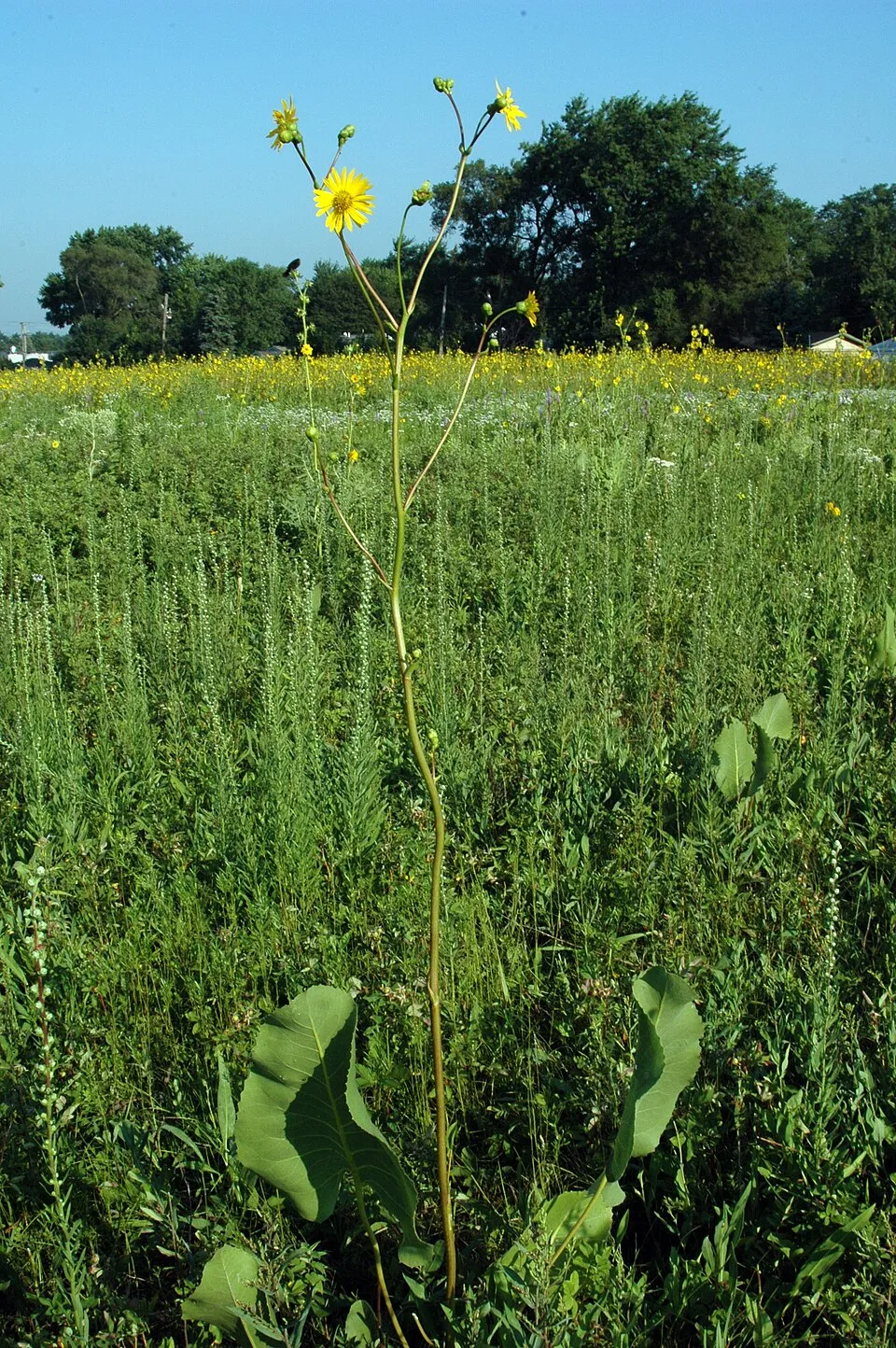
Prairie Dock, known scientifically as Silphium terebinthinaceum, is a striking herbaceous perennial belonging to the Asteraceae family, often commanding attention in its native habitats across the central and eastern United States. This robust plant can reach impressive heights of 3 to 10 feet, characterized by a sturdy, often reddish and hairy stem.
Its most distinctive feature is the basal rosette of exceptionally large, heart-shaped leaves, which can measure up to 20 inches in length and 12 inches in width, featuring coarsely serrated or dentate margins. These rough-textured leaves are notably oriented vertically, often aligned in a north-south direction, a unique adaptation thought to minimize sun exposure during intense midday heat.
From July through September, Silphium terebinthinaceum produces bright yellow, sunflower-like flower heads, each typically 2-3 inches in diameter, composed of numerous narrow ray petals and a central disc. These showy flowers are highly attractive to a diverse array of pollinators, including various species of bees and butterflies, playing a vital ecological role.
The plant's resilience stems from its deep taproot system, which can extend up to 14 feet into the soil, enabling it to thrive in a range of conditions from moist, well-drained loams to rocky or clay soils and making it remarkably drought-resistant. Native to prairies, open woods, and along roadsides, Prairie Dock is not only an ornamental and ecological asset but also holds significant ethnobotanical importance, having been historically valued by Native American tribes for both medicinal purposes and as a food source.
Trusted Scientific References
1. Authoritative external sources for Silphium terebinthinaceum
1.1 Wikipedia — Silphium terebinthinaceum
1.2 Kew POWO (Plants of the World Online)
1.3 PubMed — peer-reviewed research
1.4 NCBI Taxonomy Browser
1.5 GBIF — Global Biodiversity
1.6Prairie Dock should be interpreted through verified botanical identity, practical care, and responsible safety language. This recovery note adds the missing context needed for a complete profile: match light to the plant's habit, use well-drained soil, water according to season, and avoid unsupported medicinal or edible claims. For publishing, the plant can be presented as a source-backed medicinal plant with clear care guidance, common problem diagnosis, and conservative safety wording.
1.1.Prairie Dock — Highlights
- ✓Tall, commanding herbaceous perennial, reaching 3 — 10 feet in height.
- ✓Distinctive large, heart — shaped, vertically oriented leaves up to 20 inches long.
- ✓Bright yellow, sunflower — like flower heads blooming from July to September.
- ✓Deep taproot system — Deep taproot system (up to 14 feet) providing exceptional drought resistance.
- ✓Native to prairies — Native to prairies and open woodlands of the central and eastern United States.
- ✓Attracts a wide — Attracts a wide array of pollinators, including native bees and butterflies.
- ✓Member of the — Member of the Asteraceae family, sharing characteristics with sunflowers and asters.
- ✓Historically valued by — Historically valued by Native American tribes for medicinal and nutritional uses.
- ✓Contains diverse phytochemicals, — Contains diverse phytochemicals, including flavonoids, terpenoids, and phenolic acids.
- ✓Adaptable to various — Adaptable to various soil types, from loamy to rocky or clay, in full sun conditions.
1.2.Prairie Dock — Quick Summary
- ✓Silphium terebinthinaceum, or Prairie Dock, is a tall, resilient perennial native to the central US.
- ✓Known for large, vertically oriented leaves and bright yellow, sunflower-like flowers.
- ✓Traditionally used by Native Americans for immune, respiratory, and digestive support.
- ✓Rich in flavonoids, terpenoids, and phenolic acids, offering anti-inflammatory and antioxidant benefits.
- ✓Thrives in full sun and well-drained soil, highly drought-tolerant with a deep taproot.
- ✓Requires caution for individuals with Asteraceae allergies, pregnant women, and those on certain medications.
2.Prairie Dock — Nomenclature & Classification
3.Prairie Dock — Key Data
4.Prairie Dock — Botanical Description
5.Prairie Dock — Origin & Spread
6.Prairie Dock — Traditional Uses
7.Prairie Dock — Chemical Profile
- ✓Flavonoids — Compounds like quercetin, kaempferol, and their glycosides are present, known for their potent antioxidant and anti-inflammatory activities, contributing to cellular protection.
- ✓Terpenoids — This category includes various sesquiterpene lactones and diterpenes, which are often responsible for the plant's bitter taste and contribute to its anti-inflammatory and antimicrobial properties.
- ✓Phenolic Acids — Derivatives of caffeic acid, p-coumaric acid, and ferulic acid are found, exhibiting significant antioxidant capacity and playing a role in the plant's protective mechanisms.
- ✓Alkaloids — While typically in smaller concentrations, specific alkaloids may contribute to the plant's diverse pharmacological effects, acting on various physiological pathways.
- ✓Saponins — These glycosides are known for their emulsifying properties and have been investigated for potential immune-stimulating and cholesterol-lowering effects.
- ✓Polysaccharides — Complex carbohydrates found in the plant can exhibit immunomodulatory activities, enhancing the body's natural defense responses.
- ✓Fatty Acids — The seeds and other parts of the plant may contain essential fatty acids, which are crucial for cellular structure and various metabolic functions.
- ✓Volatile Oils — Aromatic compounds that impart a characteristic scent and may possess antimicrobial, anti-inflammatory, or expectorant properties.
- ✓Tannins — Astringent compounds that can contribute to antioxidant activity and may have protective effects on mucous membranes.
8.Prairie Dock — Evidence-Based Benefits
- ✓Immune System Support — Prairie Dock is traditionally recognized for its ability to bolster the body's natural defenses, potentially due to its rich content of immunomodulatory compounds.
- ✓Anti-inflammatory Effects — The plant contains phytochemicals, such as certain terpenoids and phenolic acids, that may help reduce inflammation and alleviate associated discomfort throughout the body.
- ✓Antioxidant Protection — With a significant presence of flavonoids and other phenolic compounds, Prairie Dock helps neutralize harmful free radicals, protecting cells from oxidative stress and supporting cellular health.
- ✓Digestive Health Enhancement — Traditional uses suggest benefits for the gastrointestinal system, potentially aiding in digestion and soothing minor digestive upsets.
- ✓Respiratory System Relief — Historically, various preparations of Prairie Dock, including teas and inhaled smoke, have been used to ease congestion and support lung function.
- ✓Skin Health Promotion — The plant's anti-inflammatory and antiseptic properties may contribute to its traditional use in addressing minor skin irritations and promoting healthy skin.
- ✓Liver Support — Some traditional practices indicate a role for Prairie Dock in supporting liver function and detoxification processes, though further research is needed.
- ✓General Wellness Promotion — By contributing to immune strength, reducing inflammation, and offering antioxidant protection, Prairie Dock supports overall vitality and well-being.
- ✓Diuretic Properties — Extracts may promote increased urine output, which can assist in flushing toxins from the body and support kidney health.
- ✓Pain Management — Its anti-inflammatory actions may indirectly contribute to the alleviation of mild aches and pains, particularly those related to inflammation.
8.1.Prairie Dock — Therapeutic Indications
9.Prairie Dock — Safety & Side Effects
9.1.Prairie Dock — Side Effects & Warnings
- ✓Allergic Reactions — Individuals sensitive to plants in the Asteraceae family (e.g., ragweed, chamomile) may experience allergic reactions, including skin rashes or respiratory symptoms.
- ✓Gastrointestinal Upset — High doses or sensitive individuals may experience mild digestive discomfort, nausea, or diarrhea.
- ✓Photosensitivity — Some compounds in certain Asteraceae plants can increase sun sensitivity; caution is advised with prolonged sun exposure after internal use.
- ✓Skin Irritation — Direct contact with the plant's rough leaves or sap may cause minor skin irritation in sensitive individuals.
- ✓Drug Interactions — Potential interactions with blood-thinning medications or immunosuppressants due to its potential anti-inflammatory and immunomodulatory properties.
- ✓Pregnancy and Lactation — Lack of sufficient safety data; therefore, use is generally not recommended for pregnant or breastfeeding individuals.
9.2.Prairie Dock — Clinical Safety Notes
- ✓Professional Consultation — Always consult a qualified healthcare professional or medical herbalist before using Prairie Dock, especially if you have pre-existing health conditions or are on medication.
- ✓Allergic Sensitivity — Exercise caution if you have known allergies to plants in the Asteraceae family, as cross-reactivity is possible.
- ✓Pregnancy and Breastfeeding — Avoid use during pregnancy and lactation due to insufficient safety research.
- ✓Children — Not recommended for use in infants or young children without expert medical supervision.
- ✓Dosage Adherence — Adhere strictly to recommended dosages and preparation methods to minimize the risk of adverse effects.
- ✓Discontinue if Adverse Reactions Occur — Cease use immediately if any unusual or adverse symptoms arise and seek medical advice.
- ✓Topical Use Caution — Perform a patch test before extensive topical application to check for skin sensitivity.
10.Prairie Dock — Preparation Methods
- ✓Herbal Tea (Infusion) — Dried roots or leaves can be steeped in hot water to create a decoction or infusion, traditionally used for respiratory or digestive support.
- ✓Tincture — Roots or leaves can be macerated in alcohol to produce a concentrated liquid extract, allowing for precise dosing and extended shelf life.
- ✓Poultice — Fresh or dried and rehydrated leaves can be crushed and applied topically as a poultice to soothe skin irritations or minor inflammatory conditions.
- ✓Smudging/Inhalation — Historically, smoke from dried plant material was inhaled to alleviate congestion, particularly for respiratory ailments.
- ✓Dried Herb Powder — Dried plant parts can be ground into a fine powder and encapsulated or mixed with food for internal consumption.
- ✓Topical Oil Infusion — Dried plant material can be infused into a carrier oil (e.g., olive, jojoba) for use in massage or as a component of salves and balms.
- ✓Decoction for External Wash — A strong decoction of the roots can be prepared and used as a wash for skin conditions or as a gargle for throat discomfort.
11.Prairie Dock — How to Grow
- ✓Soil Preference — Thrives in dry to moist, well-drained loamy soils but is highly adaptable to rocky or clay soils.
- ✓Sunlight Requirements — Prefers full sun, requiring at least 6 or more hours of direct sunlight daily for optimal growth and flowering.
- ✓Watering — Once established, Prairie Dock is drought-tolerant due to its deep taproot, but benefits from regular watering during prolonged dry spells.
- ✓Hardiness Zones — Hardy in USDA Plant Hardiness Zones 4a through 8b, demonstrating resilience to a wide range of temperate climates.
- ✓Growth Rate — Initially develops slowly, especially from seed, but is a long-lived perennial once established.
- ✓Landscape Use — Ideal for the back of borders, naturalized areas, meadows, native plant gardens, and pollinator-friendly landscapes.
- ✓Pest and Disease Resistance — Generally resistant to common pests like rabbits, making it a low-maintenance choice for many gardens.
- ✓Propagation — Can be propagated by seed, though germination may be slow, or by division of mature plants.
Reviewed by the Flora Medical Global Botanical Review Panel
Multi-disciplinary editorial group · Botany · Ethnobotany · Herbal-medicine literature
Who reviewed this: This page was checked by the Flora Medical Global Botanical Review Panel — an in-house editorial group of botany graduates, ethnobotany researchers, and horticulture practitioners who collectively maintain our 7,000+ plant encyclopedia. Meet the team.
Our 4-step verification process
1. Taxonomic verification
Scientific names and synonyms cross-checked against Kew POWO, World Flora Online, and The Plant List.
2. Phytochemical & medicinal cross-reference
Active compounds, traditional uses, and reported activities are cross-referenced with PubMed, USDA Dr. Duke's database, and peer-reviewed ethnobotanical literature.
3. Conservation & distribution check
Distribution, ecology, and conservation status confirmed against GBIF occurrence records and the IUCN Red List.
4. Editorial & safety review
Every entry passes an editorial pass for clarity, originality, and safety notices (toxicity, contraindications, dosage caveats) before publication.
Last reviewed:
Important medical disclaimer: This content is for educational and research purposes only. It is not medical advice and is not a substitute for consultation with a licensed healthcare provider. Do not use any herb to self-treat a medical condition without professional guidance.
Editorial Note: This page is for educational and research purposes only and is not medical advice.
Written by: Flora Medical Global Editorial Team
Reviewed by: Flora Medical Global Botanical Review Panel
Last Updated: June 15, 2026




Prairie Dock — Comments & Community Reviews
Rate this plant