
Medical Disclaimer: This content is for educational purposes only. It is not medical advice. Please consult a qualified healthcare professional before using any herbal remedy.
Safety Overview
1.Prince's Pine — Introduction & Highlights
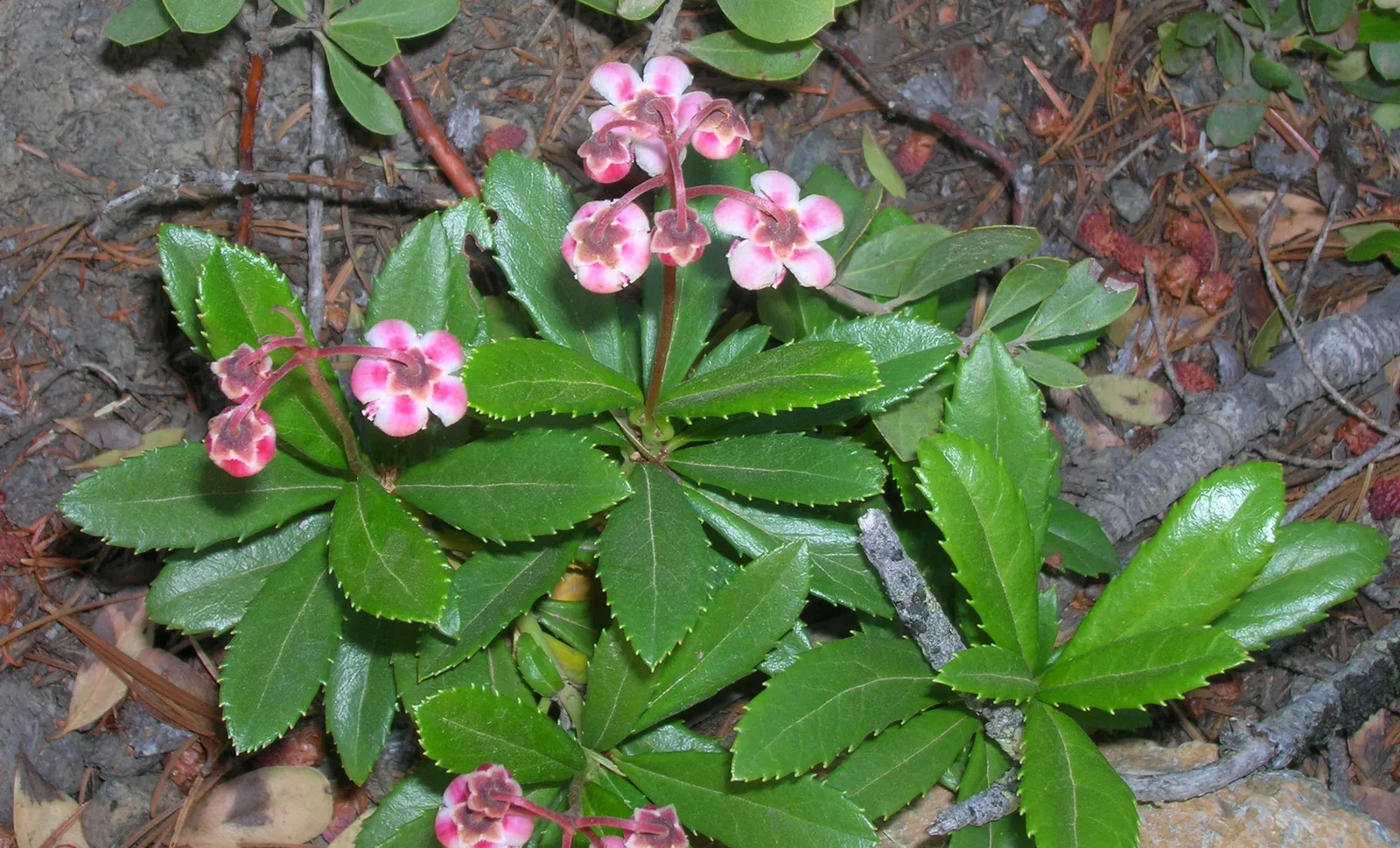
Prince's Pine (Chimaphila umbellata L.) is an elegant perennial herbaceous plant belonging to the Ericaceae family, typically reaching a modest height of 15 to 30 cm. Its distinctive dark green leaves are leathery, evergreen, and glossy, measuring approximately 3 to 10 cm in length and 1 to 3 cm in width, exhibiting an elliptical to ovate shape with serrated margins.
From late summer through early autumn, Chimaphila umbellata graces woodlands with its charming bell-shaped flowers, which are typically white or pinkish and arranged in nodding racemes at the terminal ends of its slender, erect stems, often covered with fine pubescence.
Native across the subarctic and temperate zones of North America, Europe, and Asia, Prince's Pine thrives in the understories of mixed and coniferous forests. It prefers shaded environments and acidic, well-drained soils that are often sandy or rocky. While not typically a dominant groundcover, its presence is a key indicator of specific ecological conditions.
The plant's taxonomy places it within the subfamily Pyroloideae (historically considered a separate family, Pyrolaceae) of the Ericaceae, aligning it with other notable heath family members. This unique ecological niche makes it an important component of forest biodiversity, providing year-round ground cover and contributing to the aesthetic value of its habitat. However, it is notably sensitive to physical disturbance like trampling, which can significantly impact local populations, highlighting the need for conservation efforts.
Trusted Scientific References
1. Authoritative external sources for Chimaphila umbellata L.
1.1 Wikipedia — Chimaphila umbellata L.
1.2 Kew POWO (Plants of the World Online)
1.3 PubMed — peer-reviewed research
1.4 NCBI Taxonomy Browser
1.5 GBIF — Global Biodiversity
1.6Prince's Pine should be interpreted through verified botanical identity, practical care, and responsible safety language. This recovery note adds the missing context needed for a complete profile: match light to the plant's habit, use well-drained soil, water according to season, and avoid unsupported medicinal or edible claims. For publishing, the plant can be presented as a source-backed medicinal plant with clear care guidance, common problem diagnosis, and conservative safety wording.
1.1.Prince's Pine — Defining Traits
- ✓Evergreen Foliage — Retains dark green, leathery leaves year-round, providing continuous ground cover.
- ✓Bell — Shaped Flowers — Produces delicate white to pinkish bell-shaped flowers in racemes during late summer and autumn.
- ✓Woodland Native — Thrives in the understories of mixed and coniferous forests, indicating its preference for specific ecological niches.
- ✓Perennial Herb — A long-lived herbaceous plant, growing from rhizomatous roots.
- ✓Bioactive Compounds — Contains a rich array of phytochemicals, including arbutin, flavonoids, and phenolic acids.
- ✓Traditional Medicinal Plant — Valued for centuries in various indigenous and folk medicine systems for diverse ailments.
- ✓Conservation Concern — Faces threats from habitat loss and overharvesting, leading to 'At-Risk' status in some areas.
- ✓Shade — Loving — Requires partial to full shade for optimal growth, making it suitable for woodland gardens.
- ✓Acidic Soil Preference — Adapts well to acidic, well-drained, sandy or rocky soil conditions.
- ✓Rhizomatous Spread — Spreads via underground rhizomes, forming small colonies over time.
1.2.Prince's Pine — In Brief
- ✓Prince's Pine (Chimaphila umbellata L.) is a perennial evergreen in the Ericaceae family.
- ✓Traditionally used for immune, digestive, and urinary support, and as a 'blood purifier'.
- ✓Rich in flavonoids, phenolic acids, arbutin, and terpenoids, contributing to its medicinal actions.
- ✓Prefers shady, acidic, well-drained soils and is sensitive to trampling.
- ✓Listed as 'Threatened' or 'Endangered' in several US states, emphasizing conservation needs.
- ✓Available in various forms including teas, tinctures, and topical preparations.
2.Prince's Pine — Taxonomic Classification
3.Prince's Pine — Botanical Stats
4.Prince's Pine — Morphological Account
5.Prince's Pine — Where It Grows
6.Prince's Pine — Historical Applications
7.Prince's Pine — Bioactive Constituents
- ✓Flavonoids — Key compounds like quercetin, kaempferol, and their glycosides are present, known for their potent antioxidant and anti-inflammatory activities.
- ✓Phenolic Acids — Includes chlorogenic acid and gallic acid, which contribute to the plant's antioxidant capacity and potentially influence metabolic processes.
- ✓Arbutin — A significant phenolic glycoside, arbutin is recognized for its urinary antiseptic properties, particularly when metabolized to hydroquinone in the urinary tract.
- ✓Terpenoids — Various monoterpenes and sesquiterpenes contribute to the plant's aromatic profile and may possess anti-inflammatory or antimicrobial effects.
- ✓Alkaloids — While typically in smaller concentrations, specific alkaloids may contribute to the plant's overall pharmacological activities, influencing neurological or physiological pathways.
- ✓Triterpenes — Compounds such as ursolic acid and oleanolic acid derivatives are often found, known for their anti-inflammatory, hepatoprotective, and anticancer properties.
- ✓Sterols — Plant sterols like beta-sitosterol are present, which can influence cholesterol metabolism and possess anti-inflammatory actions.
- ✓Coumarins — Certain coumarin derivatives may be found, contributing to the plant's diverse bioactivity, including potential anticoagulant or anti-inflammatory effects.
- ✓Tannins — Hydrolyzable and condensed tannins provide astringent properties, contributing to its traditional use for various ailments and potentially acting as antioxidants.
8.Prince's Pine — Research Insights
- ✓Immune Support — Prince's Pine contains compounds that may bolster the body's natural defenses, assisting the immune system in maintaining overall health.
- ✓Anti-inflammatory Effects — Bioactive constituents, such as certain flavonoids and phenolic acids, are believed to help mitigate inflammatory responses within the body.
- ✓Antioxidant Protection — The presence of potent antioxidants helps to neutralize free radicals, thereby protecting cells from oxidative stress and damage.
- ✓Digestive Health — Traditionally, Prince's Pine was used to address various stomach problems, suggesting a role in supporting healthy digestive function and comfort.
- ✓Urinary Tract Support — Historically revered as a 'blood purifier' and used for kidney issues, modern understanding points towards its potential to support urinary system health and function.
- ✓Respiratory Comfort — Traditional applications included its use for coughs, indicating a potential role in soothing respiratory discomfort and supporting lung health.
- ✓Ocular Health — As an historical eyedrop for sore eyes, it suggests properties that might alleviate minor eye irritation and promote ocular comfort.
- ✓General Wellness Promotion — Through its diverse phytochemical profile, Prince's Pine contributes to a holistic sense of well-being, supporting various bodily systems.
- ✓Skin Health — Extracts may possess properties beneficial for external applications, contributing to skin soothing and overall dermal vitality.
- ✓Detoxification Support — Its historical 'blood purifier' reputation aligns with modern concepts of supporting the body’s natural detoxification pathways.
8.1.Prince's Pine — Indications & Uses
9.Prince's Pine — Risk Profile
9.1.Prince's Pine — Warnings
- ✓Gastrointestinal Upset — High doses may lead to nausea, vomiting, or diarrhea in sensitive individuals.
- ✓Allergic Reactions — Potential for skin rash, itching, or other allergic responses, especially with topical use.
- ✓Kidney Irritation — Prolonged or excessive use, particularly if sensitive, could potentially irritate the kidneys due to active compounds.
- ✓Liver Concerns — Though rare, caution is advised for individuals with pre-existing liver conditions, as some compounds are metabolized hepatically.
- ✓Drug Interactions — May interact with diuretics, blood thinners, or medications metabolized by the liver; consult a healthcare provider.
- ✓Photosensitivity — Some individuals might experience increased skin sensitivity to sunlight, particularly with internal use.
- ✓Uterine Stimulation — Avoid during pregnancy due to potential uterine stimulating effects, though research is limited.
9.2.Prince's Pine — Risk Assessment
- ✓Professional Consultation — Always consult a qualified healthcare practitioner before using Prince's Pine, especially if pregnant, nursing, or on medication.
- ✓Pregnancy and Lactation — Contraindicated during pregnancy and breastfeeding due to insufficient safety data and potential effects.
- ✓Pediatric Use — Not recommended for infants or young children due to lack of safety studies.
- ✓Kidney or Liver Conditions — Individuals with pre-existing kidney or liver disease should avoid use or use only under strict medical supervision.
- ✓Conservation Status — Given its 'At-Risk' status in some regions, prioritize sustainably harvested or cultivated sources over wild collection.
- ✓Dosage Adherence — Strictly follow recommended dosages to minimize the risk of adverse effects.
- ✓Allergic History — Individuals with known allergies to plants in the Ericaceae family should exercise caution or avoid use.
10.Prince's Pine — Application Forms
- ✓Herbal Infusion (Tea) — Dried leaves and stems can be steeped in hot water to create a therapeutic tea for internal consumption.
- ✓Decoction — For tougher plant parts or stronger extraction, simmer the aerial parts in water for a longer duration.
- ✓Tincture — A concentrated liquid extract made by macerating the plant material in alcohol, allowing for convenient dosing.
- ✓Topical Poultice — Crushed fresh leaves can be applied directly to the skin as a poultice for localized discomfort or irritation.
- ✓Eyedrop Solution (Diluted) — Historically, highly diluted infusions were used, but extreme caution and professional guidance are paramount for ocular applications.
- ✓Capsules/Tablets — Standardized extracts or powdered plant material can be encapsulated for precise and convenient oral administration.
- ✓External Wash — A cooled decoction can be used as an external wash for minor skin irritations or as a compress.
- ✓Syrups — Infusions or decoctions can be sweetened and reduced to create medicinal syrups, particularly for respiratory support.
11.Prince's Pine — Growing Guide
- ✓Soil Preference — Thrives in well-drained, acidic, sandy or rocky soils, mimicking its natural woodland habitat.
- ✓Light Requirements — Prefers partial to full shade; direct, intense sunlight can stress the plant.
- ✓Watering Regime — Requires consistent moisture, especially during dry periods, but avoid waterlogging to prevent root rot.
- ✓Propagation — Can be propagated by seeds, which are tiny and found in berries, or by division of rhizomes.
- ✓Habitat Mimicry — Best grown in conditions that emulate its native forest understory, often under coniferous trees.
- ✓Disturbance Sensitivity — Highly sensitive to trampling and soil compaction; choose planting sites carefully and avoid foot traffic.
- ✓Climate Suitability — Best suited for temperate to subarctic climates, tolerating cold conditions.
Reviewed by the Flora Medical Global Botanical Review Panel
Multi-disciplinary editorial group · Botany · Ethnobotany · Herbal-medicine literature
Who reviewed this: This page was checked by the Flora Medical Global Botanical Review Panel — an in-house editorial group of botany graduates, ethnobotany researchers, and horticulture practitioners who collectively maintain our 7,000+ plant encyclopedia. Meet the team.
Our 4-step verification process
1. Taxonomic verification
Scientific names and synonyms cross-checked against Kew POWO, World Flora Online, and The Plant List.
2. Phytochemical & medicinal cross-reference
Active compounds, traditional uses, and reported activities are cross-referenced with PubMed, USDA Dr. Duke's database, and peer-reviewed ethnobotanical literature.
3. Conservation & distribution check
Distribution, ecology, and conservation status confirmed against GBIF occurrence records and the IUCN Red List.
4. Editorial & safety review
Every entry passes an editorial pass for clarity, originality, and safety notices (toxicity, contraindications, dosage caveats) before publication.
Last reviewed:
Important medical disclaimer: This content is for educational and research purposes only. It is not medical advice and is not a substitute for consultation with a licensed healthcare provider. Do not use any herb to self-treat a medical condition without professional guidance.
Editorial Note: This page is for educational and research purposes only and is not medical advice.
Written by: Flora Medical Global Editorial Team
Reviewed by: Flora Medical Global Botanical Review Panel
Last Updated: June 15, 2026




Prince's Pine — Comments & Community Reviews
Rate this plant