

Medical Disclaimer: This content is for educational purposes only. It is not medical advice. Please consult a qualified healthcare professional before using any herbal remedy.
Safety Overview
1.Protea Cynaroides — Overview
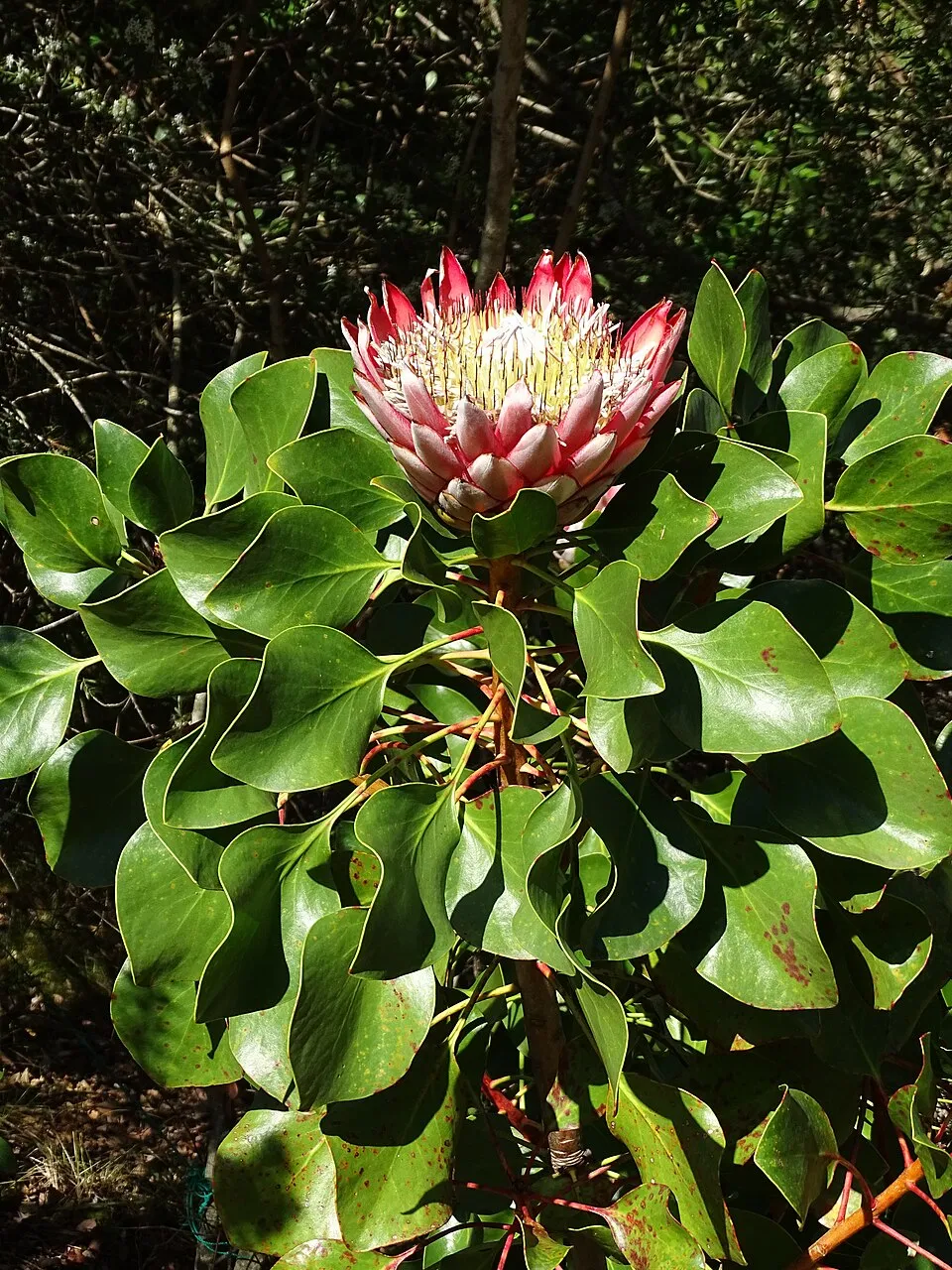
Protea cynaroides, widely recognized as the King Protea, is an emblematic species native to the Cape Floristic Region of South Africa, where it thrives within the Fynbos biome. This magnificent evergreen shrub, a proud member of the diverse Proteaceae family, is distinguished by its imposing floral structures and robust growth habit.
Typically reaching heights of 1 to 2 meters, though occasionally exceeding 4 meters, it forms a sturdy, multi-stemmed bush with thick, woody branches. The foliage consists of large, leathery, spatulate leaves, often with entire or subtly toothed margins, presenting a dark green, glossy appearance that provides a striking contrast to its vibrant inflorescences.
The 'flower' of the King Protea is not a single bloom but a large, showy capitulum, an intricate composite inflorescence that can measure up to 30 cm in diameter. This capitulum is comprised of a dense cluster of tiny individual florets centrally located, encircled by several whorls of prominent, stiff, and often waxy bracts. These bracts, which are the most visually captivating part, display a spectrum of colors from deep crimson and fiery pinks to soft creams and pale yellows, frequently tipped with darker hues and sometimes covered in fine, velvety hairs.
These vibrant bracts play a crucial role in attracting a variety of pollinators, including birds like sunbirds, and numerous insect species. Protea cynaroides is highly adapted to its indigenous environment, characterized by nutrient-poor, acidic, well-drained soils and a Mediterranean climate with dry summers and wet winters, showcasing remarkable resilience and evolutionary success in one of the world's most biodiverse regions.
Trusted Scientific References
1. Authoritative external sources for Protea cynaroides
1.1 Wikipedia — Protea cynaroides
1.2 Kew POWO (Plants of the World Online)
1.3 PubMed — peer-reviewed research
1.4 NCBI Taxonomy Browser
1.5 GBIF — Global Biodiversity
1.6Protea Cynaroides should be interpreted through verified botanical identity, practical care, and responsible safety language. This recovery note adds the missing context needed for a complete profile: match light to the plant's habit, use well-drained soil, water according to season, and avoid unsupported medicinal or edible claims. For publishing, the plant can be presented as a source-backed garden plant with clear care guidance, common problem diagnosis, and conservative safety wording.
1.1.Protea Cynaroides — Defining Traits
- ✓National Flower of South Africa — A symbol of beauty and resilience.
- ✓Gigantic Inflorescences — Up to 30 cm in diameter, making it the largest Protea flower head.
- ✓Diverse Bract Colors — Ranging from white to deep crimson, often with striking tips.
- ✓Evergreen Shrub — Maintains foliage year-round, providing continuous appeal.
- ✓Drought Tolerant — Highly adapted to arid conditions once established.
- ✓Attracts Pollinators — Nectar-rich flowers attract birds and insects.
- ✓Long — Lasting Cut Flower — Highly prized in floral arrangements worldwide.
- ✓Low Phosphorus Needs — Adapted to nutrient-poor soils.
- ✓Resilient in Fynbos Biome — Thrives in harsh, specific environmental conditions.
- ✓Architectural Foliage — Large, leathery leaves provide a robust backdrop.
1.2.Protea Cynaroides — Quick Summary
- ✓Iconic South African floral emblem, the King Protea, known for its large, striking inflorescences.
- ✓Rich in phenolic compounds, offering antioxidant and anti-inflammatory benefits.
- ✓Traditional uses include wound healing, digestive aid, and respiratory relief.
- ✓Requires well-drained, acidic soil and full sun; drought-tolerant once established.
- ✓Potential side effects include allergic reactions and gastrointestinal upset; consult a doctor.
- ✓Valued globally for its ornamental beauty and as a magnificent cut flower.
2.Protea Cynaroides — Systematic Position
3.Protea Cynaroides — Quick Facts
4.Protea Cynaroides — Structural Profile
5.Protea Cynaroides — Geographic Distribution
6.Protea Cynaroides — Cultural & Traditional Roles
7.Protea Cynaroides — Active Compounds
- ✓Phenolic Compounds — Flavonoids (e.g., quercetin, kaempferol), tannins, and phenolic acids, known for their strong antioxidant and anti-inflammatory activities.
- ✓Triterpenoids — Saponins and other triterpenes contribute to potential anti-inflammatory and adaptogenic effects.
- ✓Anthocyanins — Pigments responsible for the vibrant red and pink colors in the bracts, possessing significant antioxidant properties.
- ✓Fatty Acids — Essential fatty acids found in seeds, vital for cellular function and skin health.
- ✓Volatile Oils — Trace amounts of essential oils contributing to aroma and potential antimicrobial activity.
- ✓Polysaccharides — Complex carbohydrates that may play a role in immunomodulation and gut health.
- ✓Sterols — Plant sterols that can influence cholesterol metabolism.
- ✓Glycosides — Various glycosides contributing to diverse pharmacological actions.
- ✓Alkaloids — Present in minor quantities, with potential for various biological activities.
- ✓Organic Acids — Malic acid, citric acid, and others contributing to taste and metabolic processes.
8.Protea Cynaroides — What Research Suggests
- ✓Anti-inflammatory Support — Contains compounds that may help reduce systemic inflammation and alleviate pain associated with inflammatory conditions.
- ✓Antioxidant Properties — Rich in phenolic compounds, it helps combat oxidative stress by neutralizing free radicals, protecting cellular integrity.
- ✓Immunomodulatory Effects — Certain constituents are believed to modulate immune responses, potentially enhancing the body's defense mechanisms.
- ✓Wound Healing Acceleration — Traditional uses suggest topical application may promote faster healing of minor cuts and abrasions due to its astringent qualities.
- ✓Antiseptic Action — Extracts exhibit mild antiseptic properties, contributing to the prevention of infection in superficial wounds.
- ✓Digestive Aid — Historically used to soothe gastrointestinal discomfort and promote healthy digestion, though specific mechanisms require further study.
- ✓Cardiovascular Health — Preliminary research indicates potential benefits for heart health, possibly by influencing cholesterol levels or blood pressure regulation.
- ✓Respiratory Relief — In traditional medicine, infusions were sometimes used to alleviate symptoms of respiratory ailments like coughs and colds.
- ✓Skin Health Enhancement — Astringent and antioxidant components may contribute to improved skin tone, protection against environmental damage, and reduction of blemishes.
- ✓Analgesic Potential — May possess mild pain-relieving properties, particularly for localized discomfort or inflammatory pain.
- ✓Diuretic Activity — Traditional accounts suggest it may act as a mild diuretic, aiding in fluid balance and kidney function.
- ✓Antimicrobial Activity — Some studies indicate inhibitory effects against certain bacteria and fungi, supporting its traditional use in infection prevention.
8.1.Protea Cynaroides — Health Applications
9.Protea Cynaroides — Precautions & Warnings
9.1.Protea Cynaroides — Warnings
- ✓Allergic Reactions — Skin irritation or respiratory symptoms in sensitive individuals, especially from direct contact.
- ✓Gastrointestinal Upset — High doses of internal preparations may cause nausea, vomiting, or diarrhea.
- ✓Hypotension — Potential to lower blood pressure, which could interact with antihypertensive medications.
- ✓Anticoagulant Interaction — May possess mild blood-thinning properties, increasing risk of bleeding with anticoagulant drugs.
- ✓Pregnancy & Lactation — Insufficient safety data; generally advised against use during these periods.
- ✓Kidney Issues — Overconsumption as a diuretic could exacerbate existing kidney conditions.
- ✓Drug Interactions — Potential for interactions with various medications due to its active compounds, consult healthcare provider.
9.2.Protea Cynaroides — Risk Assessment
- ✓Consult Physician — Always seek medical advice before using, especially if pregnant, breastfeeding, or on medication.
- ✓Patch Test Recommended — Perform a skin patch test before topical application to check for allergic reactions.
- ✓Avoid During Pregnancy — Due to lack of safety data, use is not recommended for pregnant or lactating women.
- ✓Not for Children — Usage in children is not well-studied; avoid without professional guidance.
- ✓Moderate Doses — Adhere to recommended dosages; excessive intake may lead to adverse effects.
- ✓Monitor Blood Pressure — Individuals with hypotension or on blood pressure medication should use with caution.
- ✓Quality Sourcing — Ensure plant material is sourced from reputable suppliers to avoid contamination.
- ✓Discontinue if Adverse Reactions Occur — Stop use immediately if any negative symptoms arise.
10.Protea Cynaroides — Application Forms
- ✓Herbal Infusion — Dried leaves or bracts steeped in hot water to create a tea for internal consumption or topical washes.
- ✓Tincture Preparation — Plant material macerated in alcohol to extract compounds, used in drops for internal or external application.
- ✓Poultice Application — Crushed fresh leaves or dried powdered material mixed with water and applied directly to skin for minor wounds or inflammation.
- ✓Decoction Method — Woody stems or roots simmered in water for a longer period to extract tougher compounds, used for more potent remedies.
- ✓Topical Ointment — Extracts incorporated into balms or salves for localized skin conditions and pain relief.
- ✓Essential Oil Distillation — Though not common, some volatile compounds might be extracted for aromatic or therapeutic uses.
- ✓Floral Water Hydrosol — Byproduct of essential oil distillation, used as a gentle skin toner or refreshing spray.
- ✓Culinary Use (Limited) — Nectar from flowers sometimes consumed traditionally, though not a primary food source.
11.Protea Cynaroides — Growing Guide
- ✓Soil Preference — Requires well-draining, acidic to neutral soil (pH 5.5-6.5) with low phosphorus content.
- ✓Sun Exposure — Thrives in full sun, needing at least 6 hours of direct sunlight daily for optimal flowering.
- ✓Water Requirements — Drought-tolerant once established; water deeply but infrequently, allowing soil to dry out between waterings.
- ✓Temperature & Hardiness — Best suited for USDA Zones 9-12; sensitive to frost and prolonged cold temperatures.
- ✓Fertilization — Use phosphorus-free fertilizers specifically formulated for Proteaceae, if needed, during active growth.
- ✓Pruning — Prune after flowering to maintain shape, remove spent blooms, and encourage bushier growth; avoid heavy pruning into old wood.
- ✓Propagation — Can be propagated from fresh seeds (requiring smoke treatment for germination) or semi-hardwood cuttings in summer.
- ✓Air Circulation — Good air circulation is crucial to prevent fungal diseases; avoid overcrowding.
Reviewed by the Flora Medical Global Botanical Review Panel
Multi-disciplinary editorial group · Botany · Ethnobotany · Herbal-medicine literature
Who reviewed this: This page was checked by the Flora Medical Global Botanical Review Panel — an in-house editorial group of botany graduates, ethnobotany researchers, and horticulture practitioners who collectively maintain our 7,000+ plant encyclopedia. Meet the team.
Our 4-step verification process
1. Taxonomic verification
Scientific names and synonyms cross-checked against Kew POWO, World Flora Online, and The Plant List.
2. Phytochemical & medicinal cross-reference
Active compounds, traditional uses, and reported activities are cross-referenced with PubMed, USDA Dr. Duke's database, and peer-reviewed ethnobotanical literature.
3. Conservation & distribution check
Distribution, ecology, and conservation status confirmed against GBIF occurrence records and the IUCN Red List.
4. Editorial & safety review
Every entry passes an editorial pass for clarity, originality, and safety notices (toxicity, contraindications, dosage caveats) before publication.
Last reviewed:
Important medical disclaimer: This content is for educational and research purposes only. It is not medical advice and is not a substitute for consultation with a licensed healthcare provider. Do not use any herb to self-treat a medical condition without professional guidance.
Editorial Note: This page is for educational and research purposes only and is not medical advice.
Written by: Flora Medical Global Editorial Team
Reviewed by: Flora Medical Global Botanical Review Panel
Last Updated: June 15, 2026





Protea Cynaroides — Comments & Community Reviews
Rate this plant