

Medical Disclaimer: This content is for educational purposes only. It is not medical advice. Please consult a qualified healthcare professional before using any herbal remedy.
Safety Overview
1.Pulsatilla — Botanical Snapshot
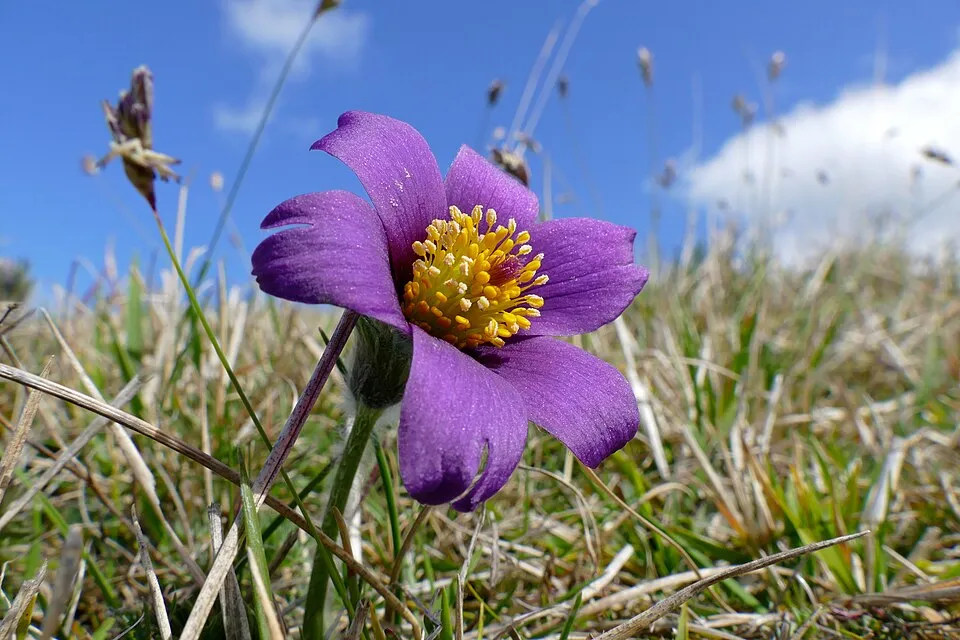
Pulsatilla vulgaris, commonly known as Pasque flower, is a captivating perennial herb belonging to the diverse Ranunculaceae family. This species typically reaches a modest height of 10 to 30 centimeters, characterized by its deeply dissected, feathery basal leaves that can extend up to 15 centimeters. When nascent, these leaves exhibit a distinctive silvery, downy sheen, gradually maturing into a rich deep green.
The plant's most striking feature is its large, cup-shaped flowers, which emerge in early spring, often preceding the full development of its foliage. These vibrant blooms typically showcase shades of violet or purple, measuring between 5 to 10 centimeters in diameter, and are adorned with numerous prominent, slender yellow stamens. The entire plant, especially the flower buds, is covered in soft, protective hairs, which are believed to offer insulation against late frosts.
Native to the temperate grasslands and open woodlands of Europe, Pulsatilla vulgaris thrives in well-drained, sandy or loamy soils that are neutral to slightly alkaline. The genus Pulsatilla encompasses several species sharing similar morphological and traditional medicinal characteristics, contributing to its historical use in various holistic healing systems like homeopathy and European traditional medicine. Its unique life cycle and delicate beauty make it a cherished plant in both ecological and ethnobotanical contexts.
Trusted Scientific References
1. Authoritative external sources for Pulsatilla vulgaris
1.1 Wikipedia — Pulsatilla vulgaris
1.2 Kew POWO (Plants of the World Online)
1.3 PubMed — peer-reviewed research
1.4 NCBI Taxonomy Browser
1.5 GBIF — Global Biodiversity
1.6Pulsatilla should be interpreted through verified botanical identity, practical care, and responsible safety language. This recovery note adds the missing context needed for a complete profile: match light to the plant's habit, use well-drained soil, water according to season, and avoid unsupported medicinal or edible claims. For publishing, the plant can be presented as a source-backed medicinal plant with clear care guidance, common problem diagnosis, and conservative safety wording.
1.1.Pulsatilla — Distinguishing Points
- ✓Early Spring Bloomer — One of the first flowers to emerge, often before leaves.
- ✓Downy Hairs — Covered in soft, silvery hairs, especially the buds and young leaves.
- ✓Violet — Purple Flowers — Striking cup-shaped blooms with prominent yellow stamens.
- ✓Ranunculaceae Family — Member of the buttercup family, known for some toxic species.
- ✓Native to Europe — Found in meadows and open woodlands across temperate Europe.
- ✓Traditional Medicinal Plant — Used historically in European folk medicine and homeopathy.
- ✓High Toxicity (Fresh) — Contains protoanemonin, a potent irritant and vesicant.
- ✓Homeopathic Remedy — Widely recognized in homeopathy for various conditions.
- ✓Perennial Herb — Returns annually from underground rootstock.
- ✓Drought Tolerant — Prefers well-drained soils and can withstand drier conditions.
1.2.Pulsatilla — In Brief
- ✓Pulsatilla vulgaris, or Pasque flower, is a European native known for its early spring blooms.
- ✓The fresh plant is highly toxic and considered LIKELY UNSAFE for internal or external use.
- ✓Traditional uses include support for reproductive health, pain relief, and emotional well-being.
- ✓Homeopathic preparations are the primary safe method of medicinal application.
- ✓Contains protoanemonin, which converts to less toxic anemonin upon drying.
- ✓Strictly contraindicated during pregnancy and breast-feeding due to abortifacient properties.
2.Pulsatilla — Nomenclature & Classification
3.Pulsatilla — Fact Sheet
4.Pulsatilla — Botanical Description
5.Pulsatilla — Ecological Habitat
6.Pulsatilla — Heritage Uses
7.Pulsatilla — Phytochemistry
- ✓Protoanemonin — A volatile, irritating lactone present in the fresh plant, which readily dimerizes into anemonin upon drying, known for its antimicrobial and vesicant properties.
- ✓Anemonin — The stable, less irritating dimer formed from protoanemonin upon drying, believed to contribute to the plant's traditional analgesic and anti-inflammatory effects.
- ✓Saponins — These triterpenoid glycosides are thought to contribute to expectorant and anti-inflammatory actions, potentially by modulating membrane permeability.
- ✓Flavonoids — A group of polyphenolic compounds, including various glycosides, known for their antioxidant, anti-inflammatory, and vasodilatory activities.
- ✓Tannins — Astringent compounds that can contribute to anti-inflammatory effects and may have antimicrobial properties by binding to proteins.
- ✓Volatile Oils — Contains trace amounts of various volatile compounds, which contribute to the plant's characteristic odor and may possess mild antiseptic qualities.
- ✓Alkaloids — While not dominant, some species in Ranunculaceae may contain trace alkaloids, though their specific role and presence in Pulsatilla vulgaris require further elucidation.
- ✓Organic Acids — Various organic acids are present, contributing to the plant's overall biochemical profile and potentially influencing its pharmacological actions.
8.Pulsatilla — Pharmacological Findings
- ✓Pain Alleviation — Traditionally recognized for its nervine properties, Pulsatilla is often indicated for various painful conditions, particularly those accompanied by restlessness or emotional sensitivity, possibly influencing neuroreceptor activity.
- ✓Reproductive System Support — Historically used for conditions affecting both male and female reproductive systems, including menstrual irregularities, premenstrual tension, and orchitis, suggesting a potential role in hormonal balance or anti-inflammatory action.
- ✓Anti-inflammatory Effects — The plant contains compounds that may exhibit anti-inflammatory properties, useful in traditional remedies for reducing swelling and discomfort associated with inflammatory states.
- ✓Immune System Modulation — Some traditional applications point to its role in supporting immune responses, though specific mechanisms require further modern scientific investigation.
- ✓Anxiety and Restlessness Relief — In homeopathic practice, Pulsatilla is frequently prescribed for individuals experiencing anxiety, restlessness, or insomnia, suggesting a calming effect on the nervous system.
- ✓Skin Condition Management — Applied externally in traditional preparations (with extreme caution due to fresh plant toxicity), it was used for skin ailments like boils and rashes, potentially due to its antimicrobial or irritant-derived healing properties.
- ✓Respiratory Support — Traditional uses include addressing mild respiratory complaints such as coughs and asthma, possibly through its expectorant or bronchodilatory effects.
- ✓Digestive Comfort — Historically employed for certain digestive tract issues, it may have a role in modulating gut motility or reducing gastrointestinal discomfort.
- ✓Urinary Tract Health — Some traditional texts mention its use for urinary tract problems, suggesting potential diuretic or antiseptic qualities, though scientific evidence is limited.
8.1.Pulsatilla — Therapeutic Indications
9.Pulsatilla — Safety Considerations
9.1.Pulsatilla — Side Effects & Warnings
- ✓Severe Irritation — Fresh Pulsatilla is a potent irritant to skin, mucous membranes, and the digestive tract, causing burning, redness, and inflammation.
- ✓Allergic Reactions — Contact with the fresh plant or its preparations can trigger allergic responses, including dermatitis, rashes, and itching.
- ✓Gastrointestinal Distress — Ingesting fresh plant material can lead to severe gastrointestinal upset, including nausea, vomiting, abdominal pain, and diarrhea.
- ✓Organ Damage — High doses of fresh Pulsatilla can potentially cause kidney damage and other systemic toxic effects.
- ✓Uterine Contractions — The fresh plant is considered abortifacient and can induce uterine contractions, posing a significant risk in pregnancy.
- ✓Cardiovascular Effects — In severe cases of poisoning, the plant can affect heart rhythm and cause circulatory collapse.
- ✓Respiratory Irritation — Inhaling volatile oils from the fresh plant can irritate the nose, throat, and eyes, causing discomfort and inflammation.
9.2.Pulsatilla — Toxicity Assessment
- ✓Pregnancy — Pulsatilla is LIKELY UNSAFE during pregnancy, both fresh and dried, due to its potential to cause miscarriage or birth defects; avoid completely.
- ✓Breast-feeding — LIKELY UNSAFE for use during breast-feeding, as toxic compounds may pass to the infant; avoid entirely.
- ✓Fresh Plant Toxicity — The fresh plant is highly toxic and should NEVER be ingested or applied directly to the skin; it is a severe irritant.
- ✓Children — Avoid use in children due to increased sensitivity and risk of toxicity; consult a pediatrician for any herbal remedies.
- ✓Pre-existing Conditions — Individuals with heart conditions, kidney disease, or severe gastrointestinal issues should avoid Pulsatilla due to potential exacerbation of symptoms.
- ✓Drug Interactions — There is insufficient reliable information on interactions with medications, thus caution is advised, and professional consultation is recommended.
- ✓Homeopathic vs. Herbal — It is crucial to distinguish between highly diluted homeopathic preparations (generally considered safe) and herbal preparations of the raw or dried plant, which carry significant risks.
10.Pulsatilla — Preparation Methods
- ✓Homeopathic Dilutions — The most common and safest method of using Pulsatilla, prepared through serial dilutions to minimize toxicity while retaining therapeutic properties.
- ✓Dried Herb Preparations — The dried aerial parts of the plant are sometimes used in traditional herbalism, as drying converts toxic protoanemonin to less harmful anemonin.
- ✓Tinctures — Extracts made from the dried plant material using alcohol, typically prepared by experienced herbalists who understand the plant's potency.
- ✓External Compresses (Caution) — Historically, dried plant material was used in poultices or compresses for skin conditions, but this requires extreme caution due to potential skin irritation even from dried forms.
- ✓Herbal Teas (Rare) — Infusions from dried Pulsatilla are rare and not generally recommended due to potential toxicity, even in dried form, except under strict professional guidance.
- ✓Professional Guidance — Due to the plant's inherent toxicity, any medicinal use of Pulsatilla, especially beyond homeopathic preparations, should be strictly supervised by a qualified medical herbalist or healthcare professional.
11.Pulsatilla — Cultivation & Care
- ✓Soil Preparation — Pulsatilla vulgaris thrives in well-drained, sandy-loam to loamy soil; amend with organic matter to improve structure and fertility.
- ✓PH Preference — Prefers a neutral to slightly alkaline soil pH, ideally between 6.0 and 7.5, which can be adjusted with lime if necessary.
- ✓Planting Method — Seeds can be directly sown in late fall or early spring, approximately 1/4 inch deep; stratification may improve germination rates.
- ✓Spacing Requirements — Allow at least 12 inches (30 cm) between plants to ensure adequate air circulation and root development for mature specimens.
- ✓Watering Regime — Moderate watering is essential, particularly during dry spells; avoid waterlogging at all costs to prevent root rot, as the plant prefers drier conditions.
- ✓Light Exposure — Prefers full sun to partial shade, with full sun promoting more abundant flowering.
- ✓Winter Protection — In colder climates, a light mulch layer can help protect the roots from extreme winter temperatures and frost heave.
Reviewed by the Flora Medical Global Botanical Review Panel
Multi-disciplinary editorial group · Botany · Ethnobotany · Herbal-medicine literature
Who reviewed this: This page was checked by the Flora Medical Global Botanical Review Panel — an in-house editorial group of botany graduates, ethnobotany researchers, and horticulture practitioners who collectively maintain our 7,000+ plant encyclopedia. Meet the team.
Our 4-step verification process
1. Taxonomic verification
Scientific names and synonyms cross-checked against Kew POWO, World Flora Online, and The Plant List.
2. Phytochemical & medicinal cross-reference
Active compounds, traditional uses, and reported activities are cross-referenced with PubMed, USDA Dr. Duke's database, and peer-reviewed ethnobotanical literature.
3. Conservation & distribution check
Distribution, ecology, and conservation status confirmed against GBIF occurrence records and the IUCN Red List.
4. Editorial & safety review
Every entry passes an editorial pass for clarity, originality, and safety notices (toxicity, contraindications, dosage caveats) before publication.
Last reviewed:
Important medical disclaimer: This content is for educational and research purposes only. It is not medical advice and is not a substitute for consultation with a licensed healthcare provider. Do not use any herb to self-treat a medical condition without professional guidance.
Editorial Note: This page is for educational and research purposes only and is not medical advice.
Written by: Flora Medical Global Editorial Team
Reviewed by: Flora Medical Global Botanical Review Panel
Last Updated: June 15, 2026





Pulsatilla — Comments & Community Reviews
Rate this plant