
Medical Disclaimer: This content is for educational purposes only. It is not medical advice. Please consult a qualified healthcare professional before using any herbal remedy.
Safety Overview
1.Pyracantha — Overview
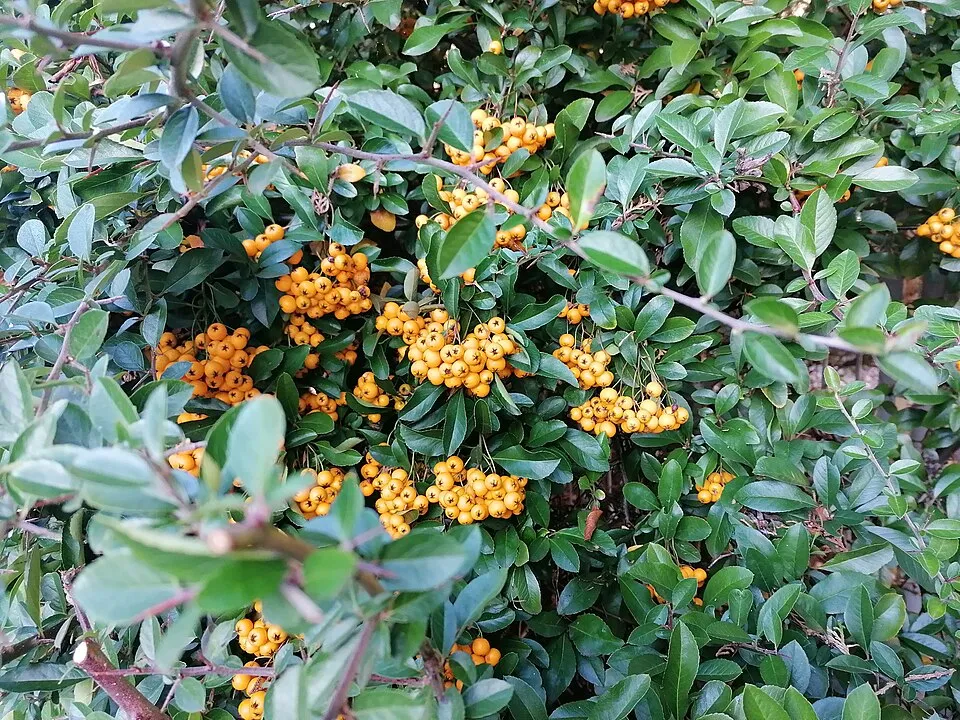
Pyracantha coccinea, commonly known as Scarlet Firethorn or European Firethorn, is a robust, broadleaf evergreen to semi-evergreen shrub belonging to the Rosaceae family. Native to regions spanning Southern Europe, Asia Minor, and North Africa, it thrives in a variety of temperate climates. This species typically forms a dense, upright to spreading habit, reaching heights of 6 to 18 feet and similar widths, characterized by rigid, thorny branches. Its foliage consists of small, glossy, dark green leaves, narrowly elliptic to ovate in shape, which remain on the plant throughout milder winters.
In late spring to early summer, P. coccinea produces abundant clusters of small, five-petaled white flowers, which, despite their individual inconspicuousness, create a striking display and attract a diverse array of pollinators. The most distinctive feature is the profusion of bright orange to scarlet pome fruits that mature in autumn and persist through winter, providing a crucial food source for birds and contributing significant ornamental value. These berries, while visually appealing, are generally considered unpalatable raw due to their bitter taste.
The plant's formidable thorns make it an effective barrier plant, often used for security hedges or espalier training against walls. Pyracantha coccinea is adaptable to various soil types, preferring well-drained conditions, and exhibits tolerance to drought, some salinity, and a range of light exposures from full sun to partial shade. Its resilience and striking seasonal display have made it a popular choice in landscape design globally, though its invasive potential in some regions warrants careful consideration.
Trusted Scientific References
1. Authoritative external sources for Pyracantha coccinea
1.1 Wikipedia — Pyracantha coccinea
1.2 Kew POWO (Plants of the World Online)
1.3 PubMed — peer-reviewed research
1.4 NCBI Taxonomy Browser
1.5 GBIF — Global Biodiversity
1.6Pyracantha should be interpreted through verified botanical identity, practical care, and responsible safety language. This recovery note adds the missing context needed for a complete profile: match light to the plant's habit, use well-drained soil, water according to season, and avoid unsupported medicinal or edible claims. For publishing, the plant can be presented as a source-backed garden plant with clear care guidance, common problem diagnosis, and conservative safety wording.
1.1.Pyracantha — Standout Qualities
- ✓Dense, thorny branches — Dense, thorny branches provide excellent security and barrier.
- ✓Abundant white flowers — Abundant white flowers in spring attract pollinators.
- ✓Bright orange — red berries persist through autumn and winter.
- ✓Berries are a — Berries are a vital food source for birds, enhancing wildlife gardens.
- ✓Evergreen to semi — evergreen foliage offers year-round interest.
- ✓Adaptable to a — Adaptable to a wide range of soil types and light conditions.
- ✓Drought — tolerant once established, requiring minimal watering.
- ✓Can be trained — Can be trained as an espalier or used for erosion control.
- ✓Contains beneficial compounds — Contains beneficial compounds like antioxidants and vitamins.
- ✓Low maintenance, but — Low maintenance, but requires pruning to manage growth.
1.2.Pyracantha — Quick Summary
- ✓Pyracantha coccinea is a thorny evergreen shrub with showy red-orange berries.
- ✓Berries are mildly toxic raw but safe and useful when cooked into jellies or preserves.
- ✓Valued for antioxidant, anti-inflammatory, and cardiovascular support properties.
- ✓Contains flavonoids, phenolic acids, carotenoids, and Vitamin C.
- ✓Requires well-drained soil, full sun to partial shade, and moderate pruning.
- ✓Avoid raw consumption; handle with care due to sharp thorns.
2.Pyracantha — Taxonomic Classification
3.Pyracantha — Quick Facts
4.Pyracantha — Plant Morphology
5.Pyracantha — Where It Grows
6.Pyracantha — Ethnobotanical Uses
7.Pyracantha — Active Compounds
- ✓Flavonoids — Including quercetin, kaempferol, and their glycosides, known for antioxidant, anti-inflammatory, and cardioprotective actions.
- ✓Phenolic Acids — Such as chlorogenic acid and gallic acid, contributing to the plant's overall antioxidant capacity.
- ✓Triterpenoids — Compounds like ursolic acid and oleanolic acid, which may possess anti-inflammatory and hepatoprotective effects.
- ✓Carotenoids — Beta-carotene and other pigments responsible for the fruit's vibrant color, acting as powerful antioxidants and precursors to Vitamin A.
- ✓Saponins — Natural detergents that can have various biological activities, including expectorant and immune-modulating properties.
- ✓Tannins — Astringent compounds found in bark and leaves, useful for their antimicrobial and anti-diarrheal effects.
- ✓Organic Acids — Malic acid, citric acid, and tartaric acid, contributing to the fruit's taste and potentially aiding digestion.
- ✓Sugars — Fructose and glucose, providing energy and contributing to the berry's nutritional profile.
- ✓Pectin — A soluble fiber found in the berries, known for its digestive benefits and ability to form gels.
- ✓Vitamin C — Ascorbic acid, a crucial antioxidant and immune-boosting vitamin, present in the fruits.
8.Pyracantha — Modern Studies
- ✓Antioxidant Properties — Pyracantha berries contain flavonoids and phenolic compounds that exhibit potent antioxidant activity, helping to neutralize free radicals and reduce oxidative stress in the body.
- ✓Anti-inflammatory Effects — Certain extracts from Pyracantha have shown anti-inflammatory potential, possibly aiding in the management of inflammatory conditions.
- ✓Cardiovascular Support — Traditional uses suggest benefits for heart health, potentially due to flavonoid content which can support circulation and vascular integrity.
- ✓Digestive Aid — The berries, when properly prepared, have been traditionally used to support digestive health, though specific mechanisms require further research.
- ✓Immune System Modulation — Some components may help modulate the immune system, contributing to the body's defense mechanisms.
- ✓Antimicrobial Activity — Preliminary studies indicate that extracts from Pyracantha may possess mild antimicrobial properties against certain pathogens.
- ✓Rich in Vitamins — The berries are a source of vitamins, including Vitamin C, which is crucial for immune function and skin health.
- ✓Diuretic Action — Traditionally, some parts of the plant have been used for their mild diuretic effects, potentially aiding in fluid balance.
- ✓Astringent Qualities — The bark and leaves may contain tannins, conferring astringent properties that could be useful in external applications.
- ✓Blood Sugar Regulation — Emerging research hints at potential effects on blood sugar levels, warranting further investigation for metabolic health.
8.1.Pyracantha — Conditions Traditionally Used For
9.Pyracantha — Adverse Effects
9.1.Pyracantha — Warnings
- ✓Nausea and Vomiting — Ingesting raw, uncooked berries can cause gastrointestinal upset due to saponins.
- ✓Diarrhea — Excessive consumption of berries, even cooked, may lead to loose stools in sensitive individuals.
- ✓Throat Irritation — Raw berries contain compounds that can cause a burning sensation in the mouth and throat.
- ✓Allergic Reactions — Individuals sensitive to plants in the Rosaceae family may experience allergic responses.
- ✓Skin Irritation — Contact with thorns can cause puncture wounds, leading to local irritation or infection.
- ✓Drug Interactions — Potential interactions with medications, especially those affecting blood clotting or blood sugar, are possible.
9.2.Pyracantha — Clinical Safety Notes
- ✓Raw Berries — Avoid consuming raw Pyracantha berries; they are mildly toxic and can cause digestive upset.
- ✓Cooking Essential — Berries must be cooked thoroughly to neutralize toxic compounds (saponins) before consumption.
- ✓Thorn Hazard — Handle the plant with care to avoid painful thorn punctures; wear protective gloves.
- ✓Pregnancy and Lactation — Use is not recommended during pregnancy or breastfeeding due to insufficient safety data.
- ✓Children — Keep berries out of reach of young children due to their attractive appearance and potential toxicity.
- ✓Pre-existing Conditions — Individuals with gastrointestinal issues or other medical conditions should consult a healthcare professional before use.
- ✓Allergic Sensitivity — Exercise caution if you have known allergies to other plants in the rose family.
- ✓Invasive Potential — Be aware of its invasive tendencies in certain regions when planting.
10.Pyracantha — Application Forms
- ✓Jellies and Preserves — Berries are cooked with sugar and pectin to create tart jellies, sauces, and preserves after removing seeds.
- ✓Herbal Teas — Dried leaves or flowers can be steeped to make an herbal tea, traditionally used for mild digestive complaints.
- ✓Tinctures — Berries or leaves can be macerated in alcohol to create a concentrated liquid extract for internal use.
- ✓Decoctions — Bark or tougher plant parts can be boiled to extract compounds for external washes or internal remedies.
- ✓Poultices — Crushed leaves or berries can be applied topically as a poultice for minor skin irritations (with caution due to thorns).
- ✓Culinary Flavoring — Small amounts of cooked berries can add a tart flavor to savory dishes or desserts.
- ✓Syrup — Berry juice can be cooked down with sugar to create a medicinal syrup, often used for its vitamin content.
- ✓External Washes — Infusions from leaves or bark can be used as an astringent wash for skin or minor wounds.
11.Pyracantha — Growing Guide
- ✓Site Selection — Prefers full sun to partial shade; ensure good air circulation to minimize disease.
- ✓Soil Requirements — Thrives in well-drained soils, tolerating clay, loam, or sandy types with a pH range of acidic to neutral.
- ✓Watering — Requires moderate watering, especially during dry spells; established plants are drought-tolerant.
- ✓Pruning — Prune after flowering to shape and control growth; avoid heavy pruning in late summer to preserve fruit set.
- ✓Fertilization — Generally low-maintenance; a balanced fertilizer can be applied in spring for optimal growth.
- ✓Propagation — Easily propagated by seeds (requiring stratification), semi-hardwood cuttings, or grafting.
- ✓Pest and Disease Management — Monitor for common issues like fire blight, scab, aphids, and lace bugs; select resistant cultivars.
- ✓Winter Protection — In colder climates, provide shelter from harsh winter winds to prevent damage to semi-evergreen foliage.
Reviewed by the Flora Medical Global Botanical Review Panel
Multi-disciplinary editorial group · Botany · Ethnobotany · Herbal-medicine literature
Who reviewed this: This page was checked by the Flora Medical Global Botanical Review Panel — an in-house editorial group of botany graduates, ethnobotany researchers, and horticulture practitioners who collectively maintain our 7,000+ plant encyclopedia. Meet the team.
Our 4-step verification process
1. Taxonomic verification
Scientific names and synonyms cross-checked against Kew POWO, World Flora Online, and The Plant List.
2. Phytochemical & medicinal cross-reference
Active compounds, traditional uses, and reported activities are cross-referenced with PubMed, USDA Dr. Duke's database, and peer-reviewed ethnobotanical literature.
3. Conservation & distribution check
Distribution, ecology, and conservation status confirmed against GBIF occurrence records and the IUCN Red List.
4. Editorial & safety review
Every entry passes an editorial pass for clarity, originality, and safety notices (toxicity, contraindications, dosage caveats) before publication.
Last reviewed:
Important medical disclaimer: This content is for educational and research purposes only. It is not medical advice and is not a substitute for consultation with a licensed healthcare provider. Do not use any herb to self-treat a medical condition without professional guidance.
Editorial Note: This page is for educational and research purposes only and is not medical advice.
Written by: Flora Medical Global Editorial Team
Reviewed by: Flora Medical Global Botanical Review Panel
Last Updated: June 15, 2026





Pyracantha — Comments & Community Reviews
Rate this plant