


Medical Disclaimer: This content is for educational purposes only. It is not medical advice. Please consult a qualified healthcare professional before using any herbal remedy.
Safety Overview
1.Quince — Essential Profile
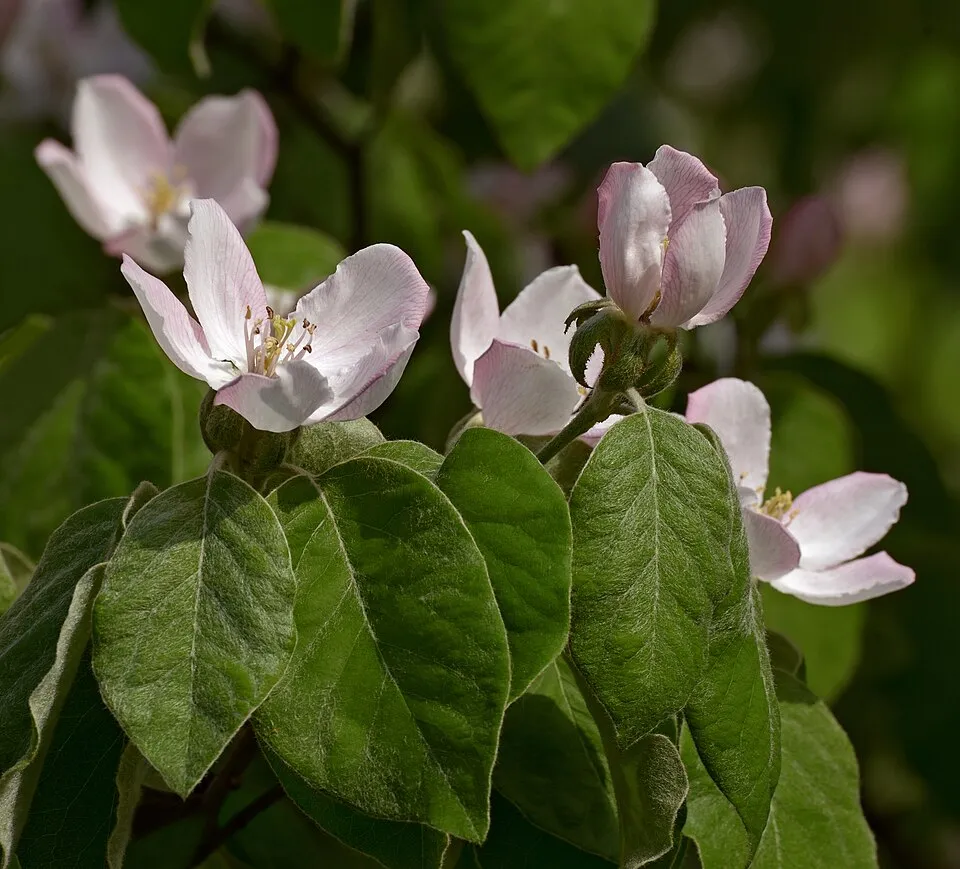
Cydonia oblonga, commonly known as Quince, is a captivating deciduous shrub or small tree belonging to the Rosaceae family, making it a close botanical relative to apples and pears. Typically attaining a height of 5 to 8 meters, and occasionally reaching up to 10 meters, it features an often irregular, spreading crown with characteristically twisted and gnarled branches. The alternate, simple leaves are oval to oblong-ovate, measuring between 6 to 11 cm in length.
Their upper surface is a rich dark green and glossy, contrasting with the underside, which is densely covered in fine, silvery-white hairs, imparting a distinct bicolor appearance. In late spring, after the foliage has emerged, the tree produces large, solitary, five-petaled flowers that range in color from pure white to delicate pale pink, borne at the ends of short shoots. The fruit, a pome, matures in late autumn, transforming from a green, fuzzy sphere into a golden-yellow, typically pear-shaped or apple-shaped fruit.
While young, the fruit is encased in a dense, fuzzy coating, which generally diminishes as it ripens. The flesh of the ripe quince is notably hard, highly aromatic, and astringent, rendering it generally unsuitable for raw consumption but exceptionally prized for culinary applications such as preserves, jellies, and cooked dishes. Native to the Caucuses, northern Iran, and Anatolia, Quince thrives in temperate climates and has been cultivated for millennia across Europe, Asia, and more recently, other parts of the world.
Trusted Scientific References
1. Authoritative external sources for Cydonia oblonga
1.1 Wikipedia — Cydonia oblonga
1.2 Kew POWO (Plants of the World Online)
1.3 PubMed — peer-reviewed research
1.4 NCBI Taxonomy Browser
1.5 GBIF — Global Biodiversity
1.6Quince should be interpreted through verified botanical identity, practical care, and responsible safety language. This recovery note adds the missing context needed for a complete profile: match light to the plant's habit, use well-drained soil, water according to season, and avoid unsupported medicinal or edible claims. For publishing, the plant can be presented as a source-backed garden plant with clear care guidance, common problem diagnosis, and conservative safety wording.
1.1.Quince — Notable Characteristics
- ✓Deciduous tree or large shrub, 5 — 10 meters tall.
- ✓Belongs to the — Belongs to the Rosaceae family, related to apples and pears.
- ✓Produces large, pale — Produces large, pale pink to white flowers in spring.
- ✓Fruit is a golden — yellow pome, typically pear-shaped or apple-shaped.
- ✓Notable for its — Notable for its hard, aromatic, and astringent flesh when raw.
- ✓High in pectin, — High in pectin, making it excellent for preserves and jellies.
- ✓Rich in antioxidants — Rich in antioxidants like flavonoids and phenolic acids.
- ✓Contains mucilaginous compounds — Contains mucilaginous compounds beneficial for soothing mucous membranes.
- ✓Valued for both — Valued for both culinary uses and traditional medicinal applications.
- ✓Native to the — Native to the Caucasus region and parts of Western Asia.
1.2.Quince — Quick Summary
- ✓Quince (Cydonia oblonga) is a Rosaceae fruit tree known for its aromatic, astringent fruit.
- ✓Rich in pectin, antioxidants, and anti-inflammatory compounds, it supports digestive and cardiovascular health.
- ✓Traditionally used for respiratory issues, allergies, and blood sugar management.
- ✓Fruit is typically cooked due to its hard, astringent raw texture; seeds should not be crushed or ingested.
- ✓Cultivated for millennia, it thrives in temperate climates and requires consistent moisture.
- ✓Offers culinary versatility in jams, pastes, and baked goods, alongside its medicinal uses.
2.Quince — Nomenclature & Classification
3.Quince — Vital Statistics
4.Quince — Botanical Description
5.Quince — Origin & Spread
6.Quince — Traditional Uses
7.Quince — Key Phytochemicals
- ✓Polysaccharides — Primarily pectin (up to 25% of dry weight), which provides mucilaginous properties, aids digestion, and contributes to its gelling ability.
- ✓Phenolic Compounds — Includes chlorogenic acid, ferulic acid, caffeic acid, and proanthocyanidins, potent antioxidants responsible for scavenging free radicals.
- ✓Flavonoids — Quercetin, kaempferol, and their glycosides are present, offering significant anti-inflammatory and antioxidant activities.
- ✓Triterpenoids — Ursolic acid and oleanolic acid are found in the fruit peel, contributing to its anti-inflammatory and hepatoprotective effects.
- ✓Ascorbic Acid (Vitamin C) — A vital antioxidant and immune booster, present in appreciable amounts.
- ✓Organic Acids — Malic acid, citric acid, and tartaric acid contribute to the fruit's characteristic tart taste and can have mild astringent properties.
- ✓Volatile Compounds — Esters, aldehydes, and terpenes contribute to the distinctive, highly aromatic fragrance of Quince fruit, influencing its flavor profile.
- ✓Tannins — Predominantly proanthocyanidins, responsible for the fruit's astringent taste, which can have beneficial effects on digestive mucosa.
- ✓Minerals — Contains potassium, copper, iron, and magnesium, essential for various physiological functions.
- ✓Sugars — Fructose, glucose, and sucrose, providing natural sweetness and energy, though less than other common fruits.
8.Quince — Scientific Evidence
- ✓Digestive Health — High pectin content acts as a prebiotic, promoting beneficial gut bacteria and aiding in regular bowel movements, alleviating constipation and potentially soothing IBS symptoms.
- ✓Antioxidant Support — Rich in phenolic compounds, flavonoids, and Vitamin C, Quince combats oxidative stress by neutralizing free radicals, thereby protecting cells from damage and reducing the risk of chronic diseases.
- ✓Anti-inflammatory Properties — Bioactive compounds in Quince have demonstrated anti-inflammatory effects, which can help soothe gastrointestinal inflammation and respiratory tract irritation.
- ✓Blood Sugar Regulation — Its significant fiber content slows down sugar absorption, contributing to better glycemic control and potentially supporting individuals with diabetes or those at risk.
- ✓Respiratory Relief — Traditionally used to alleviate coughs, colds, and sore throats, its mucilaginous properties can soothe irritated mucous membranes in the respiratory system.
- ✓Allergy Management — Some traditional systems suggest Quince can help modulate immune responses, potentially reducing symptoms of allergic reactions, though more research is needed.
- ✓Cardiovascular Health — Antioxidants and fiber contribute to reducing cholesterol levels and improving arterial health, supporting overall cardiovascular well-being.
- ✓Antimicrobial Activity — Research indicates that Quince extracts possess antimicrobial properties against certain bacteria and fungi, contributing to its traditional use in wound healing.
- ✓Skin Health — Topical application or consumption of Quince can help soothe irritated skin due to its anti-inflammatory and antioxidant components, promoting a healthy complexion.
- ✓Weight Management — The high fiber content promotes satiety, helping to reduce overall calorie intake and support weight management efforts.
- ✓Liver Protection — Certain compounds in Quince have shown hepatoprotective effects, helping to safeguard liver cells from damage.
8.1.Quince — Therapeutic Indications
9.Quince — Safety Considerations
9.1.Quince — Warnings
- ✓Allergic Reactions — Rare, but individuals sensitive to other Rosaceae fruits may experience skin rash or digestive upset.
- ✓Digestive Discomfort — Excessive consumption of raw, unripe Quince can cause stomach upset due to its high tannin content and astringency.
- ✓Seed Toxicity — Quince seeds contain cyanogenic glycosides, which can release cyanide when crushed and ingested in large quantities; always remove seeds before consumption.
- ✓Drug Interactions — High fiber content might interfere with the absorption of certain medications if consumed simultaneously; advise to take medications separately.
- ✓Astringency — The strong astringent quality can be off-putting or cause dry mouth in sensitive individuals.
- ✓Dental Erosion — High acidity, especially in raw fruit, could potentially contribute to dental enamel erosion if consumed frequently.
9.2.Quince — Toxicity Assessment
- ✓Seed Safety — Quince seeds must never be crushed or consumed in significant quantities due to their cyanogenic glycoside content; whole seeds are generally safe if accidentally swallowed.
- ✓Pregnancy & Lactation — Generally considered safe in culinary amounts, but large medicinal doses should be avoided due to insufficient safety data.
- ✓Children — Safe for consumption in cooked forms and small amounts, similar to other fruits; raw consumption is not recommended.
- ✓Allergies — Individuals with known allergies to apples, pears, or other Rosaceae family members should exercise caution.
- ✓Medication Timing — Due to high fiber, consume Quince products at least 2 hours apart from oral medications to prevent absorption interference.
- ✓Raw Consumption — Raw Quince is very astringent and hard, making it unpalatable and potentially causing digestive upset; always cook before consuming.
- ✓Quality Sourcing — Ensure Quince fruit is sourced from reputable growers to avoid pesticide residues.
10.Quince — Preparation Methods
- ✓Jams and Jellies — The high pectin content makes Quince ideal for producing firm, flavorful jams and jellies, often cooked with sugar.
- ✓Baked Goods — Sliced or diced Quince can be baked into pies, tarts, crumbles, and cakes, often requiring pre-cooking due to its hardness.
- ✓Stewed Quince — Can be slowly simmered with spices like cinnamon and cloves to create a soft, aromatic compote or side dish.
- ✓Quince Paste (Marmelada/Membrillo) — Cooked down with sugar until very thick, then set into a firm block, often served with cheese.
- ✓Herbal Tea — Dried Quince leaves or fruit pieces can be steeped in hot water to make a soothing tea for respiratory complaints.
- ✓Syrup — A decoction of Quince fruit or seeds can be reduced with honey or sugar to create a medicinal syrup for coughs and sore throats.
- ✓Topical Poultice — Crushed Quince seeds, due to their mucilage, can be used as a soothing poultice for skin irritations.
- ✓Infused Oil/Vinegar — Quince pieces can be infused into oils or vinegars to impart their distinct aroma and subtle flavor for culinary uses.
11.Quince — Garden Cultivation
- ✓Site Selection — Prefers full sun exposure (at least 6-8 hours daily) and well-drained, fertile loamy soil with a pH between 6.0 and 7.0.
- ✓Planting — Typically planted as bare-root trees in late winter or early spring, spaced 4-5 meters apart to allow for mature growth.
- ✓Watering — Requires consistent moisture, especially during fruit development; deep watering is preferable to shallow, frequent irrigation.
- ✓Fertilization — Benefits from balanced organic fertilizers in early spring, particularly those rich in phosphorus and potassium for fruit production.
- ✓Pruning — Annual dormant pruning helps maintain shape, remove dead or diseased wood, and encourage fruit bearing on two-year-old wood.
- ✓Pest & Disease Management — Generally hardy, but monitor for common Rosaceae pests like aphids and diseases such as fire blight; employ organic solutions when possible.
- ✓Pollination — Most Quince varieties are self-fertile, but planting multiple trees can improve fruit set and yield.
- ✓Harvesting — Fruits ripen in late autumn, typically October to November, when they turn golden yellow and become highly aromatic.
Reviewed by the Flora Medical Global Botanical Review Panel
Multi-disciplinary editorial group · Botany · Ethnobotany · Herbal-medicine literature
Who reviewed this: This page was checked by the Flora Medical Global Botanical Review Panel — an in-house editorial group of botany graduates, ethnobotany researchers, and horticulture practitioners who collectively maintain our 7,000+ plant encyclopedia. Meet the team.
Our 4-step verification process
1. Taxonomic verification
Scientific names and synonyms cross-checked against Kew POWO, World Flora Online, and The Plant List.
2. Phytochemical & medicinal cross-reference
Active compounds, traditional uses, and reported activities are cross-referenced with PubMed, USDA Dr. Duke's database, and peer-reviewed ethnobotanical literature.
3. Conservation & distribution check
Distribution, ecology, and conservation status confirmed against GBIF occurrence records and the IUCN Red List.
4. Editorial & safety review
Every entry passes an editorial pass for clarity, originality, and safety notices (toxicity, contraindications, dosage caveats) before publication.
Last reviewed:
Important medical disclaimer: This content is for educational and research purposes only. It is not medical advice and is not a substitute for consultation with a licensed healthcare provider. Do not use any herb to self-treat a medical condition without professional guidance.
Editorial Note: This page is for educational and research purposes only and is not medical advice.
Written by: Flora Medical Global Editorial Team
Reviewed by: Flora Medical Global Botanical Review Panel
Last Updated: June 15, 2026





Quince — Comments & Community Reviews
Rate this plant