

Medical Disclaimer: This content is for educational purposes only. It is not medical advice. Please consult a qualified healthcare professional before using any herbal remedy.
Safety Overview
1.Quinine Tree — Introduction & Highlights
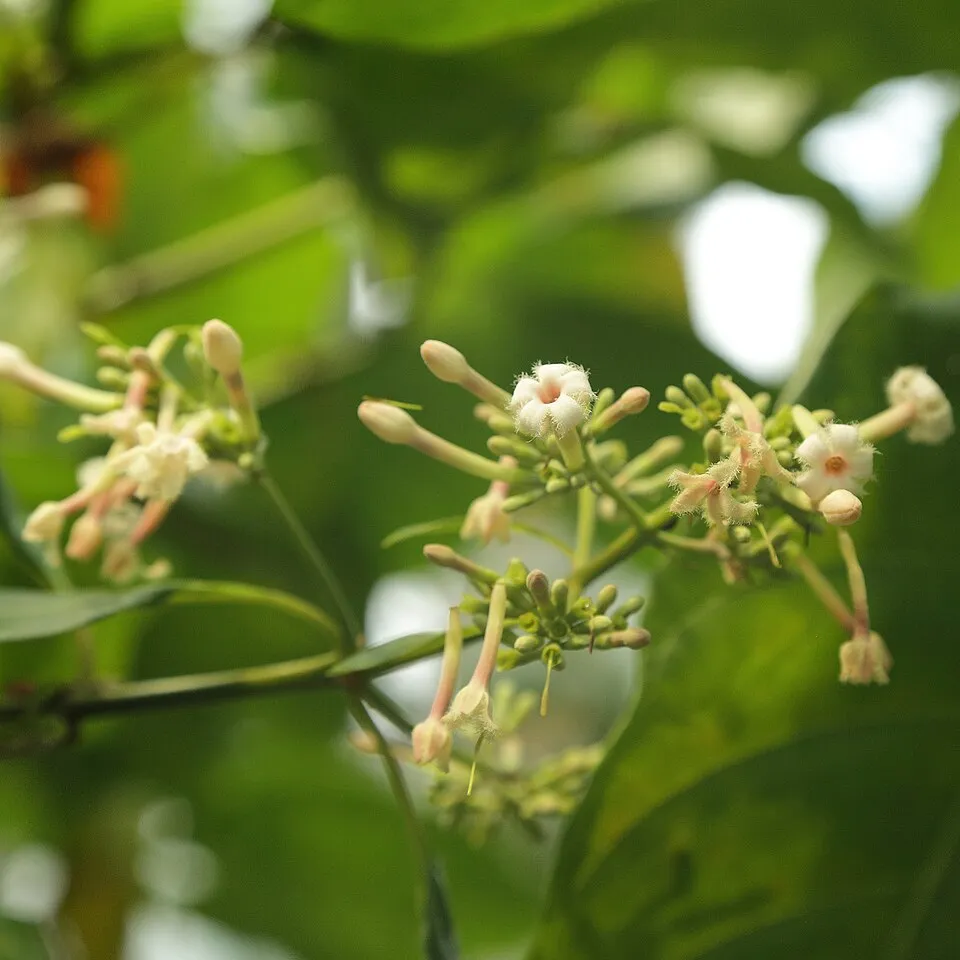
Cinchona pubescens, widely recognized as the Quinine Tree, is a prominent evergreen tree species belonging to the Rubiaceae family. In its native Andean cloud forests, it can attain significant heights of up to 20 meters (65 feet). The tree is characterized by its distinctive pale green to reddish-brown bark, which is typically smooth and can have a slightly waxy or powdery texture, becoming rougher with age. Its foliage consists of large, glossy, elliptical leaves, measuring between 15 to 30 cm (6 to 12 inches) in length and 5 to 10 cm (2 to 4 inches) in width, often featuring a pointed apex and prominent venation.
From August to October, the Quinine Tree produces small, tubular, highly fragrant flowers arranged in terminal panicles, displaying hues from white to various shades of pink or reddish-purple, which are attractive to a diverse range of pollinators. Following successful pollination, the tree develops elongated capsular fruits, approximately 3-5 cm (1-2 inches) long, which split open to release numerous winged seeds, facilitating wind or water dispersal. Native to the montane cloud forests of Peru, Ecuador, and Colombia, Cinchona pubescens thrives at elevations ranging from 1,000 to 3,000 meters (3,280 to 9,840 feet) in well-drained, acidic, and fertile soils. While historically vital for its antimalarial alkaloids, the species faces conservation challenges due to extensive overharvesting and habitat fragmentation.
Paradoxically, in some introduced regions like the Galápagos Islands, Cinchona pubescens has become a highly invasive species, outcompeting native flora and altering delicate ecosystems, thus requiring significant control efforts. The ecological role of the Quinine Tree in its indigenous habitat involves providing shelter and sustenance for local wildlife, highlighting its complex relationship with both human and natural systems.
Trusted Scientific References
1. Authoritative external sources for Cinchona pubescens
1.1 Wikipedia — Cinchona pubescens
1.2 Kew POWO (Plants of the World Online)
1.3 PubMed — peer-reviewed research
1.4 NCBI Taxonomy Browser
1.5 GBIF — Global Biodiversity
1.1.Quinine Tree — Key Features
- ✓Primary source of — Primary source of antimalarial quinine.
- ✓Native to the high — altitude Andean cloud forests.
- ✓Distinctive reddish bark — Distinctive reddish bark and fragrant pinkish flowers.
- ✓Historically vital in — Historically vital in global health against malaria.
- ✓Contains multiple pharmacologically — Contains multiple pharmacologically active alkaloids.
- ✓Also used as — Also used as a bitter tonic for digestion.
- ✓Can be an invasive species in non — native habitats.
- ✓Requires specific environmental — Requires specific environmental conditions for cultivation.
- ✓Its use is — Its use is associated with notable side effects, 'cinchonism'.
- ✓Conservation concern due — Conservation concern due to overharvesting in native range.
1.2.Quinine Tree — At-a-Glance Summary
- ✓Quinine Tree is the source of the antimalarial alkaloid quinine.
- ✓Native to the Andean regions of South America.
- ✓Historically crucial for treating malaria and fevers.
- ✓Contains potent alkaloids like quinine, quinidine, cinchonine.
- ✓Can cause significant side effects, including 'cinchonism'.
- ✓Requires careful medical supervision for internal use.
2.Quinine Tree — Taxonomic Classification
3.Quinine Tree — Quick Facts
4.Quinine Tree — Structural Profile
5.Quinine Tree — Where It Grows
6.Quinine Tree — Cultural & Traditional Roles
7.Quinine Tree — Bioactive Constituents
- ✓Quinolone Alkaloids — This crucial category includes quinine, quinidine, cinchonine, and cinchonidine, which are responsible for the plant's potent antimalarial, antipyretic, and antiarrhythmic properties.
- ✓Dihydroquinolone Alkaloids — Compounds like dihydroquinine and dihydroquinidine are structurally related to the main alkaloids and contribute to the overall pharmacological profile, often with similar but sometimes distinct activities.
- ✓Flavonoids — Quinine Tree bark contains various flavonoids, such as quercetin and rutin derivatives, which are known for their antioxidant, anti-inflammatory, and potential cardioprotective effects.
- ✓Triterpenes — These compounds, including ursolic acid and oleanolic acid, contribute to the plant's anti-inflammatory and hepatoprotective actions, supporting overall wellness.
- ✓Tannins — Hydrolyzable and condensed tannins are present, imparting astringent properties, which can aid in wound healing and digestive regulation, and contribute to the bitter taste.
- ✓Phenolic Acids — Gallic acid, caffeic acid, and other phenolic acids are found, acting as powerful antioxidants and contributing to the plant's anti-inflammatory and antimicrobial activities.
- ✓Saponins — These glycosides may contribute to the plant's expectorant and anti-inflammatory properties, although their specific role in Cinchona's medicinal profile is less emphasized than alkaloids.
- ✓Volatile Oils — Trace amounts of essential oils are present, contributing to the plant's characteristic aroma and potentially offering mild antiseptic or carminative effects.
8.Quinine Tree — What Research Suggests
- ✓Antimalarial Action — The bark of Cinchona pubescens is the primary source of quinine, a potent alkaloid historically and currently used to treat malaria, especially drug-resistant strains, by inhibiting parasite growth.
- ✓Fever Reduction (Antipyretic) — Quinine and other Cinchona alkaloids possess antipyretic properties, effectively reducing high fevers associated with various infections, including malaria, by acting on the hypothalamus.
- ✓Anti-inflammatory Effects — Certain compounds within the Quinine Tree bark exhibit anti-inflammatory activity, potentially alleviating pain and swelling associated with inflammatory conditions.
- ✓Digestive Aid (Bitter Tonic) — The intensely bitter taste of Cinchona bark stimulates digestive secretions, acting as a bitter tonic to improve appetite, digestion, and alleviate dyspepsia.
- ✓Muscle Relaxant — Quinine has been traditionally used to relieve nocturnal leg cramps and restless legs syndrome due to its muscle relaxant properties, though this use requires careful medical supervision.
- ✓Cardiotonic Properties — Quinidine, another alkaloid from Cinchona, is a class I antiarrhythmic agent used in modern medicine to treat various cardiac arrhythmias, regulating heart rhythm.
- ✓Antioxidant Protection — The phenolic compounds and flavonoids present in Cinchona bark contribute to its antioxidant capacity, helping to neutralize free radicals and protect cells from oxidative damage.
- ✓Immune Support — Traditional uses suggest Cinchona bark can bolster the immune system, particularly during febrile illnesses, although the direct mechanism for broad immune support is still under investigation.
- ✓Antimicrobial Activity — Beyond its antimalarial effects, extracts of Cinchona pubescens may exhibit broader antimicrobial properties against certain bacteria and fungi, contributing to its traditional use in various infections.
8.1.Quinine Tree — Health Applications
9.Quinine Tree — Adverse Effects
9.1.Quinine Tree — Warnings
- ✓Cinchonism — A common set of symptoms including tinnitus (ringing in ears), headache, nausea, blurred vision, dizziness, and confusion, typically dose-dependent.
- ✓Gastrointestinal Upset — Nausea, vomiting, abdominal pain, and diarrhea are frequent adverse effects, especially with higher doses or sensitive individuals.
- ✓Hypersensitivity Reactions — Allergic responses such as skin rashes, itching, facial swelling, and in rare severe cases, anaphylaxis can occur.
- ✓Hematological Issues — Can cause thrombocytopenia (low platelet count), hemolytic anemia, and agranulocytosis in susceptible individuals.
- ✓Cardiac Arrhythmias — Quinidine, a related alkaloid, is known to cause cardiac conduction disturbances, including QT prolongation and ventricular arrhythmias.
- ✓Hypoglycemia — Quinine can stimulate insulin release, potentially leading to dangerously low blood sugar levels, particularly in patients with malaria.
- ✓Ototoxicity — Prolonged or high-dose use can lead to irreversible hearing damage due to its effect on the auditory system.
9.2.Quinine Tree — Safety Profile
- ✓Pregnancy & Lactation — Contraindicated during pregnancy due to potential abortifacient effects and risk of congenital malformations; not recommended during breastfeeding.
- ✓Drug Interactions — Interacts significantly with anticoagulants (warfarin), antiarrhythmics, antacids, cimetidine, and certain antibiotics, increasing risk of adverse effects.
- ✓Pre-existing Conditions — Contraindicated in individuals with G6PD deficiency (risk of hemolytic anemia), cardiac arrhythmias, tinnitus, optic neuritis, or myasthenia gravis.
- ✓Dosage & Duration — Should only be used under strict medical supervision due to narrow therapeutic index and potential for severe side effects; avoid prolonged self-administration.
- ✓Allergic Reactions — Individuals with known hypersensitivity to quinine or other Cinchona alkaloids should avoid use entirely.
- ✓Children & Elderly — Use with extreme caution and reduced dosages in pediatric and geriatric populations due to increased sensitivity and potential for adverse effects.
- ✓Liver & Kidney Impairment — Patients with hepatic or renal dysfunction may require dose adjustments due to altered metabolism and excretion of alkaloids.
10.Quinine Tree — How to Use
- ✓Bark Decoction — The dried and powdered bark is traditionally simmered in water to create a decoction, used orally for antimalarial and fever-reducing purposes.
- ✓Tincture — Cinchona bark can be macerated in alcohol to produce a potent tincture, allowing for precise dosing and extended shelf life, often used as a bitter digestive aid.
- ✓Powdered Bark — Finely ground bark can be encapsulated or mixed with liquids, historically consumed directly for its medicinal properties, though difficult to dose accurately.
- ✓Topical Application — In some traditional practices, poultices or washes made from the bark may be applied externally for skin conditions or muscle aches, though less common.
- ✓Herbal Tea — While less potent than a decoction, a mild infusion can be made from smaller quantities of bark, primarily for its bitter digestive effects.
- ✓Tonic Water Ingredient — Historically, quinine was a key ingredient in tonic water, developed as a palatable way to consume the antimalarial compound, still enjoyed for its distinct bitter flavor.
- ✓Modern Pharmaceutical Extraction — Quinine and quinidine are extracted in controlled laboratory settings for pharmaceutical production, ensuring standardized dosages and purity for medical use.
11.Quinine Tree — Growth Requirements
- ✓Climate — Thrives in tropical to subtropical climates with high humidity and consistent rainfall, ideally without extreme temperature fluctuations.
- ✓Soil — Prefers well-drained, fertile, acidic soils (pH 4.5-6.0) rich in organic matter, often found in volcanic or loamy compositions.
- ✓Sunlight — Requires partial shade when young, transitioning to full sun exposure as it matures for optimal growth and alkaloid production.
- ✓Watering — Needs regular and ample watering, especially during dry periods, ensuring the soil remains consistently moist but not waterlogged.
- ✓Propagation — Can be propagated by seeds, stem cuttings, or grafting; seed germination can be slow and requires specific conditions.
- ✓Pruning — Minimal pruning is generally required, primarily for shaping, removing dead or diseased branches, and managing canopy density.
- ✓Pests & Diseases — Susceptible to root and collar rot caused by Phytophthora species, as well as various insect pests; proper drainage and sanitation are crucial for prevention.
Reviewed by the Flora Medical Global Botanical Review Panel
Multi-disciplinary editorial group · Botany · Ethnobotany · Herbal-medicine literature
Who reviewed this: This page was checked by the Flora Medical Global Botanical Review Panel — an in-house editorial group of botany graduates, ethnobotany researchers, and horticulture practitioners who collectively maintain our 7,000+ plant encyclopedia. Meet the team.
Our 4-step verification process
1. Taxonomic verification
Scientific names and synonyms cross-checked against Kew POWO, World Flora Online, and The Plant List.
2. Phytochemical & medicinal cross-reference
Active compounds, traditional uses, and reported activities are cross-referenced with PubMed, USDA Dr. Duke's database, and peer-reviewed ethnobotanical literature.
3. Conservation & distribution check
Distribution, ecology, and conservation status confirmed against GBIF occurrence records and the IUCN Red List.
4. Editorial & safety review
Every entry passes an editorial pass for clarity, originality, and safety notices (toxicity, contraindications, dosage caveats) before publication.
Last reviewed:
Important medical disclaimer: This content is for educational and research purposes only. It is not medical advice and is not a substitute for consultation with a licensed healthcare provider. Do not use any herb to self-treat a medical condition without professional guidance.
Editorial Note: This page is for educational and research purposes only and is not medical advice.
Written by: Flora Medical Global Editorial Team
Reviewed by: Flora Medical Global Botanical Review Panel
Last Updated: June 15, 2026




Quinine Tree — Comments & Community Reviews
Rate this plant