
Medical Disclaimer: This content is for educational purposes only. It is not medical advice. Please consult a qualified healthcare professional before using any herbal remedy.
Safety Overview
1.Ram Tulsi — Essential Profile
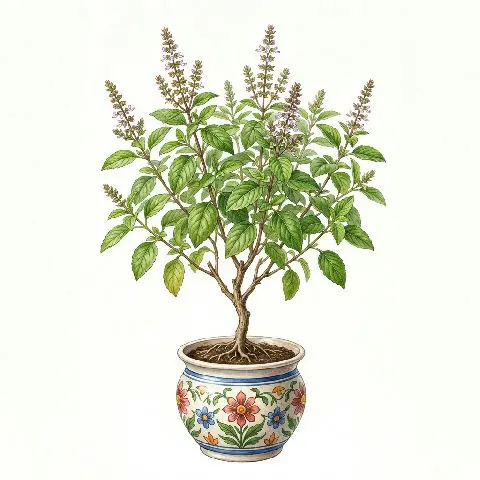
Ram Tulsi (Ocimum gratissimum), widely recognized as African Basil or Clove Basil, is a distinguished perennial herb within the Lamiaceae family, closely related to other revered Tulsi varieties. This robust plant typically grows as an upright shrub, reaching heights of 1 to 2 meters, characterized by its sturdy, often woody stems. Its foliage is particularly striking, featuring large, ovate leaves that measure between 5 to 13 centimeters, displaying a vibrant, bright green hue.
A defining feature of Ram Tulsi is its potent, distinct clove-like aroma, which is more pronounced than in some other Ocimum species. Originating in tropical and subtropical regions, particularly across India and parts of Africa, Ocimum gratissimum thrives in warm, humid climates with well-drained soil and ample sunlight. For centuries, it has been a staple in traditional Indian households, not only for its profound spiritual significance in Ayurveda, where it is often regarded as the most sattvic or pure form of Tulsi, but also for its extensive array of potent medicinal properties.
Its widespread cultivation and naturalization reflect its adaptability and cultural importance in various traditional healing systems.
Trusted Scientific References
1. Authoritative external sources for Ocimum gratissimum
1.1 Wikipedia — Ocimum gratissimum
1.2 Kew POWO (Plants of the World Online)
1.3 PubMed — peer-reviewed research
1.4 NCBI Taxonomy Browser
1.5 GBIF — Global Biodiversity
1.6Ram Tulsi should be interpreted through verified botanical identity, practical care, and responsible safety language. This recovery note adds the missing context needed for a complete profile: match light to the plant's habit, use well-drained soil, water according to season, and avoid unsupported medicinal or edible claims. For publishing, the plant can be presented as a source-backed medicinal plant with clear care guidance, common problem diagnosis, and conservative safety wording.
1.7Ram Tulsi (Ocimum gratissimum) is maintained in this recovery file as a complete medicinal profile with practical care, safety, and identification context. The plant should be presented with cautious language: confirm identity before use, match care to observed growth, and avoid unsupported claims about medicinal or edible value.
1.1.Ram Tulsi — Distinguishing Points
- ✓Botanical Identity — Ocimum gratissimum, also known as African or Clove Basil.
- ✓Ayurvedic Significance — Revered as a 'sattvic' and powerful medicinal herb.
- ✓Distinct Aroma — Characterized by a strong, pungent clove-like fragrance.
- ✓High Eugenol Content — Primary active compound responsible for many therapeutic actions.
- ✓Broad — Spectrum Antimicrobial — Effective against bacteria, viruses, and fungi.
- ✓Natural Adaptogen — Helps the body manage and adapt to various forms of stress.
- ✓Potent Anti — inflammatory — Reduces inflammation and associated pain.
- ✓Immune Modulator — Enhances the body's natural defense mechanisms.
- ✓Traditional Respiratory Aid — Widely used for coughs, colds, and asthma.
- ✓Oral Health Benefits — Supports gum health and combats bad breath.
1.2.Ram Tulsi — Snapshot Summary
- ✓Ram Tulsi (Ocimum gratissimum) is a potent Ayurvedic adaptogen.
- ✓Known for its strong clove-like aroma and high eugenol content.
- ✓Offers significant antimicrobial, anti-inflammatory, and antioxidant benefits.
- ✓Supports respiratory, digestive, and immune system health.
- ✓Traditionally used for stress relief and fever reduction.
- ✓Requires tropical/subtropical climates and full sun for cultivation.
2.Ram Tulsi — Botanical Identity
3.Ram Tulsi — Key Data
4.Ram Tulsi — Physical Description
5.Ram Tulsi — Native Range & Habitat
6.Ram Tulsi — Traditional Uses
7.Ram Tulsi — Chemical Profile
- ✓Phenylpropanoids — Eugenol is the primary compound, often comprising up to 70% of the essential oil, responsible for the characteristic clove aroma and potent antimicrobial, anti-inflammatory, and antioxidant activities.
- ✓Triterpenoids — Ursolic acid is a key pentacyclic triterpenoid found in Ram Tulsi, known for its significant anti-inflammatory, anticancer, and hepatoprotective properties.
- ✓Phenolic Acids — Rosmarinic acid, a powerful polyphenol, provides strong antioxidant, anti-inflammatory, and antiviral effects, contributing to the herb's adaptogenic profile.
- ✓Monoterpenoid Phenols — Carvacrol and Thymol are present, exhibiting potent antibacterial, antifungal, and antiseptic activities, enhancing the herb's broad-spectrum antimicrobial action.
- ✓Flavonoids — Compounds like orientin and vicenin are found, offering antioxidant protection, anti-inflammatory effects, and contributing to the plant's adaptogenic qualities.
- ✓Sesquiterpenes — Beta-caryophyllene and germacrene D are part of the essential oil, contributing to the aroma and possessing anti-inflammatory and insect-repellent properties.
- ✓Volatile Oils — A complex blend of terpenes and other aromatic compounds give Ram Tulsi its distinctive scent and contribute to its therapeutic actions, particularly in respiratory and antimicrobial applications.
- ✓Saponins — These compounds contribute to the plant's foaming properties and may have immunomodulatory and cholesterol-lowering effects.
8.Ram Tulsi — Pharmacological Findings
- ✓Adaptogenic Support — Ram Tulsi helps the body adapt to various stressors, both physical and psychological, by modulating cortisol levels and promoting overall homeostasis.
- ✓Potent Antimicrobial Action — Rich in eugenol and other compounds, Ram Tulsi exhibits strong antibacterial, antiviral, and antifungal properties, effective against a broad spectrum of pathogens.
- ✓Anti-inflammatory Effects — The presence of eugenol, ursolic acid, and rosmarinic acid contributes to its significant anti-inflammatory capabilities, alleviating pain and swelling in various conditions.
- ✓Respiratory Health Enhancement — Traditionally used as an expectorant and bronchodilator, it effectively supports respiratory function, easing symptoms of coughs, colds, bronchitis, and asthma.
- ✓Digestive System Aid — Ram Tulsi helps soothe digestive discomforts such as bloating, indigestion, and intestinal cramps, promoting a healthy gut environment.
- ✓Immune System Modulation — Regular consumption boosts the body's natural defenses, enhancing immune response and increasing resistance to common infections.
- ✓Antipyretic Properties — In traditional medicine, it is a well-regarded natural remedy for reducing fever, particularly during malarial and dengue fevers.
- ✓Oral Hygiene Promoter — Its antimicrobial compounds help combat bacteria responsible for tooth decay, gum disease, and halitosis, contributing to overall oral health.
- ✓Antioxidant Protection — High levels of phenolic compounds and flavonoids provide robust antioxidant activity, protecting cells from oxidative damage caused by free radicals.
- ✓Stress and Anxiety Relief — As an anxiolytic, it helps calm the nervous system, reducing symptoms of anxiety and promoting a sense of well-being.
8.1.Ram Tulsi — Conditions Traditionally Used For
9.Ram Tulsi — Cautions & Contraindications
9.1.Ram Tulsi — Possible Adverse Reactions
- ✓Blood Thinning — May have anticoagulant effects; caution advised for individuals on blood-thinning medications or with bleeding disorders.
- ✓Hypoglycemic Effects — Can lower blood sugar levels; diabetics should monitor glucose carefully and consult a healthcare provider.
- ✓Fertility Concerns — High doses may potentially impact male fertility; further research is ongoing.
- ✓Drug Interactions — Potential interactions with medications metabolized by cytochrome P450 enzymes; consult a doctor for concomitant use.
- ✓Pregnancy and Lactation — Lack of sufficient safety data; generally not recommended for pregnant or breastfeeding women.
- ✓Gastrointestinal Upset — In rare cases, high doses may cause mild nausea or digestive discomfort.
9.2.Ram Tulsi — Clinical Safety Notes
- ✓Pregnancy and Breastfeeding — Contraindicated due to insufficient safety data and potential effects on uterine contractions or infant development.
- ✓Bleeding Disorders and Surgery — Discontinue use at least two weeks prior to any surgery due to potential anticoagulant properties.
- ✓Diabetes Management — Use with caution by individuals on antidiabetic medication due to its potential to lower blood glucose levels.
- ✓Anticoagulant Medication — Avoid concurrent use with blood thinners like warfarin, as it may increase the risk of bleeding.
- ✓Children — Generally considered safe in moderate culinary amounts for older children, but therapeutic doses should be supervised by a practitioner.
- ✓Allergic Reactions — Rare, but individuals sensitive to plants in the Lamiaceae family may experience allergic skin reactions or respiratory symptoms.
- ✓Liver Health — While generally hepatoprotective, individuals with severe liver conditions should consult a healthcare professional before use.
10.Ram Tulsi — Usage Guide
- ✓Herbal Tea (Infusion) — Steep fresh or dried Ram Tulsi leaves in hot water for 5-10 minutes to create a therapeutic infusion for respiratory and digestive support.
- ✓Decoction — For stronger medicinal preparations, boil leaves and stems in water for a longer period, often used for chronic conditions or as a general tonic.
- ✓Culinary Herb — Fresh leaves can be added to various dishes, salads, and curries, imparting a unique clove-like flavor and nutritional benefits.
- ✓Essential Oil — The essential oil, rich in eugenol, is used topically in diluted forms for pain relief, anti-inflammatory purposes, or diffused for respiratory benefits.
- ✓Poultice/Compress — Crushed fresh leaves can be applied directly to the skin as a poultice to soothe insect bites, skin irritations, or localized inflammation.
- ✓Tincture — An alcohol-based extract of Ram Tulsi can be taken orally as a concentrated form for adaptogenic and immune-boosting effects.
- ✓Gargle/Mouthwash — An infusion of Ram Tulsi can be used as a natural gargle to promote oral hygiene and alleviate sore throats.
11.Ram Tulsi — Cultivation & Care
- ✓Climate Preference — Thrives in tropical and subtropical climates with consistent warmth and humidity.
- ✓Soil Requirements — Prefers well-drained, fertile soil rich in organic matter; a pH between 6.0 and 7.5 is ideal.
- ✓Light Exposure — Requires full sun exposure for at least 6 hours daily to ensure robust growth and potent essential oil production.
- ✓Watering — Needs regular watering to keep the soil consistently moist, but avoid waterlogging to prevent root rot.
- ✓Propagation — Easily propagated from seeds or stem cuttings; seeds should be sown indoors 6-8 weeks before the last frost.
- ✓Fertilization — Benefits from periodic feeding with a balanced organic fertilizer, especially during its active growing season.
- ✓Pests and Diseases — Generally robust, but watch for common garden pests like aphids and whiteflies; good air circulation helps prevent fungal issues.
- ✓Harvesting — Leaves can be harvested frequently once the plant is established, typically by pinching off the top sets of leaves to encourage bushier growth.
Reviewed by the Flora Medical Global Botanical Review Panel
Multi-disciplinary editorial group · Botany · Ethnobotany · Herbal-medicine literature
Who reviewed this: This page was checked by the Flora Medical Global Botanical Review Panel — an in-house editorial group of botany graduates, ethnobotany researchers, and horticulture practitioners who collectively maintain our 7,000+ plant encyclopedia. Meet the team.
Our 4-step verification process
1. Taxonomic verification
Scientific names and synonyms cross-checked against Kew POWO, World Flora Online, and The Plant List.
2. Phytochemical & medicinal cross-reference
Active compounds, traditional uses, and reported activities are cross-referenced with PubMed, USDA Dr. Duke's database, and peer-reviewed ethnobotanical literature.
3. Conservation & distribution check
Distribution, ecology, and conservation status confirmed against GBIF occurrence records and the IUCN Red List.
4. Editorial & safety review
Every entry passes an editorial pass for clarity, originality, and safety notices (toxicity, contraindications, dosage caveats) before publication.
Last reviewed:
Important medical disclaimer: This content is for educational and research purposes only. It is not medical advice and is not a substitute for consultation with a licensed healthcare provider. Do not use any herb to self-treat a medical condition without professional guidance.
Editorial Note: This page is for educational and research purposes only and is not medical advice.
Written by: Flora Medical Global Editorial Team
Reviewed by: Flora Medical Global Botanical Review Panel
Last Updated: June 15, 2026





Ram Tulsi — Comments & Community Reviews
Rate this plant