
Medical Disclaimer: This content is for educational purposes only. It is not medical advice. Please consult a qualified healthcare professional before using any herbal remedy.
Safety Overview
1.Ranunculus — Introduction & Highlights
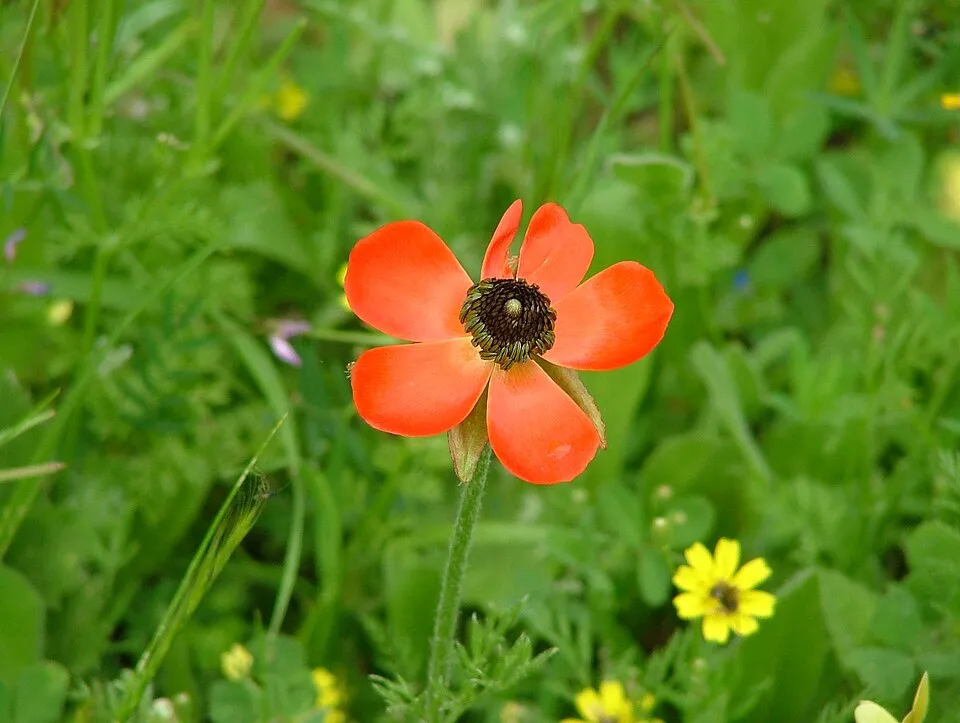
Ranunculus asiaticus, commonly known as Persian Buttercup, is a captivating ornamental plant belonging to the Ranunculaceae family. Native to the Eastern Mediterranean, encompassing regions from southeastern Europe to southwestern Asia, this herbaceous perennial thrives in sunny, well-drained environments. It typically grows from small, claw-like corms, reaching heights of 12 to 24 inches (30-60 cm) with a spread of 6 to 12 inches (15-30 cm).
The plant forms a basal rosette of deeply lobed, fern-like green leaves, from which slender, branching stems emerge, bearing exquisite, multi-petaled flowers. These blooms, often resembling miniature roses or peonies, exhibit a remarkable diversity in color, including vibrant shades of red, orange, yellow, pink, purple, and white, frequently with contrasting centers. The delicate, papery petals are tightly packed, creating a lush, opulent appearance.
Flowering occurs primarily in late spring to early summer, providing a spectacular display of color before the plant enters dormancy in hotter weather. While primarily cultivated for its aesthetic appeal, its morphology, particularly the corms and foliage, is characteristic of the Ranunculus genus, which historically holds both ornamental and caution-demanding medicinal significance.
Trusted Scientific References
1. Authoritative external sources for Ranunculus asiaticus
1.1 Wikipedia — Ranunculus asiaticus
1.2 Kew POWO (Plants of the World Online)
1.3 PubMed — peer-reviewed research
1.4 NCBI Taxonomy Browser
1.5 GBIF — Global Biodiversity
1.6Ranunculus should be interpreted through verified botanical identity, practical care, and responsible safety language. This recovery note adds the missing context needed for a complete profile: match light to the plant's habit, use well-drained soil, water according to season, and avoid unsupported medicinal or edible claims. For publishing, the plant can be presented as a source-backed garden plant with clear care guidance, common problem diagnosis, and conservative safety wording.
1.1.Ranunculus — Key Features
- ✓Ornamental Value — Prized for its vibrant, rose-like or peony-like flowers.
- ✓Diverse Colors — Blooms come in a wide spectrum of colors, including red, orange, yellow, pink, purple, and white.
- ✓Tuberous Roots (Corms) — Grows from claw-like corms that store nutrients.
- ✓Fern — like Foliage — Features attractive, deeply lobed green leaves.
- ✓Spring/Early Summer Blooms — Flowers profusely in cooler spring and early summer temperatures.
- ✓Mediterranean Origin — Native to the Eastern Mediterranean region.
- ✓Toxic Plant — Contains ranunculin, which converts to toxic protoanemonin upon damage.
- ✓Historical Medicinal Use (External Only) — Traditionally used with extreme caution as a topical irritant.
- ✓Low Maintenance (Once Established) — Relatively easy to grow in appropriate climates and conditions.
- ✓Cut Flower Popularity — Highly sought after for bouquets and floral designs.
1.2.Ranunculus — At-a-Glance Summary
- ✓Ranunculus asiaticus is a beautiful ornamental plant, known as Persian Buttercup.
- ✓It is highly toxic due to protoanemonin, especially when fresh.
- ✓Historically used externally as a counter-irritant and vesicant with extreme caution.
- ✓Internal use is strictly contraindicated and dangerous.
- ✓Primarily valued today for its vibrant, multi-petaled flowers in gardens and floral arrangements.
- ✓Always handle with gloves and keep away from children and pets.
2.Ranunculus — Taxonomic Classification
3.Ranunculus — Quick Facts
4.Ranunculus — Morphological Account
5.Ranunculus — Where It Grows
6.Ranunculus — Ethnobotanical Uses
7.Ranunculus — Secondary Metabolites
- ✓Ranunculin — The primary glucoside present in fresh plant tissue, which is non-toxic in its intact form.
- ✓Protoanemonin — A highly unstable, volatile, and pungent lactone formed when ranunculin is enzymatically hydrolyzed upon plant cell damage; responsible for the plant's irritant and vesicant properties.
- ✓Anemonin — A dimerized, less toxic compound formed from protoanemonin upon drying or heating, which also possesses some irritant qualities.
- ✓Flavonoids — A class of polyphenolic compounds, contributing to flower pigmentation and potentially offering antioxidant activity, though less prominent in medicinal context for this plant.
- ✓Triterpenoids — Present in various plant parts, these compounds may have diverse biological activities, but their specific role in Ranunculus medicinal effects is secondary to protoanemonin.
- ✓Saponins — Found in some Ranunculus species, these compounds can have surfactant properties and may contribute to irritant effects or other biological actions.
- ✓Volatile Oils — Besides protoanemonin, other minor volatile compounds contribute to the plant's characteristic scent and potential irritant profile.
- ✓Alkaloids — While not dominant, certain Ranunculus species may contain trace amounts of alkaloids, though not typically associated with R. asiaticus's primary medicinal or toxic effects.
8.Ranunculus — Research Insights
- ✓Counter-irritant — Historically applied topically to create a localized irritation, diverting pain and inflammation from deeper tissues.
- ✓Vesicant — The protoanemonin content can induce blistering when applied to the skin, which was traditionally used for drawing out toxins or treating skin conditions.
- ✓Rubefacient — Causes redness and warming of the skin by increasing blood flow to the area, useful in some traditional pain remedies.
- ✓Anti-rheumatic (external) — Folk medicine used diluted preparations topically to alleviate pain associated with rheumatism and arthritis.
- ✓Anti-gout (external) — Applied externally to joints affected by gout to reduce swelling and discomfort by stimulating local circulation.
- ✓Antifungal (traditional, external) — Some historical accounts suggest topical use for certain superficial fungal infections due to its irritant properties.
- ✓Skin stimulant (external) — Used to stimulate circulation and promote healing in some localized skin conditions, always with extreme caution due to its toxicity.
- ✓Purgative (historical, internal, highly dangerous) — Ancient texts mention highly diluted internal use as a purgative, a practice now considered extremely hazardous and medically unsound.
8.1.Ranunculus — Conditions Traditionally Used For
9.Ranunculus — Risk Profile
9.1.Ranunculus — Side Effects & Warnings
- ✓Skin Blistering — Direct contact with fresh plant material causes severe skin irritation, redness, and blistering due to protoanemonin.
- ✓Dermatitis — Allergic reactions or contact dermatitis can occur upon handling, leading to itching, rashes, and inflammation.
- ✓Gastrointestinal Distress — Ingestion causes severe burning in the mouth and throat, nausea, vomiting, diarrhea, and abdominal pain.
- ✓Oral Ulceration — Chewing or ingesting fresh plant material can lead to painful sores and ulcers in the mouth and esophagus.
- ✓Kidney Damage — Systemic absorption after ingestion can lead to kidney irritation and potential damage in severe cases.
- ✓Nervous System Effects — Large doses ingested can cause dizziness, convulsions, and paralysis due to neurotoxic effects.
- ✓Liver Toxicity — Potentially hepatotoxic with significant ingestion, though less common than gastrointestinal and renal effects.
9.2.Ranunculus — Risk Assessment
- ✓HIGHLY TOXIC INTERNALLY — Ranunculus asiaticus is toxic if ingested due to protoanemonin; internal use is strictly contraindicated.
- ✓EXTERNAL IRRITANT — Fresh plant sap causes severe skin irritation, blistering, and dermatitis upon contact.
- ✓NOT FOR SELF-MEDICATION — Its historical medicinal uses were by experienced practitioners due to extreme toxicity; not suitable for home remedies.
- ✓KEEP AWAY FROM CHILDREN AND PETS — Ensure plants are inaccessible to prevent accidental ingestion or contact.
- ✓WEAR GLOVES WHEN HANDLING — Always use protective gloves when working with fresh Ranunculus to avoid skin irritation.
- ✓PREGNANCY AND LACTATION — Absolutely contraindicated during pregnancy and breastfeeding due to potential toxicity to mother and child.
- ✓AVOID CONTACT WITH EYES AND MUCOUS MEMBRANES — Can cause severe irritation and inflammation if it comes into contact with sensitive tissues.
- ✓VETERINARY CONCERN — Toxic to livestock and pets if consumed, leading to severe gastrointestinal and neurological symptoms.
10.Ranunculus — Application Forms
- ✓External Poultice (Traditional, Extreme Caution) — Fresh leaves or stems crushed and applied externally as a counter-irritant for localized pain, always diluted and for very short durations.
- ✓Tincture (Historical, External) — Highly diluted alcoholic extracts historically used topically for rheumatic conditions; modern use is strongly discouraged due to toxicity.
- ✓Ointment/Salve (Traditional, External) — Infused oils or fats with dried plant material, applied sparingly to unbroken skin as a rubefacient.
- ✓Homeopathic Preparations — Highly diluted forms are used in homeopathy for conditions like neuralgia, rheumatism, and skin eruptions.
- ✓Dried Herb Preparations (Traditional) — Drying converts protoanemonin to less toxic anemonin, making it safer for very cautious external use in some folk traditions.
- ✓Vesicant Plaster (Historical) — Plant sap or crushed material mixed into a plaster to intentionally induce blistering for specific ailments.
- ✓Floral Arrangements — Primarily used today as ornamental cut flowers, enjoyed for their beauty without medicinal application.
- ✓Garden Cultivation — Grown in gardens for aesthetic appeal, contributing vibrant colors to landscapes.
11.Ranunculus — Growth Requirements
- ✓Site Selection — Choose a location with full sun to partial shade and well-drained soil.
- ✓Soil Preparation — Amend heavy clay soils with organic matter to improve drainage; prefers slightly acidic to neutral pH (6.0-7.0).
- ✓Planting Corms — Plant corms 'claw-side down' about 2 inches deep and 4-6 inches apart in late autumn or early spring.
- ✓Watering — Keep soil consistently moist but not waterlogged during the growing season; reduce watering once foliage yellows and plant enters dormancy.
- ✓Fertilization — Apply a balanced, slow-release fertilizer at planting time, or a liquid feed every few weeks during active growth.
- ✓Pest and Disease Control — Generally robust, but watch for aphids and powdery mildew; ensure good air circulation to prevent fungal issues.
- ✓Winter Protection — In colder climates (below USDA Zone 8), lift corms after foliage dies back and store in a cool, dry place over winter.
- ✓Deadheading — Remove spent flowers to encourage more blooms and prevent seed formation, extending the flowering period.
Reviewed by the Flora Medical Global Botanical Review Panel
Multi-disciplinary editorial group · Botany · Ethnobotany · Herbal-medicine literature
Who reviewed this: This page was checked by the Flora Medical Global Botanical Review Panel — an in-house editorial group of botany graduates, ethnobotany researchers, and horticulture practitioners who collectively maintain our 7,000+ plant encyclopedia. Meet the team.
Our 4-step verification process
1. Taxonomic verification
Scientific names and synonyms cross-checked against Kew POWO, World Flora Online, and The Plant List.
2. Phytochemical & medicinal cross-reference
Active compounds, traditional uses, and reported activities are cross-referenced with PubMed, USDA Dr. Duke's database, and peer-reviewed ethnobotanical literature.
3. Conservation & distribution check
Distribution, ecology, and conservation status confirmed against GBIF occurrence records and the IUCN Red List.
4. Editorial & safety review
Every entry passes an editorial pass for clarity, originality, and safety notices (toxicity, contraindications, dosage caveats) before publication.
Last reviewed:
Important medical disclaimer: This content is for educational and research purposes only. It is not medical advice and is not a substitute for consultation with a licensed healthcare provider. Do not use any herb to self-treat a medical condition without professional guidance.
Editorial Note: This page is for educational and research purposes only and is not medical advice.
Written by: Flora Medical Global Editorial Team
Reviewed by: Flora Medical Global Botanical Review Panel
Last Updated: June 15, 2026





Ranunculus — Comments & Community Reviews
Rate this plant