
Medical Disclaimer: This content is for educational purposes only. It is not medical advice. Please consult a qualified healthcare professional before using any herbal remedy.
Safety Overview
1.Ranunculus Repens Pleniflorus — Botanical Snapshot
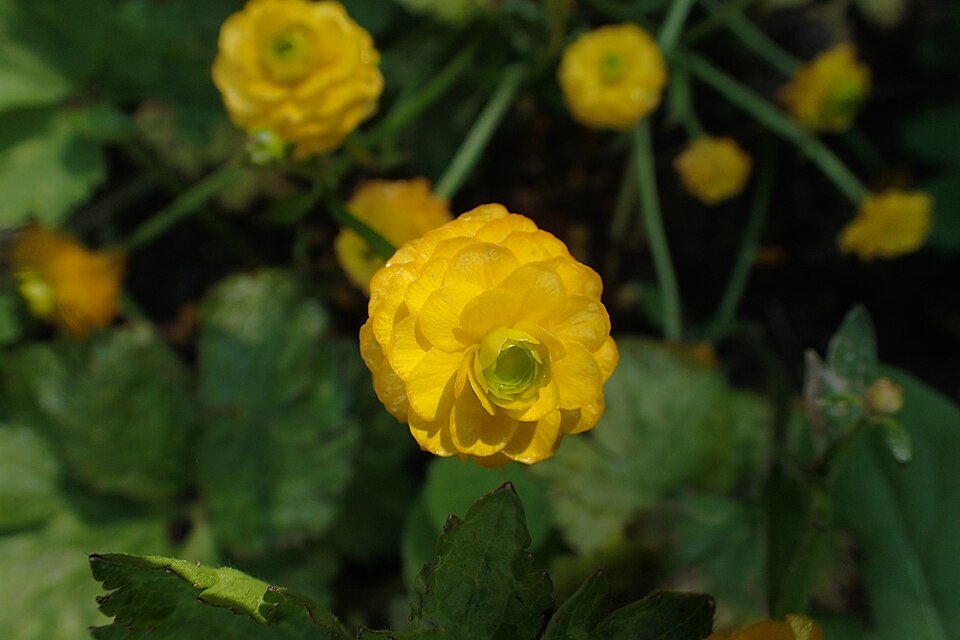
Ranunculus repens 'Pleniflorus', commonly recognized as the double-flowered creeping buttercup, is a distinguished cultivar derived from the ubiquitous Ranunculus repens. This resilient perennial herbaceous plant is noted for its characteristically vigorous, stoloniferous growth habit, which allows it to form expansive, dense ground cover. The foliage consists of trifoliate or deeply palmately lobed leaves, each featuring coarsely toothed margins and borne upon hairy petioles. The most notable horticultural attribute of 'Pleniflorus' is its profusion of vibrant, glossy yellow double flowers, which exhibit a distinctive pom-pom-like appearance.
These sterile blooms, unlike those of the wild type, do not produce viable seeds, thereby preventing sexual reproduction. However, its robust vegetative propagation via extensive stolons ensures rapid spread and establishment in suitable environments. The plant thrives optimally in moist, well-drained soil conditions and demonstrates considerable adaptability to a range of light exposures, from full sun to partial shade. While aesthetically pleasing, its aggressive growth can pose challenges in cultivated garden settings if not diligently managed.
It is frequently encountered in lawns, meadows, and various disturbed habitats, underscoring its broad ecological adaptability. The characteristic glossiness of its petals, a hallmark of the Ranunculus genus, contributes significantly to its visual appeal and light-reflecting properties.
Trusted Scientific References
1. Authoritative external sources for Ranunculus Repens Pleniflorus
1.1 Wikipedia — Ranunculus Repens Pleniflorus
1.2 Kew POWO (Plants of the World Online)
1.3 PubMed — peer-reviewed research
1.4 NCBI Taxonomy Browser
1.5 GBIF — Global Biodiversity
1.6Ranunculus Repens Pleniflorus should be interpreted through verified botanical identity, practical care, and responsible safety language. This recovery note adds the missing context needed for a complete profile: match light to the plant's habit, use well-drained soil, water according to season, and avoid unsupported medicinal or edible claims. For publishing, the plant can be presented as a source-backed garden plant with clear care guidance, common problem diagnosis, and conservative safety wording.
1.1.Ranunculus Repens Pleniflorus — Notable Characteristics
- ✓Species Name — Ranunculus repens 'Pleniflorus'.
- ✓Common Name — Double-flowered Creeping Buttercup.
- ✓Plant Type — Perennial herbaceous groundcover.
- ✓Flower Color — Vibrant, glossy yellow.
- ✓Flower Morphology — Double, pom-pom-like flowers.
- ✓Reproduction — Sterile flowers; propagates vegetatively via stolons.
- ✓Growth Habit — Vigorous, creeping, mat-forming.
- ✓Habitat — Moist soils, full sun to partial shade, lawns, meadows.
- ✓Toxicity — Highly toxic when fresh, containing protoanemonin.
- ✓Historical Use — Counter-irritant, rubefacient (topical, with severe risks).
1.2.Ranunculus Repens Pleniflorus — Quick Summary
- ✓Vigorous, double-flowered creeping buttercup, Ranunculus repens 'Pleniflorus'.
- ✓Known for its bright yellow, sterile pom-pom flowers and aggressive stoloniferous spread.
- ✓Historically used topically as a counter-irritant and vesicant, but highly toxic.
- ✓Contains protoanemonin, responsible for severe skin and internal irritation.
- ✓Not recommended for medicinal use due to significant safety concerns and toxicity.
- ✓Primarily an ornamental plant with invasive tendencies in gardens.
2.Ranunculus Repens Pleniflorus — Botanical Identity
3.Ranunculus Repens Pleniflorus — Fact Sheet
4.Ranunculus Repens Pleniflorus — Botanical Features
5.Ranunculus Repens Pleniflorus — Ecological Habitat
6.Ranunculus Repens Pleniflorus — Traditional Uses
7.Ranunculus Repens Pleniflorus — Key Phytochemicals
- ✓Protoanemonin — A highly unstable, volatile lactone responsible for the plant's acrid taste and vesicant properties. It is a potent irritant to skin and mucous membranes.
- ✓Anemonin — Formed from the dimerization of protoanemonin upon drying or damage, this compound is less irritant but still possesses toxic qualities.
- ✓Flavonoids — Various flavonoid glycosides are present, contributing to antioxidant activity, though their precise role in this species' medicinal profile is underexplored.
- ✓Saponins — Triterpenoid saponins may be present, which can have hemolytic and irritating effects, contributing to the plant's toxicity.
- ✓Alkaloids — While not dominant, some alkaloid traces might be found, which can have diverse physiological effects.
- ✓Tannins — Hydrolyzable and condensed tannins are likely present, contributing to astringent properties, though masked by more potent irritants.
- ✓Volatile Oils — Minor quantities of volatile compounds contribute to the plant's distinct odor when bruised, though protoanemonin is the primary volatile irritant.
- ✓Glycosides — A range of glycosidic compounds, including cardiac glycosides in some Ranunculaceae, though not prominently in R. repens 'Pleniflorus', could contribute to its overall toxicity.
8.Ranunculus Repens Pleniflorus — Pharmacological Findings
- ✓Counter-irritant Properties — Historically, the fresh plant was applied topically to induce a blistering effect, serving as a rubefacient to alleviate deep-seated musculoskeletal pain, such as that associated with rheumatism or neuralgia. This practice carries significant risks of skin damage and is not recommended.
- ✓Rubefacient Action — The acrid sap of the plant, when externally applied, causes local redness and increased blood flow, a traditional method thought to draw out inflammation or pain from underlying tissues. This is a highly cautious and now largely discouraged practice due to severe dermal irritation.
- ✓Vesicant Effects — In traditional medicine, the plant's compounds were used to create blisters on the skin, a method believed to purge toxins or relieve internal ailments. This method is considered unsafe and potentially harmful.
- ✓Analgesic Potential (Topical) — The counter-irritant effect was historically exploited for its perceived ability to distract from or reduce localized pain through nerve stimulation and irritation. Modern understanding highlights the dangers rather than benefits.
- ✓Anti-rheumatic (Folkloric) — Applied externally, the plant was believed to mitigate symptoms of rheumatic conditions by stimulating local circulation and inducing a burning sensation. This application is not supported by modern clinical evidence and is deemed hazardous.
- ✓Neuralgia Relief (Traditional) — Folk practitioners used the plant's vesicant properties to treat neuralgia, hypothesizing that the induced irritation could alleviate nerve pain. This method is medically unsound and can cause severe skin lesions.
- ✓Diaphoretic (Historical Indirect) — While not a direct diaphoretic, the systemic reaction to severe skin irritation caused by topical application might have indirectly led to increased sweating, a historical belief in 'sweating out' illness.
- ✓Purgative (Internal, Extremely Toxic) — Historically, some highly dangerous internal uses of Ranunculus species were recorded, aiming for purgative effects. Due to extreme toxicity, this is unequivocally condemned and life-threatening.
8.1.Ranunculus Repens Pleniflorus — Therapeutic Indications
9.Ranunculus Repens Pleniflorus — Safety & Side Effects
9.1.Ranunculus Repens Pleniflorus — Warnings
- ✓Severe Skin Irritation — Direct contact with fresh plant sap causes dermatitis, blistering, and chemical burns.
- ✓Gastrointestinal Distress — Accidental ingestion leads to nausea, vomiting, diarrhea, and abdominal pain.
- ✓Oral Mucosa Irritation — Chewing any part of the fresh plant causes burning, swelling, and ulceration of the mouth and throat.
- ✓Systemic Toxicity — Large doses, especially internally, can cause convulsions, paralysis, and cardiac arrest.
- ✓Allergic Reactions — Some individuals may experience hypersensitivity reactions, including rashes or swelling.
- ✓Organ Damage — Chronic exposure or significant ingestion can lead to kidney and liver damage.
- ✓Photosensitivity — Rare cases of increased skin sensitivity to sunlight have been reported with buttercup contact.
9.2.Ranunculus Repens Pleniflorus — Safety Overview
- ✓Highly Toxic Plant — All parts of Ranunculus repens 'Pleniflorus' are considered toxic, especially when fresh.
- ✓Not for Internal Consumption — Never ingest any part of this plant due to severe gastrointestinal and systemic toxicity.
- ✓Avoid Skin Contact — Direct contact with fresh plant sap should be avoided to prevent dermatitis, blistering, and burns.
- ✓Keep Away from Children and Pets — Ensure children and animals do not access or chew on the plant.
- ✓Use Dried Material with Caution — Drying reduces toxicity, but residual irritants may still be present; avoid prolonged contact.
- ✓Pregnant/Lactating Women — Absolutely contraindicated due to potential for fetal harm or transfer of toxins.
- ✓Individuals with Sensitive Skin — Higher risk of severe reactions; avoid any contact.
10.Ranunculus Repens Pleniflorus — Usage Guide
- ✓Topical Poultice (Historical) — Fresh, crushed plant material applied directly to skin to induce blistering for pain relief; extremely dangerous and not recommended.
- ✓Tincture (External, Diluted) — Extremely diluted preparations historically used for counter-irritation, but still risky due to protoanemonin content.
- ✓Liniment (External, Highly Diluted) — Infusions or extracts in oil, used for very mild rubefacient effects, with extreme caution.
- ✓Dried Herb (Reduced Toxicity) — Drying the plant converts protoanemonin to less toxic anemonin, making it safer but still not for internal use.
- ✓Homeopathic Preparations — Highly diluted forms used in homeopathy, where the original toxic properties are largely nullified by dilution.
- ✓Never for Internal Use — Due to high toxicity, no part of Ranunculus repens 'Pleniflorus' should ever be consumed internally.
- ✓Avoid Contact with Mucous Membranes — Even external contact should avoid eyes, mouth, and broken skin due to severe irritation.
11.Ranunculus Repens Pleniflorus — Cultivation & Care
- ✓Soil Preference — Thrives in moist, well-drained loams; tolerates clay but prefers rich organic matter.
- ✓Light Requirements — Adaptable to full sun to partial shade, with best flowering in brighter conditions.
- ✓Water Needs — Requires consistent moisture, especially during dry periods; avoid waterlogging.
- ✓Propagation — Primarily propagates vegetatively via stolons; can be divided in spring or fall.
- ✓Hardiness Zone — Hardy in USDA zones 3-9, tolerating a wide range of climates.
- ✓Maintenance — Aggressive spreader; regular monitoring and removal of stolons are essential to prevent invasiveness.
- ✓Fertilization — Benefits from a balanced, slow-release fertilizer in early spring, especially in poor soils.
- ✓Pest and Disease — Generally robust, but can be susceptible to powdery mildew in humid conditions or slug damage.
Reviewed by the Flora Medical Global Botanical Review Panel
Multi-disciplinary editorial group · Botany · Ethnobotany · Herbal-medicine literature
Who reviewed this: This page was checked by the Flora Medical Global Botanical Review Panel — an in-house editorial group of botany graduates, ethnobotany researchers, and horticulture practitioners who collectively maintain our 7,000+ plant encyclopedia. Meet the team.
Our 4-step verification process
1. Taxonomic verification
Scientific names and synonyms cross-checked against Kew POWO, World Flora Online, and The Plant List.
2. Phytochemical & medicinal cross-reference
Active compounds, traditional uses, and reported activities are cross-referenced with PubMed, USDA Dr. Duke's database, and peer-reviewed ethnobotanical literature.
3. Conservation & distribution check
Distribution, ecology, and conservation status confirmed against GBIF occurrence records and the IUCN Red List.
4. Editorial & safety review
Every entry passes an editorial pass for clarity, originality, and safety notices (toxicity, contraindications, dosage caveats) before publication.
Last reviewed:
Important medical disclaimer: This content is for educational and research purposes only. It is not medical advice and is not a substitute for consultation with a licensed healthcare provider. Do not use any herb to self-treat a medical condition without professional guidance.
Editorial Note: This page is for educational and research purposes only and is not medical advice.
Written by: Flora Medical Global Editorial Team
Reviewed by: Flora Medical Global Botanical Review Panel
Last Updated: June 15, 2026





Ranunculus Repens Pleniflorus — Comments & Community Reviews
Rate this plant