
Medical Disclaimer: This content is for educational purposes only. It is not medical advice. Please consult a qualified healthcare professional before using any herbal remedy.
Safety Overview
1.Raphidophora Decursiva — Botanical Snapshot
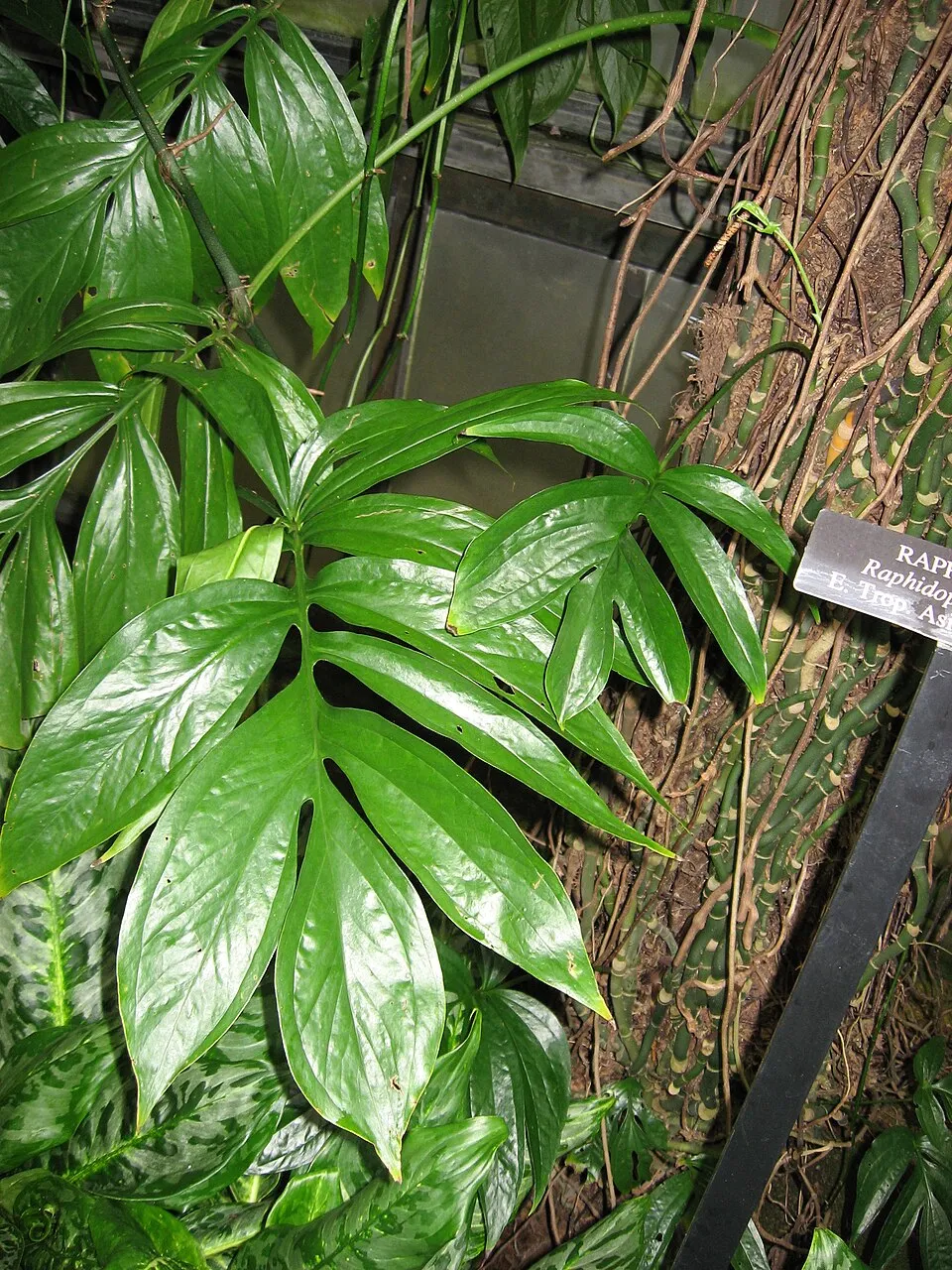
Rhaphidophora decursiva, commonly known as the Dragon Tail Plant or Creeping Philodendron, is a striking perennial hemi-epiphytic vine belonging to the Araceae family. This tropical aroid is characterized by its robust, climbing stems that can extend several meters, utilizing aerial roots to attach to tree trunks or other supports in its natural habitat. The most distinctive feature of Rhaphidophora decursiva is its large, deeply lobed, and highly fenestrated leaves, which develop from heart-shaped juvenile foliage into spectacularly dissected mature forms, typically measuring 20-30 cm (8-12 inches) in length.
The foliage exhibits a glossy texture, enhancing its aesthetic appeal. Native to tropical and subtropical regions of Southeast Asia, including parts of India, China, and Indochina, it thrives in the shaded understory of moist forests, where high humidity and consistent warmth are prevalent. When cultivated as an indoor ornamental, it requires a sturdy support structure to mimic its natural climbing habit and encourage the development of its mature, split leaves.
While primarily valued for its decorative qualities, recent scientific investigations have begun to explore the plant's phytochemical composition and potential medicinal attributes, moving beyond its traditional ornamental classification.
Trusted Scientific References
1. Authoritative external sources for Rhaphidophora decursiva
1.1 Wikipedia — Rhaphidophora decursiva
1.2 Kew POWO (Plants of the World Online)
1.3 PubMed — peer-reviewed research
1.4 NCBI Taxonomy Browser
1.5 GBIF — Global Biodiversity
1.6Raphidophora Decursiva should be interpreted through verified botanical identity, practical care, and responsible safety language. This recovery note adds the missing context needed for a complete profile: match light to the plant's habit, use well-drained soil, water according to season, and avoid unsupported medicinal or edible claims. For publishing, the plant can be presented as a source-backed indoor plant with clear care guidance, common problem diagnosis, and conservative safety wording.
1.1.Raphidophora Decursiva — Notable Characteristics
- ✓Botanical Name — Rhaphidophora decursiva.
- ✓Common Name — Creeping Philodendron, Dragon Tail Plant.
- ✓Family — Araceae (Aroid Family).
- ✓Morphology — Large, deeply lobed, and fenestrated glossy green leaves.
- ✓Growth Habit — Perennial hemi-epiphytic climbing vine with prominent aerial roots.
- ✓Habitat — Native to tropical and subtropical rainforest understories of Southeast Asia.
- ✓Medicinal Potential — In vitro anti-lung cancer activity has been identified in recent research.
- ✓Key Compounds — Phytochemical profile includes flavonoids, terpenoids, and phenolic compounds.
- ✓Toxicity — Contains calcium oxalate crystals, rendering it toxic if ingested and irritating upon contact.
- ✓Ornamental Value — Highly prized as an indoor decorative plant for its unique and attractive foliage.
1.2.Raphidophora Decursiva — Concise Overview
- ✓Ornamental Aroid — A popular climbing vine known for its deeply lobed, glossy foliage.
- ✓Tropical Habitat — Thrives in warm, humid, shaded environments of tropical and subtropical forests.
- ✓Emerging Research — In vitro studies suggest potential anti-lung cancer activity from its extracts.
- ✓Phytochemical Rich — Contains flavonoids, terpenoids, and phenolic compounds with antioxidant potential.
- ✓Toxic if Ingested — Contains calcium oxalate crystals, causing severe irritation if consumed.
- ✓Not for Self-Medication — Lacks human clinical data for safe internal medicinal use.
2.Raphidophora Decursiva — Nomenclature & Classification
3.Raphidophora Decursiva — Key Data
4.Raphidophora Decursiva — Physical Description
5.Raphidophora Decursiva — Native Range & Habitat
6.Raphidophora Decursiva — Traditional Uses
7.Raphidophora Decursiva — Key Phytochemicals
- ✓Flavonoids — Identified in both methanol and ethanol extracts, these polyphenolic compounds are potent antioxidants, contributing to anti-inflammatory and potential anti-cancer effects by scavenging free radicals.
- ✓Terpenoids — Present in the extracts, this diverse class of organic compounds includes mono-, sesqui-, and diterpenes, known for various biological activities such as anti-inflammatory and potential cytotoxic properties.
- ✓Phenolic Compounds — A broad category of secondary metabolites, including phenolic acids and polyphenols, confirmed in the extracts and recognized for their strong antioxidant capacity and protective effects against oxidative stress.
- ✓Glycosides — Compounds characterized by a sugar moiety linked to a non-sugar component (aglycone), detected specifically in the methanol extract, and often exhibiting diverse pharmacological properties.
- ✓Steroids — Lipophilic compounds with a characteristic four-ring carbon skeleton, identified in the ethanol extract, potentially involved in hormonal or cellular regulatory functions.
- ✓Fatty Acids — Essential components of cell membranes and energy storage, commonly found in plant extracts and contributing to overall nutritional and therapeutic profiles.
- ✓Amino Acids — The fundamental building blocks of proteins, vital for plant metabolism and potentially contributing to the nutritional value or subtle biological activities of the extract.
- ✓Carbohydrates — Sugars and starches, serving as fundamental energy sources and structural components, are present in all plant material and can influence extract properties.
8.Raphidophora Decursiva — Pharmacological Findings
- ✓Potential Anti-Lung Cancer Activity — In vitro studies have indicated that extracts of Rhaphidophora decursiva can significantly inhibit the proliferation of human lung cancer cells.
- ✓Cytotoxic Effects — Extracts demonstrate a concentration-dependent cytotoxicity against specific lung cancer cell lines (A549), suggesting direct harm to cancer cells.
- ✓Cell Viability Reduction — Research shows that Rhaphidophora decursiva extracts effectively reduce the overall viability of lung cancer cells, impairing their cellular health.
- ✓Inhibition of Colony Formation — The extracts suppress the ability of lung cancer cells to form colonies, which is crucial for their long-term survival and metastatic potential.
- ✓Cell Cycle Arrest Induction — Studies reveal that Rhaphidophora decursiva extracts induce cell cycle arrest, specifically in the G0/G1 phase, preventing uncontrolled division of cancer cells.
- ✓Apoptosis Induction Potential — Flow cytometry analysis suggests that these extracts may also promote apoptosis, or programmed cell death, in lung cancer cells.
- ✓Rich in Bioactive Compounds — The presence of flavonoids, terpenoids, and phenolic compounds in its extracts provides a strong foundation for its observed therapeutic potential.
- ✓Antioxidant Potential (Inferred) — Based on its rich profile of flavonoids and phenolic compounds, Rhaphidophora decursiva is inferred to possess antioxidant properties, which could protect against oxidative stress.
- ✓Anti-inflammatory Potential (Inferred) — While specific studies on R. decursiva are limited, the Araceae family and its identified phytochemicals suggest possible anti-inflammatory actions.
- ✓Traditional Uses (General Family) — Although not specific to R. decursiva, some members of the Araceae family have been traditionally employed for general wellness and anti-inflammatory purposes.
8.1.Raphidophora Decursiva — Conditions Traditionally Used For
9.Raphidophora Decursiva — Safety Considerations
9.1.Raphidophora Decursiva — Side Effects & Warnings
- ✓Oral Irritation — Ingestion of Rhaphidophora decursiva can cause severe irritation, burning, and swelling of the mouth, throat, and digestive tract due to calcium oxalate crystals.
- ✓Skin Contact Dermatitis — Direct contact with the plant sap may lead to skin irritation, redness, itching, or swelling in sensitive individuals.
- ✓Swelling and Pain — Ingestion symptoms can include significant swelling of the tongue, lips, and throat, potentially leading to difficulty swallowing or breathing.
- ✓Nausea and Vomiting — Gastrointestinal upset, including nausea, vomiting, and stomach pain, is a common adverse effect if plant material is consumed.
- ✓Eye Irritation — Contact with the eyes can cause immediate pain, redness, tearing, and temporary vision disturbances.
- ✓Allergic Reactions — Although rare, individuals may experience allergic responses to plant components, manifesting as skin rashes or respiratory issues.
- ✓Systemic Toxicity (Undetermined) — The long-term effects or potential for systemic toxicity from prolonged exposure or ingestion are not well-documented in humans.
9.2.Raphidophora Decursiva — Safety Profile
- ✓Avoid Ingestion — Rhaphidophora decursiva is toxic if ingested due to insoluble calcium oxalate crystals; keep it strictly out of reach of children and pets.
- ✓Handle with Care — Always wear protective gloves when handling the plant, especially during pruning or repotting, to prevent skin irritation from its sap.
- ✓Eye Protection — Avoid rubbing eyes after handling the plant; in case of contact, rinse eyes thoroughly with copious amounts of water and seek medical attention.
- ✓NOT for Medicinal Use — There is currently insufficient clinical evidence to support the safe internal medicinal use of this plant in humans; it is for ornamental purposes only.
- ✓Pregnant/Nursing Women — Should strictly avoid any internal or significant external contact with R. decursiva due to unknown risks and lack of safety data.
- ✓Individuals with Sensitivities — People with known oxalate sensitivity or a history of skin allergies should exercise extreme caution, even with external contact.
- ✓Veterinary Warning — Ensure pets cannot chew on the plant, as ingestion can cause significant oral irritation and digestive distress in animals.
10.Raphidophora Decursiva — Preparation Methods
- ✓Research Extraction (Methanol) — For scientific investigation, powdered Rhaphidophora decursiva plant material is commonly subjected to Soxhlet extraction using methanol to isolate polar phytochemicals.
- ✓Research Extraction (Ethanol) — Similarly, ethanol extraction is employed in laboratory settings to obtain a broader spectrum of compounds due to its varying polarity for in vitro studies.
- ✓NOT for Self-Medication — Due to insufficient human clinical data and potential toxicity (common in Araceae family members), Rhaphidophora decursiva is strictly not recommended for self-administered medicinal use.
- ✓Ornamental Use — Primarily cultivated as an ornamental houseplant or in tropical gardens, valued for its striking deeply lobed foliage and climbing habit, enhancing aesthetic appeal.
- ✓Traditional External Application (Hypothetical) — While not specific to R. decursiva, some related Araceae species have been traditionally used externally as poultices for certain ailments, requiring extreme caution.
- ✓No Internal Consumption — There are no established safe methods for internal consumption of Rhaphidophora decursiva for medicinal purposes, and ingestion should be actively avoided.
- ✓Consultation with Experts — Any consideration of medicinal use, even based on preliminary research, must be done under the strict guidance of qualified medical and botanical experts.
11.Raphidophora Decursiva — Garden Cultivation
- ✓Light — Provide bright, indirect light; direct sunlight can scorch the glossy leaves of Rhaphidophora decursiva.
- ✓Soil — Plant in a well-draining, moisture-retentive potting mix, ideally an aroid-specific blend rich in organic matter.
- ✓Watering — Water thoroughly when the top 1-2 inches of soil feel dry, ensuring adequate drainage to prevent root rot.
- ✓Humidity — Maintain high humidity levels (60-80%) through regular misting, a pebble tray, or a humidifier, crucial for its tropical origin.
- ✓Temperature — Thrives in warm, consistent temperatures between 65-80°F (18-27°C); avoid cold drafts or temperatures below 55°F (13°C).
- ✓Support — As a climbing vine, provide a sturdy moss pole, trellis, or totem for its aerial roots to anchor, encouraging mature leaf development.
- ✓Fertilization — Feed with a balanced liquid fertilizer diluted to half strength every 2-4 weeks during the active growing season (spring and summer).
- ✓Propagation — Easily propagated via stem cuttings, ensuring each cutting has at least one node and aerial root, then rooting in water or moist substrate.
Reviewed by the Flora Medical Global Botanical Review Panel
Multi-disciplinary editorial group · Botany · Ethnobotany · Herbal-medicine literature
Who reviewed this: This page was checked by the Flora Medical Global Botanical Review Panel — an in-house editorial group of botany graduates, ethnobotany researchers, and horticulture practitioners who collectively maintain our 7,000+ plant encyclopedia. Meet the team.
Our 4-step verification process
1. Taxonomic verification
Scientific names and synonyms cross-checked against Kew POWO, World Flora Online, and The Plant List.
2. Phytochemical & medicinal cross-reference
Active compounds, traditional uses, and reported activities are cross-referenced with PubMed, USDA Dr. Duke's database, and peer-reviewed ethnobotanical literature.
3. Conservation & distribution check
Distribution, ecology, and conservation status confirmed against GBIF occurrence records and the IUCN Red List.
4. Editorial & safety review
Every entry passes an editorial pass for clarity, originality, and safety notices (toxicity, contraindications, dosage caveats) before publication.
Last reviewed:
Important medical disclaimer: This content is for educational and research purposes only. It is not medical advice and is not a substitute for consultation with a licensed healthcare provider. Do not use any herb to self-treat a medical condition without professional guidance.
Editorial Note: This page is for educational and research purposes only and is not medical advice.
Written by: Flora Medical Global Editorial Team
Reviewed by: Flora Medical Global Botanical Review Panel
Last Updated: June 15, 2026





Raphidophora Decursiva — Comments & Community Reviews
Rate this plant