
Medical Disclaimer: This content is for educational purposes only. It is not medical advice. Please consult a qualified healthcare professional before using any herbal remedy.
Safety Overview
1.Raphidophora Korthalsii — At a Glance
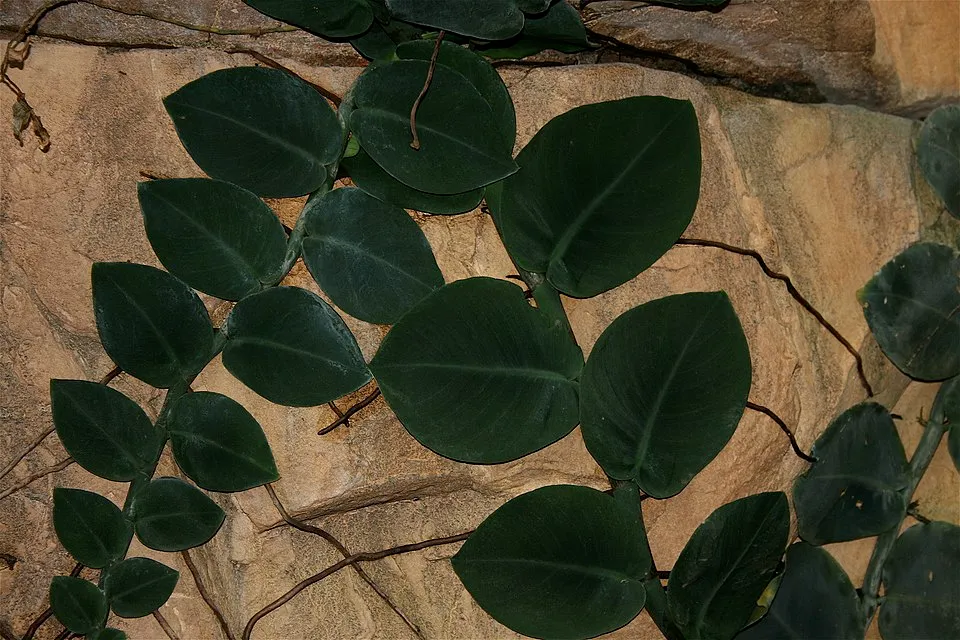
Rhaphidophora korthalsii, commonly known as Dragon Tail or Shingle Plant, is a striking perennial climbing vine indigenous to the humid tropical rainforests of Southeast Asia, with a native distribution spanning Malaysia, Indonesia, and Singapore. Belonging to the Araceae family, this plant is characterized by its distinctive foliage.
The leaves are typically heart-shaped to ovate, with a glossy, dark green surface and a somewhat leathery texture that aids in moisture retention within its naturally moist environment. These leaves can achieve impressive sizes, often reaching up to 30 centimeters in length, and are known for their habit of 'shingling' or pressing flat against tree trunks as the plant climbs, an adaptation to maximize light capture in dense forest understories.
As a hemiepiphyte, Rhaphidophora korthalsii utilizes robust aerial roots to anchor itself firmly to host trees or other structures, allowing it to ascend considerable heights. While its inflorescences, consisting of a characteristic spadix enveloped by a spathe, are less frequently observed in cultivated settings, they are typical of the Araceae family.
In horticultural contexts, particularly as an indoor ornamental, the plant is prized for its unique foliage and its adaptability to varied indoor conditions, making it a popular choice for tropical plant enthusiasts.
Trusted Scientific References
1. Authoritative external sources for Rhaphidophora korthalsii
1.1 Wikipedia — Rhaphidophora korthalsii
1.2 Kew POWO (Plants of the World Online)
1.3 PubMed — peer-reviewed research
1.4 NCBI Taxonomy Browser
1.5 GBIF — Global Biodiversity
1.6Raphidophora Korthalsii should be interpreted through verified botanical identity, practical care, and responsible safety language. This recovery note adds the missing context needed for a complete profile: match light to the plant's habit, use well-drained soil, water according to season, and avoid unsupported medicinal or edible claims. For publishing, the plant can be presented as a source-backed indoor plant with clear care guidance, common problem diagnosis, and conservative safety wording.
1.1.Raphidophora Korthalsii — Distinguishing Points
- ✓Botanical Name — Rhaphidophora korthalsii, a member of the Araceae family.
- ✓Common Names — Dragon Tail, Shingle Plant, due to its unique leaf growth habit.
- ✓Native Habitat — Tropical rainforests of Southeast Asia, including Malaysia and Indonesia.
- ✓Morphological Traits — Large, glossy, heart-shaped leaves that 'shingle' on surfaces.
- ✓Medicinal Uses — Traditional Chinese Medicine for cancer and skin conditions.
- ✓Immunomodulatory — Research shows enhanced Natural Killer cell cytotoxicity.
- ✓Active Compounds — Rich in phenolics, flavonoids, and indole derivatives like DHI.
- ✓Horticultural Value — Popular as an ornamental houseplant for its unique foliage.
- ✓Aerial Roots — Produces strong aerial roots for climbing and support.
- ✓Hemiepiphytic Nature — Begins life rooted in soil, then climbs and can become epiphytic.
1.2.Raphidophora Korthalsii — Quick Summary
- ✓Rhaphidophora korthalsii is a Southeast Asian climbing vine from the Araceae family.
- ✓Traditionally used in TCM for cancer and skin diseases, known as Dragon Tail.
- ✓Scientific research confirms immunomodulatory effects, boosting NK cell activity.
- ✓Contains active compounds like 5,6-dihydroxyindole (DHI) with cytotoxic potential.
- ✓Requires careful preparation due to calcium oxalate crystals; avoid raw ingestion.
- ✓Popular ornamental plant, also valued for potential air purification.
2.Raphidophora Korthalsii — Nomenclature & Classification
3.Raphidophora Korthalsii — Vital Statistics
4.Raphidophora Korthalsii — Physical Description
5.Raphidophora Korthalsii — Native Range & Habitat
6.Raphidophora Korthalsii — Folk Medicine Applications
7.Raphidophora Korthalsii — Key Phytochemicals
- ✓Phenolic Compounds — These are a broad group of phytochemicals, including various phenolic acids, known for their strong antioxidant and anti-inflammatory properties within Rhaphidophora korthalsii.
- ✓Flavonoids — A class of polyphenolic compounds, such as quercetin derivatives, contributing significantly to the plant's antioxidant capacity and potentially offering anti-inflammatory and immunomodulatory effects.
- ✓Indole Derivatives — Notably, 5,6-dihydroxyindole (DHI) has been identified as a key active ingredient, exhibiting significant cytotoxic activity against cancerous cell lines.
- ✓Terpenoids — A diverse group of organic compounds that may contribute to the plant's aroma, defense mechanisms, and potentially possess anti-inflammatory or antimicrobial properties.
- ✓Alkaloids — Nitrogen-containing organic compounds, often with potent pharmacological activities, though specific alkaloids in Rhaphidophora korthalsii require further detailed identification.
- ✓Saponins — Glycosides that can have foam-forming properties and are investigated for their potential immunomodulatory and cytotoxic effects, often found in various medicinal plants.
- ✓Tannins — Astringent polyphenols that can bind to proteins, potentially offering antimicrobial, anti-inflammatory, and antioxidant benefits, contributing to traditional uses for skin conditions.
- ✓Glycosides — Various compounds linked to a sugar molecule, which can influence their solubility, stability, and bioavailability, often responsible for diverse biological activities.
- ✓Steroids — Plant sterols and other steroid-like compounds may be present, contributing to the overall pharmacological profile, potentially affecting hormone regulation or inflammation.
8.Raphidophora Korthalsii — Evidence-Based Benefits
- ✓Immune System Modulation — Ethanolic extracts of Rhaphidophora korthalsii have demonstrated the ability to stimulate immune cell proliferation, specifically enhancing Natural Killer (NK) cell populations and their cytotoxic activity against target cells in in vivo studies.
- ✓Anti-Cancer Potential — Traditionally utilized in Traditional Chinese Medicine (TCM) for cancer treatment, research indicates that various extracts exert cytotoxic effects on different cancerous cell lines.
- ✓Skin Disease Treatment — Within traditional Chinese herbal medicine, Rhaphidophora korthalsii has been historically applied topically to address various skin ailments and conditions.
- ✓Antioxidant Activity — The presence of phenolic compounds and flavonoids contributes to the plant's antioxidant capacity, helping to neutralize free radicals and protect cellular integrity from oxidative stress.
- ✓Anti-inflammatory Effects — Phytochemicals like flavonoids and other phenolic compounds suggest potential anti-inflammatory properties, which could be beneficial in mitigating inflammatory responses.
- ✓Enhanced Cytokine Production — Studies have observed an increase in crucial plasma cytokines such as Interleukin-2 (IL-2) and Interferon-gamma (IFN-γ), vital for regulating robust immune responses and cellular immunity.
- ✓Cellular Proliferation Support — Methanol extracts have been shown to stimulate the proliferation of murine splenocytes and human peripheral blood mononuclear cells (PBMC), indicating broader immune system support.
- ✓Cytotoxic Effects — Specific compounds, notably 5,6-dihydroxyindole (DHI), have been identified for their direct cytotoxic activity against certain cancer cell lines, including P388 and non-melanocytic types.
- ✓Respiratory Support — Traditional uses in some Southeast Asian communities suggest potential benefits for respiratory complaints, though scientific validation is limited.
- ✓General Wellness Tonic — Due to its immune-boosting properties, Rhaphidophora korthalsii is considered a general wellness tonic in some traditional practices, aimed at enhancing overall vitality.
8.1.Raphidophora Korthalsii — Reported Uses
9.Raphidophora Korthalsii — Cautions & Contraindications
9.1.Raphidophora Korthalsii — Side Effects & Warnings
- ✓Allergic Reactions — Individuals sensitive to plants in the Araceae family may experience skin irritation, itching, or allergic dermatitis upon contact.
- ✓Gastrointestinal Upset — Oral consumption, especially of raw or improperly prepared plant material, may lead to nausea, vomiting, or diarrhea due to calcium oxalate crystals.
- ✓Oral Irritation — The presence of calcium oxalate raphides can cause immediate irritation, burning sensation, and swelling of the mouth and throat if ingested directly.
- ✓Drug Interactions — Potential for interaction with immunosuppressants, as the plant exhibits immunomodulatory effects, requiring caution and medical consultation.
- ✓Toxicity at High Doses — Unregulated or excessively high doses of extracts may lead to adverse systemic effects, necessitating adherence to recommended dosages.
- ✓Photosensitivity — While not widely reported, some plant compounds can induce photosensitivity in susceptible individuals, especially with topical use.
- ✓Hepatic or Renal Burden — Long-term or high-dose use of certain plant extracts can potentially stress liver and kidney functions, especially in individuals with pre-existing conditions.
9.2.Raphidophora Korthalsii — Safety Profile
- ✓Pregnancy and Lactation — Avoid use during pregnancy and lactation due to insufficient safety data and the potential for uterine stimulation or unknown effects on infants.
- ✓Children — Not recommended for use in children due to lack of established safety guidelines and potential for adverse reactions.
- ✓Pre-existing Conditions — Individuals with autoimmune disorders, organ transplant recipients, or those on immunosuppressant medications should avoid use without medical supervision.
- ✓Oral Ingestion Warning — Raw plant material should never be ingested due to the presence of calcium oxalate crystals, which can cause severe oral and gastrointestinal irritation.
- ✓Topical Application — Exercise caution with topical use; perform a patch test on a small skin area first to check for allergic reactions or irritation.
- ✓Professional Guidance — Always consult a qualified healthcare professional or medical herbalist before using Rhaphidophora korthalsii for medicinal purposes.
- ✓Storage — Store dried plant material or extracts in a cool, dark, and dry place, away from direct sunlight and moisture, to maintain potency and prevent degradation.
10.Raphidophora Korthalsii — Usage Guide
- ✓Ethanolic Extract — Leaves can be processed into an ethanolic extract, as used in research, for potential immunomodulatory effects. This requires specialized extraction techniques.
- ✓Methanol Extract — Preparation involves soaking dried leaf powder in methanol, followed by filtration and evaporation, yielding an extract used in studies for immune cell proliferation.
- ✓Decoction for Oral Use — In traditional practices, dried leaves or parts of the plant may be boiled to create a decoction, consumed for internal medicinal benefits, particularly immune support.
- ✓Topical Poultice — For skin conditions, fresh or dried, powdered leaves might be prepared into a paste or poultice and applied directly to the affected skin area.
- ✓Infusion — A less concentrated preparation than a decoction, an infusion can be made by steeping dried leaves in hot water, typically for milder applications or as a tonic.
- ✓Tincture — A concentrated liquid extract made by macerating plant material in alcohol, suitable for precise dosing and longer shelf life.
- ✓Powdered Form — Dried leaves can be ground into a fine powder, which can then be encapsulated, mixed into beverages, or incorporated into topical formulations.
11.Raphidophora Korthalsii — Garden Cultivation
- ✓Soil Preference — Rhaphidophora korthalsii thrives in well-draining, rich potting soil, ideally an aroid mix with good aeration.
- ✓Watering Schedule — Water thoroughly when the top inch or two of soil feels dry to the touch, allowing excess water to drain to prevent root rot.
- ✓Humidity Requirements — This tropical vine prefers high humidity, ideally above 60%, benefiting from regular misting or placement near a humidifier.
- ✓Light Conditions — Prefers bright, indirect light; direct sunlight can scorch its leaves. It tolerates lower light but growth may be slower.
- ✓Fertilization — During its active growing season (spring and summer), fertilize every 2-4 weeks with a balanced liquid fertilizer diluted to half strength.
- ✓Pruning Techniques — Regular pruning helps encourage bushier growth and can be used to manage its climbing habit, especially for indoor cultivation.
- ✓Support Structure — Provide a moss pole or trellis for its aerial roots to cling to, mimicking its natural climbing behavior and promoting larger leaf development.
- ✓Temperature Range — Maintain temperatures between 18-29°C (65-85°F); avoid cold drafts and temperatures below 15°C (60°F).
Reviewed by the Flora Medical Global Botanical Review Panel
Multi-disciplinary editorial group · Botany · Ethnobotany · Herbal-medicine literature
Who reviewed this: This page was checked by the Flora Medical Global Botanical Review Panel — an in-house editorial group of botany graduates, ethnobotany researchers, and horticulture practitioners who collectively maintain our 7,000+ plant encyclopedia. Meet the team.
Our 4-step verification process
1. Taxonomic verification
Scientific names and synonyms cross-checked against Kew POWO, World Flora Online, and The Plant List.
2. Phytochemical & medicinal cross-reference
Active compounds, traditional uses, and reported activities are cross-referenced with PubMed, USDA Dr. Duke's database, and peer-reviewed ethnobotanical literature.
3. Conservation & distribution check
Distribution, ecology, and conservation status confirmed against GBIF occurrence records and the IUCN Red List.
4. Editorial & safety review
Every entry passes an editorial pass for clarity, originality, and safety notices (toxicity, contraindications, dosage caveats) before publication.
Last reviewed:
Important medical disclaimer: This content is for educational and research purposes only. It is not medical advice and is not a substitute for consultation with a licensed healthcare provider. Do not use any herb to self-treat a medical condition without professional guidance.
Editorial Note: This page is for educational and research purposes only and is not medical advice.
Written by: Flora Medical Global Editorial Team
Reviewed by: Flora Medical Global Botanical Review Panel
Last Updated: June 15, 2026





Raphidophora Korthalsii — Comments & Community Reviews
Rate this plant