
Medical Disclaimer: This content is for educational purposes only. It is not medical advice. Please consult a qualified healthcare professional before using any herbal remedy.
Safety Overview
1.Ravensara — Botanical Snapshot
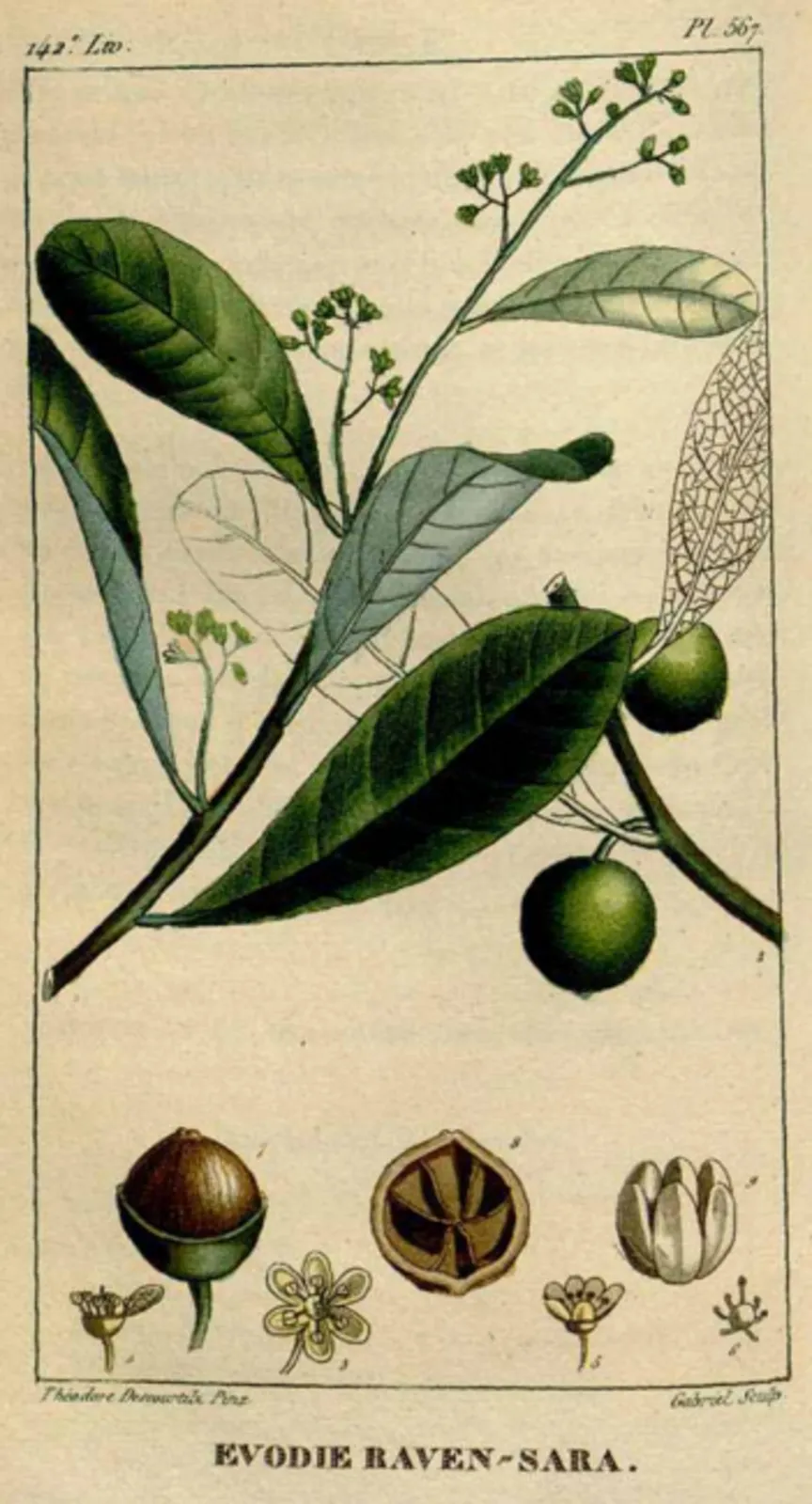
Ravensara (Ravensara aromatica) is a majestic, medium-sized evergreen tree indigenous to the humid tropical forests of Madagascar, typically reaching impressive heights of 10 to 25 meters. Its botanical classification places it within the esteemed Lauraceae family, an order known for many aromatic species. The leaves are a striking feature, ovate in shape, glossy dark green, and substantial, measuring between 10 to 30 cm in length and 4 to 10 cm in width.
When crushed, these leaves release a distinctly aromatic scent, a characteristic that lends the tree its common moniker, 'aromatic Ravensara,' and is the source of its valuable essential oil. The tree's bark presents a texture ranging from smooth to slightly rough, adorned in shades of light brown to greyish. During its flowering phase, Ravensara produces small, inconspicuous greenish-yellow to white flowers, arranged in delicate clusters.
These blossoms are composed of six petal-like segments, forming a star-like pattern, which eventually give way to small, round fruits, each containing a single seed. Ravensara thrives in specific ecological niches, preferring well-drained, fertile soils and environments with abundant rainfall, typically receiving an annual mean of 1,500 mm to 3,000 mm. Taxonomically, it belongs to the order Laurales, underscoring its ancient lineage and significance within the plant kingdom.
Trusted Scientific References
1. Authoritative external sources for Ravensara aromatica
1.1 Wikipedia — Ravensara aromatica
1.2 Kew POWO (Plants of the World Online)
1.3 PubMed — peer-reviewed research
1.4 NCBI Taxonomy Browser
1.5 GBIF — Global Biodiversity
1.6Ravensara should be interpreted through verified botanical identity, practical care, and responsible safety language. This recovery note adds the missing context needed for a complete profile: match light to the plant's habit, use well-drained soil, water according to season, and avoid unsupported medicinal or edible claims. For publishing, the plant can be presented as a source-backed medicinal plant with clear care guidance, common problem diagnosis, and conservative safety wording.
1.1.Ravensara — Highlights
- ✓Native to Madagascar's — Native to Madagascar's humid tropical forests.
- ✓Source of potent — Source of potent essential oil from its highly aromatic leaves.
- ✓Renowned for significant — Renowned for significant immune system support.
- ✓Effective in aiding — Effective in aiding respiratory health and alleviating congestion.
- ✓Possesses notable anti — inflammatory and antiviral properties.
- ✓Contains a distinct — Contains a distinct chemical profile rich in monoterpenes and lower estragole in leaf oil.
- ✓Traditionally used in — Traditionally used in Madagascan medicine for various ailments.
- ✓Contributes to stress — Contributes to stress relief and promotes restful sleep.
- ✓Classified as 'Near — Classified as 'Near Threatened' on the IUCN Red List, emphasizing conservation.
- ✓A versatile botanical — A versatile botanical with applications in aromatherapy and herbalism.
1.2.Ravensara — Concise Overview
- ✓Ravensara aromatica is a Madagascan tree known for its highly aromatic leaves.
- ✓Its essential oil is prized for immune-boosting and respiratory support properties.
- ✓Key benefits include anti-inflammatory, antiviral, and calming effects.
- ✓Always use the leaf oil and ensure proper dilution for safety.
- ✓It is a valuable natural remedy for colds, flu, and muscular pain.
- ✓Conservation efforts are important due to its 'Near Threatened' status.
2.Ravensara — Scientific Identity
3.Ravensara — Key Data
4.Ravensara — Botanical Features
5.Ravensara — Native Range & Habitat
6.Ravensara — Folk Medicine Applications
7.Ravensara — Chemical Profile
- ✓Monoterpenes — Compounds such as Limonene, Sabinene, alpha-Pinene, beta-Myrcene, and alpha-Terpinene are abundant, contributing to Ravensara's characteristic aroma and possessing notable anti-inflammatory, antiseptic, and bronchodilatory properties.
- ✓Phenylpropanoids — Estragole (Methyl Chavicol) is a significant component, particularly in the leaf oil at lower concentrations (2.4-11.9%), contributing antispasmodic and calming effects, though its higher presence in bark oil necessitates caution.
- ✓Sesquiterpenes — Beta-Caryophyllene is present, known for its anti-inflammatory and analgesic activities, which contribute to the oil's pain-relieving potential.
- ✓Monoterpenols — Linalool is a key alcohol in the essential oil, recognized for its calming, anxiolytic, and antimicrobial properties, enhancing the oil's therapeutic versatility.
- ✓Alkaloids — While not primary constituents of the essential oil, the whole plant contains various alkaloids that contribute to its broader pharmacological profile and traditional uses.
- ✓Flavonoids — These polyphenolic compounds are present in the leaves, acting as potent antioxidants and contributing to the plant's anti-inflammatory and immune-modulating effects.
- ✓Terpenoids — A broad category encompassing both monoterpenes and sesquiterpenes, these are the primary active compounds responsible for the essential oil's aromatic and therapeutic properties.
- ✓Phenolic Acids — These organic acids contribute to the plant's antioxidant capacity and may play a role in its antimicrobial and anti-inflammatory activities.
- ✓Oxides — 1,8-Cineole, though less prominent than in Ravintsara, may be present in trace amounts, contributing to respiratory support.
8.Ravensara — Scientific Evidence
- ✓Immune System Support — Ravensara aromatica is highly regarded for its ability to bolster the body's natural defenses, particularly against seasonal challenges, by supporting cytokine production and cellular immunity.
- ✓Respiratory Tract Support — This plant's essential oil is valued for its expectorant and decongestant qualities, which help to clear airways and soothe irritation associated with common colds, bronchitis, and influenza.
- ✓Antiviral Activity — Traditional and some modern applications suggest Ravensara possesses properties that may inhibit the replication of certain viruses, making it beneficial for conditions like cold sores and shingles.
- ✓Anti-inflammatory Effects — Bioactive compounds within Ravensara contribute to its capacity to reduce inflammation, offering relief for conditions involving joint and muscular pain.
- ✓Analgesic Properties — When applied topically, diluted Ravensara oil may help alleviate localized pain, making it a natural choice for soothing discomfort in muscles and joints.
- ✓Stress and Insomnia Relief — Certain constituents in Ravensara have demonstrated calming effects on the nervous system, potentially aiding in reducing anxiety and promoting restful sleep, as reported in some aromatherapy contexts.
- ✓Antioxidant Protection — The plant contains various phytochemicals that act as antioxidants, helping to neutralize free radicals and protect cells from oxidative stress and damage.
- ✓Digestive Health — Traditionally, Ravensara has been used to support digestive wellness, potentially by easing discomfort and promoting a balanced gut environment.
- ✓General Wellness Promotion — Beyond specific ailments, Ravensara is often incorporated into holistic practices for its overall tonic and revitalizing effects on the body and mind.
- ✓Antispasmodic Action — Its constituents can help relax smooth muscles, which may be beneficial for easing coughs, cramps, and other spasmodic conditions.
8.1.Ravensara — Indications & Uses
9.Ravensara — Safety & Side Effects
9.1.Ravensara — Reported Side Effects
- ✓Skin Sensitization — Undiluted Ravensara essential oil may cause skin irritation or sensitization, especially in individuals with sensitive skin; always perform a patch test.
- ✓Allergic Reactions — Some individuals may experience allergic contact dermatitis, presenting as redness, itching, or rash upon topical application.
- ✓Internal Use Contraindication — Ravensara essential oil should generally not be taken internally without expert guidance due to the concentration of active compounds and potential toxicity.
- ✓High Estragole Content (Bark Oil) — Oil distilled from the bark of Ravensara aromatica contains significantly higher levels of Estragole (Methyl Chavicol), a potentially hepatotoxic and carcinogenic compound, and should be strictly avoided.
- ✓Pregnancy and Lactation — Due to insufficient safety data, pregnant and breastfeeding individuals should avoid using Ravensara essential oil.
- ✓Children and Infants — Use with extreme caution and only under the guidance of a qualified practitioner, with significantly lower dilution rates for children.
- ✓Drug Interactions — Potential interactions with certain medications, particularly those metabolized by the liver, are possible; consult a healthcare provider.
9.2.Ravensara — Clinical Safety Notes
- ✓External Use Only — Ravensara essential oil is primarily for external application and aromatic diffusion; internal use is generally not recommended without expert supervision.
- ✓Proper Dilution — Always dilute Ravensara essential oil with a suitable carrier oil (e.g., 0.12% dermal maximum for leaf oil) before applying to the skin to prevent irritation.
- ✓Patch Testing — Conduct a small patch test on a discreet area of skin to check for any adverse reactions before broader application.
- ✓Avoid Bark Oil — Ensure that any Ravensara oil used is specifically derived from the leaves of Ravensara aromatica, as bark oil contains dangerously high levels of Estragole.
- ✓Consult a Professional — Individuals who are pregnant, breastfeeding, epileptic, have liver damage, cancer, or other medical conditions, or are taking medications, should consult a qualified aromatherapy practitioner or physician before use.
- ✓Keep Out of Reach — Store essential oils safely away from children and pets to prevent accidental ingestion or misuse.
- ✓Airway Sensitivity — Avoid direct application near the eyes or mucous membranes, and use diffusers in well-ventilated areas to prevent respiratory irritation in sensitive individuals.
10.Ravensara — Preparations & Uses
- ✓Aromatherapy Diffusion — Add a few drops of Ravensara essential oil to an ultrasonic diffuser to purify the air, support respiratory function, or promote relaxation.
- ✓Topical Application (Diluted) — Blend Ravensara essential oil with a carrier oil (e.g., jojoba, almond) at a 0.5-2% dilution rate for massage on muscles, joints, or chest to alleviate discomfort or congestion.
- ✓Inhalation — Directly inhale a drop of oil from a tissue or via a personal inhaler for immediate respiratory relief or to calm the mind.
- ✓Aromatic Bath — Disperse 5-10 drops of Ravensara essential oil in a bath dispersant (e.g., Epsom salts, carrier oil) before adding to warm bathwater for a soothing and immune-boosting soak.
- ✓Compresses — Create a warm compress by adding 2-3 drops of diluted Ravensara oil to warm water, soaking a cloth, and applying it to sore areas or the chest.
- ✓Steam Inhalation — Add 1-2 drops of Ravensara essential oil to a bowl of hot water, cover your head with a towel, and inhale the aromatic steam carefully to clear nasal passages and soothe the throat.
- ✓Traditional Decoctions — In some traditional practices, dried Ravensara leaves are prepared as decoctions or infusions for internal use, though this method is less common in modern aromatherapy due to oil concentration.
11.Ravensara — Cultivation & Care
- ✓Climate Preference — Ravensara thrives in tropical to subtropical climates with high humidity and consistent warmth, mirroring its native Madagascan environment.
- ✓Soil Requirements — It necessitates well-drained, fertile soils, ideally with a slightly acidic to neutral pH, enriched with organic matter for optimal growth.
- ✓Sunlight Exposure — Adequate sunlight is crucial; the tree prefers full sun to partial shade, especially when young, to support robust photosynthesis and oil production.
- ✓Watering Regimen — Regular and consistent watering is essential, particularly during dry spells, to maintain the high moisture levels it naturally prefers.
- ✓Propagation — Ravensara can be propagated from seeds, which require specific stratification, or more commonly from cuttings, ensuring genetic consistency.
- ✓Pest and Disease Management — The tree generally exhibits good natural resistance to common pests and diseases, minimizing the need for extensive chemical interventions.
- ✓Harvesting — Leaves are typically harvested from mature trees, carefully selected for optimal essential oil yield, usually through steam distillation to extract the aromatic compounds.
- ✓Conservation Status — Given its 'Near Threatened' status, sustainable harvesting practices and cultivation efforts are vital to protect this valuable species.
Reviewed by the Flora Medical Global Botanical Review Panel
Multi-disciplinary editorial group · Botany · Ethnobotany · Herbal-medicine literature
Who reviewed this: This page was checked by the Flora Medical Global Botanical Review Panel — an in-house editorial group of botany graduates, ethnobotany researchers, and horticulture practitioners who collectively maintain our 7,000+ plant encyclopedia. Meet the team.
Our 4-step verification process
1. Taxonomic verification
Scientific names and synonyms cross-checked against Kew POWO, World Flora Online, and The Plant List.
2. Phytochemical & medicinal cross-reference
Active compounds, traditional uses, and reported activities are cross-referenced with PubMed, USDA Dr. Duke's database, and peer-reviewed ethnobotanical literature.
3. Conservation & distribution check
Distribution, ecology, and conservation status confirmed against GBIF occurrence records and the IUCN Red List.
4. Editorial & safety review
Every entry passes an editorial pass for clarity, originality, and safety notices (toxicity, contraindications, dosage caveats) before publication.
Last reviewed:
Important medical disclaimer: This content is for educational and research purposes only. It is not medical advice and is not a substitute for consultation with a licensed healthcare provider. Do not use any herb to self-treat a medical condition without professional guidance.
Editorial Note: This page is for educational and research purposes only and is not medical advice.
Written by: Flora Medical Global Editorial Team
Reviewed by: Flora Medical Global Botanical Review Panel
Last Updated: June 15, 2026




Ravensara — Comments & Community Reviews
Rate this plant