
Medical Disclaimer: This content is for educational purposes only. It is not medical advice. Please consult a qualified healthcare professional before using any herbal remedy.
Safety Overview
1.Red Hot Poker — Overview
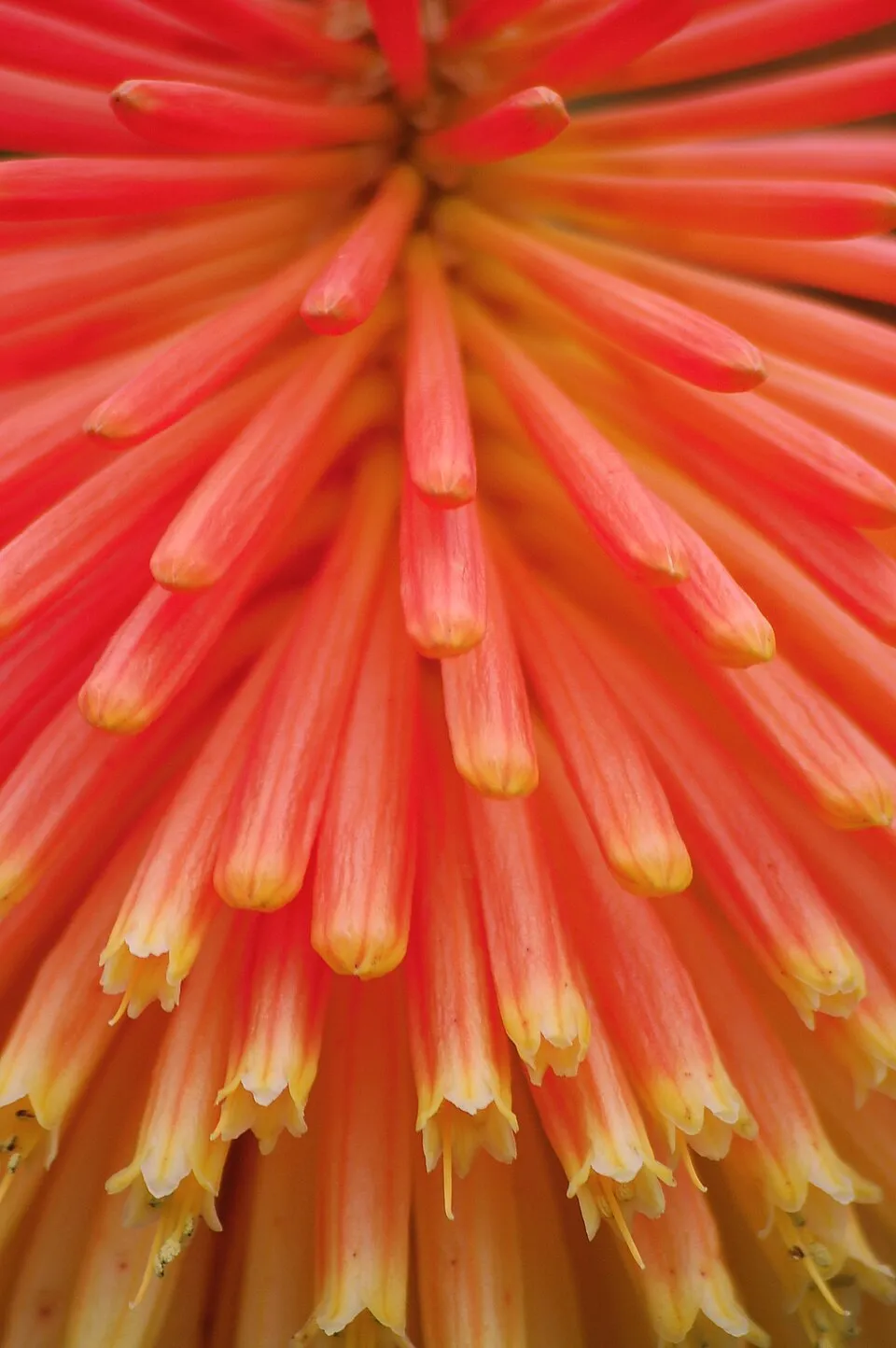
Kniphofia rooperi, commonly known as Rooper's Red Hot Poker or simply Red Hot Poker, is a striking ornamental perennial native to the Eastern Cape of South Africa, belonging to the family Asphodelaceae. This robust species is celebrated for its dramatic, torch-like flower spikes that emerge in late summer and autumn, providing a vibrant display when many other garden plants begin to wane. The inflorescence is a dense, cylindrical raceme, typically measuring 15-30 cm in length, densely packed with tubular flowers.
These flowers exhibit a captivating color gradient, transitioning from bright orange at the tips to a deeper red or scarlet at the base, often with subtle yellow or green accents. The individual flowers are pendulous, with prominent stamens and styles that extend beyond the petals, creating a delicate, feathery appearance. Complementing its fiery blooms, the plant forms a substantial, fountain-like clump of long, arching, strap-like leaves.
These dark green, somewhat leathery leaves can reach over a meter in length, contributing a significant architectural presence throughout the growing season. Kniphofia rooperi grows from a thick, woody rhizome, enabling its perennial nature and gradual spread. It thrives in full sun and well-drained, sandy or loamy soils, demonstrating good drought tolerance once established, making it a valuable choice for water-wise landscapes and attracting pollinators.
Trusted Scientific References
1. Authoritative external sources for Kniphofia rooperi
1.1 Wikipedia — Kniphofia rooperi
1.2 Kew POWO (Plants of the World Online)
1.3 PubMed — peer-reviewed research
1.4 NCBI Taxonomy Browser
1.5 GBIF — Global Biodiversity
1.6Red Hot Poker should be interpreted through verified botanical identity, practical care, and responsible safety language. This recovery note adds the missing context needed for a complete profile: match light to the plant's habit, use well-drained soil, water according to season, and avoid unsupported medicinal or edible claims. For publishing, the plant can be presented as a source-backed garden plant with clear care guidance, common problem diagnosis, and conservative safety wording.
1.1.Red Hot Poker — Key Features
- ✓Striking ornamental perennial with torch — like flower spikes.
- ✓Native to the — Native to the Eastern Cape of South Africa.
- ✓Member of the — Member of the Asphodelaceae family, related to Aloes.
- ✓Flowers transition from — Flowers transition from orange to red, appearing in late summer/autumn.
- ✓Forms dense clumps of long, arching, strap — like foliage.
- ✓Grows from a — Grows from a robust, woody rhizome.
- ✓Drought — tolerant once established, suitable for xeriscaping.
- ✓Attracts pollinators, including — Attracts pollinators, including hummingbirds and bees.
- ✓Contains naphthoquinones like — Contains naphthoquinones like knipholone, unique to the genus.
- ✓Traditional uses include anti — inflammatory and wound-healing applications.
1.2.Red Hot Poker — Snapshot Summary
- ✓Red Hot Poker (Kniphofia rooperi) is a South African perennial known for vibrant, torch-like flowers.
- ✓Possesses traditional medicinal uses for inflammation, wounds, and infections.
- ✓Rich in anthraquinones, naphthoquinones, and flavonoids with diverse bioactivities.
- ✓Thrives in full sun and well-drained soil, making it a drought-tolerant garden plant.
- ✓Requires careful handling due to potential skin irritation and internal toxicity risks.
- ✓Further scientific research is needed to fully validate its pharmacological potential.
2.Red Hot Poker — Scientific Profile
3.Red Hot Poker — Reference Facts
4.Red Hot Poker — Plant Morphology
5.Red Hot Poker — Geographic Distribution
6.Red Hot Poker — Cultural & Traditional Roles
7.Red Hot Poker — Secondary Metabolites
- ✓Anthraquinones — These compounds, such as emodin and aloe-emodin, are known for their laxative, antimicrobial, and anti-inflammatory properties.
- ✓Naphthoquinones — Including knipholone, these are characteristic to the genus Kniphofia and exhibit diverse biological activities like antiplasmodial and anticancer effects.
- ✓Flavonoids — Quercetin, kaempferol, and their glycosides contribute to antioxidant, anti-inflammatory, and cardioprotective effects.
- ✓Phenolic Acids — Gallic acid and caffeic acid derivatives provide antioxidant and anti-inflammatory benefits.
- ✓Saponins — These triterpenoid glycosides can have expectorant, anti-inflammatory, and immune-modulating properties.
- ✓Alkaloids — While less prominent than in other plant families, some nitrogen-containing compounds may contribute to pharmacological actions.
- ✓Triterpenoids — Compounds like ursolic acid and oleanolic acid are often associated with anti-inflammatory and anticancer activities.
- ✓Polysaccharides — Gums and mucilages can offer demulcent properties, soothing irritated tissues and supporting gut health.
- ✓Stilbenoids — Resveratrol-like compounds may be present, offering antioxidant and anti-aging potential.
- ✓Volatile Organic Compounds — Trace amounts of terpenes and other aromatic compounds may contribute to the plant's defensive mechanisms and subtle pharmacological effects.
8.Red Hot Poker — Research Insights
- ✓Anti-inflammatory Action — Certain compounds within Kniphofia species have shown potential to reduce inflammation by modulating cytokine production and inhibiting pro-inflammatory enzymes.
- ✓Antioxidant Properties — Flavonoids and other phenolic compounds contribute to the plant's antioxidant capacity, helping to neutralize free radicals and protect cells from oxidative damage.
- ✓Antimicrobial Activity — Extracts from Kniphofia have demonstrated inhibitory effects against various bacteria and fungi, suggesting utility in fighting infections.
- ✓Wound Healing Support — Traditional uses suggest application for minor cuts and abrasions, potentially due to antiseptic and regenerative properties.
- ✓Analgesic Effects — Some traditional applications point to the plant's use in alleviating pain, possibly through interaction with pain pathways or reduction of inflammatory pain.
- ✓Immunomodulatory Potential — Research into related species within Asphodelaceae suggests components could influence immune responses, though specific mechanisms for K. rooperi require further study.
- ✓Digestive Aid — In some traditional systems, parts of the plant are used to address minor digestive discomforts, although scientific validation is limited.
- ✓Antimalarial Properties — While not specifically for K. rooperi, other Kniphofia species contain compounds with reported antiplasmodial activity, warranting investigation.
8.1.Red Hot Poker — Health Applications
9.Red Hot Poker — Precautions & Warnings
9.1.Red Hot Poker — Reported Side Effects
- ✓Skin Irritation — Direct contact with sap may cause dermatitis or allergic reactions in sensitive individuals.
- ✓Gastrointestinal Upset — Oral ingestion of large quantities may lead to nausea, vomiting, or diarrhea.
- ✓Allergic Reactions — Individuals sensitive to plants in the Asphodelaceae family may experience allergic responses.
- ✓Photosensitivity — Some plant compounds can increase sensitivity to sunlight, leading to sunburn.
- ✓Interaction with Medications — Potential for interaction with blood thinners or other drugs due to unknown compounds.
- ✓Toxicity — Ingesting specific parts or excessive amounts may be toxic, especially the rhizomes.
- ✓Pregnancy/Lactation Risks — Lack of safety data advises against use during pregnancy and breastfeeding.
9.2.Red Hot Poker — Toxicity Assessment
- ✓Consult a Professional — Always seek advice from a qualified healthcare practitioner before using any herbal remedy.
- ✓Patch Test — Perform a small patch test on skin before widespread topical application to check for allergic reactions.
- ✓Dosage Awareness — Adhere strictly to recommended dosages, as excessive intake can lead to adverse effects.
- ✓Not for Internal Use — Unless specifically prepared and advised by an expert, avoid internal consumption.
- ✓Keep Out of Reach — Store away from children and pets to prevent accidental ingestion.
- ✓Identify Correctly — Ensure accurate plant identification to avoid confusion with potentially toxic species.
- ✓Monitor for Reactions — Discontinue use immediately if any adverse reactions or discomfort occur.
10.Red Hot Poker — How to Use
- ✓Decoction — Boil dried rhizomes or roots in water to extract compounds, traditionally used for internal conditions.
- ✓Poultice — Crush fresh leaves or rhizomes and apply directly to skin for minor wounds or inflammation.
- ✓Tincture — Macerate plant material in alcohol for several weeks, creating a concentrated liquid extract for internal or external use.
- ✓Infusion — Steep dried leaves or flowers in hot water, similar to making tea, for a milder internal remedy.
- ✓Herbal Bath — Add strong decoctions to bathwater for topical relief of skin irritations or muscle aches.
- ✓Ointment/Salve — Incorporate plant extracts into a fatty base like beeswax or shea butter for topical application.
- ✓Juice — Press fresh leaves to extract juice, which can be used topically or, with caution, internally in small amounts.
11.Red Hot Poker — Growth Requirements
- ✓Sunlight — Thrives in full sun, requiring at least 6-8 hours of direct sunlight daily for optimal flowering.
- ✓Soil — Prefers well-drained, sandy or loamy soil; avoid heavy, waterlogged conditions to prevent root rot.
- ✓Watering — Water regularly during the first growing season to establish roots; once established, it is drought-tolerant.
- ✓Fertilization — Apply a balanced, slow-release fertilizer in spring, or compost, to support vigorous growth.
- ✓Spacing — Plant individual specimens 60-90 cm apart to allow for mature clump size and air circulation.
- ✓Propagation — Can be propagated by division of rhizomes in spring or autumn, or from seed.
- ✓Pruning — Remove spent flower stalks after blooming to encourage reblooming and maintain a tidy appearance.
- ✓Winter Care — In colder zones, provide a protective layer of mulch around the base to insulate rhizomes.
Reviewed by the Flora Medical Global Botanical Review Panel
Multi-disciplinary editorial group · Botany · Ethnobotany · Herbal-medicine literature
Who reviewed this: This page was checked by the Flora Medical Global Botanical Review Panel — an in-house editorial group of botany graduates, ethnobotany researchers, and horticulture practitioners who collectively maintain our 7,000+ plant encyclopedia. Meet the team.
Our 4-step verification process
1. Taxonomic verification
Scientific names and synonyms cross-checked against Kew POWO, World Flora Online, and The Plant List.
2. Phytochemical & medicinal cross-reference
Active compounds, traditional uses, and reported activities are cross-referenced with PubMed, USDA Dr. Duke's database, and peer-reviewed ethnobotanical literature.
3. Conservation & distribution check
Distribution, ecology, and conservation status confirmed against GBIF occurrence records and the IUCN Red List.
4. Editorial & safety review
Every entry passes an editorial pass for clarity, originality, and safety notices (toxicity, contraindications, dosage caveats) before publication.
Last reviewed:
Important medical disclaimer: This content is for educational and research purposes only. It is not medical advice and is not a substitute for consultation with a licensed healthcare provider. Do not use any herb to self-treat a medical condition without professional guidance.
Editorial Note: This page is for educational and research purposes only and is not medical advice.
Written by: Flora Medical Global Editorial Team
Reviewed by: Flora Medical Global Botanical Review Panel
Last Updated: June 15, 2026





Red Hot Poker — Comments & Community Reviews
Rate this plant