
Medical Disclaimer: This content is for educational purposes only. It is not medical advice. Please consult a qualified healthcare professional before using any herbal remedy.
Safety Overview
1.Rhaphidophora Hayi — Botanical Snapshot
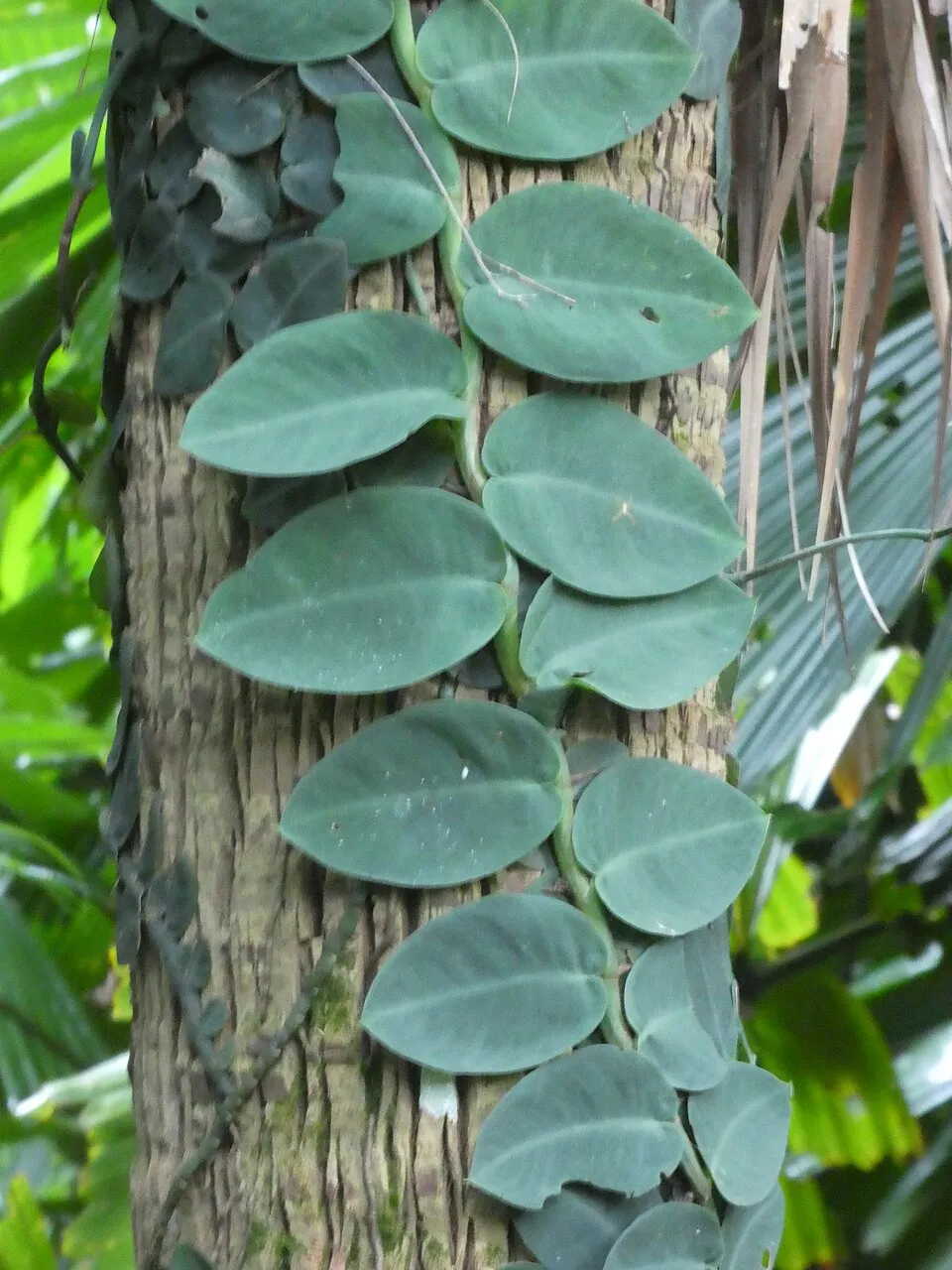
Rhaphidophora hayi, commonly known as the Shingle Plant, is a captivating tropical evergreen climber belonging to the Araceae family, a diverse group of monocotyledonous flowering plants. This distinctive species is celebrated for its unique growth habit, where its leaves grow flat against a support surface, overlapping like roof shingles, a characteristic that gives it its common name. Native to the humid tropical rainforests of Southeast Asia, particularly Malaysia and Thailand, Rhaphidophora hayi thrives in environments with consistent warmth and high humidity.
Its morphology includes glossy, deep green, oval to heart-shaped leaves that can range from 10 to 25 cm (4 to 10 inches) in length, developing a more pronounced shingling effect as the plant matures and ascends. The plant produces robust aerial roots along its smooth, often woody stem, which are crucial for adhering to tree trunks or other supports in its natural habitat. While it can produce small, inconspicuous white spathe and spadix flowers typical of aroids, this phenomenon is rare in indoor cultivation.
Taxonomically, it is closely related to other popular aroid genera such as Monstera, Epipremnum, and Philodendron, sharing many of their care requirements and growth characteristics. It typically reaches heights of up to 1.8 meters (6 feet) or more when provided with adequate vertical support and optimal growing conditions, making it a striking ornamental choice for botanical enthusiasts.
Trusted Scientific References
1. Authoritative external sources for Rhaphidophora hayi
1.1 Wikipedia — Rhaphidophora hayi
1.2 Kew POWO (Plants of the World Online)
1.3 PubMed — peer-reviewed research
1.4 NCBI Taxonomy Browser
1.5 GBIF — Global Biodiversity
1.6Rhaphidophora Hayi should be interpreted through verified botanical identity, practical care, and responsible safety language. This recovery note adds the missing context needed for a complete profile: match light to the plant's habit, use well-drained soil, water according to season, and avoid unsupported medicinal or edible claims. For publishing, the plant can be presented as a source-backed indoor plant with clear care guidance, common problem diagnosis, and conservative safety wording.
1.1.Rhaphidophora Hayi — Distinguishing Points
- ✓Unique Shingling Growth Habit — Leaves grow flat and overlap against a support.
- ✓Glossy, Deep Green Foliage — Oval to heart-shaped leaves with a striking appearance.
- ✓Robust Aerial Roots — Specialized roots for clinging and climbing.
- ✓Native to Tropical Southeast Asia — Thrives in warm, humid environments.
- ✓Air — Purifying Qualities — Contributes to healthier indoor air by removing VOCs.
- ✓Member of the Araceae Family — Related to popular aroids like Monstera and Philodendron.
- ✓Contains Calcium Oxalate Raphides — Causes irritation and toxicity if ingested.
- ✓Prefers High Humidity — Essential for lush growth and leaf development.
- ✓Striking Ornamental Houseplant — Highly sought after for its decorative appeal.
- ✓Relatively Slow — Growing — Develops into a mature, impressive specimen over time.
1.2.Rhaphidophora Hayi — Snapshot Summary
- ✓Rhaphidophora hayi is a distinctive shingling tropical climber from Southeast Asia.
- ✓Primarily an ornamental houseplant valued for its unique foliage and air-purifying qualities.
- ✓Contains toxic calcium oxalate raphides and cyanogenic glycosides, making it dangerous if ingested.
- ✓Thrives in bright, indirect light, high humidity, and requires vertical support for optimal growth.
- ✓Offers indirect benefits like improved indoor air quality and psychological well-being.
- ✓Not used in traditional medicine; research on isolated compounds shows potential, but consumption is strictly prohibited.
2.Rhaphidophora Hayi — Nomenclature & Classification
3.Rhaphidophora Hayi — Vital Statistics
4.Rhaphidophora Hayi — Physical Description
5.Rhaphidophora Hayi — Origin & Spread
6.Rhaphidophora Hayi — Folk Medicine Applications
7.Rhaphidophora Hayi — Phytochemistry
- ✓Calcium Oxalate Raphides — Needle-like crystals found in idioblasts, acting as a mechanical defense mechanism and causing severe irritation upon ingestion or contact.
- ✓Cyanogenic Glycosides — Compounds that release hydrogen cyanide upon enzymatic hydrolysis, serving as a chemical defense against herbivores; present in trace amounts.
- ✓Flavone C-glycosides — A class of flavonoids known for their antioxidant, anti-inflammatory, and potential antimicrobial activities; contribute to plant defense and pigment.
- ✓Sinapinic Acid — A hydroxycinnamic acid, which is a phenolic compound known for its antioxidant properties and role in plant cell wall structure and UV protection.
- ✓Lupane Triterpenoids — Pentacyclic triterpenes that often exhibit anti-inflammatory, hepatoprotective, and cytotoxic activities in various plant species.
- ✓Lanostane Triterpenoids — Tetracyclic triterpenes with diverse biological activities, including immunomodulatory and potential anticancer effects, typically found in fungi and some plants.
- ✓Cysteine Proteases — Enzymes that cleave peptide bonds, potentially involved in protein turnover, defense mechanisms, and, in some plants, digestive aid functions.
- ✓Campesterol — A common phytosterol, structurally similar to cholesterol, known for its ability to inhibit cholesterol absorption in the gut.
- ✓Stigmasterol — Another widely distributed phytosterol, recognized for its anti-inflammatory, antioxidant, and cholesterol-lowering properties.
8.Rhaphidophora Hayi — Scientific Evidence
- ✓Indoor Air Quality Enhancement — Rhaphidophora hayi, like many houseplants, can passively absorb certain volatile organic compounds (VOCs) from indoor air, contributing to a cleaner and healthier living environment.
- ✓Psychological Well-being — The presence of vibrant green foliage and the unique aesthetic appeal of the Shingle Plant can foster a sense of calm and reduce stress, promoting mental relaxation through the biophilia effect.
- ✓Humidification Support — Through natural transpiration, Rhaphidophora hayi releases water vapor into the air, subtly contributing to increased indoor humidity levels, which can be beneficial for respiratory comfort.
- ✓Antimicrobial Potential (Research Interest) — Phytochemicals such as flavone C-glycosides, found in the plant, are known to exhibit antimicrobial properties in other species, suggesting a potential area for future scientific investigation.
- ✓Anti-inflammatory Properties (Research Interest) — The presence of lupane and lanostane triterpenoids, along with flavone C-glycosides, indicates a theoretical basis for anti-inflammatory effects, warranting further research into isolated compounds.
- ✓Antioxidant Activity (Research Interest) — Flavone C-glycosides and sinapinic acid are recognized antioxidants, suggesting that extracts from Rhaphidophora hayi could possess free radical scavenging capabilities, though direct studies are lacking.
- ✓Digestive Enzyme Potential (Research Interest) — Cysteine proteases, similar to those found in other plants, could theoretically possess digestive properties, but this is highly speculative for Rhaphidophora hayi and requires rigorous scientific study.
- ✓Cholesterol Management (Research Interest) — Phytosterols like campesterol and stigmasterol are known for their potential to help manage cholesterol levels, making their presence in Rhaphidophora hayi an interesting point for pharmacological exploration.
- ✓Environmental Enrichment — Cultivating the Shingle Plant adds natural beauty and a connection to nature within indoor spaces, enhancing overall quality of life and fostering a positive atmosphere.
8.1.Rhaphidophora Hayi — Conditions Traditionally Used For
9.Rhaphidophora Hayi — Cautions & Contraindications
9.1.Rhaphidophora Hayi — Reported Side Effects
- ✓Oral Irritation — Ingestion of any part of Rhaphidophora hayi causes immediate and severe burning, swelling, and pain in the mouth, throat, and digestive tract due to calcium oxalate raphides.
- ✓Dermatitis — Direct skin contact with the sap can lead to irritation, redness, itching, and a rash in sensitive individuals.
- ✓Digestive Upset — If ingested, symptoms can include nausea, vomiting, abdominal pain, and diarrhea.
- ✓Respiratory Distress — Swelling of the tongue and throat can potentially obstruct airways, leading to difficulty breathing in severe cases of ingestion.
- ✓Allergic Reactions — Although rare, some individuals may experience allergic responses to plant compounds, manifesting as skin reactions or respiratory symptoms.
- ✓Systemic Toxicity — While less likely from casual ingestion, large quantities of cyanogenic glycosides could theoretically lead to more severe systemic effects.
9.2.Rhaphidophora Hayi — Toxicity Assessment
- ✓Keep Out of Reach — Absolutely essential to keep Rhaphidophora hayi away from children and pets to prevent accidental ingestion.
- ✓Avoid Ingestion — This plant is strictly for ornamental purposes; no part of it should ever be consumed by humans or animals.
- ✓Handle with Care — Wear gloves when pruning, repotting, or handling the plant to prevent skin irritation from sap.
- ✓Wash Hands Thoroughly — Always wash hands with soap and water after touching any part of the plant.
- ✓Seek Medical Attention — In case of ingestion or severe exposure, contact a poison control center or medical professional immediately.
- ✓Not for Traditional Medicinal Use — There is no historical or scientific basis for using Rhaphidophora hayi in traditional medicinal practices for internal consumption.
- ✓Pregnancy and Lactation — Pregnant or nursing individuals should exercise extreme caution and avoid any direct contact or ingestion due to insufficient safety data.
10.Rhaphidophora Hayi — Preparation Methods
- ✓Ornamental Display — Cultivate as an aesthetic houseplant to enhance indoor environments and appreciate its unique shingling growth.
- ✓Indoor Air Purification — Position plants in living spaces to benefit from their natural ability to absorb certain airborne toxins.
- ✓Psychological Comfort — Utilize its presence to create a calming atmosphere, promoting stress reduction and a connection to nature.
- ✓Botanical Education — Employ in educational settings to demonstrate unique climbing strategies and plant adaptations.
- ✓Bio-filtration Systems (Research) — Explore its potential in advanced bio-filtration systems for more targeted air purification.
- ✓Phytochemical Extraction (Research) — Conduct scientific extraction of specific compounds like triterpenoids for laboratory analysis and drug discovery.
- ✓NOT FOR INGESTION — Strictly avoid any internal consumption due to the presence of toxic calcium oxalate raphides and cyanogenic glycosides.
- ✓Topical Application (Extreme Caution) — Hypothetical use in research for isolated, purified compounds in topical formulations, but direct plant contact with skin can cause irritation.
11.Rhaphidophora Hayi — Garden Cultivation
- ✓Light — Provide bright, indirect light; avoid direct afternoon sun to prevent leaf scorching.
- ✓Water — Water thoroughly when the top two to three inches of soil feel dry; ensure adequate drainage to prevent root rot.
- ✓Humidity — Prefers high humidity (60-80%); use a humidifier, pebble tray, or group with other plants.
- ✓Soil — Use a well-draining, airy potting mix rich in organic matter, such as an aroid-specific blend.
- ✓Support — Essential for its shingling habit; provide a moss pole, plank, or textured surface for aerial roots to cling to.
- ✓Fertilizing — Feed lightly with a balanced liquid houseplant fertilizer during spring and summer growing seasons.
- ✓Temperature — Maintain warm temperatures, ideally between 18-29°C (65-85°F); avoid cold drafts.
- ✓Pruning — Generally minimal; prune only to manage size or remove yellowing/damaged leaves.
Reviewed by the Flora Medical Global Botanical Review Panel
Multi-disciplinary editorial group · Botany · Ethnobotany · Herbal-medicine literature
Who reviewed this: This page was checked by the Flora Medical Global Botanical Review Panel — an in-house editorial group of botany graduates, ethnobotany researchers, and horticulture practitioners who collectively maintain our 7,000+ plant encyclopedia. Meet the team.
Our 4-step verification process
1. Taxonomic verification
Scientific names and synonyms cross-checked against Kew POWO, World Flora Online, and The Plant List.
2. Phytochemical & medicinal cross-reference
Active compounds, traditional uses, and reported activities are cross-referenced with PubMed, USDA Dr. Duke's database, and peer-reviewed ethnobotanical literature.
3. Conservation & distribution check
Distribution, ecology, and conservation status confirmed against GBIF occurrence records and the IUCN Red List.
4. Editorial & safety review
Every entry passes an editorial pass for clarity, originality, and safety notices (toxicity, contraindications, dosage caveats) before publication.
Last reviewed:
Important medical disclaimer: This content is for educational and research purposes only. It is not medical advice and is not a substitute for consultation with a licensed healthcare provider. Do not use any herb to self-treat a medical condition without professional guidance.
Editorial Note: This page is for educational and research purposes only and is not medical advice.
Written by: Flora Medical Global Editorial Team
Reviewed by: Flora Medical Global Botanical Review Panel
Last Updated: June 15, 2026





Rhaphidophora Hayi — Comments & Community Reviews
Rate this plant