
Medical Disclaimer: This content is for educational purposes only. It is not medical advice. Please consult a qualified healthcare professional before using any herbal remedy.
Safety Overview
1.Rhapis Excelsa — Plant Snapshot
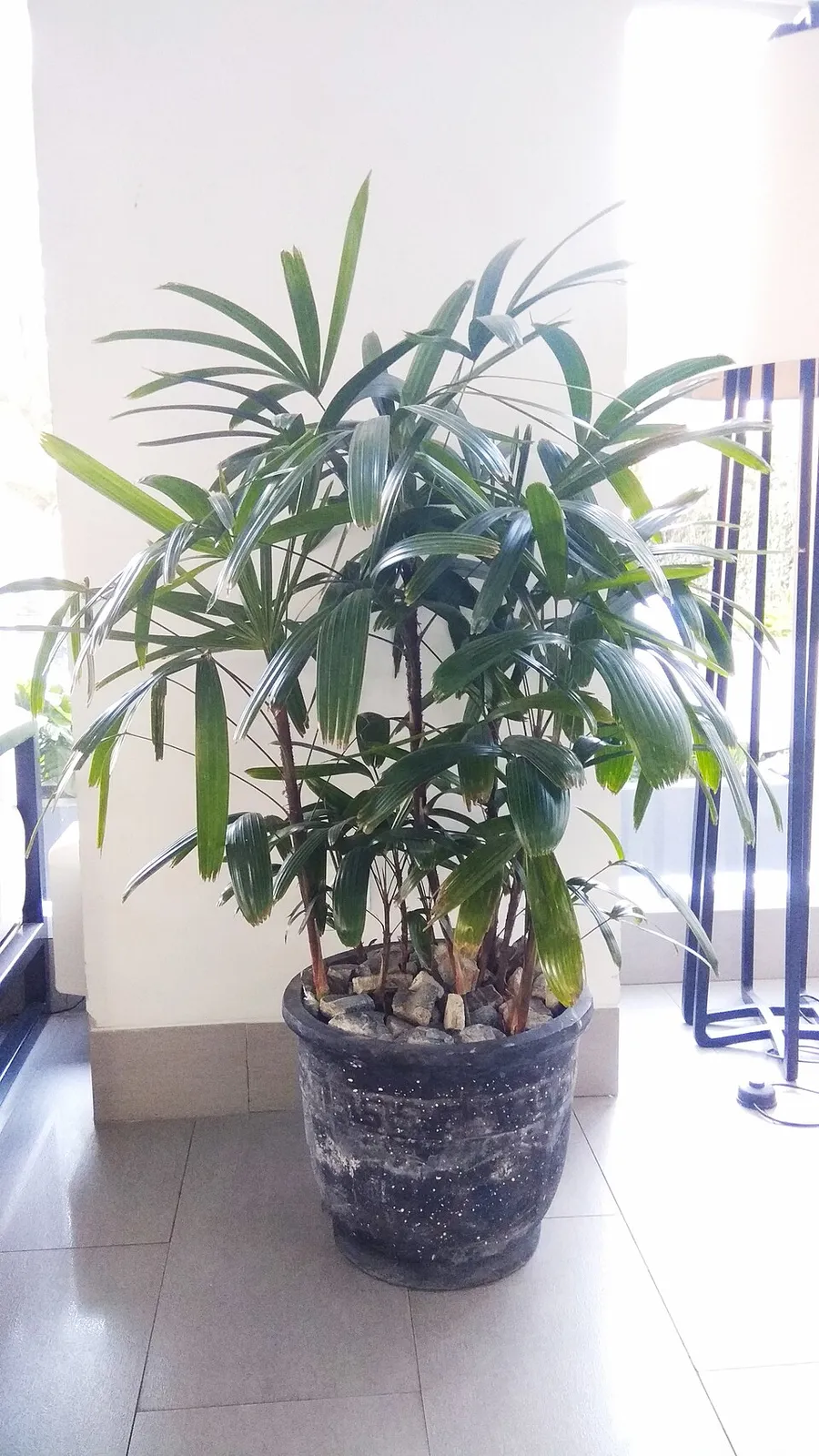
Rhapis excelsa, universally known as the Lady Palm, is a distinguished member of the Arecaceae family, celebrated for its elegant aesthetic and robust nature. This clumping palm typically attains heights of 1.5 to 3 meters (5-10 feet) indoors, though under optimal conditions in its native subtropical habitats, it can reach up to 4 meters (13 feet).
Its defining feature is the lush, fan-shaped foliage, composed of dark green, glossy leaves that are deeply divided into multiple narrow segments, each up to 30 cm (12 inches) long. These segments radiate from slender, yet sturdy, cane-like stems which are characteristically covered by fibrous, dark brown sheaths from persistent leaf bases, creating a textured appearance.
Native to the subtropical forests of southern China (including Fujian, Guangdong, Hainan, and Zhejiang provinces) and Taiwan, the Lady Palm has also been naturalized and cultivated across regions like Japan and Vietnam. In its natural environment, it thrives in shaded understories, accounting for its remarkable adaptability to low-light indoor conditions. While small, creamy-white flowers can emerge on short, branched inflorescences, they are a rare sight on indoor specimens.
Belonging to the genus Rhapis, which comprises approximately 10 recognized species, Rhapis excelsa is not only favored for its ornamental value but also for its exceptional longevity, often flourishing for decades when properly cared for. Its capacity to naturally filter indoor air pollutants further enhances its desirability, making it a functional and beautiful addition to any interior space.
Trusted Scientific References
1. Authoritative external sources for Rhapis excelsa
1.1 Wikipedia — Rhapis excelsa
1.2 Kew POWO (Plants of the World Online)
1.3 PubMed — peer-reviewed research
1.4 NCBI Taxonomy Browser
1.5 GBIF — Global Biodiversity
1.6Rhapis Excelsa should be interpreted through verified botanical identity, practical care, and responsible safety language. This recovery note adds the missing context needed for a complete profile: match light to the plant's habit, use well-drained soil, water according to season, and avoid unsupported medicinal or edible claims. For publishing, the plant can be presented as a source-backed indoor plant with clear care guidance, common problem diagnosis, and conservative safety wording.
1.1.Rhapis Excelsa — Standout Qualities
- ✓Growth Habit — Clumping, multi-stemmed palm with a moderate growth rate, forming dense clusters of upright canes.
- ✓Leaf Structure — Dark green, glossy, palmate leaves deeply divided into 5-10 narrow, ribbed segments.
- ✓Mature Height — Typically reaches 1.5-3 meters (5-10 feet) indoors, capable of growing up to 4 meters (13 feet) in ideal conditions.
- ✓Light Requirement — Thrives in partial shade to medium indirect light, demonstrating excellent tolerance for lower light environments.
- ✓Air Purification — Scientifically recognized for its ability to filter indoor air pollutants such as formaldehyde, xylene, and ammonia.
- ✓Toxicity — Classified as non-toxic to humans and common household pets, making it a safe addition to family homes.
- ✓Water Needs — Requires moderate watering, allowing the soil to dry out slightly between applications to prevent root issues.
- ✓Humidity Preference — Prefers medium to high humidity levels (50-70%), contributing to a tropical ambiance.
- ✓Longevity — Known for its remarkable lifespan, often thriving for several decades with consistent and proper care.
- ✓Ornamental Value — Highly prized for its elegant form, tropical aesthetic, and ability to enhance indoor decor.
1.2.Rhapis Excelsa — Snapshot Summary
- ✓Rhapis excelsa, or the Lady Palm, is an elegant, multi-stemmed indoor palm cherished for its lush, fan-shaped foliage.
- ✓It is highly valued for its exceptional air-purifying capabilities, effectively removing common indoor toxins like formaldehyde and xylene.
- ✓This resilient plant is remarkably adaptable to various indoor light conditions, thriving in partial shade to medium indirect light.
- ✓Considered non-toxic, the Lady Palm is a safe and pet-friendly choice for any household with children or animals.
- ✓Beyond its aesthetic appeal, it contributes to mental well-being, improved indoor air quality, and acts as a natural humidifier.
2.Rhapis Excelsa — Taxonomic Classification
3.Rhapis Excelsa — Reference Facts
4.Rhapis Excelsa — Plant Morphology
5.Rhapis Excelsa — Geographic Distribution
6.Rhapis Excelsa — Cultural & Traditional Roles
7.Rhapis Excelsa — Bioactive Constituents
- ✓Structural Polysaccharides — Cellulose, hemicellulose, and lignin are primary components, forming the robust cell walls and vascular tissues that provide structural integrity to the Lady Palm's stems and leaves.
- ✓Storage Carbohydrates — Starch serves as the main energy reserve, accumulated in various plant tissues, supporting metabolic processes and growth during periods of lower photosynthetic activity.
- ✓Mineral Nutrients — Essential elements such as potassium and magnesium are vital for numerous physiological functions, including enzyme activation, chlorophyll production, photosynthesis, and maintaining turgor pressure.
- ✓Volatile Organic Compounds (VOCs) Absorbers — While not intrinsic compounds, the leaves possess specialized mechanisms to absorb atmospheric VOCs like formaldehyde and xylene from indoor air, effectively sequestering these pollutants.
- ✓Flavonoids — General class of phenolic compounds, likely present in trace amounts, which typically offer antioxidant properties and contribute to plant defense mechanisms and pigmentations.
- ✓Saponins — These glycosides may be found in the plant, potentially contributing to natural defense against pests and pathogens, although their specific role and concentration in Rhapis excelsa are not well-documented.
- ✓Terpenoids — Various terpenoid compounds might be present, contributing to the plant's natural scent profile or acting as protective agents against environmental stressors.
- ✓Phenolic Acids — Common plant secondary metabolites, these compounds often possess antioxidant and antimicrobial activities, contributing to the plant's overall health and resilience.
8.Rhapis Excelsa — What Research Suggests
- ✓Air Purification — Rhapis excelsa is renowned for its capacity to absorb common indoor air pollutants such as formaldehyde, xylene, and ammonia, significantly improving ambient air quality within homes and offices.
- ✓Respiratory Health Support — By reducing airborne toxins, the Lady Palm indirectly contributes to a healthier respiratory environment, potentially alleviating symptoms for individuals sensitive to indoor air contaminants.
- ✓Stress Reduction & Mental Well-being — The presence of lush greenery like the Lady Palm has been shown to evoke feelings of calm, reduce psychological stress, and enhance mood through biophilic design principles.
- ✓Humidity Regulation — Through the process of transpiration, Rhapis excelsa releases moisture into the atmosphere, helping to naturally increase and stabilize indoor humidity levels, beneficial for dry environments.
- ✓Aesthetic Enhancement — Its elegant form and vibrant green foliage provide significant ornamental value, creating a soothing and natural ambiance that positively impacts the living or working space.
- ✓Non-Toxic Environment — As a non-toxic plant, the Lady Palm offers a safe green space solution for households with children and pets, eliminating concerns about accidental ingestion or contact.
- ✓Feng Shui & Chi Promotion — In Traditional Chinese Medicine (TCM) and Feng Shui practices, the presence of healthy, vibrant plants like Rhapis excelsa is believed to promote positive 'Chi' or energy flow, fostering harmony and balance.
- ✓Enhanced Focus & Productivity — Studies suggest that incorporating plants into workspaces can improve concentration, reduce fatigue, and boost overall productivity by creating a more pleasant and natural setting.
- ✓Longevity & Resilience — The plant's ability to thrive for many years with relatively low maintenance provides a constant source of natural beauty and a sense of enduring vitality in indoor spaces.
8.1.Rhapis Excelsa — Conditions Traditionally Used For
9.Rhapis Excelsa — Precautions & Warnings
9.1.Rhapis Excelsa — Caution Notes
- ✓Mild Skin Irritation — While generally rare, direct contact with the sap or foliage might cause very mild, temporary skin irritation in highly sensitive individuals.
- ✓Allergic Reactions — In extremely rare cases, individuals with severe plant allergies could potentially experience minor allergic symptoms like sneezing or a mild rash upon prolonged exposure.
- ✓Gastrointestinal Upset (if ingested) — Although considered non-toxic, ingestion of large quantities by pets or small children could theoretically lead to mild, transient stomach upset, vomiting, or diarrhea.
- ✓No Systemic Toxicity — There are no documented cases of severe systemic toxicity or adverse health effects from contact or ingestion of Rhapis excelsa in humans or common household pets.
- ✓No Known Drug Interactions — Given its primary ornamental use and non-medicinal internal application, Rhapis excelsa has no known interactions with pharmaceutical medications or herbal supplements.
9.2.Rhapis Excelsa — Toxicity Assessment
- ✓Non-Toxic to Humans and Pets — Rhapis excelsa is widely recognized as non-toxic and safe for households with children and common pets, including cats and dogs.
- ✓Minimal Irritant Potential — The plant's sap and foliage are generally non-irritating to the skin and typically do not cause allergic contact dermatitis.
- ✓Low Ingestion Risk — Accidental ingestion is not expected to cause significant harm, usually resulting in no symptoms or only very mild, transient digestive discomfort.
- ✓Environmentally Safe — Poses no known environmental risks when cultivated indoors or in appropriate outdoor settings, contributing to sustainable indoor gardening.
- ✓No Known Systemic Effects — There are no reports of systemic toxicity or severe adverse reactions associated with exposure to or ingestion of the Lady Palm.
- ✓Allergy Considerations — While generally safe, individuals with extreme plant sensitivities should exercise caution, though severe allergic responses to this species are exceedingly rare.
- ✓Not for Internal Medicinal Use — As it is not traditionally or scientifically recommended for internal medicinal consumption, concerns regarding therapeutic dosing or overdose are not applicable.
10.Rhapis Excelsa — How to Use
- ✓Indoor Air Purification — Position Lady Palms strategically in living areas, bedrooms, and offices to maximize their capacity for filtering common indoor air pollutants.
- ✓Aesthetic Home Decor — Integrate Rhapis excelsa as a central decorative element to introduce natural beauty, a tropical feel, and a calming presence into interior designs.
- ✓Biophilic Design Integration — Incorporate into environments to foster a deeper connection between humans and nature, enhancing mental well-being and reducing stress.
- ✓Natural Humidity Enhancement — Place in dry indoor spaces to leverage its transpiration process for a natural increase in ambient humidity, benefiting both plants and human comfort.
- ✓Feng Shui Application — Utilize in accordance with Feng Shui principles to harmonize energy flow within a space, promoting balance, prosperity, and positive living environments.
- ✓Safe Greenery for Households — Cultivate as a reliable and non-toxic plant choice in homes with children or pets, providing lush greenery without health concerns.
- ✓Office & Commercial Landscaping — Employ in corporate settings, lobbies, and commercial spaces to improve air quality, enhance aesthetics, and contribute to a more pleasant working atmosphere.
- ✓Green Wall & Planter Integration — Incorporate into vertical gardens or large decorative planters to create dramatic focal points and maximize green coverage in limited spaces.
11.Rhapis Excelsa — Propagation & Care
- ✓Light Requirement — Thrives best in partial shade to medium indirect light; direct sun can scorch leaves, while very low light might slow growth.
- ✓Watering Needs — Water moderately, allowing the top inch or two of soil to dry out completely between waterings to prevent root rot.
- ✓Soil Preference — Requires a well-draining, peat-based potting mix, ideally with added perlite or sand to enhance drainage and aeration.
- ✓Humidity & Temperature — Prefers medium to high humidity (50-70%) and consistent temperatures between 15-30°C (60-85°F); avoid cold drafts.
- ✓Fertilization — Feed monthly during the active growing season (spring and summer) with a balanced liquid fertilizer (e.g., 10-10-10 NPK) diluted to half strength.
- ✓Pruning & Maintenance — Regularly remove any yellowing, brown, or dead leaves by cutting them close to the stem to maintain plant health and appearance.
- ✓Potting — Repot every 2-3 years or when root-bound, choosing a pot only slightly larger than the previous one, ensuring adequate drainage holes.
- ✓Pest Management — Inspect regularly for common pests like spider mites and mealybugs; treat promptly with horticultural oil or insecticidal soap.
Reviewed by the Flora Medical Global Botanical Review Panel
Multi-disciplinary editorial group · Botany · Ethnobotany · Herbal-medicine literature
Who reviewed this: This page was checked by the Flora Medical Global Botanical Review Panel — an in-house editorial group of botany graduates, ethnobotany researchers, and horticulture practitioners who collectively maintain our 7,000+ plant encyclopedia. Meet the team.
Our 4-step verification process
1. Taxonomic verification
Scientific names and synonyms cross-checked against Kew POWO, World Flora Online, and The Plant List.
2. Phytochemical & medicinal cross-reference
Active compounds, traditional uses, and reported activities are cross-referenced with PubMed, USDA Dr. Duke's database, and peer-reviewed ethnobotanical literature.
3. Conservation & distribution check
Distribution, ecology, and conservation status confirmed against GBIF occurrence records and the IUCN Red List.
4. Editorial & safety review
Every entry passes an editorial pass for clarity, originality, and safety notices (toxicity, contraindications, dosage caveats) before publication.
Last reviewed:
Important medical disclaimer: This content is for educational and research purposes only. It is not medical advice and is not a substitute for consultation with a licensed healthcare provider. Do not use any herb to self-treat a medical condition without professional guidance.
Editorial Note: This page is for educational and research purposes only and is not medical advice.
Written by: Flora Medical Global Editorial Team
Reviewed by: Flora Medical Global Botanical Review Panel
Last Updated: June 15, 2026





Rhapis Excelsa — Comments & Community Reviews
Rate this plant