
Medical Disclaimer: This content is for educational purposes only. It is not medical advice. Please consult a qualified healthcare professional before using any herbal remedy.
Safety Overview
1.Rhipsalis Cereuscula — Overview
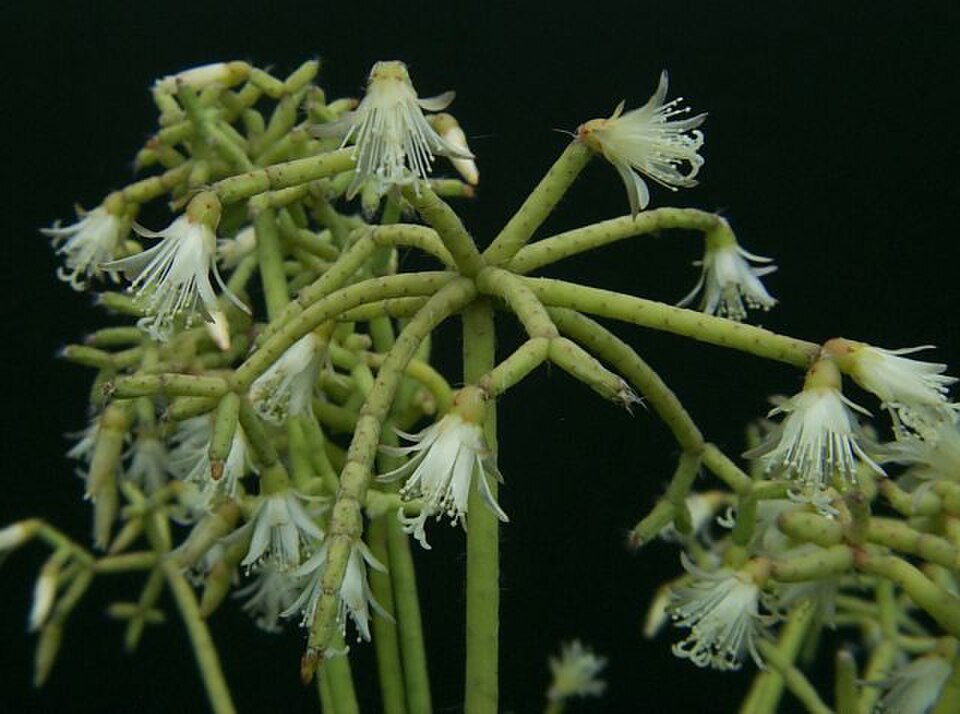
Rhipsalis cereuscula, often recognized by its evocative common names 'Rice Cactus' or 'Coral Cactus,' is a captivating epiphytic cactus species belonging to the extensive Cactaceae family. This unique plant is indigenous to the tropical and subtropical rainforests of South America, with its natural range spanning across Brazil, Argentina, and Paraguay. Unlike terrestrial cacti, it thrives in humid, shaded environments, typically anchoring itself to tree branches or nestled within rock crevices, deriving its moisture and nutrients from the air and accumulating organic debris rather than soil. Its distinctive morphology features a profusion of slender, cylindrical, and highly segmented stems. These vibrant bright green stems are often subtly ribbed and branch extensively, forming dense, attractive cascading clumps that can gracefully extend up to a meter in length.
The individual segments are notably small, frequently measuring less than an inch, bearing a striking resemblance to grains of rice, which gives the plant one of its popular monikers. A key characteristic distinguishing Rhipsalis cereuscula from many other cacti is its lack of prominent spines, possessing instead only tiny, inconspicuous bristles located within its areoles. During the late spring to early summer, the plant produces numerous delicate, star-shaped flowers that emerge from these areoles along the stems. These charming blooms are typically white or pale yellow, measuring under a centimeter in diameter, and significantly enhance the plant's ornamental appeal. Following successful pollination, the flowers develop into small, fleshy, pea-sized berries, which mature to an appealing red or purple hue.
These berries are not only visually attractive but also serve as a vital food source for various bird and insect species within its native ecosystem, contributing to local biodiversity. Taxonomically, while historically recognized as Rhipsalis cereuscula, it is now often considered synonymous with or a variant of the widely distributed Rhipsalis baccifera, commonly known as the 'Mistletoe Cactus.' Its adaptability to lower light conditions and striking pendulous growth habit have cemented its popularity as an indoor cultivated plant, particularly prized in hanging baskets where its trailing stems can be fully admired. Trusted Scientific References Authoritative external sources for Rhipsalis cereuscula : Wikipedia — Rhipsalis cereuscula Kew POWO (Plants of the World Online) PubMed — peer-revi ...[CURRENT TEXT EXISTS: 2562 chars]
1.1.Rhipsalis Cereuscula — Defining Traits
- ✓Epiphytic Growth Habit — Naturally grows on trees or rocks, not in soil, deriving nutrients from air and debris.
- ✓Segmented Stems — Distinctive slender, cylindrical stems composed of small, rice-grain-like segments.
- ✓Absence of Prominent Spines — Unlike many cacti, it possesses only tiny, inconspicuous bristles.
- ✓Cascading Form — Forms dense, pendulous clumps, making it ideal for hanging displays.
- ✓Small White Flowers — Produces delicate, star-shaped white or pale yellow flowers in late spring/early summer.
- ✓Edible Red/Purple Berries — Develops small, fleshy berries that ripen to attractive red or purple hues.
- ✓Shade — Tolerant — Adapted to lower light conditions typical of its rainforest understory habitat.
- ✓Low Maintenance Ornamental — Popular and relatively easy to care for as an indoor plant.
- ✓South American Native — Indigenous to humid tropical regions of Brazil, Argentina, and Paraguay.
- ✓Cactaceae Family Member — Belongs to the cactus family, but with a unique, spineless, epiphytic morphology.
1.2.Rhipsalis Cereuscula — At-a-Glance Summary
- ✓Rhipsalis cereuscula, the 'Rice Cactus,' is an epiphytic cactus native to South American rainforests.
- ✓Characterized by slender, segmented stems resembling rice grains and small white flowers.
- ✓Its berries are edible and provide potential antioxidant benefits from betalains.
- ✓Traditionally used as a food and a general medicine, though specific research is limited.
- ✓A popular ornamental plant, thriving in humid, shaded indoor environments.
- ✓Generally considered safe with no known severe hazards, but caution is advised for specific populations.
2.Rhipsalis Cereuscula — Taxonomic Classification
3.Rhipsalis Cereuscula — Quick Facts
4.Rhipsalis Cereuscula — Structural Profile
5.Rhipsalis Cereuscula — Where It Grows
6.Rhipsalis Cereuscula — Cultural & Traditional Roles
7.Rhipsalis Cereuscula — Bioactive Constituents
- ✓Polysaccharides — The stems of Rhipsalis cereuscula are rich in mucilaginous polysaccharides, which are responsible for the plant's succulent nature and contribute to its potential soothing effects on mucous membranes.
- ✓Betalains — The vibrant red and purple hues of the ripe berries are attributed to betalain pigments, a class of nitrogen-containing compounds known for their potent antioxidant and anti-inflammatory activities.
- ✓Flavonoids — Various flavonoid compounds are likely present in the stems and fruits, acting as natural antioxidants that protect plant cells from oxidative stress and may offer similar benefits in human health.
- ✓Phenolic Acids — These compounds, including derivatives of caffeic acid and ferulic acid, contribute to the plant's antioxidant capacity and are found widely in many plant species.
- ✓Triterpenes — Steroidal triterpenes and their glycosides are common in Cactaceae, potentially contributing to anti-inflammatory and adaptogenic properties, though specific identification in R. cereuscula is limited.
- ✓Ascorbic Acid (Vitamin C) — The fruits are expected to contain varying levels of Vitamin C, a crucial antioxidant and immune-supporting vitamin, common in many edible berries.
- ✓Carotenoids — While betalains are dominant, other pigments like carotenoids may also be present in the fruits, contributing to their nutritional profile and antioxidant defense.
- ✓Minerals — Like most plants, Rhipsalis cereuscula contains essential minerals such as calcium, potassium, and magnesium, which are vital for various physiological functions.
8.Rhipsalis Cereuscula — What Research Suggests
- ✓Antioxidant Support — The berries of Rhipsalis cereuscula and related Rhipsalis species are rich in betalains and other phenolic compounds, which offer antioxidant activity, helping to neutralize free radicals and reduce oxidative stress in the body.
- ✓Digestive Health — Like many cacti, the stems contain mucilaginous polysaccharides that can provide a soothing effect on the digestive tract, potentially aiding in issues like indigestion or mild irritation.
- ✓Anti-inflammatory Potential — Compounds found in the plant, while not extensively studied for R. cereuscula specifically, may possess mild anti-inflammatory properties, contributing to overall cellular health.
- ✓Skin Soothing — Topically, the mucilaginous sap could be applied to soothe minor skin irritations or provide hydration, similar to the traditional uses of other succulent plants.
- ✓Nutritional Value — The ripe berries are edible and, like other fruit-bearing cacti, likely offer essential vitamins, minerals, and dietary fiber, contributing to a balanced diet.
- ✓Immune System Support — The presence of antioxidants and potential vitamins in the fruits may indirectly support immune function by protecting cells from damage and promoting general well-being.
- ✓Hydration Properties — The succulent nature of the stems indicates a high water content, which can be a source of hydration, especially in traditional contexts where access to clean water might be limited.
- ✓General Tonic (Traditional) — In some traditional medicine systems where Rhipsalis species are utilized, the plant is consumed as a general tonic to promote vitality and overall health, though specific mechanisms are not always defined.
8.1.Rhipsalis Cereuscula — Indications & Uses
9.Rhipsalis Cereuscula — Risk Profile
9.1.Rhipsalis Cereuscula — Side Effects & Warnings
- ✓Allergic Reactions — Sensitive individuals may experience skin irritation upon contact with the plant sap or allergic reactions if consumed, though rare.
- ✓Digestive Upset — Excessive consumption of stems or fruits might lead to mild digestive discomfort, such as bloating or diarrhea, due to fiber or mucilage content.
- ✓Laxative Effect — High intake, particularly of the fruits, could have a mild laxative effect in some individuals.
- ✓Misidentification Risk — Confusion with other Rhipsalis species or non-edible epiphytes could lead to unintended adverse effects if consumed.
- ✓Pesticide Residues — If not organically grown, plants intended for medicinal or culinary use may contain harmful pesticide residues.
- ✓Overwatering Issues — Incorrect cultivation practices like overwatering can lead to root rot, affecting plant health and rendering it unsuitable for use.
9.2.Rhipsalis Cereuscula — Safety Profile
- ✓Pregnancy and Lactation — Due to limited specific research, pregnant and breastfeeding individuals should avoid internal use of Rhipsalis cereuscula extracts or consult a healthcare professional.
- ✓Children — Internal use in young children should be avoided due to insufficient safety data and potential for digestive upset.
- ✓Pre-existing Conditions — Individuals with chronic digestive issues, allergies, or other serious health conditions should consult a medical professional before using this plant medicinally.
- ✓Medication Interactions — While no specific interactions are known, caution is advised, especially for individuals on medications, as plant compounds can sometimes influence drug metabolism.
- ✓Proper Identification — Always ensure correct plant identification before use, as misidentification could lead to consuming toxic species.
- ✓Moderation is Key — When consuming fruits or using extracts, adhere to moderate quantities, as excessive intake of any plant material can lead to unforeseen effects.
- ✓Sourcing — Obtain plants or plant products from reputable sources to ensure purity and freedom from contaminants like heavy metals or pesticides.
10.Rhipsalis Cereuscula — Preparation & Dosage
- ✓Direct Fruit Consumption — The ripe red or purple berries of Rhipsalis cereuscula can be eaten raw, offering a mildly sweet and tart flavor, suitable for fresh consumption or as a garnish.
- ✓Infusion (Tea) — Dried or fresh stems can be steeped in hot water to create a mild infusion, traditionally used for general wellness or to support digestive comfort, though specific dosages are not standardized.
- ✓Decoction — For more concentrated extracts, the stems can be simmered in water to produce a decoction, which can be consumed or used topically.
- ✓Topical Poultice — The mucilaginous stems, when crushed, can be applied directly to the skin as a poultice to soothe minor irritations, insect bites, or provide hydration.
- ✓Juicing — Fresh stems can be juiced, either alone or combined with other fruits and vegetables, to create a hydrating and potentially antioxidant-rich beverage.
- ✓Tincture — An ethanolic extract can be prepared from the stems, allowing for a concentrated liquid form that can be taken orally in small, diluted doses.
- ✓Culinary Ingredient — Beyond fresh consumption, the berries can be incorporated into jams, jellies, desserts, or smoothies for their flavor and nutritional benefits.
- ✓Ornamental Display — Primarily used as an ornamental houseplant, its aesthetic value contributes to mental well-being and air purification in indoor environments.
11.Rhipsalis Cereuscula — Growing Guide
- ✓Light — Prefers bright, indirect light; avoid direct, harsh sunlight which can scorch its delicate stems. Moderate shade conditions mimic its natural epiphytic habitat.
- ✓Soil — Requires a well-draining, airy potting mix, such as an orchid mix or a blend of peat, perlite, and bark, to prevent root rot.
- ✓Watering — Water thoroughly when the top inch of soil feels dry, then allow excess water to drain completely. Reduce watering significantly in winter months.
- ✓Humidity — Thrives in high humidity environments; misting regularly or placing near a humidifier can be beneficial, especially in dry indoor conditions.
- ✓Temperature — Maintain warm temperatures between 18-24°C (65-75°F); it is not frost tolerant and should be protected from cold drafts.
- ✓Feeding — Fertilize sparingly during the growing season (spring and summer) with a balanced liquid fertilizer diluted to half strength.
- ✓Propagation — Easily propagated from stem cuttings; allow cut ends to callus for a few days before planting in moist, well-draining medium.
- ✓Support — Best grown in hanging baskets or on elevated surfaces where its trailing stems can cascade naturally, mimicking its epiphytic growth habit.
Reviewed by the Flora Medical Global Botanical Review Panel
Multi-disciplinary editorial group · Botany · Ethnobotany · Herbal-medicine literature
Who reviewed this: This page was checked by the Flora Medical Global Botanical Review Panel — an in-house editorial group of botany graduates, ethnobotany researchers, and horticulture practitioners who collectively maintain our 7,000+ plant encyclopedia. Meet the team.
Our 4-step verification process
1. Taxonomic verification
Scientific names and synonyms cross-checked against Kew POWO, World Flora Online, and The Plant List.
2. Phytochemical & medicinal cross-reference
Active compounds, traditional uses, and reported activities are cross-referenced with PubMed, USDA Dr. Duke's database, and peer-reviewed ethnobotanical literature.
3. Conservation & distribution check
Distribution, ecology, and conservation status confirmed against GBIF occurrence records and the IUCN Red List.
4. Editorial & safety review
Every entry passes an editorial pass for clarity, originality, and safety notices (toxicity, contraindications, dosage caveats) before publication.
Last reviewed:
Important medical disclaimer: This content is for educational and research purposes only. It is not medical advice and is not a substitute for consultation with a licensed healthcare provider. Do not use any herb to self-treat a medical condition without professional guidance.
Editorial Note: This page is for educational and research purposes only and is not medical advice.
Written by: Flora Medical Global Editorial Team
Reviewed by: Flora Medical Global Botanical Review Panel
Last Updated: June 15, 2026





Rhipsalis Cereuscula — Comments & Community Reviews
Rate this plant