
Medical Disclaimer: This content is for educational purposes only. It is not medical advice. Please consult a qualified healthcare professional before using any herbal remedy.
Safety Overview
1.Rhipsalis Ewaldiana — Botanical Snapshot
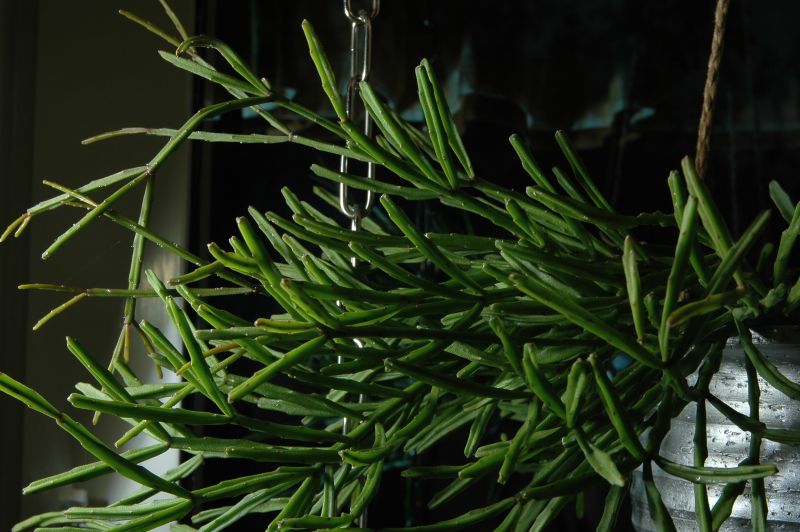
Rhipsalis ewaldiana, commonly known as Ewald's Rhipsalis or Mistletoe Cactus, is a captivating epiphytic member of the Cactaceae family, indigenous to the tropical and subtropical forests of southeastern Brazil, particularly within the Atlantic Forest biome. This species is predominantly found clinging to tree trunks and branches, utilizing them for support rather than as a parasitic host, thriving in the dappled light and high humidity characteristic of its native environment. Morphologically, Rhipsalis ewaldiana is distinguished by its cascading, segmented stems, which present as slender, cylindrical to slightly flattened, bright green chains. These succulent stems can attain lengths of up to 2 meters, developing an elegant, pendulous habit that makes the plant highly sought after in ornamental horticulture, especially for hanging baskets. The individual stem segments are typically smooth, glabrous, and can branch profusely, creating a dense, intricate curtain of foliage.
Unlike many desert cacti, Rhipsalis ewaldiana lacks prominent spines, possessing instead minute areoles from which its small, often inconspicuous flowers emerge. The blooms are typically solitary or in small clusters, appearing along the stem tips or nodes. They are relatively small, usually white or cream-colored, delicate, and star-shaped, often blooming during the cooler, drier months. Following successful pollination, these flowers give way to small, spherical, berry-like fruits. These fruits are typically vibrant red or purple when mature, adding a decorative contrast to the green stems, and are considered edible, though often bland in flavor.
The root system is fibrous and adapted for clinging to rough bark, absorbing moisture and nutrients from the humid air and accumulated organic debris. Taxonomically, Rhipsalis ewaldiana belongs to the genus Rhipsalis, which encompasses approximately 35-60 species, all native to the Americas, with the highest diversity in Brazil. The genus name 'Rhipsalis' derives from the ancient Greek word for 'wickerwork,' referring to the plant's flexible, interwoven branches. This species is valued primarily for its aesthetic appeal and ease of cultivation as an indoor or greenhouse plant.
Trusted Scientific References
1. Authoritative external sources for Rhipsalis ewaldiana
1.1 Wikipedia — Rhipsalis ewaldiana
1.2 Kew POWO (Plants of the World Online)
1.3 PubMed — peer-reviewed research
1.4 NCBI Taxonomy Browser
1.5 GBIF — Global Biodiversity
1.1.Rhipsalis Ewaldiana — Distinguishing Points
- ✓Epiphytic Growth Habit — Naturally grows on trees for support, not as a parasite, in its native tropical habitat.
- ✓Cascading Stems — Long, pendulous, segmented stems make it highly decorative for hanging displays.
- ✓Succulent Nature — Stems are succulent, allowing water storage and adaptation to humid but sometimes dry conditions.
- ✓Spineless Cactus — Unlike many cacti, Rhipsalis ewaldiana lacks prominent spines, making it easy to handle.
- ✓Small, Delicate Flowers — Produces inconspicuous white or cream-colored, star-shaped flowers along its stems.
- ✓Edible Berry — like Fruits — Develops small, vibrant red or purple fruits that are edible, though mild in taste.
- ✓Native to Atlantic Forest — Indigenous to the tropical and subtropical forests of southeastern Brazil.
- ✓Low Maintenance Ornamental — Popular as a houseplant due to its unique appearance and relatively easy care requirements.
- ✓High Humidity Preference — Thrives in environments with consistent high humidity, reflecting its rainforest origins.
- ✓Dappled Light Adaptation — Prefers indirect or filtered light, sensitive to intense direct sunlight.
1.2.Rhipsalis Ewaldiana — Concise Overview
- ✓Rhipsalis ewaldiana is an epiphytic cactus from Brazil, known for its cascading green stems.
- ✓Primarily valued as an ornamental houseplant, thriving in humid, indirect light conditions.
- ✓Produces small, edible, berry-like fruits that are typically bland in flavor.
- ✓Specific medicinal uses for R. ewaldiana are not widely documented in modern research.
- ✓Contains general plant compounds like flavonoids and mucilage, offering potential antioxidant and hydrating benefits.
- ✓Requires well-draining soil, warm temperatures, and is not frost tolerant.
2.Rhipsalis Ewaldiana — Nomenclature & Classification
3.Rhipsalis Ewaldiana — Fact Sheet
4.Rhipsalis Ewaldiana — Botanical Features
5.Rhipsalis Ewaldiana — Ecological Habitat
6.Rhipsalis Ewaldiana — Traditional Uses
7.Rhipsalis Ewaldiana — Chemical Profile
- ✓Flavonoids — Common in Cactaceae, these phenolic compounds act as antioxidants, protecting cells from oxidative damage and potentially reducing inflammation.
- ✓Phenolic Acids — Present in many plants, including Rhipsalis, contributing to antioxidant activity and potentially antimicrobial properties.
- ✓Mucilage (Polysaccharides) — Found in succulent plants, providing hydration, aiding digestion, and potentially offering soothing effects for mucous membranes.
- ✓Triterpenes — A diverse group of compounds with potential anti-inflammatory, adaptogenic, and cytotoxic activities, found in various plant species.
- ✓Alkaloids (trace) — While not a primary constituent, trace amounts of alkaloids may be present, which can have various physiological effects, though specific types and concentrations for R. ewaldiana are not well-documented.
- ✓Ascorbic Acid (Vitamin C) — Present in the edible fruits, this essential vitamin is a powerful antioxidant crucial for immune function and collagen synthesis.
- ✓Organic Acids (e.g., Malic Acid) — Contribute to the plant's metabolism and fruit flavor; may have mild digestive benefits.
- ✓Carotenoids — Pigments found in the red/purple fruits, acting as antioxidants and precursors to Vitamin A.
- ✓Minerals — Trace amounts of essential minerals like potassium, calcium, and magnesium are generally present in plant tissues, supporting various bodily functions.
- ✓Water — As a succulent, the stems and fruits contain a high percentage of water, crucial for hydration and nutrient transport.
8.Rhipsalis Ewaldiana — Pharmacological Findings
- ✓Nutritional Support — The edible fruits of Rhipsalis ewaldiana, though bland, can contribute to dietary intake of water and potentially minor nutrients, supporting general well-being.
- ✓Hydration Properties — As a succulent, Rhipsalis ewaldiana contains significant water content, which can be a source of hydration, particularly in traditional contexts where diverse plant consumption occurs.
- ✓Antioxidant Potential — Many plants, including members of the Cactaceae family, contain natural antioxidants like flavonoids and phenolic compounds that help combat oxidative stress in the body.
- ✓Digestive Health — The consumption of whole fruits, including those of Rhipsalis ewaldiana, can provide dietary fiber, which is beneficial for promoting healthy digestion and bowel regularity.
- ✓General Wellness Aid — While specific modern research is limited for Rhipsalis ewaldiana, related Rhipsalis species have been traditionally used as general tonics or for non-specific health maintenance.
- ✓Minor Vitamin & Mineral Source — Edible plant materials generally offer trace amounts of essential vitamins and minerals, and the fruits of Rhipsalis ewaldiana are expected to provide some contribution to overall bodily functions.
- ✓Anti-inflammatory Potential (General) — Some Cactaceae species exhibit mild anti-inflammatory effects due to their phytochemical profiles, which may extend to the Rhipsalis genus in a non-specific manner.
- ✓Skin Soothing (Topical, speculative) — The mucilaginous nature found in some cacti suggests potential for soothing irritated skin when applied topically, though this is speculative for Rhipsalis ewaldiana.
- ✓Blood Sugar Regulation (Indirect) — Dietary fiber from fruit consumption can indirectly aid in moderating blood sugar levels by slowing down glucose absorption, a general benefit of fruit intake.
- ✓Immune System Support (Indirect) — Through general nutritional contributions and antioxidant activity, the plant may offer indirect support to the body's immune defenses.
8.1.Rhipsalis Ewaldiana — Indications & Uses
9.Rhipsalis Ewaldiana — Safety Considerations
9.1.Rhipsalis Ewaldiana — Reported Side Effects
- ✓Allergic Reactions — While rare, individuals sensitive to Cactaceae or other plants may experience mild allergic reactions upon contact or ingestion.
- ✓Digestive Upset — Consuming large quantities of the fruit, especially if unaccustomed, might lead to mild digestive upset due to fiber content.
- ✓Skin Irritation — Though lacking prominent spines, minute glochids or plant sap could potentially cause minor skin irritation in very sensitive individuals.
- ✓Overconsumption — As with any food, excessive intake of the fruit might lead to imbalances, though specific adverse effects are not documented.
- ✓Interaction with Medications — No known specific interactions, but caution is advised when combining any plant material with prescription medications.
9.2.Rhipsalis Ewaldiana — Safety Profile
- ✓General Safety — Rhipsalis ewaldiana is generally considered safe for ornamental use and consumption of its fruits in moderation.
- ✓Pregnancy & Lactation — Specific safety data for pregnant or lactating individuals is unavailable; use with caution or avoid.
- ✓Children — Fruits are edible but should be offered to children in moderation and under supervision to prevent choking or overconsumption.
- ✓Allergies — Individuals with known allergies to cacti or other plant families should exercise caution.
- ✓Pet Safety — Generally considered non-toxic to pets, but ingestion of large quantities could potentially cause mild gastrointestinal upset.
- ✓External Use — Topical application of plant parts is not a common practice, and skin sensitivity should be tested if attempted.
- ✓Wild Harvesting — Ensure correct identification if harvesting from the wild, as other species may not be suitable for consumption.
10.Rhipsalis Ewaldiana — Preparation Methods
- ✓Ornamental Display — Rhipsalis ewaldiana is primarily cultivated as an ornamental plant, ideal for hanging baskets, terrariums, or as a trailing accent in indoor gardens.
- ✓Stem Cuttings — For propagation, healthy stem segments can be taken, allowed to callus for a few days, and then planted in suitable potting mix to root.
- ✓Edible Fruit Consumption — The small, berry-like fruits are edible, though bland, and can be consumed fresh as a minor dietary supplement or for hydration.
- ✓Botanical Specimen — Used in botanical collections and educational settings to study epiphytic cactus morphology and adaptation.
- ✓Air Purification (General) — Like many houseplants, it contributes to indoor air quality by absorbing certain toxins and releasing oxygen.
- ✓Aesthetic Enhancement — Its unique cascading form and vibrant green stems are used to enhance interior decor and create a lush, tropical ambiance.
- ✓Juicing/Smoothies (Fruit) — The fruits, if gathered in sufficient quantity, could be added to juices or smoothies for hydration and minor nutrient content, though flavor impact is minimal.
11.Rhipsalis Ewaldiana — Garden Cultivation
- ✓Light — Prefers bright, indirect light; avoid direct, harsh sun which can scorch stems. Dappled shade is ideal.
- ✓Watering — Water thoroughly when the top inch of soil feels dry, then allow to drain completely. Reduce watering in cooler, dormant months.
- ✓Humidity — Thrives in high humidity, mimicking its native rainforest environment. Regular misting or a humidity tray is beneficial.
- ✓Soil — Requires a well-draining, airy potting mix, typically an orchid or succulent mix with added perlite or bark.
- ✓Temperature — Best grown in warm temperatures, between 18-29°C (65-85°F). Not frost tolerant, protect from cold drafts.
- ✓Fertilization — Feed monthly during the growing season (spring and summer) with a balanced liquid fertilizer diluted to half strength.
- ✓Propagation — Easily propagated from stem cuttings. Allow cuttings to callus for a few days before planting in moist, well-draining soil.
- ✓Support — As an epiphytic plant with cascading stems, it is best grown in hanging baskets or on elevated surfaces to allow its foliage to trail.
Reviewed by the Flora Medical Global Botanical Review Panel
Multi-disciplinary editorial group · Botany · Ethnobotany · Herbal-medicine literature
Who reviewed this: This page was checked by the Flora Medical Global Botanical Review Panel — an in-house editorial group of botany graduates, ethnobotany researchers, and horticulture practitioners who collectively maintain our 7,000+ plant encyclopedia. Meet the team.
Our 4-step verification process
1. Taxonomic verification
Scientific names and synonyms cross-checked against Kew POWO, World Flora Online, and The Plant List.
2. Phytochemical & medicinal cross-reference
Active compounds, traditional uses, and reported activities are cross-referenced with PubMed, USDA Dr. Duke's database, and peer-reviewed ethnobotanical literature.
3. Conservation & distribution check
Distribution, ecology, and conservation status confirmed against GBIF occurrence records and the IUCN Red List.
4. Editorial & safety review
Every entry passes an editorial pass for clarity, originality, and safety notices (toxicity, contraindications, dosage caveats) before publication.
Last reviewed:
Important medical disclaimer: This content is for educational and research purposes only. It is not medical advice and is not a substitute for consultation with a licensed healthcare provider. Do not use any herb to self-treat a medical condition without professional guidance.
Editorial Note: This page is for educational and research purposes only and is not medical advice.
Written by: Flora Medical Global Editorial Team
Reviewed by: Flora Medical Global Botanical Review Panel
Last Updated: June 15, 2026





Rhipsalis Ewaldiana — Comments & Community Reviews
Rate this plant