
Medical Disclaimer: This content is for educational purposes only. It is not medical advice. Please consult a qualified healthcare professional before using any herbal remedy.
Safety Overview
1.Rodgersia — Introduction & Highlights
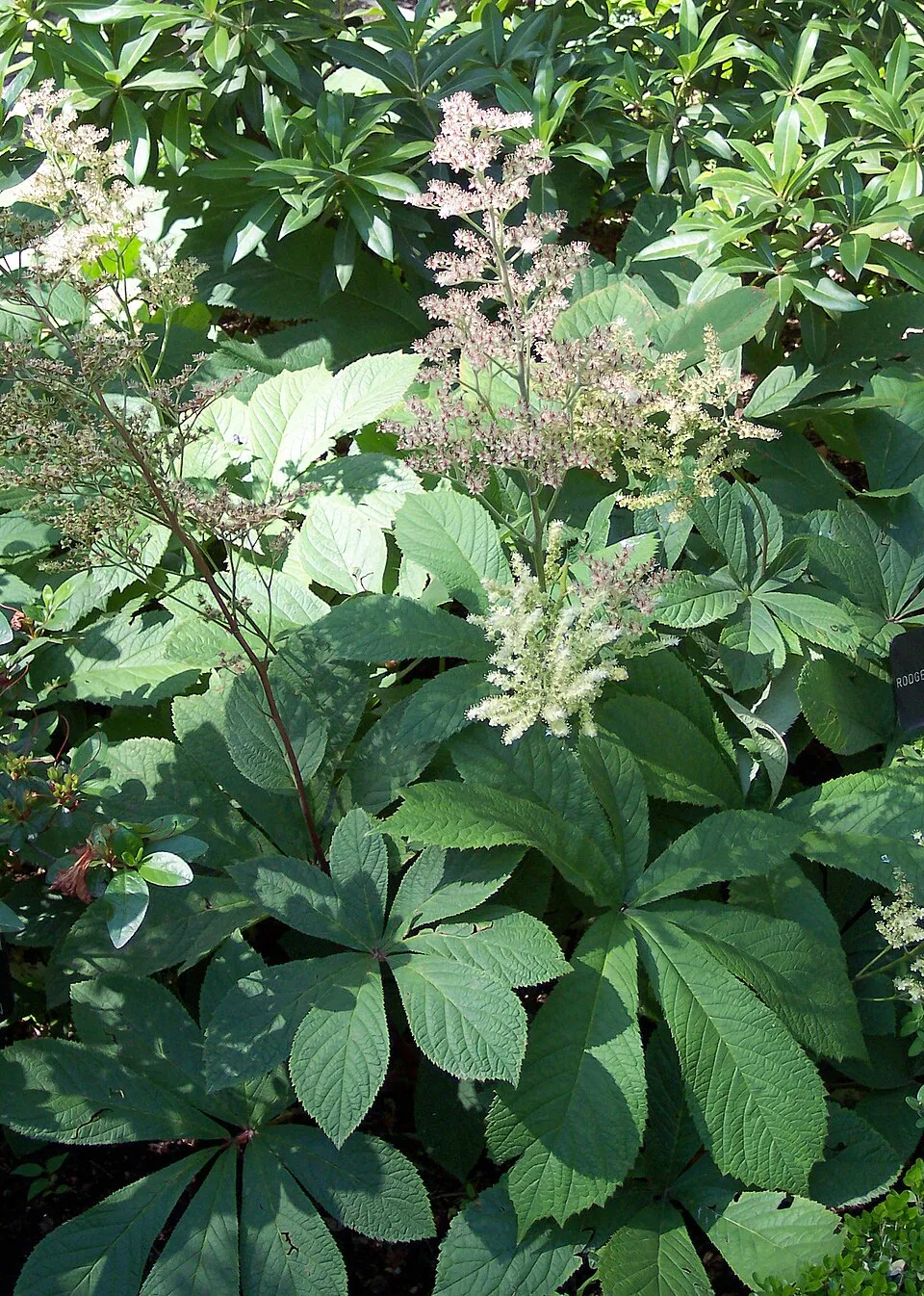
Rodgersia aesculifolia, commonly known as Chestnut-leaf Rodgersia, is a striking herbaceous perennial belonging to the Saxifragaceae family. Native to the damp, shaded woodlands and stream banks of mountainous regions in China, particularly in provinces like Hubei and Sichuan, it is renowned for its bold, architectural presence. The plant typically forms substantial clumps, reaching heights of 3-5 feet with an equivalent spread.
Its most distinguishing feature is its large, palmate leaves, deeply veined and textured, which strongly resemble those of a horse chestnut (Aesculus hippocastanum), hence the specific epithet 'aesculifolia'. These leaves emerge a captivating bronze or reddish hue in spring, gradually maturing to a rich, deep green throughout the summer. In mid-to-late summer, towering, upright flower stalks ascend above the foliage, bearing impressive, frothy plumes of tiny, star-shaped flowers.
These inflorescences are typically creamy-white, sometimes with a subtle pinkish tint, and can extend 2-4 feet above the leaves, adding vertical interest and elegance. The plant's robust rhizomatous root system anchors it firmly, allowing it to colonize suitable moist, shady environments. Its dramatic form makes it a focal point in woodland gardens, shady borders, or beside water features, where its robust nature and striking foliage can truly flourish.
Trusted Scientific References
1. Authoritative external sources for Rodgersia aesculifolia
1.1 Wikipedia — Rodgersia aesculifolia
1.2 Kew POWO (Plants of the World Online)
1.3 PubMed — peer-reviewed research
1.4 NCBI Taxonomy Browser
1.5 GBIF — Global Biodiversity
1.6Rodgersia should be interpreted through verified botanical identity, practical care, and responsible safety language. This recovery note adds the missing context needed for a complete profile: match light to the plant's habit, use well-drained soil, water according to season, and avoid unsupported medicinal or edible claims. For publishing, the plant can be presented as a source-backed garden plant with clear care guidance, common problem diagnosis, and conservative safety wording.
1.1.Rodgersia — Defining Traits
- ✓Bold, architectural foliage — Bold, architectural foliage resembling horse chestnut leaves.
- ✓Large, palmate leaves — Large, palmate leaves emerging bronze, maturing to deep green.
- ✓Impressive, frothy plumes of creamy — white to pinkish flowers.
- ✓Native to the — Native to the mountainous, shaded regions of China.
- ✓Thrives in consistently moist, humus — rich soil.
- ✓Prefers partial to — Prefers partial to full shade, intolerant of dry conditions.
- ✓Excellent for woodland — Excellent for woodland gardens, shady borders, and waterside planting.
- ✓Robust, rhizomatous perennial — Robust, rhizomatous perennial forming substantial clumps.
- ✓Primarily an ornamental — Primarily an ornamental plant with no known medicinal uses.
- ✓Relatively low maintenance — Relatively low maintenance once established in ideal conditions.
1.2.Rodgersia — At-a-Glance Summary
- ✓Rodgersia aesculifolia is an architectural herbaceous perennial from China, known for its bold, chestnut-like foliage and frothy flower plumes.
- ✓Primarily cultivated for its significant ornamental value in shade gardens and woodland settings.
- ✓Requires consistently moist, humus-rich soil and partial to full shade to thrive.
- ✓No documented traditional or modern medicinal uses or therapeutic properties are attributed to this species.
- ✓Contains general plant compounds like flavonoids and tannins, but their specific medicinal efficacy in Rodgersia is unstudied.
- ✓Should not be considered a medicinal herb; any internal use is unsupported and potentially unsafe.
2.Rodgersia — Scientific Profile
3.Rodgersia — Botanical Stats
4.Rodgersia — Morphological Account
5.Rodgersia — Where It Grows
6.Rodgersia — Historical Applications
7.Rodgersia — Active Compounds
- ✓Flavonoids — A class of polyphenolic compounds, potentially present in Rodgersia aesculifolia, generally known for antioxidant and anti-inflammatory activities, though specific compounds and concentrations in this species are unstudied and their medicinal relevance is not established.
- ✓Tannins — Astringent polyphenols that may be found in the plant, typically contributing to plant defense mechanisms and potentially having mild astringent effects, but their specific profile or medicinal application in Rodgersia is not documented.
- ✓Saponins — Glycosides that can create a frothing action, possibly present in Rodgersia aesculifolia, with diverse biological activities in other plants, but their specific role or quantity here is unknown and unresearched for medicinal purposes.
- ✓Phenolic Acids — Simple phenolic compounds, such as gallic acid or caffeic acid derivatives, which are common in plants and contribute to antioxidant capacity, yet remain unquantified and unverified for medicinal efficacy in Rodgersia aesculifolia.
- ✓Anthocyanins — Pigments responsible for red, purple, or blue hues, potentially contributing to the bronze spring foliage of Rodgersia, known for antioxidant properties in other botanical sources, but not isolated for medicinal use here.
- ✓Carotenoids — Yellow, orange, and red pigments, present in many green plants, acting as antioxidants and accessory pigments in photosynthesis, but not specifically analyzed or utilized for therapeutic purposes from Rodgersia aesculifolia.
- ✓Polysaccharides — Complex carbohydrates common in plant cell walls, which can sometimes exhibit immunomodulatory effects in other species, but their presence and function in Rodgersia are not documented for human medicinal use.
- ✓Phytosterols — Plant sterols are common lipid compounds, which can have various physiological roles in plant structure, though their specific profile or medicinal significance in Rodgersia aesculifolia is not known or studied.
- ✓Volatile Organic Compounds — Various aromatic compounds that contribute to plant scent or defense, possibly present in trace amounts, but not typically extracted or studied for medicinal properties from this ornamental plant.
- ✓Chlorophylls — The primary photosynthetic pigment, abundant in the green leaves of Rodgersia aesculifolia, essential for its growth and energy production but not considered a medicinal constituent for human therapeutic use.
8.Rodgersia — Research Insights
- ✓Ornamental Value — Rodgersia aesculifolia is primarily valued for its dramatic aesthetic contribution to garden landscapes, fostering visual appeal and potentially supporting mental well-being through horticultural engagement and exposure to natural beauty.
- ✓Potential Antioxidant Activity — While not specifically studied in Rodgersia aesculifolia, many plants contain flavonoids and phenolic compounds which possess antioxidant properties, theoretically offering cellular protection, though specific research for this species is absent.
- ✓Hypothetical Anti-inflammatory Properties — General plant phytochemistry suggests the presence of compounds like tannins which can exhibit mild anti-inflammatory effects in other species, though such properties are unverified and undocumented for Rodgersia aesculifolia.
- ✓Astringent Potential — If present, tannins in the plant might theoretically offer mild astringent qualities, commonly found in many botanical species, but without specific application or research for Rodgersia aesculifolia's medicinal use.
- ✓Eco-friendly Landscaping — Cultivating Rodgersia aesculifolia contributes to biodiversity in garden settings and provides effective groundcover, supporting local ecosystems without direct human medicinal intervention.
- ✓Shade Garden Enhancement — Its robust foliage and elegant plumes are highly effective in transforming shaded, damp areas into visually rich and structured environments, promoting aesthetic harmony and garden design.
- ✓Air Quality Contribution — Like all green plants, Rodgersia aesculifolia participates in photosynthesis, converting carbon dioxide to oxygen, thereby contributing to local air quality, albeit on a small, localized scale.
- ✓Soil Stabilization — Its vigorous rhizomatous root system can help stabilize soil in moist, shaded areas, effectively reducing erosion on slopes or near water bodies in appropriate garden conditions.
- ✓Habitat Provision — The dense, architectural foliage of Rodgersia aesculifolia can offer shelter and microhabitats for small garden creatures, contributing to local garden biodiversity and ecological balance.
- ✓Stress Reduction Through Gardening — Engaging with ornamental plants like Rodgersia aesculifolia in gardening activities is widely recognized to reduce stress, improve mood, and provide a sense of accomplishment and connection with nature.
8.1.Rodgersia — Reported Uses
9.Rodgersia — Precautions & Warnings
9.1.Rodgersia — Warnings
- ✓Skin Irritation — While rare, some individuals may experience mild skin irritation or contact dermatitis upon direct contact with the plant sap, typical of many herbaceous perennials.
- ✓Ingestion Risks — Rodgersia aesculifolia is not intended for human consumption; ingestion could potentially lead to mild gastrointestinal upset due to unknown compounds.
- ✓Allergic Reactions — As with any plant, there is a remote possibility of allergic reactions in sensitive individuals, though specific allergens for Rodgersia are not widely documented.
- ✓Environmental Impact — Over-collection from wild habitats for ornamental purposes, if not sustainably managed, could potentially impact native populations, though commercial propagation is common.
- ✓No Documented Medicinal Toxicity — Due to its lack of traditional medicinal use, specific toxicity data from medicinal applications is unavailable; however, caution should always be exercised with non-food plants.
9.2.Rodgersia — Safety Overview
- ✓Non-Medicinal Use — Rodgersia aesculifolia is cultivated purely for ornamental purposes; no internal consumption is advised or supported by research or traditional herbal practices.
- ✓External Contact — Handle with care; wear gloves if you have sensitive skin to avoid potential, albeit rare, mild skin irritation from plant sap.
- ✓Children and Pets — Keep out of reach of small children and pets to prevent accidental ingestion, as its internal effects are not studied and it is not considered edible.
- ✓Pregnancy and Lactation — There is absolutely no data regarding the safety of Rodgersia aesculifolia during pregnancy or lactation; therefore, use is contraindicated.
- ✓Drug Interactions — Due to the absence of medicinal use and pharmacological research, potential drug interactions are unknown and should be assumed to be possible if ingested.
- ✓Lack of Research — The plant's safety profile for internal human use is entirely unestablished due to its ornamental classification and lack of medicinal research.
- ✓Horticultural Plant — It is strictly a horticultural plant; do not confuse it with any plant known for medicinal properties.
10.Rodgersia — Application Forms
- ✓Landscape Design — Primarily used as an architectural specimen plant in woodland gardens, shady borders, or near water features for its bold foliage and striking flower plumes.
- ✓Foliage Accent — Planted to provide dramatic texture and color contrast, particularly effective when combined with finer-leaved shade perennials like ferns or hostas.
- ✓Groundcover in Shady Areas — Its spreading habit makes it an excellent choice for naturalizing in consistently moist, shaded areas, forming large, impactful clumps.
- ✓Container Planting (Large) — Can be grown in very large containers in shaded patios or balconies, provided consistent moisture and adequate drainage are maintained.
- ✓Cut Flower/Foliage — The mature leaves and elegant flower plumes can be used in floral arrangements, adding a dramatic and sophisticated element.
- ✓Ecological Gardening — Utilized in native or naturalistic garden designs to replicate woodland understory conditions and support local garden biodiversity.
- ✓Soil Conservation — Planted in areas prone to erosion in shaded, moist conditions due to its robust root system, helping to stabilize soil.
11.Rodgersia — Growing Guide
- ✓Soil Preparation — Thrives in moist, humus-rich, well-drained soil; amend heavily with organic matter like compost or well-rotted manure to improve fertility and moisture retention.
- ✓Light Requirements — Prefers partial to full shade; avoid direct afternoon sun which can scorch its large leaves, especially in warmer climates.
- ✓Watering — Requires consistent moisture and will not tolerate dry conditions; ensure the soil remains evenly damp, particularly during dry spells.
- ✓Planting — Plant in spring or early autumn, ensuring the crown is at soil level; space plants adequately to allow for their mature size.
- ✓Propagation — Easily propagated by division of its rhizomatous rootstock in early spring or autumn; can also be grown from seed, though germination can be slow and erratic.
- ✓Hardiness — Generally hardy in USDA Zones 5-8, tolerating cold winters but benefiting from a layer of mulch in colder regions for root protection.
- ✓Pest and Disease — Relatively pest and disease resistant; occasional issues might include slugs and snails, or powdery mildew in poor air circulation.
- ✓Fertilization — Benefits from an annual application of balanced slow-release fertilizer or compost top-dressing in spring to support vigorous growth.
Reviewed by the Flora Medical Global Botanical Review Panel
Multi-disciplinary editorial group · Botany · Ethnobotany · Herbal-medicine literature
Who reviewed this: This page was checked by the Flora Medical Global Botanical Review Panel — an in-house editorial group of botany graduates, ethnobotany researchers, and horticulture practitioners who collectively maintain our 7,000+ plant encyclopedia. Meet the team.
Our 4-step verification process
1. Taxonomic verification
Scientific names and synonyms cross-checked against Kew POWO, World Flora Online, and The Plant List.
2. Phytochemical & medicinal cross-reference
Active compounds, traditional uses, and reported activities are cross-referenced with PubMed, USDA Dr. Duke's database, and peer-reviewed ethnobotanical literature.
3. Conservation & distribution check
Distribution, ecology, and conservation status confirmed against GBIF occurrence records and the IUCN Red List.
4. Editorial & safety review
Every entry passes an editorial pass for clarity, originality, and safety notices (toxicity, contraindications, dosage caveats) before publication.
Last reviewed:
Important medical disclaimer: This content is for educational and research purposes only. It is not medical advice and is not a substitute for consultation with a licensed healthcare provider. Do not use any herb to self-treat a medical condition without professional guidance.
Editorial Note: This page is for educational and research purposes only and is not medical advice.
Written by: Flora Medical Global Editorial Team
Reviewed by: Flora Medical Global Botanical Review Panel
Last Updated: June 15, 2026





Rodgersia — Comments & Community Reviews
Rate this plant