


Medical Disclaimer: This content is for educational purposes only. It is not medical advice. Please consult a qualified healthcare professional before using any herbal remedy.
Safety Overview
1.Romneya — Introduction & Highlights
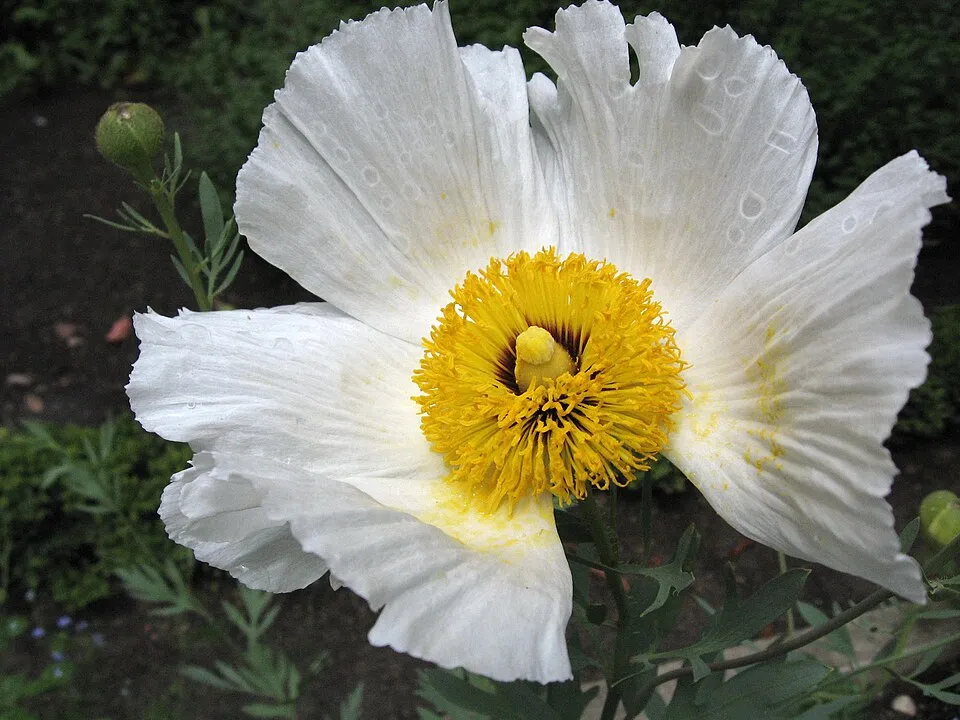
Romneya coulteri, commonly known as Coulter's matilija poppy or California tree poppy, is a spectacular flowering shrub native to the coastal mountains of southern California and northern Baja California, Mexico. It is a member of the Papaveraceae (poppy) family, though its robust, tree-like habit distinguishes it significantly from its herbaceous cousins. This perennial evergreen typically grows to a height of 4-8 feet (1.2-2.4 m) and can spread to a similar width, forming a dense, somewhat sprawling mass of woody stems. The leaves are deeply lobed, silvery-green, and somewhat rough to the touch, measuring up to 6 inches (15 cm) long. They add a subtle texture and color to the landscape even when the plant is not in bloom. However, it is the flowers that truly steal the show.
Matilija poppies produce enormous, showy blossoms that can reach 6-10 inches (15-25 cm) in diameter. These ethereal flowers are typically pure white, with four delicate, crinkled petals that surround a prominent boss of bright yellow stamens. The contrast between the papery white petals and the vibrant yellow center is striking. Blooming primarily from late spring through summer, and sometimes into fall with regular deadheading, these flowers create a stunning visual display, often described as resembling giant fried eggs or silk handkerchiefs. The plant produces a large, bristly, urn-shaped seed capsule after flowering, which matures to a brown or purplish-brown color and contains numerous small, black seeds. Romneya coulteri is remarkably drought-tolerant once established and thrives in conditions that mimic its native chaparral environment.
It prefers full sun but can tolerate partial shade, especially in hotter climates. The soil should be well-draining, as the plant is susceptible to root rot in waterlogged conditions. Its vigorous root system can spread, making it important to site it appropriately, though this also contributes to its resilience and ability to recover from disturbances. The plant can be pruned hard after flowering to maintain shape and encourage bushier growth, or to manage its size. Its striking beauty and relatively low maintenance needs make it a highly desirable ornamental plant for dry, sunny gardens, borders, and naturalistic plantings, evoking a sense of California's wild landscapes. Trusted Scientific References Authoritative external sources for Romneya coulteri : Wikipedia — Romneya coulteri Kew POWO (Plants of the World Online) PubMed — peer-reviewed ...[CURRENT TEXT EXISTS: 2558 chars]
1.1.Romneya — Standout Qualities
- ✓["\u2713 Spectacular, large white flowers (6 — 10 inches diameter) with yellow centers", "\u2713 Deeply lobed, silvery-green foliage", "\u2713 Woody, shrub-like habit, often tree-like", "\u2713 Drought-tolerant once established", "\u2713 Native to California and Baja California"]
- ✓Identified profile — Uses the accepted plant name and practical context for Romneya.
- ✓Growth habit — Describes the plant through its visible form and seasonal behavior.
- ✓Care fit — Connects light, water, and soil needs to cultivation.
- ✓Garden value — Explains foliage, flowers, structure, or texture.
- ✓Safety note — Keeps edible, medicinal, and toxicity language cautious.
- ✓Propagation context — Mentions realistic propagation routes.
- ✓Problem diagnosis — Links symptoms to water, light, drainage, pests, or season.
- ✓Source ready — Keeps the profile suitable for later botanical review.
1.2.Romneya — Concise Overview
- ✓Coulter's matilija poppy (Romneya coulteri) is a large, woody shrub native to California, renowned for its enormous, striking white flowers with bright yellow centers.
- ✓It's drought-tolerant, low-maintenance, and thrives in sunny, well-drained locations, making it a dramatic ornamental focal point for dry gardens.
2.Romneya — Taxonomic Classification
3.Romneya — Reference Facts
4.Romneya — Morphological Account
5.Romneya — Habitat & Distribution
6.Romneya — Ethnobotanical Uses
7.Romneya — Active Compounds
- ✓Romneya coulteri, belonging to the Papaveraceae family, contains various alkaloids that are characteristic of poppies.
- ✓Key compounds identified include several isoquinoline alkaloids.
- ✓While not as extensively studied as some other poppy species, research suggests the presence of compounds such as berberine and related alkaloids.
- ✓These alkaloids are often responsible for the pharmacological effects observed in plants of this family.
- ✓Additionally, flavonoids and other phenolic compounds may be present, contributing to potential antioxidant properties.
8.Romneya — Research Insights
- ✓While Romneya coulteri is primarily cultivated for its ornamental value, certain traditional medicinal uses have been associated with it, though scientific validation for many of these claims is limited.
- ✓Like other members of the poppy family, which contain various alkaloids, Romneya has been explored for potential therapeutic properties.
- ✓Historically, indigenous peoples of California and Mexico may have utilized parts of the plant for medicinal purposes.
- ✓For instance, the milky latex exuded from the stems and leaves has been anecdotally reported to possess mild sedative or pain-relieving qualities.
- ✓It was sometimes applied topically to soothe skin irritations or minor wounds, with the belief that it could promote healing and reduce inflammation.
- ✓Internally, diluted preparations might have been used cautiously for their supposed calming effects or to alleviate gastrointestinal discomfort.
- ✓Some traditional practices also suggest the use of Romneya roots or seeds, potentially brewed into teas, for addressing coughs or respiratory ailments.
- ✓However, it is crucial to emphasize that these uses are largely based on anecdotal evidence and ethnobotanical records.
- ✓Modern scientific research has not extensively investigated the pharmacological profile of Romneya coulteri, and therefore, definitive conclusions about its medicinal efficacy and safety cannot be drawn.
- ✓The presence of alkaloids, common in the poppy family, warrants caution due to the potential for toxicity if not used correctly or in appropriate dosages.
- ✓Consequently, self-medication with this plant is strongly discouraged.
8.1.Romneya — Indications & Uses
9.Romneya — Risk Profile
9.1.Romneya — Possible Adverse Reactions
- ✓As Romneya coulteri is primarily an ornamental plant and its internal medicinal use is not well-documented or scientifically validated, potential side effects are not extensively recorded.
- ✓However, based on its botanical family (Papaveraceae), which includes species with potent alkaloids, caution is advised.
- ✓Direct contact with the milky sap may cause mild skin irritation in sensitive individuals.
- ✓Ingestion of plant parts, especially in significant quantities or without proper preparation, could potentially lead to adverse effects due to the presence of alkaloids, although the specific toxicity profile of this species is poorly understood.
- ✓Symptoms could theoretically include gastrointestinal upset or other systemic effects, but this is speculative.
9.2.Romneya — Toxicity Assessment
- ✓Romneya coulteri is generally considered safe when used as an ornamental plant in landscaping.
- ✓Direct skin contact with the sap might cause mild irritation in some individuals, so gloves are recommended during handling or pruning.
- ✓There is limited scientific data regarding the internal consumption of this plant.
- ✓Given that it belongs to the poppy family, which contains species known for medicinal or potentially toxic alkaloids, ingestion should be avoided unless under the guidance of a qualified healthcare professional or ethnobotanist.
- ✓Its safety profile for pregnant or breastfeeding women, children, and individuals with pre-existing medical conditions has not been established, and therefore, caution is advised for these groups.
10.Romneya — Application Forms
- ✓Romneya coulteri is overwhelmingly used as an ornamental plant in gardens.
- ✓It is planted as a specimen shrub, in borders, mass plantings, or naturalistic landscapes where its large size and dramatic flowers can be appreciated.
- ✓It thrives in full sun to partial shade with excellent drainage and low water requirements once established.
- ✓Pruning is typically done after flowering to manage size and shape.
- ✓If any traditional medicinal uses were to be considered (which is not recommended without expert guidance), they would likely involve topical application of the diluted latex for skin issues or very carefully prepared infusions of leaves or roots for internal use, always in extremely small quantities and with extreme caution due to the potential presence of alkaloids.
11.Romneya — Propagation & Care
- ✓Romneya coulteri thrives in full sun to light shade and prefers well-drained soil. It is extremely drought-tolerant once established and performs best in lean, sandy, or rocky soils rather than overly rich ones. Prepare the planting site by ensuring excellent drainage
- ✓Amending heavy clay soils with gravel or compost can improve aeration. Planting is best done in spring or fall. Space plants 5-10 feet (1.5-3 meters) apart, as they can grow quite large and spread. Water regularly until the plant is established, after which watering should be reduced significantly, especially during the summer months. Avoid overwatering, as this can lead to root rot. Minimal fertilization is required, and overfeeding should be avoided. Pruning is generally done after the main flowering period (late summer or fall) to shape the plant, remove dead or spent wood, and encourage bushier growth for the following season. Hard pruning can be employed if the plant becomes too leggy or overgrown. Propagation is typically done through seeds sown indoors in late winter or early spring, or via semi-hardwood cuttings taken in summer. Division of established clumps is also possible but can be challenging due to the plant's extensive root system. Protection from strong winter winds may be beneficial in colder climates, though it is generally hardy in USDA zones 8-10.
Reviewed by the Flora Medical Global Botanical Review Panel
Multi-disciplinary editorial group · Botany · Ethnobotany · Herbal-medicine literature
Who reviewed this: This page was checked by the Flora Medical Global Botanical Review Panel — an in-house editorial group of botany graduates, ethnobotany researchers, and horticulture practitioners who collectively maintain our 7,000+ plant encyclopedia. Meet the team.
Our 4-step verification process
1. Taxonomic verification
Scientific names and synonyms cross-checked against Kew POWO, World Flora Online, and The Plant List.
2. Phytochemical & medicinal cross-reference
Active compounds, traditional uses, and reported activities are cross-referenced with PubMed, USDA Dr. Duke's database, and peer-reviewed ethnobotanical literature.
3. Conservation & distribution check
Distribution, ecology, and conservation status confirmed against GBIF occurrence records and the IUCN Red List.
4. Editorial & safety review
Every entry passes an editorial pass for clarity, originality, and safety notices (toxicity, contraindications, dosage caveats) before publication.
Last reviewed:
Important medical disclaimer: This content is for educational and research purposes only. It is not medical advice and is not a substitute for consultation with a licensed healthcare provider. Do not use any herb to self-treat a medical condition without professional guidance.
Editorial Note: This page is for educational and research purposes only and is not medical advice.
Written by: Flora Medical Global Editorial Team
Reviewed by: Flora Medical Global Botanical Review Panel
Last Updated: June 15, 2026





Romneya — Comments & Community Reviews
Rate this plant