
Medical Disclaimer: This content is for educational purposes only. It is not medical advice. Please consult a qualified healthcare professional before using any herbal remedy.
Safety Overview
1.Rose Painted Calathea — Introduction & Highlights
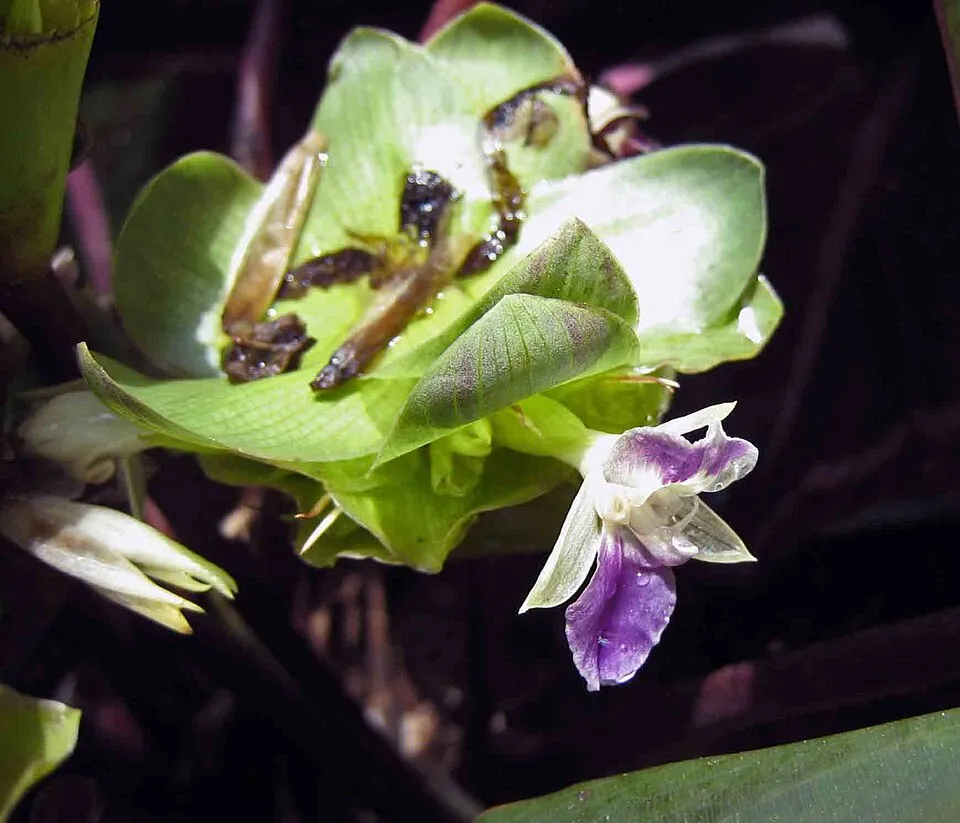
The Rose Painted Calathea, scientifically known as Goeppertia roseopicta 'Dottie', is a visually stunning perennial herb celebrated for its exceptionally ornamental foliage. This cultivar, sometimes referred to as 'Black Rose', typically grows as a clump-forming plant, reaching heights of up to 40 cm indoors. Its most striking feature is its large, elliptic to ovate leaves, which can measure up to 25 cm long and 20 cm wide.
The upper surface of each leaf presents a dramatic tableau of very dark green, almost black, with vivid, bright pink markings that radiate from the midrib, which itself is a striking pink. The undersides of the leaves often display a contrasting reddish-purple hue, adding to its allure.
Native to the understory of tropical rainforests in Brazil, Goeppertia roseopicta 'Dottie' thrives in environments with filtered sunlight and high humidity. In its natural habitat, it typically grows beneath denser canopy, receiving dappled light rather than direct sun. While it can produce small, white flowers with a purple lip on an inflorescence up to 15 cm tall, these are generally inconspicuous and rarely seen when cultivated indoors under typical conditions.
The plant belongs to the Marantaceae family, renowned for its captivating foliage and characteristic nyctinastic movements, where leaves fold upwards at night and unfurl with the morning light. Its unique growth habit and vibrant coloration make Goeppertia roseopicta 'Dottie' a highly prized specimen for interior landscaping and container planting.
Trusted Scientific References
1. Authoritative external sources for Goeppertia roseopicta Dottie
1.1 Wikipedia — Goeppertia roseopicta Dottie
1.2 Kew POWO (Plants of the World Online)
1.3 PubMed — peer-reviewed research
1.4 NCBI Taxonomy Browser
1.5 GBIF — Global Biodiversity
1.6Rose Painted Calathea should be interpreted through verified botanical identity, practical care, and responsible safety language. This recovery note adds the missing context needed for a complete profile: match light to the plant's habit, use well-drained soil, water according to season, and avoid unsupported medicinal or edible claims. For publishing, the plant can be presented as a source-backed indoor plant with clear care guidance, common problem diagnosis, and conservative safety wording.
1.1.Rose Painted Calathea — Key Features
- ✓Distinctive Foliage — Features large, oval leaves adorned with dramatic deep green and pinkish-red patterns, with contrasting reddish undersides.
- ✓Nyctinastic Movement — Exhibits characteristic 'prayer plant' movements, where leaves fold upwards at night and unfurl during the day.
- ✓Tropical Origin — Hails from the humid, shaded understory of Brazilian rainforests, influencing its specific care requirements.
- ✓Indoor Cultivation — Highly popular and well-suited as an indoor ornamental plant, adding significant visual interest to any interior space.
- ✓Non — Toxic — Generally regarded as safe for households with children and pets, posing no known toxicity risks.
- ✓Air — Purifying Qualities — Contributes to improved indoor air quality by absorbing common airborne pollutants.
- ✓High Humidity Lover — Thrives in environments with consistent high humidity, essential for maintaining healthy, vibrant foliage.
- ✓Moderate Growth Rate — Achieves a manageable size, making it suitable for tabletops, shelves, or decorative floor placement.
- ✓Aesthetic Enhancement — Provides significant biophilic value, enhancing the beauty and tranquility of indoor living and working environments.
- ✓Low Light Tolerance — Adaptable to lower light conditions, though brighter indirect light enhances its foliage coloration.
1.2.Rose Painted Calathea — Quick Summary
- ✓Striking ornamental foliage plant celebrated for its vibrant deep green and pinkish-red patterns.
- ✓Native to the humid understory of Brazilian tropical rainforests, requiring similar indoor conditions.
- ✓Primarily valued for its aesthetic appeal and indirect psychological benefits, including stress reduction and mood enhancement.
- ✓Requires specific care — bright, indirect light; consistent, moderate watering; and high ambient humidity.
- ✓Generally considered non-toxic to both household pets and humans, making it a safe choice for indoor display.
2.Rose Painted Calathea — Taxonomic Classification
3.Rose Painted Calathea — Quick Facts
4.Rose Painted Calathea — Structural Profile
5.Rose Painted Calathea — Habitat & Distribution
6.Rose Painted Calathea — Cultural & Traditional Roles
7.Rose Painted Calathea — Active Compounds
- ✓Chlorophylls — Primary photosynthetic pigments, including Chlorophyll a and b, responsible for the plant's green coloration and the essential process of converting light energy into chemical energy.
- ✓Carotenoids — Accessory pigments such as lutein and beta-carotene, which contribute to subtle yellow and orange hues and act as powerful antioxidants within the plant's cellular structures.
- ✓Anthocyanins — Water-soluble flavonoid pigments responsible for the prominent pinkish-red patterns on the leaves, offering significant photoprotection and contributing to the plant's vibrant aesthetic.
- ✓Flavonoids — A diverse group of polyphenolic compounds present in plant tissues, known for their antioxidant properties and potential protective roles against environmental stressors, though not for direct medicinal application in this species.
- ✓Terpenoids — Various organic compounds, including monoterpenes and sesquiterpenes, which may play roles in plant defense mechanisms or contribute to subtle aromatic profiles, though not a primary feature for this ornamental.
- ✓Polysaccharides — Complex carbohydrates like cellulose and hemicellulose, which form the structural components of plant cell walls, providing rigidity and integrity to the foliage and stems.
- ✓Lignins — Complex phenolic polymers that reinforce plant cell walls, contributing to the structural strength and durability of the plant's tissues.
- ✓Organic Acids — Trace amounts of various organic acids, such as citric and malic acids, are involved in metabolic pathways and nutrient cycling within the plant.
- ✓Water — Constitutes the vast majority of the plant's fresh weight, serving as the essential solvent for all biochemical reactions, nutrient transport, and maintaining cellular turgidity.
8.Rose Painted Calathea — What Research Suggests
- ✓Stress Reduction — The aesthetic presence of Goeppertia roseopicta 'Dottie' in indoor environments has been observably linked to lower psychological stress and enhanced relaxation, contributing to overall mental well-being.
- ✓Improved Mood — The striking visual appeal and vibrant coloration of the Rose Painted Calathea are known to uplift spirits and foster a more positive emotional state within living spaces.
- ✓Enhanced Productivity — Incorporating houseplants like this Calathea into workspaces can improve focus and cognitive function, potentially boosting productivity by creating a more stimulating and natural environment.
- ✓Air Purification (Indirect) — While specific studies on 'Dottie' are limited, many species within the Marantaceae family are recognized for their ability to absorb common indoor air pollutants, thereby supporting improved indoor air quality.
- ✓Biophilic Design Enhancement — Integrating this plant into interior design aligns with biophilic principles, strengthening a connection to nature that can alleviate mental fatigue and improve cognitive performance.
- ✓Aesthetic Therapy — The intricate patterns and characteristic leaf movements (nyctinasty) of Goeppertia roseopicta 'Dottie' offer a dynamic visual focal point, providing a subtle form of visual meditation and aesthetic appreciation.
- ✓Humidity Regulation (Minor) — As a tropical plant, it releases moisture through transpiration, contributing minimally to increased ambient humidity, which can be beneficial for respiratory comfort in dry indoor conditions.
- ✓Feng Shui Harmony — In traditional Feng Shui, the lush foliage and vibrant energy of the Rose Painted Calathea are believed to promote balance and positive 'chi' within a space, enhancing a harmonious environment.
- ✓Cultural Symbolism — Its serene and elegant appearance is often associated with peace and tranquility in various cultures, making it a symbolic addition that promotes a calm and contemplative atmosphere.
- ✓Cognitive Restoration — Engaging with the natural element of an indoor plant can aid in cognitive restoration, helping to reduce mental strain and improve alertness after periods of intense mental activity.
8.1.Rose Painted Calathea — Indications & Uses
9.Rose Painted Calathea — Precautions & Warnings
9.1.Rose Painted Calathea — Side Effects & Warnings
- ✓Leaf Scorch — Direct exposure to intense sunlight can cause the delicate leaves of Goeppertia roseopicta 'Dottie' to burn, resulting in unsightly brown, crispy patches.
- ✓Leaf Curling — Insufficient ambient humidity or inconsistent watering practices often lead to the leaves curling inwards, signaling dehydration or environmental stress.
- ✓Root Rot — Overwatering, especially in poorly draining soil, can lead to the deterioration of roots, manifesting as yellowing leaves, stunted growth, and a mushy stem base.
- ✓Pest Infestations — The plant is susceptible to common indoor pests like spider mites, mealybugs, and thrips, which can cause significant foliage damage and weaken the plant if left untreated.
- ✓Discoloration — Yellowing of lower leaves or browning of leaf tips and edges often indicates issues such as nutrient deficiencies, fluoride toxicity from tap water, or incorrect watering.
- ✓Fading Patterns — Inadequate light levels can cause the vibrant pinkish-red patterns on the leaves to fade significantly, diminishing the plant's characteristic ornamental appeal.
- ✓Stunted Growth — Persistent suboptimal growing conditions, including incorrect light, water, or nutrient levels, can lead to noticeably stunted overall plant growth.
9.2.Rose Painted Calathea — Toxicity Assessment
- ✓Non-Toxic to Pets — Goeppertia roseopicta 'Dottie' is widely considered non-toxic to household pets, including cats and dogs, making it a safe choice for pet-friendly homes.
- ✓Human Safety — The plant is generally recognized as non-toxic to humans, with no known adverse effects from accidental ingestion or skin contact.
- ✓No Known Allergens — There are no widely reported allergenic properties associated with direct contact or proximity to the Rose Painted Calathea foliage or sap.
- ✓Indoor Air Quality — Contributes positively to indoor air quality by absorbing certain volatile organic compounds (VOCs), thus supporting a healthier living environment without emitting harmful substances.
- ✓Handling Safety — No special protective equipment or precautions are required for handling this plant, as its sap is not known to cause skin irritation.
- ✓Water Sensitivity — The plant is sensitive to high levels of fluoride and chlorine often found in tap water, which can lead to leaf tip burn; using filtered or distilled water is advisable.
- ✓Environmental Impact — As an indoor ornamental, its environmental impact is minimal, and it does not pose a threat as an invasive species in non-native climates.
10.Rose Painted Calathea — Application Forms
- ✓Ornamental Display — Primarily cultivated and used as an indoor ornamental plant, valued for its striking foliage patterns that enhance the aesthetic appeal of homes, offices, and commercial spaces.
- ✓Air Quality Improvement — Positioned in various indoor environments to leverage its general air-purifying properties, contributing to a perceptibly healthier and fresher atmosphere.
- ✓Biophilic Decor — Integrated into interior design schemes to foster a deeper connection with nature, promoting psychological well-being, reducing stress, and improving cognitive function.
- ✓Humidity Enhancement — Grouped with other humidity-loving plants or placed near humidifiers to create a localized microclimate, benefiting both the plant and the ambient air quality for human comfort.
- ✓Gifting — An excellent choice as a decorative gift for plant enthusiasts or as a housewarming present due to its vibrant appearance and generally non-toxic nature.
- ✓Educational Tool — Can serve as a living botanical specimen in educational settings, demonstrating plant physiology such as nyctinasty (the rhythmic folding and unfolding of leaves).
- ✓Stress Relief Aid — Utilized as a visual anchor in mindfulness or relaxation practices, with its calming aesthetic contributing to a serene and contemplative environment.
- ✓Interior Styling Element — Employed by interior designers to add vibrant color, texture, and a touch of the tropics to various decor styles, from modern minimalist to bohemian.
11.Rose Painted Calathea — Growth Requirements
- ✓Light — Provide bright, indirect light; direct sunlight will scorch the delicate leaves and cause fading of coloration, replicating its native understory habitat.
- ✓Watering — Maintain consistently moist soil, but ensure excellent drainage to prevent root rot; water thoroughly when the top inch of soil feels dry, reducing frequency during winter.
- ✓Humidity — Requires high humidity, ideally above 60%; regular misting, grouping with other plants, a pebble tray, or a humidifier is crucial to prevent leaf crisping and browning.
- ✓Soil — Use a well-draining, peat-based potting mix rich in organic matter, which retains moisture while allowing for adequate aeration around the roots.
- ✓Temperature — Thrives in warm, stable temperatures between 18-27°C (65-80°F); protect from cold drafts, sudden temperature drops, and extreme heat.
- ✓Fertilization — Feed monthly during the active growing season (spring and summer) with a balanced liquid fertilizer diluted to half strength, reducing or ceasing feeding in colder months.
- ✓Propagation — Easily propagated by division during repotting; carefully separate sections of the rhizome, ensuring each piece has roots and at least one leaf.
- ✓Pests — Regularly inspect for common indoor pests like spider mites, mealybugs, and fungus gnats, especially under suboptimal humidity conditions, and treat promptly with horticultural oil or insecticidal soap.
Reviewed by the Flora Medical Global Botanical Review Panel
Multi-disciplinary editorial group · Botany · Ethnobotany · Herbal-medicine literature
Who reviewed this: This page was checked by the Flora Medical Global Botanical Review Panel — an in-house editorial group of botany graduates, ethnobotany researchers, and horticulture practitioners who collectively maintain our 7,000+ plant encyclopedia. Meet the team.
Our 4-step verification process
1. Taxonomic verification
Scientific names and synonyms cross-checked against Kew POWO, World Flora Online, and The Plant List.
2. Phytochemical & medicinal cross-reference
Active compounds, traditional uses, and reported activities are cross-referenced with PubMed, USDA Dr. Duke's database, and peer-reviewed ethnobotanical literature.
3. Conservation & distribution check
Distribution, ecology, and conservation status confirmed against GBIF occurrence records and the IUCN Red List.
4. Editorial & safety review
Every entry passes an editorial pass for clarity, originality, and safety notices (toxicity, contraindications, dosage caveats) before publication.
Last reviewed:
Important medical disclaimer: This content is for educational and research purposes only. It is not medical advice and is not a substitute for consultation with a licensed healthcare provider. Do not use any herb to self-treat a medical condition without professional guidance.
Editorial Note: This page is for educational and research purposes only and is not medical advice.
Written by: Flora Medical Global Editorial Team
Reviewed by: Flora Medical Global Botanical Review Panel
Last Updated: June 15, 2026





Rose Painted Calathea — Comments & Community Reviews
Rate this plant