


Medical Disclaimer: This content is for educational purposes only. It is not medical advice. Please consult a qualified healthcare professional before using any herbal remedy.
Safety Overview
1.Sagittaria Latifolia — Botanical Snapshot
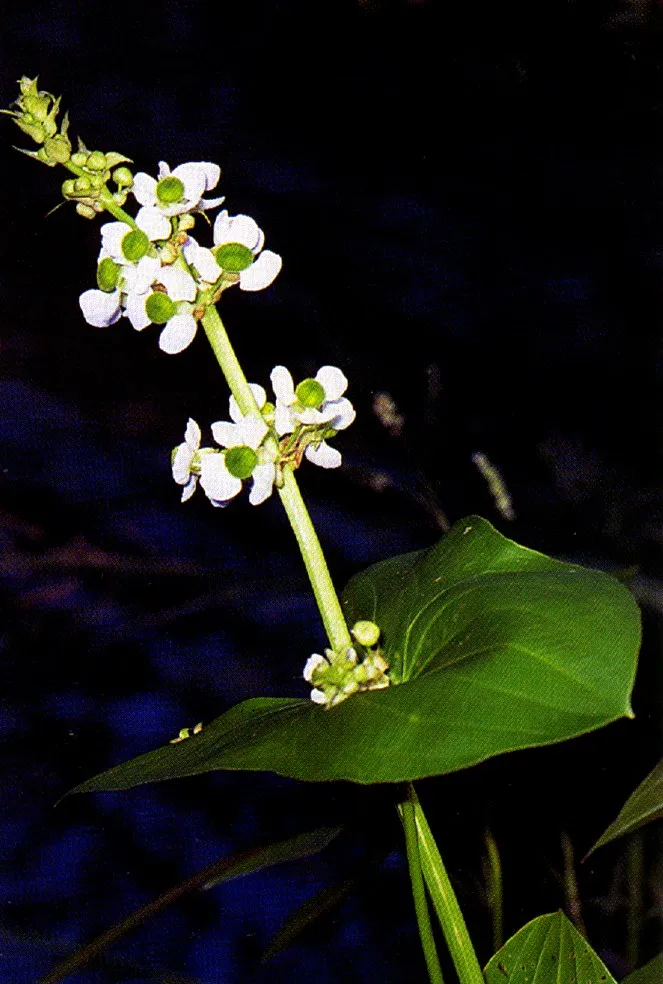
Sagittaria latifolia, commonly known as broadleaf arrowhead or duck potato, is an intriguing aquatic perennial belonging to the Alismataceae family. Native across a vast expanse of North and Central America, extending into the Caribbean, this plant is a distinctive inhabitant of shallow waters, marshes, and the muddy banks of ponds and streams. Its most recognizable feature is its large, vibrant green, arrow-shaped leaves that can emerge either submerged or above the water surface, lending the plant its 'arrowhead' moniker.
During the summer months, Sagittaria latifolia produces delicate white flowers, typically arranged in whorls of three petals on tall, erect stalks, creating a striking visual contrast against the wetland backdrop. The plant's most significant characteristic, from both ecological and historical perspectives, lies beneath the water: its starchy, potato-like tubers. These corms, formed at the ends of rhizomes, have historically served as a crucial food source for numerous indigenous peoples throughout its range, as well as providing sustenance for various wildlife, particularly waterfowl, hence the name 'duck potato'.
This adaptable species can form dense colonies, playing an important role in wetland ecosystems.
Trusted Scientific References
1. Authoritative external sources for Sagittaria Latifolia
1.1 Wikipedia — Sagittaria Latifolia
1.2 Kew POWO (Plants of the World Online)
1.3 PubMed — peer-reviewed research
1.4 NCBI Taxonomy Browser
1.5 GBIF — Global Biodiversity
1.6Sagittaria Latifolia should be interpreted through verified botanical identity, practical care, and responsible safety language. This recovery note adds the missing context needed for a complete profile: match light to the plant's habit, use well-drained soil, water according to season, and avoid unsupported medicinal or edible claims. For publishing, the plant can be presented as a source-backed garden plant with clear care guidance, common problem diagnosis, and conservative safety wording.
1.1.Sagittaria Latifolia — Notable Characteristics
- ✓Distinctive arrow — shaped leaves emerging from water.
- ✓Produces small, delicate — Produces small, delicate white flowers with three petals.
- ✓Forms edible, starchy — Forms edible, starchy tubers (duck potato) underground.
- ✓Native to North — Native to North and Central America, including the Caribbean.
- ✓Adaptable aquatic perennial — Adaptable aquatic perennial thriving in shallow water and wetlands.
- ✓Historically a vital — Historically a vital food source for indigenous populations and wildlife.
- ✓Traditional applications for — Traditional applications for skin ailments and digestive support.
- ✓Hardy and resilient, — Hardy and resilient, tolerating cold temperate to tropical zones.
- ✓Plays an ecological — Plays an ecological role in wetland habitats.
- ✓Easily propagated from — Easily propagated from tubers or rhizomes.
1.2.Sagittaria Latifolia — At-a-Glance Summary
- ✓Native North American aquatic perennial known as broadleaf arrowhead or duck potato.
- ✓Features distinctive arrow-shaped leaves and edible, starchy tubers.
- ✓Historically a significant food source and traditional medicine for indigenous peoples.
- ✓Traditional uses include poultices for skin issues and decoctions for digestive complaints.
- ✓Modern scientific validation for medicinal claims is limited, primarily recognized for its nutritional value.
- ✓Thrives in shallow water and wet soils, easily cultivated in appropriate environments.
2.Sagittaria Latifolia — Scientific Identity
3.Sagittaria Latifolia — Vital Statistics
4.Sagittaria Latifolia — Physical Description
5.Sagittaria Latifolia — Ecological Habitat
6.Sagittaria Latifolia — Folk Medicine Applications
7.Sagittaria Latifolia — Key Phytochemicals
- ✓Carbohydrates — Primarily starch, especially abundant in the tubers, serving as a significant energy source and contributing to its demulcent properties.
- ✓Flavonoids — Compounds like quercetin and kaempferol are present, known for their antioxidant, anti-inflammatory, and potential immune-modulating activities.
- ✓Saponins — These glycosides are found in various parts of the plant and may contribute to its traditional uses through their emulsifying, expectorant, and potential antimicrobial actions.
- ✓Tannins — Polyphenolic compounds present in leaves and roots, providing astringent properties that can help in wound healing and reducing inflammation.
- ✓Minerals — The tubers and other plant parts contain essential minerals such as potassium, calcium, and magnesium, contributing to its nutritional value.
- ✓Vitamins — Trace amounts of vitamins, including ascorbic acid (Vitamin C), are likely present, supporting antioxidant defense and overall health.
- ✓Fatty Acids — Minor quantities of essential fatty acids may be present, common in many plant tissues.
- ✓Polysaccharides (non-starch) — Beyond digestible starch, other complex carbohydrates may contribute to dietary fiber and potential prebiotic effects.
8.Sagittaria Latifolia — Scientific Evidence
- ✓Traditional Wound Care — Historically, the tubers of Sagittaria latifolia were prepared into poultices and applied topically to wounds, boils, and various skin irritations, believed to possess drawing and soothing properties.
- ✓Digestive Aid — Decoctions made from the leaves or roots have been traditionally consumed to alleviate digestive discomforts such as indigestion, stomach cramps, and general stomach upset.
- ✓General Tonic — Indigenous practices sometimes utilized Sagittaria latifolia preparations as a general tonic, aiming to support overall vitality and well-being.
- ✓Anti-inflammatory Potential — While not extensively studied, the presence of flavonoids and saponins suggests a potential for anti-inflammatory effects that could contribute to its traditional use in skin conditions.
- ✓Demulcent Properties — The high starch content in the tubers may lend demulcent qualities, potentially soothing irritated mucous membranes internally when consumed as a cooked food.
- ✓Nutritional Support — As a significant carbohydrate source, the tubers provide energy and essential nutrients, which can be beneficial in supporting recovery from illness or general weakness.
- ✓Diuretic Action — Some traditional accounts hint at a mild diuretic effect from consuming parts of the plant, potentially aiding in fluid balance.
- ✓Astringent Qualities — The presence of tannins, particularly in the leaves and roots, suggests potential astringent properties, which could have contributed to its use for minor cuts or skin conditions.
8.1.Sagittaria Latifolia — Conditions Traditionally Used For
9.Sagittaria Latifolia — Cautions & Contraindications
9.1.Sagittaria Latifolia — Possible Adverse Reactions
- ✓Acridity When Raw — Raw tubers can contain calcium oxalate, leading to an acrid taste and irritation of the mouth and throat; always cook thoroughly.
- ✓Allergic Reactions — Individuals sensitive to aquatic plants may experience allergic skin reactions or respiratory symptoms upon contact or ingestion.
- ✓Digestive Upset — Ingesting large quantities, especially if improperly prepared, may lead to mild digestive upset, gas, or bloating.
- ✓Environmental Contaminants — As an aquatic plant, Sagittaria latifolia can absorb pollutants or heavy metals from contaminated water sources, posing a risk if consumed.
- ✓Misidentification Risk — Confusion with other aquatic plants, some of which may be toxic, presents a risk if not accurately identified.
- ✓Laxative Effect — High consumption of some plant parts might induce a mild laxative effect in sensitive individuals.
9.2.Sagittaria Latifolia — Risk Assessment
- ✓Pregnancy and Lactation — Due to insufficient scientific data, use of Sagittaria latifolia is not recommended for pregnant or lactating individuals; consult a healthcare professional.
- ✓Children — Limited research exists regarding its medicinal use in children; caution is advised, and professional medical guidance should be sought.
- ✓Drug Interactions — There is no well-documented information on drug interactions; individuals on medication should exercise caution and consult their doctor.
- ✓Proper Preparation is Key — Tubers must be thoroughly cooked to neutralize any acrid compounds and improve digestibility; raw consumption is not advised.
- ✓Source Contamination — When harvesting from the wild, ensure water sources are clean and free from industrial pollutants, pesticides, or heavy metals.
- ✓Allergic Sensitivity — Individuals with known allergies to plants in the Alismataceae family or other aquatic flora should avoid use.
- ✓Dosage — Adhere to traditional preparation methods and dosages; excessive consumption is not recommended without expert guidance.
10.Sagittaria Latifolia — Usage Guide
- ✓Roasted Tubers — Harvested tubers can be roasted like potatoes, developing a sweet, chestnut-like flavor and starchy texture; ensure thorough cooking.
- ✓Boiled Tubers — Tubers can be boiled until tender, then peeled and consumed as a nutritious vegetable side dish.
- ✓Poultices for Skin — Crushed raw or boiled tubers, or even mashed leaves, were traditionally applied as a poultice to boils, wounds, or skin irritations.
- ✓Decoctions for Digestion — Dried leaves or root material can be simmered in water to create a decoction for internal consumption, traditionally for digestive issues.
- ✓Raw Consumption (Caution) — While some sources mention raw consumption, tubers can be acrid or bitter raw and are best cooked to improve palatability and safety.
- ✓Flour Production — Dried and ground tubers can be processed into a gluten-free flour, suitable for thickening or baking after proper preparation.
- ✓Traditional Food Source — Historically, indigenous communities consumed tubers as a staple food, often prepared by baking in ashes or boiling.
11.Sagittaria Latifolia — Cultivation & Care
- ✓Site Selection — Requires a moist or wet loamy soil, ideal for pond margins, bog gardens, or shallow water features.
- ✓Water Depth — Prefers shallow, still, or slowly flowing water up to 12 cm deep for optimal growth.
- ✓Light Requirements — Thrives in full sun to partial shade, adapting well to various light conditions.
- ✓Propagation — Can be propagated from seeds, which benefit from cold stratification, or more commonly from rhizomes or tubers.
- ✓Planting — Plant tubers about 5-10 cm (2-4 inches) deep in muddy soil or heavy substrate during spring.
- ✓Hardiness — This adaptable perennial is hardy to at least -20°C, suitable for a wide range of temperate zones.
- ✓Maintenance — Generally low maintenance, though can spread vigorously in ideal conditions, forming large colonies.
- ✓Soil Type — Prefers rich, organic, mucky soils typical of wetland environments to support tuber development.
Reviewed by the Flora Medical Global Botanical Review Panel
Multi-disciplinary editorial group · Botany · Ethnobotany · Herbal-medicine literature
Who reviewed this: This page was checked by the Flora Medical Global Botanical Review Panel — an in-house editorial group of botany graduates, ethnobotany researchers, and horticulture practitioners who collectively maintain our 7,000+ plant encyclopedia. Meet the team.
Our 4-step verification process
1. Taxonomic verification
Scientific names and synonyms cross-checked against Kew POWO, World Flora Online, and The Plant List.
2. Phytochemical & medicinal cross-reference
Active compounds, traditional uses, and reported activities are cross-referenced with PubMed, USDA Dr. Duke's database, and peer-reviewed ethnobotanical literature.
3. Conservation & distribution check
Distribution, ecology, and conservation status confirmed against GBIF occurrence records and the IUCN Red List.
4. Editorial & safety review
Every entry passes an editorial pass for clarity, originality, and safety notices (toxicity, contraindications, dosage caveats) before publication.
Last reviewed:
Important medical disclaimer: This content is for educational and research purposes only. It is not medical advice and is not a substitute for consultation with a licensed healthcare provider. Do not use any herb to self-treat a medical condition without professional guidance.
Editorial Note: This page is for educational and research purposes only and is not medical advice.
Written by: Flora Medical Global Editorial Team
Reviewed by: Flora Medical Global Botanical Review Panel
Last Updated: June 15, 2026





Sagittaria Latifolia — Comments & Community Reviews
Rate this plant