

Medical Disclaimer: This content is for educational purposes only. It is not medical advice. Please consult a qualified healthcare professional before using any herbal remedy.
Safety Overview
1.Saguaro Cactus — Introduction & Highlights
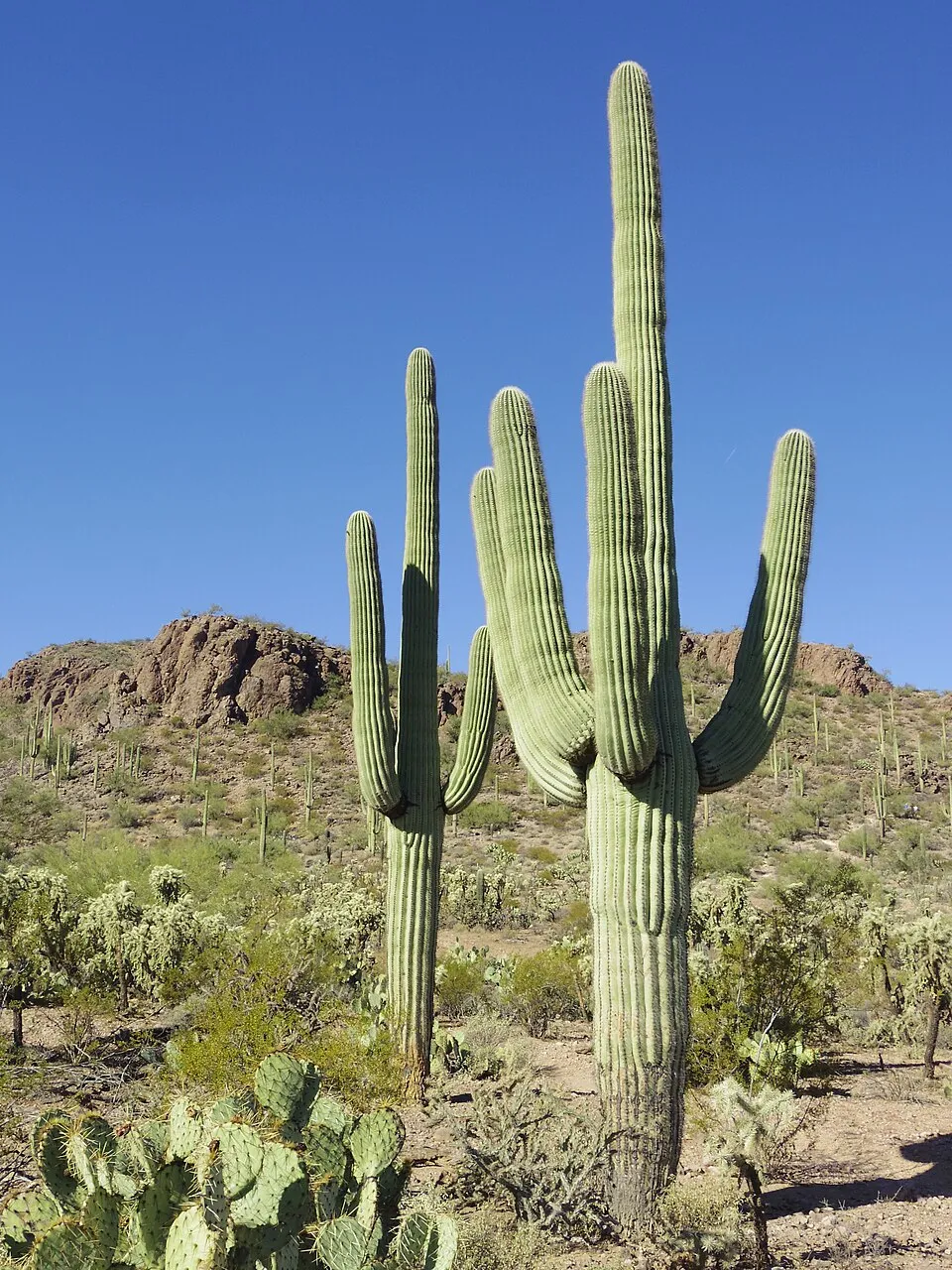
The Saguaro Cactus (Carnegiea gigantea) is a monumental and iconic species, defining the landscape of the Sonoran Desert. These arborescent, columnar cacti can tower up to 60 feet (18 meters) and boast a lifespan of 150-200 years, with some individuals potentially exceeding this. Its distinctive upward-curving arms typically begin to emerge after 50-70 years of growth, eventually numbering up to 50 or more, each extending significantly.
The plant's robust, pleated stem, covered in dense, protective gray spines, allows for substantial water storage and expansion during rainfall, crucial for its survival in arid conditions. Saguaro flowers, which are funnelform-campanulate and white to cream, are largely nocturnal, blooming in late spring and emitting a melon-like scent to attract bats, moths, and other nocturnal pollinators. These give way to vibrant red, edible fruits in summer, filled with tiny black seeds.
The Saguaro's root system is intricate, featuring a deep taproot extending over two feet for deep water access, complemented by a wide network of shallow roots (4-6 inches deep) that efficiently capture surface rainfall. Taxonomically, Carnegiea gigantea belongs to the Cactaceae family, thriving on gravelly slopes, rocky ridges, and outwash fans below 1500 meters across southern Arizona, western Sonora (Mexico), and isolated areas of southeastern California. It is a slow-growing species, with a 10-year-old plant potentially reaching only 1.5 inches in height.
Trusted Scientific References
1. Authoritative external sources for Carnegiea gigantea
1.1 Wikipedia — Carnegiea gigantea
1.2 Kew POWO (Plants of the World Online)
1.3 PubMed — peer-reviewed research
1.4 NCBI Taxonomy Browser
1.5 GBIF — Global Biodiversity
1.6Saguaro Cactus should be interpreted through verified botanical identity, practical care, and responsible safety language. This recovery note adds the missing context needed for a complete profile: match light to the plant's habit, use well-drained soil, water according to season, and avoid unsupported medicinal or edible claims. For publishing, the plant can be presented as a source-backed medicinal plant with clear care guidance, common problem diagnosis, and conservative safety wording.
1.1.Saguaro Cactus — Defining Traits
- ✓Largest cactus species — Largest cactus species in the United States, reaching up to 60 feet tall.
- ✓Exceptionally long lifespan, — Exceptionally long lifespan, often exceeding 150 years.
- ✓Distinctive multi — armed, columnar growth habit, with arms emerging after decades.
- ✓Nocturnal white flowers — Nocturnal white flowers attract bats and moths for pollination.
- ✓Produces vibrant red, — Produces vibrant red, edible fruit filled with tiny black seeds.
- ✓Sophisticated root system — Sophisticated root system with a deep taproot and widespread shallow roots.
- ✓Essential 'foundation species' — Essential 'foundation species' providing habitat for numerous desert wildlife.
- ✓Culturally revered and — Culturally revered and historically vital food source for Native American tribes.
- ✓Possesses a thick, — Possesses a thick, waxy, pleated stem for efficient water conservation.
- ✓Arizona's state flower, — Arizona's state flower, symbolizing resilience and the desert ecosystem.
1.2.Saguaro Cactus — Snapshot Summary
- ✓Iconic Sonoran Desert giant, living up to 200 years.
- ✓Edible fruit and seeds, traditionally used as food and medicine.
- ✓Unique adaptations for desert survival, including water storage and deep roots.
- ✓Culturally significant to indigenous peoples like the Tohono O'odham.
- ✓Contains beneficial phytochemicals like alkaloids, flavonoids, and phenolic acids.
- ✓Requires full sun and well-drained soil for cultivation, sensitive to frost.
2.Saguaro Cactus — Taxonomic Classification
3.Saguaro Cactus — Botanical Stats
4.Saguaro Cactus — Structural Profile
5.Saguaro Cactus — Geographic Distribution
6.Saguaro Cactus — Historical Applications
7.Saguaro Cactus — Secondary Metabolites
- ✓Alkaloids — Notably carnegine, a specific Saguaro alkaloid, historically studied for potential psychoactive or hypotensive properties; other minor alkaloids may also be present.
- ✓Flavonoids — A diverse group of polyphenolic compounds, including various flavones and flavonols, contributing to antioxidant and anti-inflammatory activities.
- ✓Terpenoids — A broad class of organic compounds, including triterpenes and sterols, which can exhibit a range of biological activities such as antimicrobial or adaptogenic effects.
- ✓Phenolic Acids — Compounds like gallic acid or ferulic acid derivatives, prevalent in many plants, known for their strong antioxidant capabilities.
- ✓Mucilage — Polysaccharide gums that allow the cactus to store significant amounts of water, offering potential soothing and demulcent properties for digestive health.
- ✓Betalains — Pigments responsible for the vibrant red color of the fruit, acting as potent antioxidants and potentially offering anti-inflammatory benefits.
- ✓Fatty Acids — Present in the seeds, providing essential lipids and contributing to the nutritional value of the fruit.
- ✓Vitamins and Minerals — The fruit is a source of various micronutrients, supporting overall metabolic functions and general health.
8.Saguaro Cactus — Modern Studies
- ✓Nutritional Support — The saguaro fruit and seeds are rich in nutrients, traditionally consumed as a staple food source, providing essential vitamins, minerals, and fatty acids crucial for desert dwellers.
- ✓Hydration Aid — The fruit's high water content and the plant's general ability to store water offer direct hydration benefits, particularly vital in arid environments.
- ✓Digestive Health — The fibrous nature of the fruit and potentially mucilaginous compounds in the plant can support healthy digestion and bowel regularity.
- ✓Postpartum Recovery — Historically, the Pima people prepared a gruel from saguaro fruits, believed to aid new mothers in stimulating milk flow after childbirth.
- ✓Antioxidant Protection — The presence of flavonoids and phenolic acids suggests potential antioxidant activity, helping to neutralize free radicals and protect cellular health.
- ✓Anti-inflammatory Potential — Bioactive compounds within the cactus may contribute to anti-inflammatory effects, traditionally utilized to soothe minor discomforts.
- ✓Immune System Support — A diverse array of phytochemicals, coupled with nutritional content from the fruit, may contribute to overall immune system resilience.
- ✓General Wellness Promotion — As a nutrient-dense traditional food source, Saguaro contributes to overall vitality and well-being, supporting the body's natural functions.
8.1.Saguaro Cactus — Indications & Uses
9.Saguaro Cactus — Risk Profile
9.1.Saguaro Cactus — Warnings
- ✓Spine Injuries — Direct contact with the sharp, dense spines can cause painful punctures and skin irritation.
- ✓Allergic Reactions — As with any plant, individuals sensitive to members of the Cactaceae family may experience allergic skin reactions or digestive upset.
- ✓Overconsumption of Fruit — While generally safe, excessive intake of the fruit may lead to mild digestive discomfort duein to its fibrous content.
- ✓Illegal Harvesting — Engaging in unauthorized collection or destruction of Saguaro is illegal and carries severe penalties in protected areas.
- ✓Interactions with Medications — Theoretical possibility of interactions with blood pressure or central nervous system medications due to alkaloid content, though not clinically established for fruit consumption.
- ✓Potential for Contamination — Wild-harvested fruits may be exposed to environmental pollutants or pesticides if not carefully sourced.
9.2.Saguaro Cactus — Safety Overview
- ✓Pregnancy and Lactation — While traditionally used, pregnant or breastfeeding individuals should consult a healthcare professional before extensive use beyond typical food consumption.
- ✓Children — Saguaro fruit is generally safe for children as food; however, supervise to prevent spine-related injuries.
- ✓Allergies — Individuals with known allergies to cacti or similar plant families should exercise caution.
- ✓Medical Conditions — Those with pre-existing medical conditions, especially digestive or cardiovascular issues, should consult a doctor before using Saguaro medicinally.
- ✓Medication Interactions — Due to the presence of alkaloids, theoretical interactions with certain medications (e.g., hypotensives, CNS depressants) are possible, though unproven with fruit consumption.
- ✓Proper Identification — Ensure correct identification of Carnegiea gigantea to avoid confusion with other cactus species, some of which may not be edible or safe.
- ✓Sustainable Sourcing — Prioritize ethically sourced or cultivated Saguaro products to support conservation efforts and prevent depletion of wild populations.
10.Saguaro Cactus — Application Forms
- ✓Fresh Fruit Consumption — Ripe, red saguaro fruits are traditionally harvested and eaten fresh for their sweet, juicy pulp and edible seeds.
- ✓Fruit Gruel Preparation — Indigenous communities historically made a gruel from the processed fruit, particularly used by Pima mothers for postpartum support.
- ✓Roasted Seed Mush — The small black seeds were roasted, ground on a metate, and prepared into a nutritious mush.
- ✓Jam and Jelly Production — Saguaro fruit pulp is cooked down to create jams, jellies, and syrups, preserving its nutritional value.
- ✓Traditional Fermented Beverages — The Tohono O'odham Nation ritually ferments saguaro fruit into wine for ceremonies, particularly for rain-making.
- ✓Non-Food Uses of Ribs — Dried saguaro ribs (the woody skeleton) were utilized as splints for injuries, framework for cradles, walking canes, and in building wattle and daub house walls.
- ✓'Saguaro Boots' as Containers — Abandoned bird nests within the cactus tissue, known as 'saguaro boots,' were traditionally collected and used as water containers.
11.Saguaro Cactus — Growth Requirements
- ✓Soil Requirements — Thrives in well-drained, gravelly, or sandy soil, avoiding heavy clay that retains too much moisture.
- ✓Sunlight Exposure — Requires full, direct sunlight for optimal growth and development throughout its life cycle.
- ✓Temperature Sensitivity — Cannot withstand prolonged temperatures below freezing; susceptible to frost damage, especially when young.
- ✓Slow Growth & Sourcing — Extremely slow-growing; it is best to obtain nursery-grown plants rather than attempting to cultivate from seed in most home settings.
- ✓Planting & Protection — Plant in October to allow establishment before summer heat; young plants require shade cloth protection during their first summer.
- ✓Watering Regimen — Young plants need monthly watering during extended droughts; established plants are highly drought-tolerant and typically survive on natural rainfall.
- ✓Site Selection — Plant away from compacted areas or heavy foot traffic to avoid root damage and ensure proper drainage.
- ✓Conservation Status — Respect strict regulations regarding harvesting, collection, or destruction, especially in its native range.
Reviewed by the Flora Medical Global Botanical Review Panel
Multi-disciplinary editorial group · Botany · Ethnobotany · Herbal-medicine literature
Who reviewed this: This page was checked by the Flora Medical Global Botanical Review Panel — an in-house editorial group of botany graduates, ethnobotany researchers, and horticulture practitioners who collectively maintain our 7,000+ plant encyclopedia. Meet the team.
Our 4-step verification process
1. Taxonomic verification
Scientific names and synonyms cross-checked against Kew POWO, World Flora Online, and The Plant List.
2. Phytochemical & medicinal cross-reference
Active compounds, traditional uses, and reported activities are cross-referenced with PubMed, USDA Dr. Duke's database, and peer-reviewed ethnobotanical literature.
3. Conservation & distribution check
Distribution, ecology, and conservation status confirmed against GBIF occurrence records and the IUCN Red List.
4. Editorial & safety review
Every entry passes an editorial pass for clarity, originality, and safety notices (toxicity, contraindications, dosage caveats) before publication.
Last reviewed:
Important medical disclaimer: This content is for educational and research purposes only. It is not medical advice and is not a substitute for consultation with a licensed healthcare provider. Do not use any herb to self-treat a medical condition without professional guidance.
Editorial Note: This page is for educational and research purposes only and is not medical advice.
Written by: Flora Medical Global Editorial Team
Reviewed by: Flora Medical Global Botanical Review Panel
Last Updated: June 15, 2026




Saguaro Cactus — Comments & Community Reviews
Rate this plant