

Medical Disclaimer: This content is for educational purposes only. It is not medical advice. Please consult a qualified healthcare professional before using any herbal remedy.
Safety Overview
1.Salacia — Introduction & Highlights
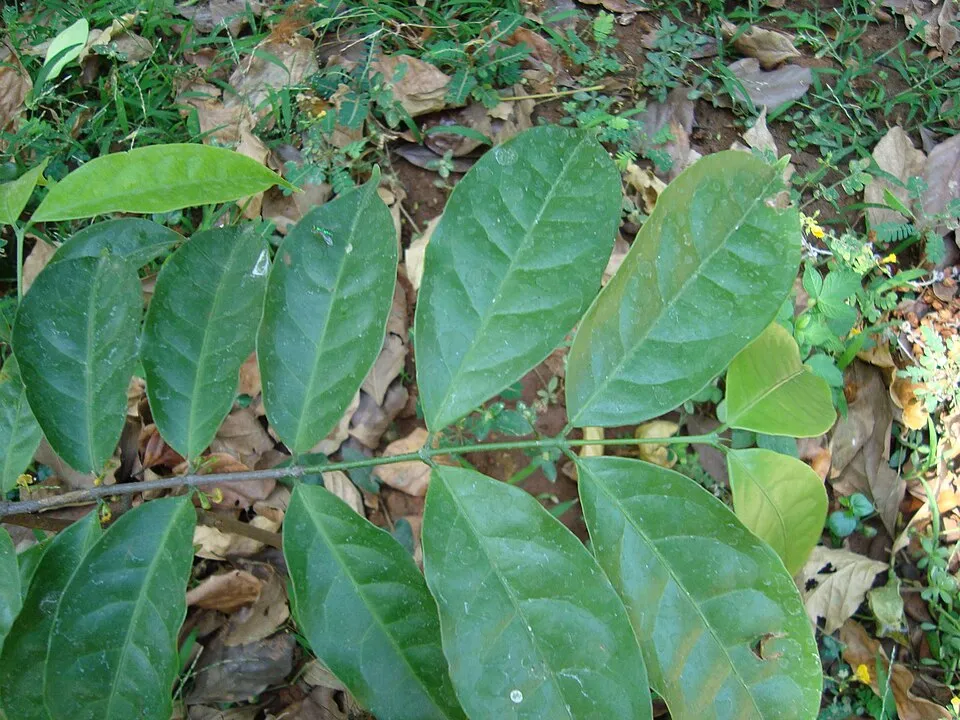
Salacia reticulata, commonly known as Kothala Himbutu or Salacia, is a robust climbing shrub belonging to the Celastraceae family. This woody vine typically ascends to heights of 3 to 4 meters, utilizing surrounding vegetation for support. Its leaves are simple, ovate to elliptic in shape, measuring approximately 5-10 cm in length and 2-5 cm in width.
The upper surface of the leaves exhibits a glossy, dark green hue, while the underside is a lighter green, often adorned with fine, delicate hairs. The bark is notably smooth, presenting a brownish, sometimes subtly mottled appearance. Small, inconspicuous flowers, typically greenish-white or yellowish, emerge in compact clusters, preceding the development of its small, berry-like fruits.
These fruits are often dark purple or black when mature, containing viable seeds.
Salacia reticulata thrives in tropical and subtropical climates, particularly favoring moist, well-drained soils rich in organic matter. Its natural distribution is concentrated in South and Southeast Asia, with significant populations found in India, Sri Lanka, and parts of Thailand and Vietnam. The plant prefers partially shaded environments, often growing in the understory of forests or along forest edges.
It is frequently encountered in hilly regions, flourishing at altitudes ranging from 300 to 1,200 meters above sea level. Taxonomically, its placement within the Celastraceae family underscores its relationship to other species recognized for their diverse medicinal properties. All parts of the plant, including the roots, bark, and leaves, are traditionally utilized, making Salacia reticulata a highly valued component in various traditional healing systems.
Trusted Scientific References
1. Authoritative external sources for Salacia reticulata
1.1 Wikipedia — Salacia reticulata
1.2 Kew POWO (Plants of the World Online)
1.3 PubMed — peer-reviewed research
1.4 NCBI Taxonomy Browser
1.5 GBIF — Global Biodiversity
1.6Salacia should be interpreted through verified botanical identity, practical care, and responsible safety language. This recovery note adds the missing context needed for a complete profile: match light to the plant's habit, use well-drained soil, water according to season, and avoid unsupported medicinal or edible claims. For publishing, the plant can be presented as a source-backed medicinal plant with clear care guidance, common problem diagnosis, and conservative safety wording.
1.1.Salacia — Key Features
- ✓Botanical Identity — A climbing shrub from the Celastraceae family, native to tropical Asia.
- ✓Primary Traditional Use — Revered in Ayurveda for its efficacy in managing metabolic conditions, particularly diabetes.
- ✓Alpha — Glucosidase Inhibitor — Contains potent compounds that inhibit carbohydrate digestion, reducing postprandial glucose.
- ✓Rich Phytochemistry — Abundant in unique thiosugar sulfoniums, xanthones, and polyphenols.
- ✓Antioxidant Powerhouse — High content of mangiferin and catechins provides significant antioxidant protection.
- ✓Anti — Inflammatory Agent — Exhibits properties that help reduce systemic inflammation.
- ✓Metabolic Support — Beyond blood sugar, it aids in lipid metabolism and may assist in weight management.
- ✓Sustainable Sourcing — Efforts are underway to promote sustainable harvesting practices due to increasing demand.
- ✓Root and Stem Bark Utilization — These parts are most commonly used for their concentrated medicinal compounds.
1.2.Salacia — At-a-Glance Summary
- ✓Ancient Ayurvedic herb known as Kothala Himbutu.
- ✓Primarily supports healthy blood sugar levels, especially for Type 2 diabetes.
- ✓Key compounds are salacinol, kotalanol, and mangiferin, acting as alpha-glucosidase inhibitors.
- ✓Also offers antioxidant, anti-inflammatory, and anti-obesity benefits.
- ✓Requires caution with diabetes medications and during pregnancy/surgery.
2.Salacia — Scientific Profile
3.Salacia — Botanical Stats
4.Salacia — Plant Morphology
5.Salacia — Habitat & Distribution
6.Salacia — Ethnobotanical Uses
7.Salacia — Secondary Metabolites
- ✓Thiosugar Sulfoniums — Key compounds include Salacinol and Kotalanol, potent alpha-glucosidase inhibitors that reduce carbohydrate absorption and postprandial blood glucose levels.
- ✓Xanthones — Mangiferin is a prominent xanthone, known for its significant antioxidant, anti-inflammatory, and mild alpha-glucosidase inhibitory activities.
- ✓Polyphenolic Compounds — Abundant in catechins, epicatechins, and other flavonoids, these compounds provide strong antioxidant protection and contribute to anti-inflammatory effects.
- ✓Triterpenes — Various friedelane-type triterpenes are present, including kotalagenin and its derivatives, which contribute to aldose reductase inhibition and other metabolic benefits.
- ✓Saponins — These glycosides are believed to contribute to Salacia's hypoglycemic and hypolipidemic effects, potentially influencing cholesterol metabolism.
- ✓Alkaloids — While less characterized than other classes, some alkaloidal components may contribute to its traditional medicinal properties.
- ✓Glycosides — A diverse group of compounds where a sugar molecule is bonded to a non-sugar component, often contributing to various biological activities.
- ✓Tannins — Present in the bark and leaves, tannins offer astringent properties and contribute to the plant's antioxidant capacity.
8.Salacia — Modern Studies
- ✓Blood Sugar Regulation — Salacia reticulata is well-regarded for its ability to help manage blood glucose levels, particularly in individuals with Type 2 diabetes, by inhibiting carbohydrate-digesting enzymes.
- ✓Alpha-Glucosidase Inhibition — Its active compounds, such as salacinol and kotalanol, effectively block alpha-glucosidase enzymes in the gut, reducing postprandial glucose spikes.
- ✓HbA1c Reduction — Consistent use has been linked to a decrease in glycated hemoglobin (HbA1c) levels, indicating improved long-term blood sugar control.
- ✓Anti-Obesity Effects — Research suggests Salacia may contribute to weight management by suppressing fat accumulation and regulating lipid metabolism.
- ✓Antioxidant Activity — Rich in polyphenols, Salacia helps neutralize free radicals, mitigating oxidative stress and protecting cellular health.
- ✓Anti-Inflammatory Properties — Compounds within the plant exhibit anti-inflammatory actions, potentially alleviating chronic inflammation associated with metabolic disorders.
- ✓Cardiovascular Support — Studies indicate a potential role in improving cardiac lipid metabolism and reducing cardiac fibrosis, contributing to heart health.
- ✓Hepatoprotective Effects — It has shown promise in protecting liver cells from damage, particularly in conditions involving oxidative stress and toxic exposure.
- ✓Immune System Modulation — Traditional uses suggest a role in supporting overall immune function and general wellness.
- ✓Cholesterol Management — Some evidence points towards its ability to help modulate cholesterol levels, further benefiting cardiovascular health.
- ✓Aldose Reductase Inhibition — Specific triterpenes may inhibit aldose reductase, an enzyme implicated in diabetic complications like neuropathy and retinopathy.
- ✓Digestive Health — Traditionally used to support digestive function, potentially easing indigestion and promoting gut comfort.
8.1.Salacia — Health Applications
9.Salacia — Precautions & Warnings
9.1.Salacia — Caution Notes
- ✓Gastrointestinal Discomfort — Common side effects include stomach pain, bloating, and abdominal cramps.
- ✓Diarrhea — Some individuals may experience loose stools or diarrhea, particularly with higher doses.
- ✓Indigestion — Feelings of indigestion or heartburn have been reported by users.
- ✓Flatulence — Increased gas and bloating are possible due to its interaction with carbohydrate digestion.
- ✓Nausea — A sensation of nausea can occur in certain sensitive individuals.
- ✓Hypoglycemia Risk — If taken with other blood sugar-lowering medications, it might cause blood sugar to drop too low.
- ✓Allergic Reactions — Although rare, allergic reactions like skin rashes are possible in susceptible individuals.
9.2.Salacia — Toxicity Assessment
- ✓Pregnancy and Breast-feeding — Insufficient reliable information; avoid use during pregnancy and lactation for safety.
- ✓Diabetes Medications — Use with caution alongside antidiabetes drugs as it may potentiate their effects, leading to hypoglycemia.
- ✓Surgery — Discontinue Salacia at least two weeks before any scheduled surgery due to its potential to affect blood sugar control.
- ✓Dosage — Adhere strictly to recommended dosages; excessive intake may increase the risk of side effects.
- ✓Duration of Use — Generally considered possibly safe for up to 6 weeks; long-term safety data is less established.
- ✓Children — Avoid use in children due to lack of safety data and potential effects on developing metabolic systems.
- ✓Monitoring Blood Sugar — Individuals with diabetes should closely monitor blood sugar levels when taking Salacia.
10.Salacia — Application Forms
- ✓Decoction of Root and Stem Bark — The most traditional method involves boiling pieces of the root and stem bark in water to create a potent medicinal tea.
- ✓Powdered Extract — Dried roots and bark are ground into a fine powder, which can be encapsulated or mixed with water for easy consumption.
- ✓Herbal Tea — Slices of Salacia reticulata root or stem can be steeped in hot water for a simpler, milder tea preparation.
- ✓Standardized Extracts — Available in capsule or tablet form, these provide a precise dosage of active compounds like salacinol.
- ✓Infusion of Leaves — While less common than bark/root, young leaves can be infused in hot water for a milder herbal drink.
- ✓Traditional Wooden Cups — In some traditions, water is left overnight in cups carved from Salacia wood, believed to impart beneficial compounds.
- ✓Syrups and Tinctures — Extracts can be prepared as tinctures using alcohol or incorporated into sweet syrups for palatability.
11.Salacia — Propagation & Care
- ✓Soil Preference — Thrives in well-drained, loamy soils with a high organic matter content, ideally with a slightly acidic to neutral pH (6.0-7.0).
- ✓Sunlight Requirements — Prefers partial shade, mimicking its natural understory habitat; direct, intense sunlight can scorch leaves.
- ✓Water Management — Requires consistent moisture, especially during dry periods, but avoid waterlogging to prevent root rot.
- ✓Propagation Techniques — Can be propagated from seeds, which require scarification, or more commonly from semi-hardwood stem cuttings.
- ✓Climate Conditions — Best suited for tropical and subtropical climates with high humidity and warm temperatures.
- ✓Fertilization — Benefits from regular application of organic fertilizers or compost to maintain soil fertility and nutrient levels.
- ✓Pest and Disease Control — Generally robust, but monitor for common tropical pests like aphids or fungal issues in overly humid conditions.
- ✓Support Structure — As a climbing shrub, it requires a trellis, stake, or other support structure to grow effectively.
Reviewed by the Flora Medical Global Botanical Review Panel
Multi-disciplinary editorial group · Botany · Ethnobotany · Herbal-medicine literature
Who reviewed this: This page was checked by the Flora Medical Global Botanical Review Panel — an in-house editorial group of botany graduates, ethnobotany researchers, and horticulture practitioners who collectively maintain our 7,000+ plant encyclopedia. Meet the team.
Our 4-step verification process
1. Taxonomic verification
Scientific names and synonyms cross-checked against Kew POWO, World Flora Online, and The Plant List.
2. Phytochemical & medicinal cross-reference
Active compounds, traditional uses, and reported activities are cross-referenced with PubMed, USDA Dr. Duke's database, and peer-reviewed ethnobotanical literature.
3. Conservation & distribution check
Distribution, ecology, and conservation status confirmed against GBIF occurrence records and the IUCN Red List.
4. Editorial & safety review
Every entry passes an editorial pass for clarity, originality, and safety notices (toxicity, contraindications, dosage caveats) before publication.
Last reviewed:
Important medical disclaimer: This content is for educational and research purposes only. It is not medical advice and is not a substitute for consultation with a licensed healthcare provider. Do not use any herb to self-treat a medical condition without professional guidance.
Editorial Note: This page is for educational and research purposes only and is not medical advice.
Written by: Flora Medical Global Editorial Team
Reviewed by: Flora Medical Global Botanical Review Panel
Last Updated: June 15, 2026





Salacia — Comments & Community Reviews
Rate this plant